6 Week Beginner Workout Plan: Phased Progression, Movement Mechanics, and Home Floor Staging
Introduction: Why a 6-Week Structured Framework Works for Beginners
Starting a new fitness routine can often feel overwhelming when faced with complicated splits, aggressive loading schedules, and conflicting guidance. A 6 week beginner workout plan offers a practical timeframe that allows the body to adapt to unfamiliar movement patterns while establishing consistent exercise habits. Rather than chasing immediate fatigue or complex exercise sequences, a structured multi-week cycle provides predictable progression and ample opportunity to refine foundational technique.
Common obstacles for novices include premature overtraining, inconsistent session scheduling, and training on unsupportive, slippery surfaces. When your setup lacks traction or joint cushioning, movement mechanics can break down quickly. Pairing progressive physical conditioning with an intentional home training environment helps protect your joints and creates a dedicated space for sustained progress.
The 6-Week Phased Progression Blueprint
A well-designed 6 week exercise plan for beginners divides the overall journey into manageable two-week blocks. This stepwise approach prioritizes neuromuscular familiarity before increasing workload, giving connective tissues time to adjust.
Weeks 1–2: Movement Pattern Competency and Joint Familiarization
The opening two weeks focus on movement literacy. The primary goal is learning how to hinge at the hips, squat with balance, push, pull, and stabilize the trunk without relying on excessive external resistance. Training sessions should emphasize steady pacing and complete control through each repetition. If you prefer timed intervals over strict repetition targets, reviewing a beginner exercise workout guide can help you structure comfortable working windows without rushing your tempo.
Weeks 3–4: Progressive Volume and Control
Once baseline movement mechanics feel natural, the middle phase introduces moderate resistance alongside deliberate tempo control. Slowing down the lowering phase of each movement challenges muscular endurance while reinforcing joint stability. Consulting a straightforward workout plan fitness guide can assist in organizing your weekly schedule so that muscle groups receive adequate rest between sessions.
Weeks 5–6: Density, Work Capacity, and Confidence
The final phase of this 6 week fitness plan for beginners links individual movements into smoother, more cohesive training blocks. By modestly shortening rest intervals or grouping complementary exercises, you build overall work capacity while solidifying your confidence with compound movements. This phase bridges the gap between basic initiation and long-term, self-directed training.
Core Movement Archetypes in the 6-Week Exercise Plan for Beginners
A balanced 6 week workout plan for beginners revolves around fundamental multi-joint patterns that translate directly to daily functional movement.
Lower Body: Squat Mechanics and Hip Hinge Foundations
Lower-body training centers on two primary mechanics: knee-dominant knee flexion (the squat) and hip-dominant hip extension (the hinge). For squats, maintain a planted foot position, keep the torso tall, and allow the knees to track naturally in line with the toes. For hip hinges, such as standard Romanian deadlifts or glute bridges, push the hips backward while maintaining a neutral spine, loading the hamstrings and glutes without rounding the lower back. Practicing on a firm, non-slip surface ensures your feet remain rooted throughout the range of motion.
Upper Body: Horizontal and Vertical Push-Pull Dynamics
Upper-body balance requires equal attention to pushing and pulling movements. Horizontal pushes (such as push-ups or floor presses) develop chest and triceps strength, while horizontal pulls (such as resistance band rows) reinforce upper-back engagement and posture. Vertical variations, including overhead dumbbell presses and supported pull-downs, build shoulder stability when performed with a braced core and controlled scapular movement.
Midsection Stability: Anti-Extension and Isometric Bracing
Rather than relying solely on repetitive spinal flexion exercises, prioritize isometric trunk stability. Exercises such as front planks, side planks, and dead bugs teach the core to resist unwanted arching or twisting. Padded floor support is essential during kneeling or supine floor work to prevent uncomfortable pressure on the knees, wrists, and lumbar spine.
Home Gym Floor Staging and Joint Protection
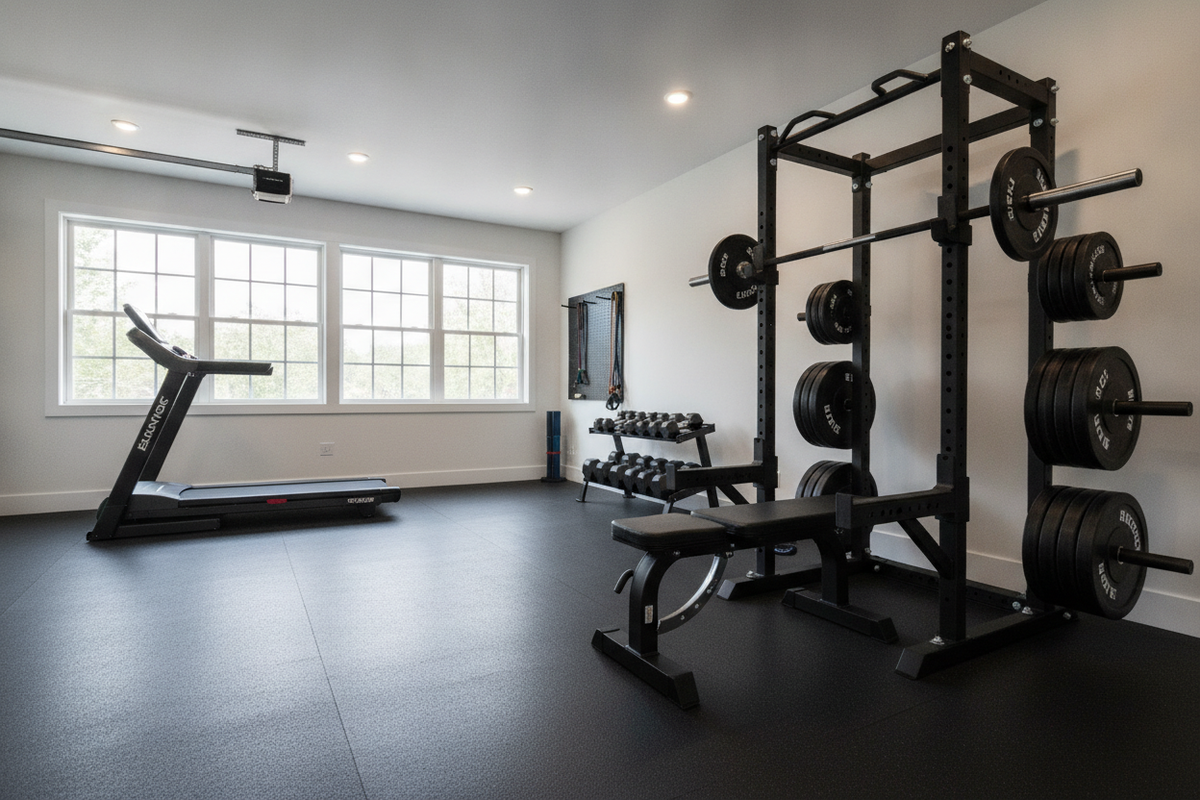
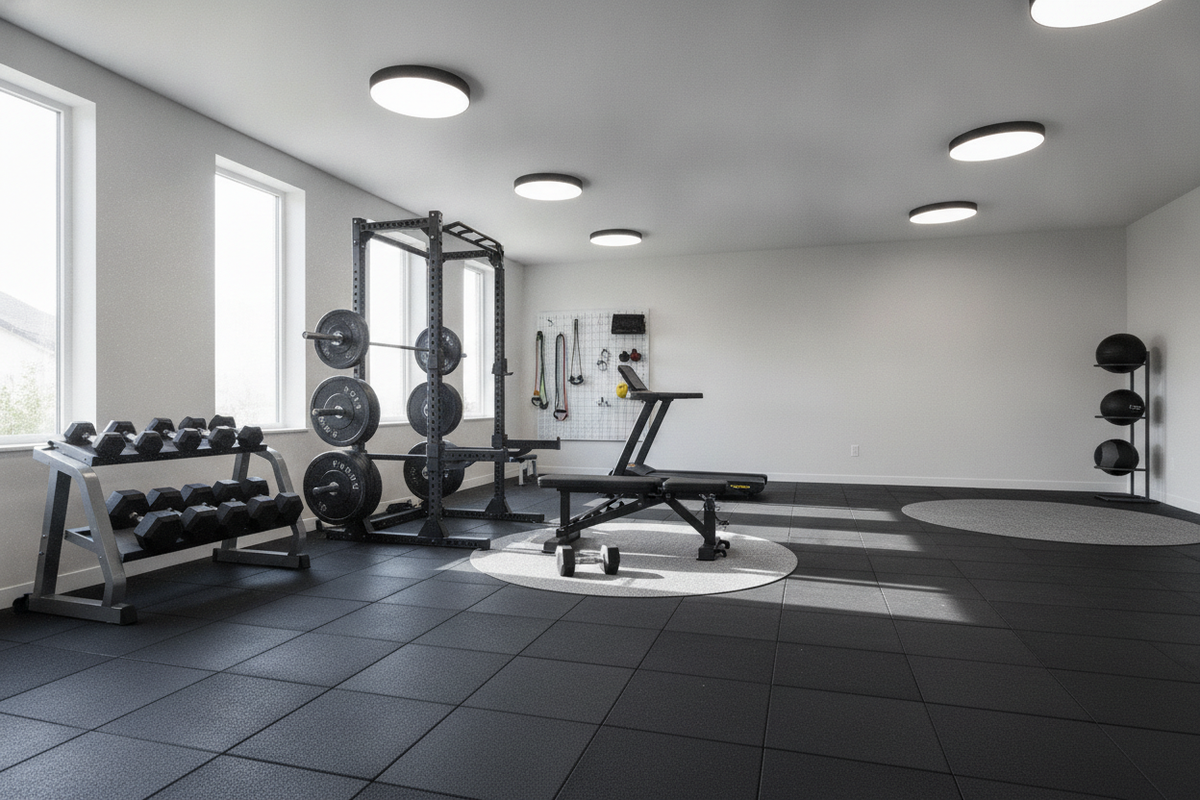
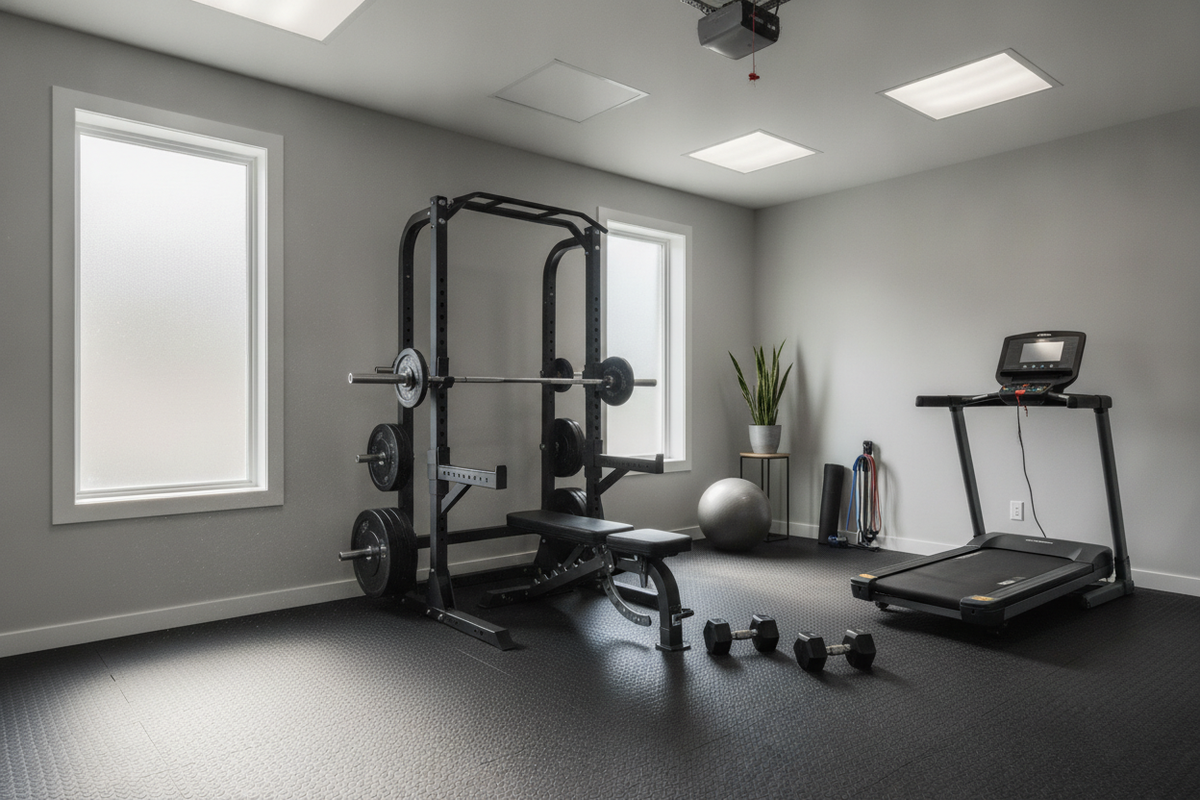
Working out on bare concrete, thin carpeting, or slick hardwood can compromise stability and cause discomfort during ground-based movements. High-density workout flooring absorbs repetitive impact, cushions joints during bodyweight routines, and prevents slipping during dynamic footwork. Exploring a curated exercise collection allows you to select surface materials that provide firm balance without sinking underfoot.
- Firm Traction: Textured surfaces prevent shoes or bare feet from sliding during wide-stance squats and lunges.
- Cushioned Ground Support: Dense padding reduces direct pressure on wrists during push-ups and elbows during planks.
- Subfloor Protection: Resilient padding shields underlying tile or wood from accidental equipment contact.
Equipment Layout and Subfloor Protection Strategies
Setting up an effective home workout area requires thoughtful spatial organization. Designate distinct zones for bodyweight movement, resistance bands, and free-weight storage to keep your training space tidy and free of trip hazards. Covering high-traffic movement zones with a large exercise workout product provides seamless coverage, eliminating gaps where individual small mats might slide apart.
- Define Your Footprint: Clear adequate floor space to allow for full arm and leg extensions in all directions.
- Anchor the Surface: Ensure protective mats lie flat against the subfloor to maintain a level, stable surface.
- Routine Surface Maintenance: Wipe down mats periodically with mild soap and water to clear dust, perspiration, and maintain grip traction.
Summary: Sustaining Momentum Beyond the Initial 6 Weeks
Completing a progressive 6-week training cycle builds physical literacy, joint resilience, and a repeatable workout habit. As you finish your initial routine, review your movement comfort across all fundamental patterns, reassess your recovery needs, and adjust your home gym layout to support intermediate training goals. Consistent exercise paired with a supportive environment establishes a durable foundation for long-term health and strength.