You're Probably Training the Wrong Muscular Strength Type
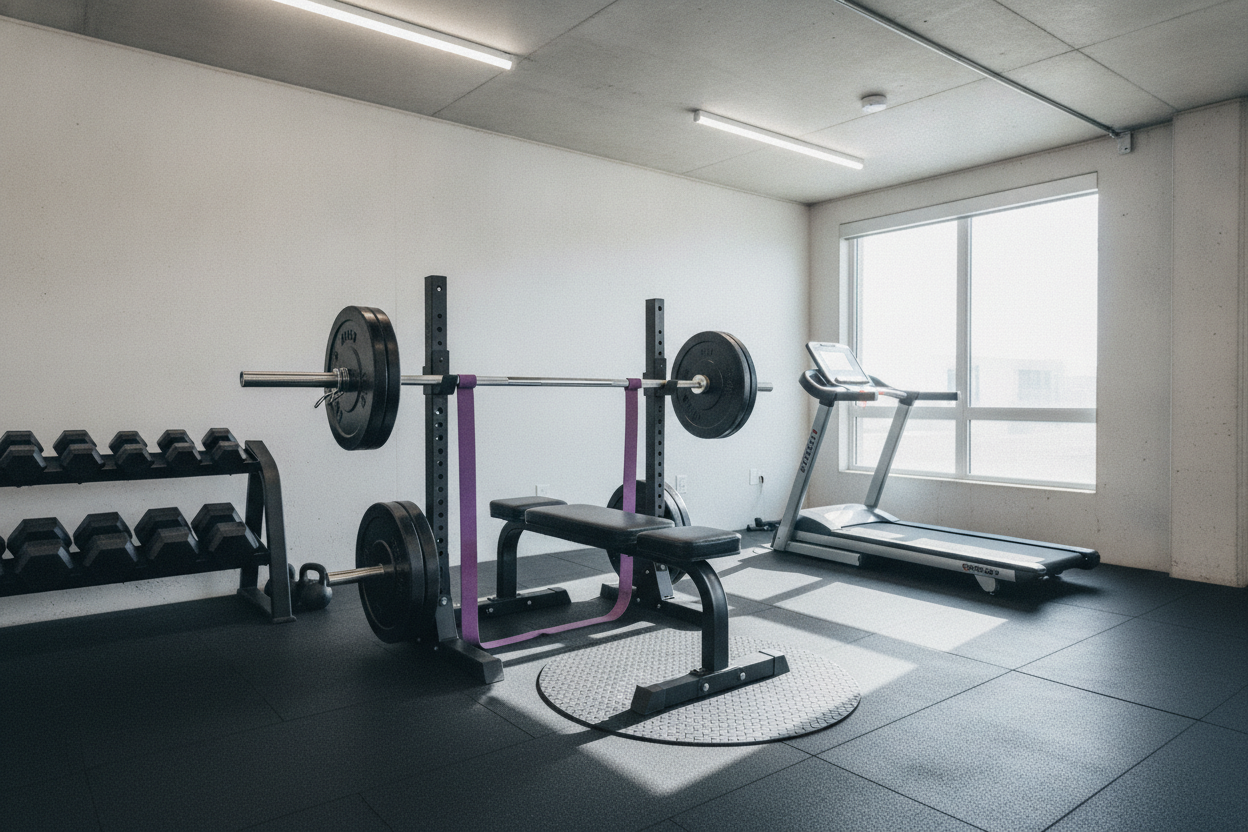
I spent an entire winter in my unheated garage grinding against a 405-pound squat plateau. Every single Tuesday, I would load the bar, hit a shaky, grinding single, and wonder why my vertical jump was still embarrassing and my clothes weren't fitting any tighter. I was obsessed with my muscular strength type, but I was training for the one I already had, rather than the one I actually needed.
Quick Takeaways
- Absolute strength is your 'ceiling' of force, but it's not the only metric for athleticism.
- Explosive power requires moving weight quickly, not just moving heavy weight.
- A 3-Rep Max test is often more useful (and safer) for home lifters than a true 1RM.
- Proper flooring is non-negotiable for explosive testing to prevent joint injury.
The Problem With 'Just Getting Stronger'
Vague goals are the fastest way to waste a gym membership or a perfectly good garage setup. I see guys all the time saying they just want to 'get stronger,' so they hop on a generic program they found on a forum. They get decent at grinding out slow, ugly reps, but they never actually get 'athletic.' They build what I call 'tractor strength'—plenty of torque, but zero top-end speed.
I lived this mistake for two years. I was training my absolute force production while my actual goal was to be more explosive for weekend sports. I was essentially building a massive engine but forgot to install a transmission. I was lifting heavy singles until my eyes bled, yet I felt slower than ever. Before you overcomplicate your programming, try simple chest plate workouts to build strength and muscle anywhere to see how your body handles different loading styles and intensities.
The issue is that 'strength' isn't a monolith. If you only train one way, you develop 'stale' strength. You might be able to grind out a 300-pound bench press that takes six seconds to complete, but if you can't push a heavy door open quickly, you've missed the point of functional training.
Breaking Down the 3 Types of Muscle Strength
To stop spinning your wheels, you need to understand the three primary types of muscle strength. First is Absolute Strength. This is your ability to move the heaviest object possible, regardless of time. This is the realm of the powerlifter. It’s pure force, and it doesn't care if the rep looks like a slow-motion car crash. If you're building a foundation, using the top 5 chest exercises to build strength and muscle fast is a great way to push this metric.
Second is Explosive Power. This is force multiplied by velocity. It’s not just about moving the weight; it’s about how fast you can accelerate it. Think of a heavy sandbag toss or a jump squat. In the lab, they call this the 'rate of force development.' If you have high absolute strength but low power, you’re like a bulldozer—powerful but slow. If you have high power but low absolute strength, you’re like a firework—fast but lacking substance.
Third is Strength Endurance. This is your ability to produce force repeatedly over time. If you can squat 400 pounds for a single but you're gasping for air after a set of ten with 225, your endurance is your bottleneck. Most home gym owners neglect this because it isn't as 'cool' as a heavy single, but it's what actually builds the metabolic stress required for muscle growth.
Let's Discuss Two Ways to Determine Your Muscular Strength
You don't need a $2,000 velocity tracker or a lab coat to figure out where you stand. In a garage gym, we use 'low-tech, high-effect' metrics. We are going to discuss two ways to determine your muscular strength that you can do tomorrow morning with a barbell and a bit of floor space. These tests will tell you exactly where your training is failing you.
Method 1: The 3-Rep Max Grinder
Testing a true 1-Rep Max (1RM) is a specific skill. If you aren't a competitive powerlifter, it’s also a great way to tear a pec or blow a disc when you're training solo in a garage. A 3-Rep Max (3RM) is my go-to for testing absolute force. It’s heavy enough to be 'real' but gives you enough room to maintain your technical integrity.
Find a weight you can move for three—and only three—clean reps. If you can squeeze out a fourth, it’s too light. If your 3RM is consistently rising but your athletic performance feels sluggish, you know your absolute strength is fine, but your nervous system is 'slow.' You've reached the point of diminishing returns for heavy grinding and need to pivot to speed work.
Method 2: The Broad Jump Power Test
This is the ultimate BS-detector for the 'barbell-only' crowd. Stand behind a line and jump as far forward as you can, landing softly on both feet. This measures your explosive power and your body's ability to recruit motor units instantly. If you can squat twice your bodyweight but can't jump your own height, you have a massive power deficit.
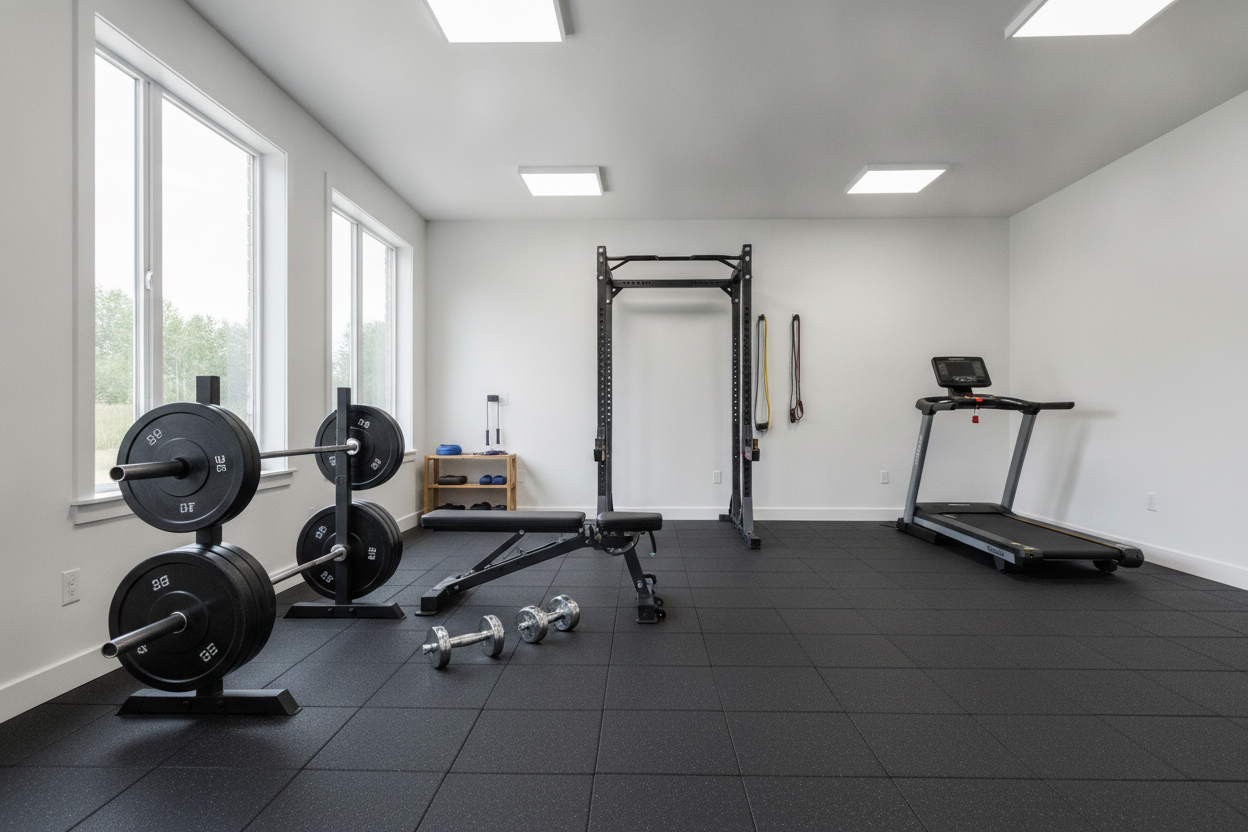
Don't do this on bare concrete. I've seen guys slip on dusty garage floors and wreck their knees. I recommend using Gxmmat new upgraded exercise mats or similar high-density rubber to provide the necessary traction and shock absorption. If your jump distance is poor, it means your 'engine' is big, but your 'tires' are spinning; you need to add plyometrics and medicine ball slams to your routine.
Equipping Your Setup for Your Specific Target
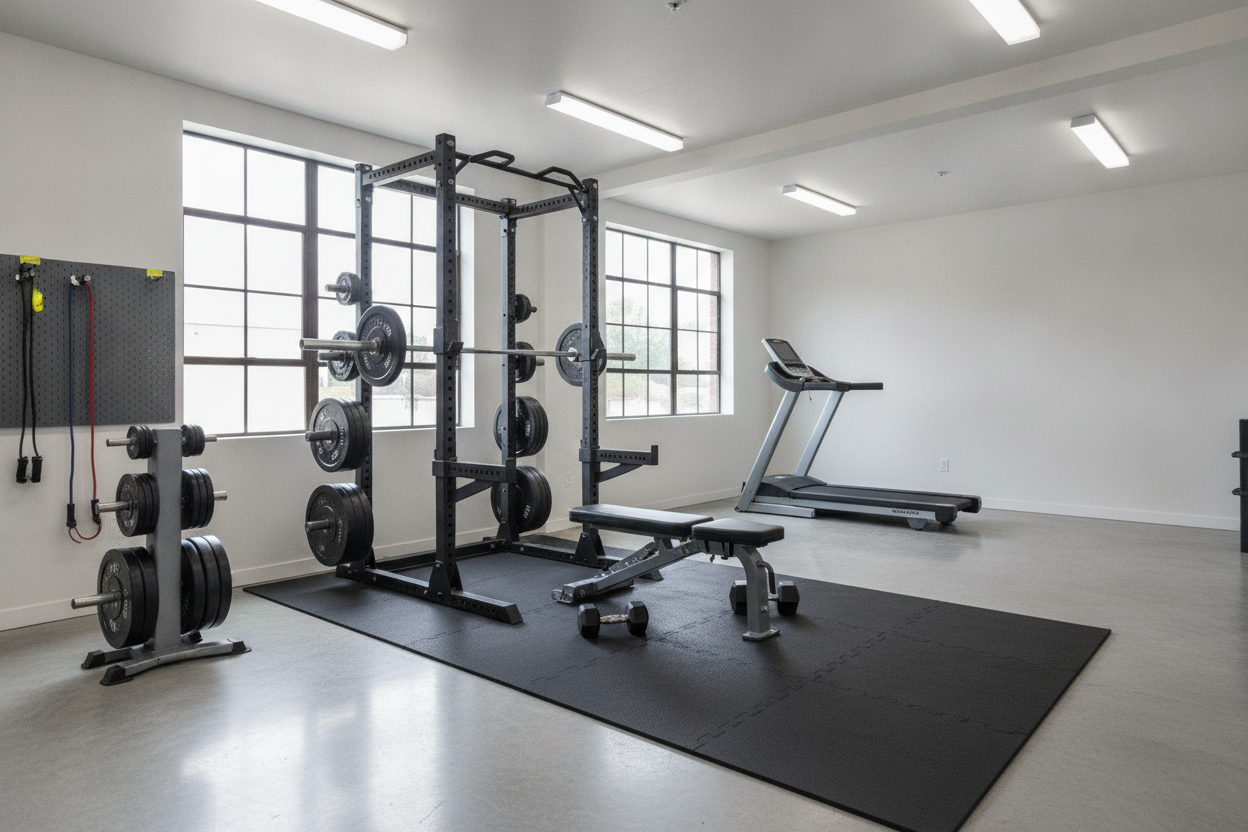
Once you know your deficit, stop buying random gear and buy the stuff that fixes your specific muscular strength type. If you failed the 3RM test, you need a high-quality power bar—something with a 29mm diameter and aggressive knurling that won't slip when your hands get sweaty. You need iron plates and a rack that doesn't shake when you re-rack a heavy set.
If you failed the broad jump, stop buying more plates. You need tools for speed. Grab some 10-to-20 pound slam balls, a set of resistance bands to add 'accommodating resistance' to your lifts (making the top of the movement harder), or a solid wooden plyo box. Training for your specific target means your gear should reflect your weaknesses, not just your ego. I once spent $500 on a specialized squat bar when what I really needed was a $50 set of bands to help me move faster. Don't be that guy.
FAQ
Can I train for power and endurance at the same time?
You can, but you won't maximize either. It's better to use 'periodization'—focus on building absolute strength for two months, then spend a month turning that strength into power with lighter, faster movements.
What is the most common strength type people lack?
In the home gym community, it's usually explosive power. We love to grind out slow reps in our racks, but we rarely practice moving weight as fast as humanly possible.
Do I need a belt for 3RM testing?
If you usually wear one during your heavy working sets, wear it for the test. You want to test your strength under the conditions you normally train in, not try to be a 'raw' hero on testing day.