The Hardest Lifts Don't Make the Best Workout for Building Mass
I used to think that if I wasn't crawling out of my garage gym after a leg day, I hadn't worked hard enough. I would spend two hours grinding through heavy back squats and deadlifts, feeling like a warrior, only to realize six months later my quads hadn't grown an inch. I was exhausted, but I was stagnant. The truth is that the best workout for building mass isn't always the one that leaves you the most wrecked.
We have been conditioned to believe that 'harder is better.' But if 'hard' just means your lower back is fried and your central nervous system is toasted, you're actually sabotaging your gains. You need a program that targets the muscle, not your soul.
- Systemic fatigue is the enemy of hypertrophy—don't mistake being tired for being productive.
- Stability equals more weight on the target muscle and less on your joints.
- The best workouts for mass gain prioritize the Stimulus-to-Fatigue Ratio (SFR).
- Swapping 'ego lifts' for high-stimulus variations is the fastest way to grow.
Stop Confusing Exhaustion With Muscle Growth
There is a massive difference between systemic fatigue and local muscular fatigue. Systemic fatigue is that 'hit by a truck' feeling. Your heart rate is 180, you're gasping for air, and you need a nap before you can even think about driving home. Local muscular fatigue is when your chest is so pumped and tired that you can't squeeze out another rep, even though your breathing is perfectly fine.
If you want to grow, you want the latter. When you do a set of high-rep barbell back squats, your lungs or your lower back often give out before your quads do. That means you've accumulated a ton of total-body fatigue without actually pushing the target muscle to its limit. If you're too exhausted to train hard for the rest of the week, you've failed the most basic rule of hypertrophy.
The Golden Rule: Understanding the Stimulus-to-Fatigue Ratio
The Stimulus-to-Fatigue Ratio (SFR) is the secret sauce. Every exercise has a cost. A heavy deadlift has a massive stimulus for the posterior chain, but the fatigue cost is astronomical—it can wreck your recovery for days. On the flip side, a chest-supported row gives you a similar stimulus for the lats with about 20% of the fatigue.
Hypertrophy is about maximizing the stimulus while minimizing the cost. When you choose movements that are stable and isolate the target tissue, you can take those sets to true failure. This is how the real pros train. They aren't trying to see how much they can survive; they're seeing how much tension they can put on a specific muscle fiber.
How the Best Workouts for Mass Gain Actually Look
The best workouts for mass gain look less like a CrossFit competition and more like a calculated demolition of muscle tissue. You want to move away from movements where balance or core strength is the limiting factor. If you're wobbling, you aren't growing.
Building Tree-Trunk Legs Without the Barbell
I love the barbell, but it’s a tool, not a religion. If your goal is pure size, a hack squat or a pendulum squat is often superior to a traditional back squat. Why? Because the machine provides the stability. Your brain doesn't have to worry about you falling over, so it allows your quads to output 100% of their force. If you're looking for the best quad workouts for mass, you need to find ways to bury the needle on intensity without your spine becoming the weak link.
Shoulders That Pop (Without Frying Your Lower Back)
Standing overhead presses are great for athletes, but for building boulder shoulders, I'm taking a seated dumbbell press or a machine press every single time. When you sit down and press your back into a pad, you eliminate the 'cheat' from your hips and the strain on your lumbar. This forces the deltoids to do the heavy lifting. Taking momentum out of the equation is the only way to ensure the shoulder workout for mass you're doing is actually hitting the shoulders and not just your ego.
Setting Up Your Home Space for High-Stimulus Lifting
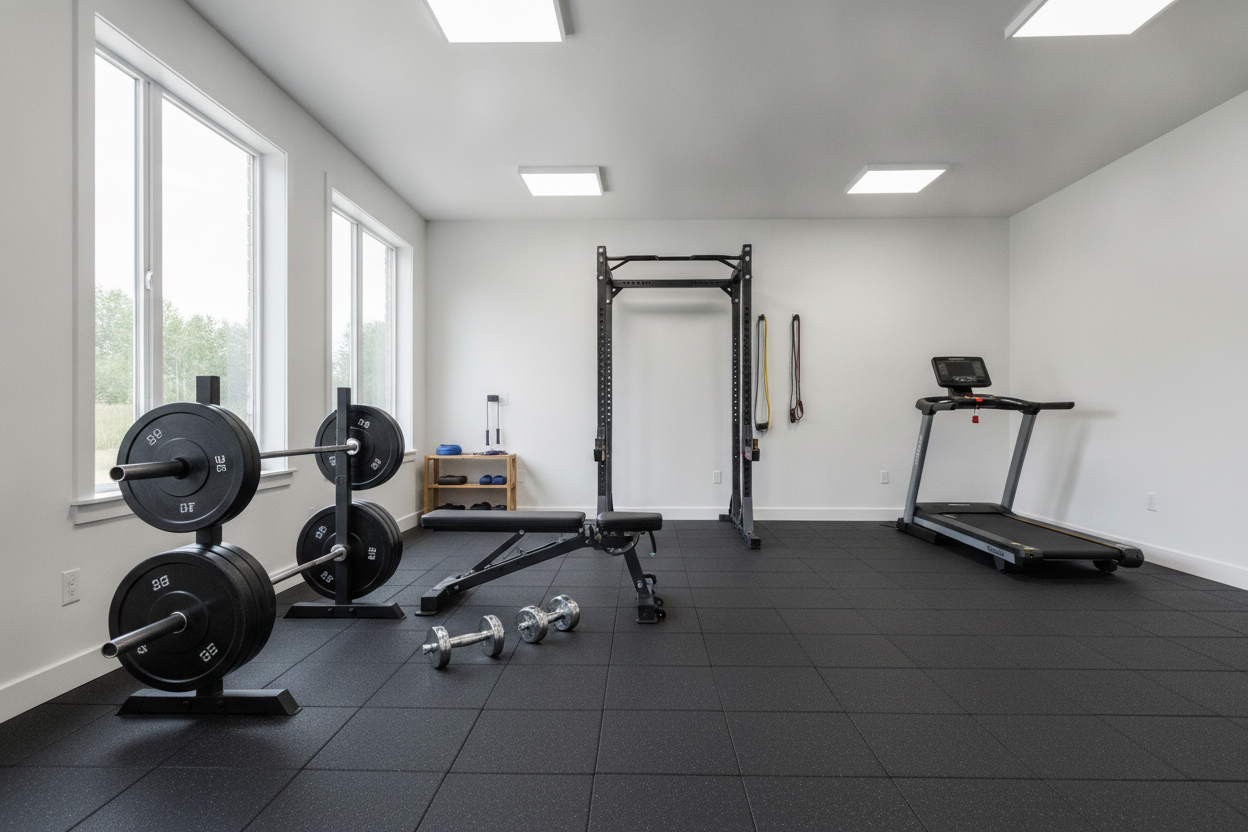
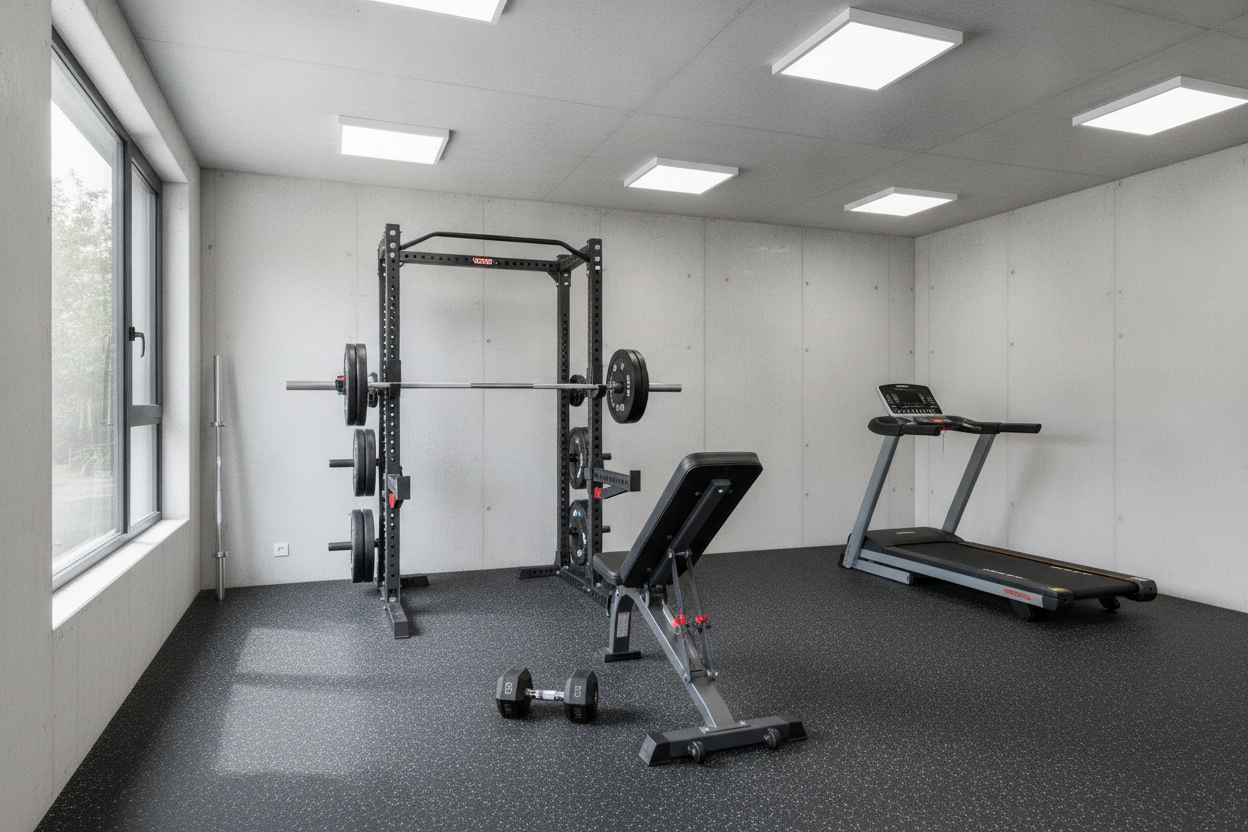
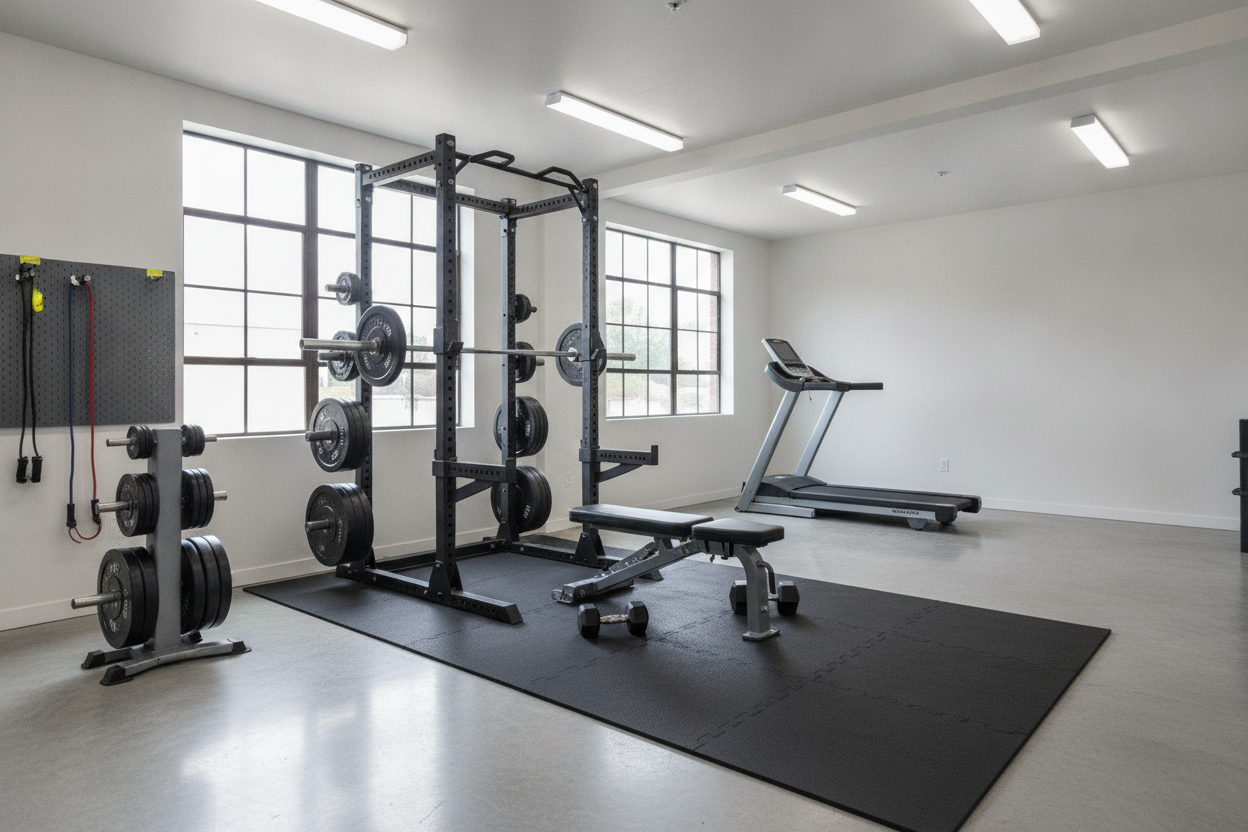
Training for mass requires you to go to the dark place—those final two reps where the bar barely moves. You cannot do that if you're worried about your feet slipping or your rack shaking. I’ve seen guys try to do heavy Bulgarian split squats on a slick concrete floor, and it’s a recipe for a torn groin.
Invest in a high-quality, large exercise mat for home gym use. You need a non-slip foundation that absorbs vibration and keeps your feet glued to the floor. When you feel stable, you can push harder. It sounds simple, but the mental confidence of a solid floor allows you to grind out the 'growth reps' that actually build mass.
The Blueprint: Put It Into Practice Today
Stop trying to do everything in one session. Focus on 2-3 high-quality sets per exercise, taken to 0-1 reps shy of failure. Here is a simple split focusing on high SFR movements:
- Day 1: Quads & Hips – Hack Squats (3x8-12), Leg Press (3x15), RDLs (3x10).
- Day 2: Chest & Shoulders – Incline Dumbbell Press (3x8-10), Seated Machine Press (3x12), Lateral Raises (4x15).
- Day 3: Back & Arms – Chest-Supported Rows (3x10), Lat Pulldowns (3x12), Bicep Curls (3x12).
Track your numbers. If you did 200 lbs for 10 reps last week, try for 205 lbs or 11 reps this week. Progressive overload on high-stability movements is the fastest way to change your physique.
Personal Experience: My Ego-Check Moment
A few years ago, I was obsessed with my 500-lb deadlift. I hit it, but I looked exactly the same as when I pulled 400 lbs. My back was constantly sore, and I was too tired to do any accessory work. I finally swallowed my pride, dropped the heavy pulls, and started doing high-rep RDLs and chest-supported rows. Within three months, my back thickness doubled, and my chronic hip pain vanished. The downside? I had to admit that the 'easier-looking' exercises were actually much harder to recover from when done with intensity.
FAQ
Is the barbell deadlift bad for mass?
It’s not bad, but it’s inefficient. The fatigue it generates is often higher than the muscle-building stimulus it provides. If you love it, do it—but don't think it's the only way to grow a big back.
Can I build mass with just dumbbells?
Absolutely. Dumbbells allow for a greater range of motion and a more natural path for your joints. The only limit is how heavy your set goes. If you have a set that goes up to 80 or 100 lbs, you can build a world-class physique.
How many days a week should I train for mass?
Four days is the sweet spot for most people. It allows for enough frequency to hit every muscle twice a week while providing three full days of rest to actually grow.