You're Doing Too Much: Why the Best Leg Workouts Are Only 3 Moves
I remember spending two hours in my garage, sweating through a list of ten different best leg workouts I’d found on Instagram. By the time I got to my sixth exercise, I was just going through the motions with light weights, my intensity was non-existent, and my progress had stalled for months. I realized I wasn't training; I was just exercising until I was tired.
Quick Takeaways
- Junk volume is the silent killer of lower body hypertrophy.
- Intensity on three key moves beats moderate effort on ten moves every time.
- Start with a heavy compound, follow with a unilateral soul-crusher, and finish with safe isolation.
- A quality adjustable bench and a solid rack are the only non-negotiables for this protocol.
The Junk Volume Trap Ruining Your Leg Day
Social media has turned leg day into a variety show. You see influencers performing eight to ten different lifting exercises for legs in a single session, jumping from cables to bands to three different types of lunges. It looks impressive on a reel, but it’s usually 'junk volume'—sets that add fatigue without providing enough stimulus to actually grow muscle.
When you try to cram every possible variation into one hour, you naturally pace yourself. You hold back on your squats because you know you have six more exercises to go. That’s a mistake. Following a streamlined blueprint for total lower body power is significantly more effective than doing a little bit of everything and a whole lot of nothing.
Real growth happens when you demand more from your central nervous system (CNS) and muscle fibers than they are used to. If you’re doing 20 sets for legs, your intensity per set is likely garbage. Cut the fluff and focus on the moves that actually move the needle.
Why Less is Actually More for Lower Body Growth
To grow, you need to take a muscle to—or very close to—absolute mechanical failure. This is physiologically impossible to do across ten different exercises. By the time you reach move number four, your glycogen stores are dipping and your mental focus is shot. The weight training leg workouts that actually build slabs of muscle are built on the back of intensity, not duration.
I’ve found that focusing on just three movements allows me to track my progressive overload with surgical precision. I know exactly what I squatted last week, and I know I need to beat it by five pounds or one rep today. When you have a dozen exercises, you lose that focus. You’re just chasing a 'pump' that disappears twenty minutes after you leave the gym.
Move 1: The Heavy Bilateral Compound
Your legs weight training exercises must start with a heavy hitter while your CNS is fresh. For me, that’s the high-bar back squat or a deep, paused goblet squat with a heavy dumbbell. This is where you move the most weight and recruit the most motor units. Don't overcomplicate it; pick a bar, load it up, and get to work.
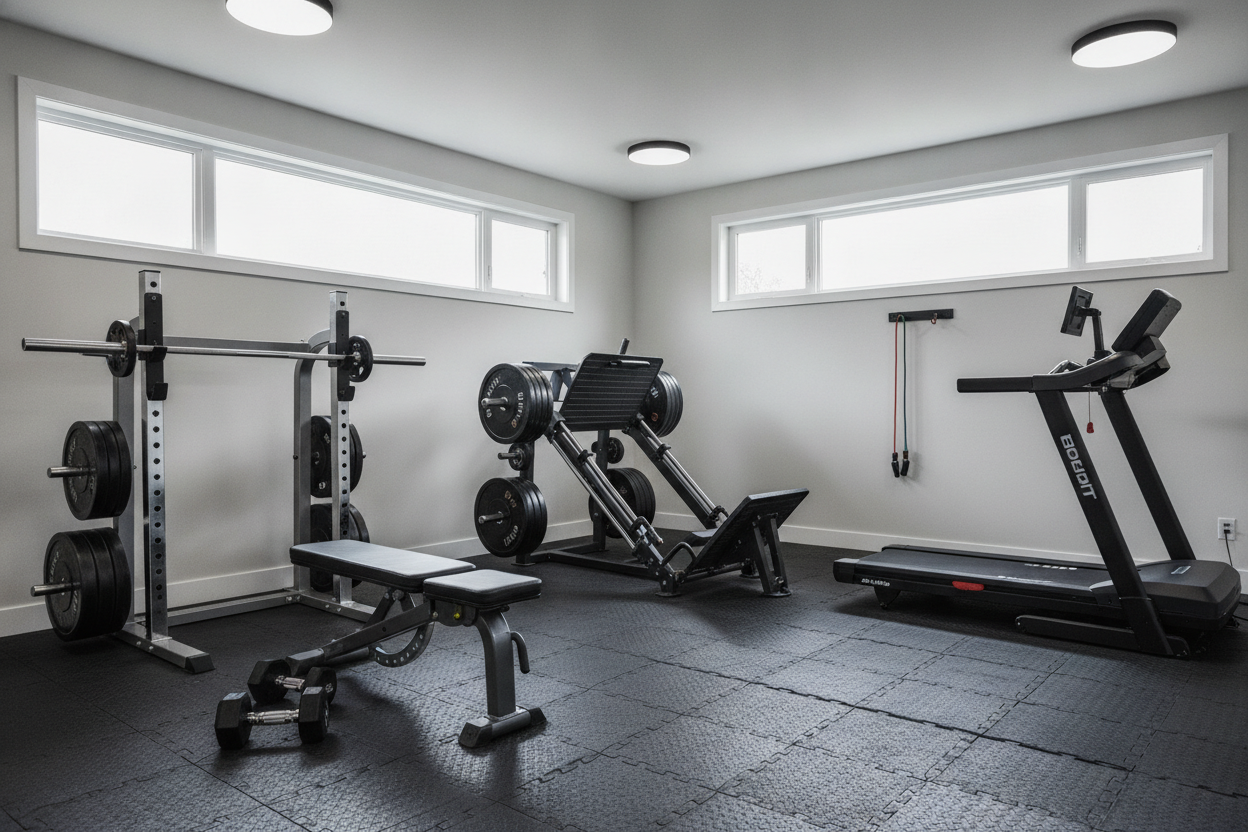
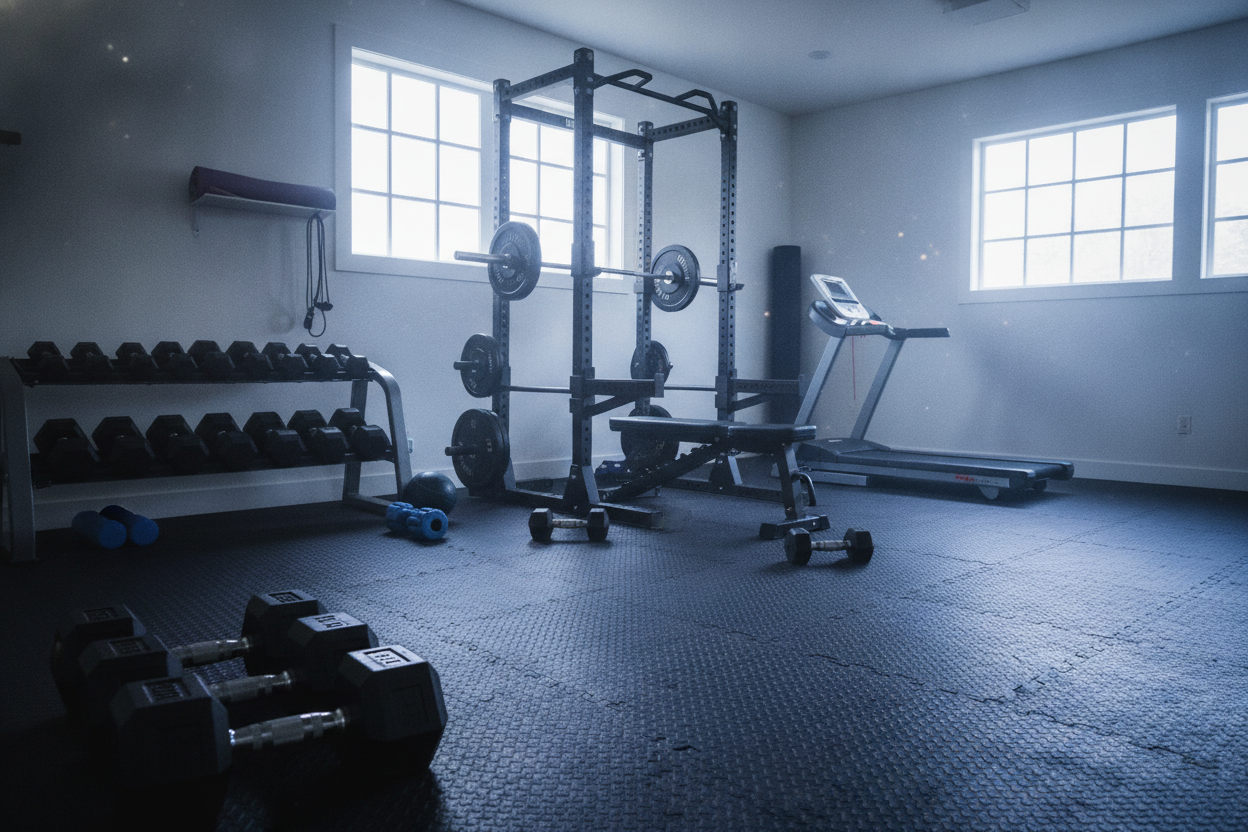
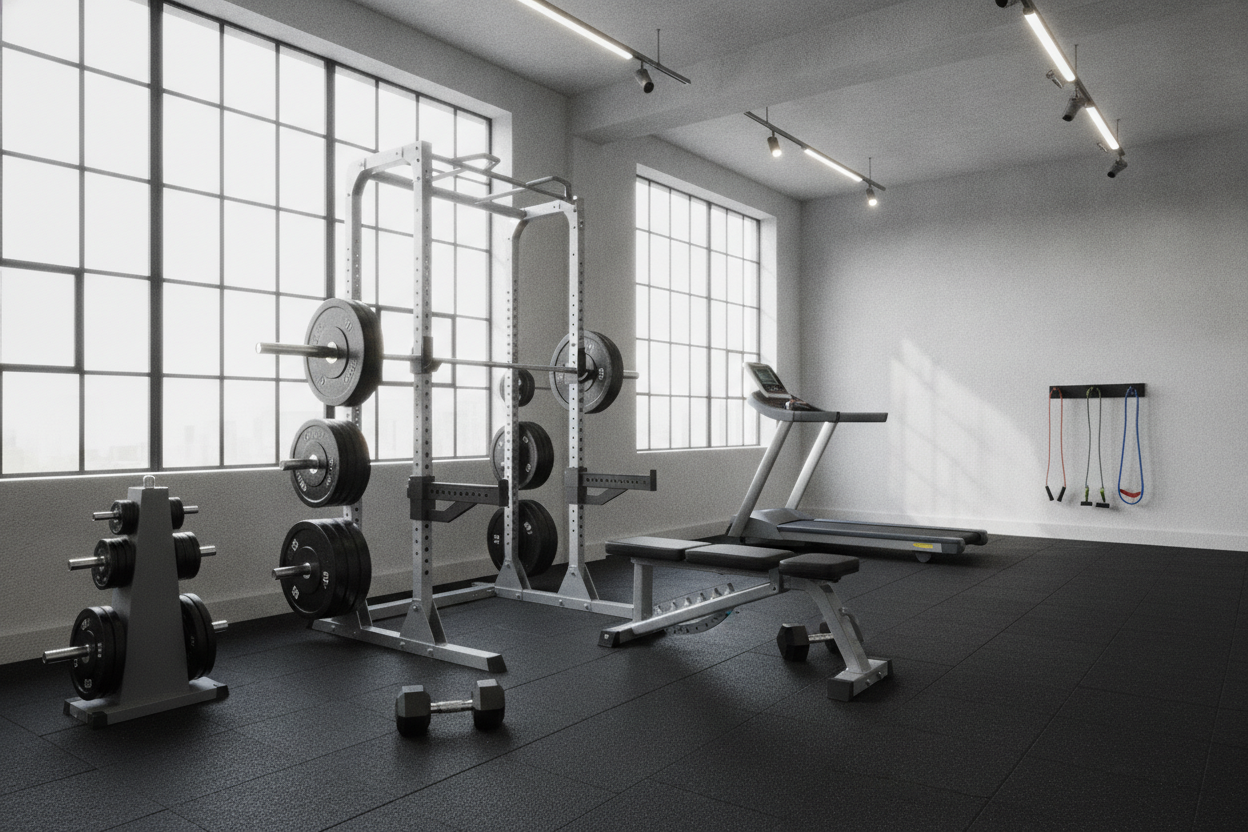
Choosing the right weight training equipment for your goals is crucial here. If you're working in a tight garage, a solid power rack with 1-inch hole spacing is a godsend for setting the perfect safety height. You need to feel safe enough to truly push that last rep without worrying about getting pinned under the bar.
Move 2: The Unilateral Death March
Once the heavy bilateral work is done, it’s time to address imbalances. The Bulgarian split squat is the gold standard here. It forces each leg to carry its own weight, literally. It also spares your lower back, which is likely already taxed from the squats. I personally hate these—everyone does—which is usually a sign they are working.
To do these right, you need a sturdy adjustable weight bench that won't wobble when you hook your rear foot. I’ve tried using a folding chair in the past, and it’s a recipe for a rolled ankle. A bench with a 1,000-lb capacity gives you the stability to hold heavy 80-lb dumbbells without the platform shifting under you.
Move 3: Machine Isolation to Absolute Failure
By the time you finish the first two moves, your stabilizers—the small muscles that keep you upright—are fried. This is the perfect time to move to a machine. Since the machine handles the stabilization for you, you can safely push your quads or hamstrings to 100% mechanical failure without your form breaking down and risking a disc injury.
I finish my weight training leg workouts with a heavy leg extension machine. I’ll do two sets of 12-15 reps, then a final 'widowmaker' set where I just go until I can't move the weight an inch. It’s brutal, it’s efficient, and it’s the most direct way to trigger hypertrophy after your heavy lifting is done.
How to Program This 3-Move Routine in Your Garage Gym
Don't overthink the programming. For the heavy compound, go for 3 sets of 5-8 reps. For the unilateral move, 3 sets of 10-12 per leg. For the isolation finisher, 2-3 sets of 15+ reps. Rest at least three minutes between the heavy sets. You aren't doing cardio; you're building power. If you're breathing too hard to talk, you aren't ready for the next set.
Integrating just one or two dedicated weight lifting machines into your home setup can completely change the game. You don't need a commercial gym membership to get a pro-level leg pump; you just need the right tools and the discipline to stop doing 'junk' exercises that don't yield results.
Personal Experience: My Biggest Mistake
For years, I thought I needed a leg press, a hack squat, and a smith machine to get big legs. I spent thousands of dollars and filled my entire garage with bulky equipment I barely used. One day, I sold most of it and went back to the basics: a rack, a bench, and one solid leg extension machine. My legs actually grew faster because I was finally putting 100% effort into three moves instead of 40% effort into ten. I realized that my 'marathon' workouts were just a way for me to avoid the discomfort of truly heavy sets.
FAQ
Do I need to do calves every workout?
If you have the genetics of a bird, yes. Otherwise, hitting them once or twice a week at the end of your session is plenty. Don't let calf raises take energy away from your heavy squats.
Can I swap squats for leg press?
You can, but you're losing the core and stabilizer recruitment. If you have a back injury, the leg press is a great alternative, but for most people, the squat remains the king of the best leg workouts for a reason.
How long should this workout take?
If you're resting properly and hitting the required intensity, you should be in and out in 45 to 50 minutes. If it takes longer, you're likely scrolling on your phone too much between sets.