Your Lower Back Hurts? Try This Brutal Mat Leg Workout
I spent years thinking leg day required a squat rack and at least four plates. Then I felt that familiar, sickening 'pop' in my lower back during a heavy set of triples. Suddenly, the rack was off-limits, and I was staring at the floor of my garage wondering if a mat leg workout could actually keep my wheels from shrinking or if I was doomed to a month of upper-body-only fluff sessions.
What I discovered was a reality check. When you strip away the barbell, you stop hiding behind momentum. You realize how much 'slop' was in your form when you're forced to use agonizingly slow tempos and awkward leverages to create tension.
Quick Takeaways
- Axial loading (weight on your spine) isn't the only way to trigger hypertrophy.
- Tempo, specifically 4-second eccentrics, is your primary tool for a leg workout on mat.
- High-density mats are non-negotiable to protect your joints during floor-based movements.
- Unilateral (single-leg) work on a mat forces stability that machines simply can't mimic.
Why I Stopped Laughing at Floor Routines
I used to be the guy who rolled his eyes at anyone doing a legs workout on mat. In my mind, if you weren't under a bar, you weren't training. That ego-driven mindset lasted exactly until my L4-L5 discs decided they'd had enough of my 'powerlifting' form. I was forced to pivot to mat leg exercises out of necessity, and the soreness I felt the next day was a different breed of pain.
The thing about training on the floor is that there's nowhere to hide. You can't bounce out of the hole in a squat. You can't use a belt to compensate for a weak core. A mat workout for legs forces you to master your own bodyweight, which is arguably harder than moving iron once you start playing with time-under-tension. I stopped laughing when I realized my quads were more pumped from floor work than they ever were from sloppy leg presses.
The Mechanics of a Muscle-Building Mat Workout for Legs
To grow muscle without heavy plates, you have to maximize mechanical tension. On a mat, this means manipulating your center of gravity and extending your sets. I’m talking about 40 to 60 seconds of continuous tension per set. If you just breeze through 10 air squats, you’re wasting your time. You need to descend like you’re moving through molasses.
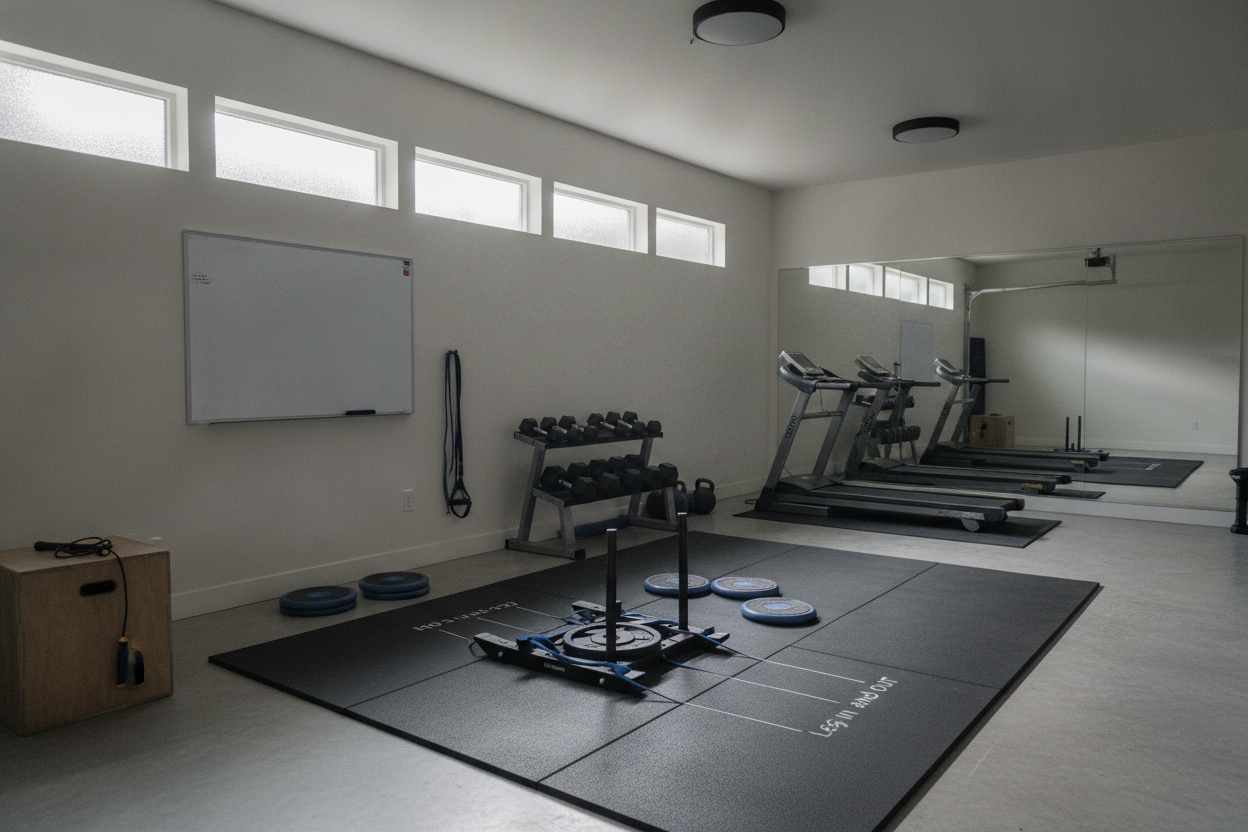
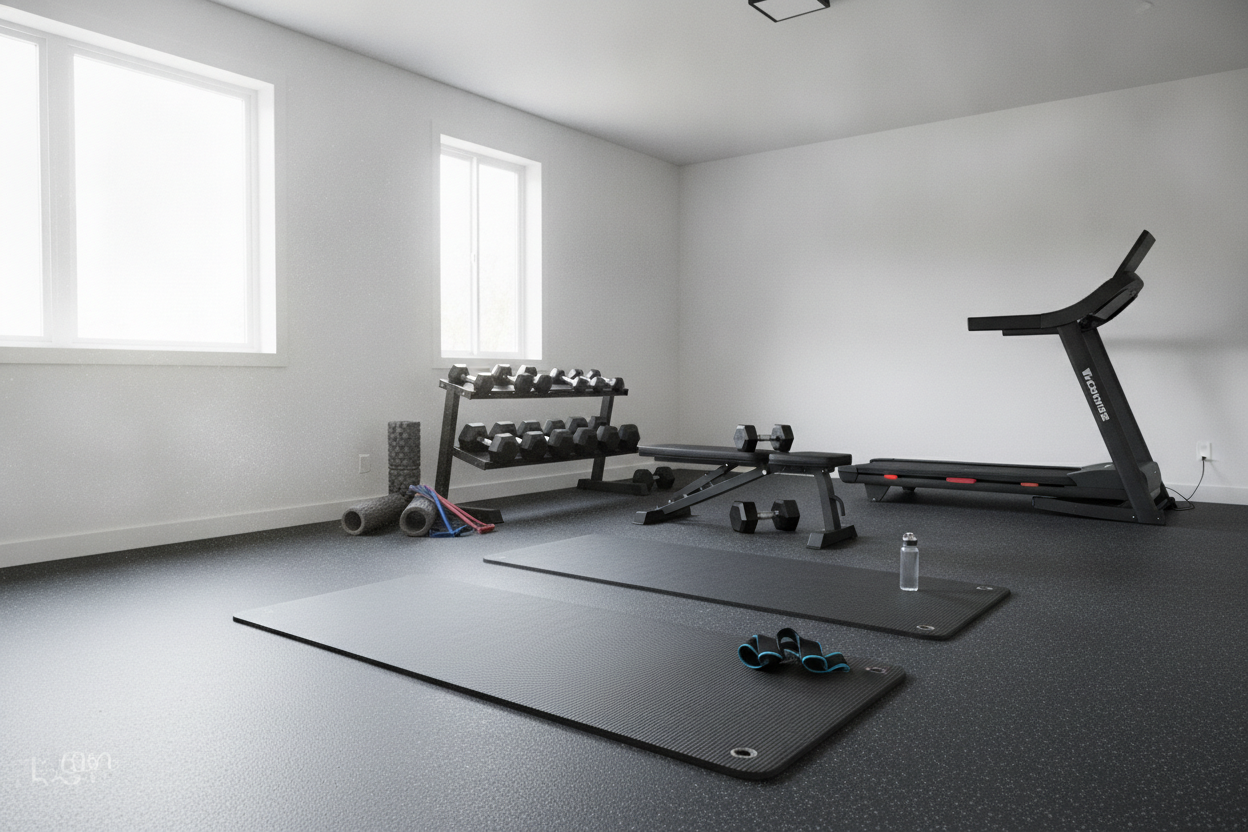
Space is your biggest asset here. Attempting complex movements on a tiny, slippery yoga strip is frustrating and dangerous. I found that having a large exercise mat for your home gym allows you to transition from lunges to lateral shifts without constantly resetting your feet or falling off the edge. When you have 48 square feet of high-density foam, you can actually focus on the contraction rather than whether your heel is going to slip on the hardwood.
The Routine: 4 Floor Moves to Fry Your Quads and Hamstrings
Here is the core of the routine. Perform these as a circuit or back-to-back with 60 seconds of rest. First, the Nordic Hamstring Curl. This is the king of floor mat leg exercises. Anchor your heels under a heavy couch or a specialized bar and lower your torso as slowly as possible. Your hamstrings will feel like they're about to snap—in a good way.
Second, the 1.5-rep Bulgarian Split Squat. Place one foot behind you on the mat or a low step. Go all the way down, come halfway up, go back to the bottom, then stand all the way up. That’s one rep. I've found that doing leg exercises on a 6x4 mat gives me the perfect amount of landing zone for my front foot while keeping my back knee cushioned.
Third, sliding leg curls. If your mat is smooth enough, use a towel or sliders. Lie on your back, hips up, and pull your heels toward your glutes. Finally, finish with sissy squats on the mat—leaning back while keeping your hips forward to torch the quads. These mat leg workouts aren't about the weight; they're about the torture you can put your muscles through in a small space.
Glute Exercises on Mat That Don't Feel Like Fluff
Most people think glute exercises on mat are just for physical therapy. Tell that to someone doing 50 banded frog pumps. By placing a heavy resistance band just above your knees and pressing the soles of your feet together, you isolate the glutes in a way a barbell hip thrust rarely does. This is a staple for any serious glute workout on mat.
I also swear by single-leg hip thrusts with a 3-second hold at the top. Because you don't have the stability of a bench, your glute medius has to fire like crazy just to keep your hips level. These mat glute exercises build the kind of functional stability that actually carries over to your heavy lifts once your back is healed. Don't call them fluff until you've done three sets of 20 with zero rest between legs.
Setting Up Your Space for Heavy Floor Work
Let's talk gear. You cannot do a serious leg workout on mat using one of those flimsy 1/4-inch foam pads from a grocery store. You'll bottom out, your knees will ache, and the mat will bunch up under your feet during lateral movements. I learned this the hard way after a sliding lunge sent my cheap mat flying across the room and my knee directly into the concrete.
If you're serious about floor-based training, you need something with real mass. A heavy-duty 6x8ft exercise mat is thick enough to absorb the impact of a 200-lb human but firm enough that you don't lose your balance. It stays put, it doesn't tear when you're wearing shoes, and it turns any corner of your house into a professional-grade training zone. Invest in the surface, and the results will follow.
FAQ
Can I really build muscle without a squat rack?
Absolutely. You build muscle through tension, metabolic stress, and muscle damage. You can achieve all three with bodyweight and a mat by using slow eccentrics, high reps, and limited rest. It's not easier—it's just different.
Will a mat leg workout help my lower back?
Usually, yes. By removing the vertical load on your spine (axial loading), you allow your lower body to work while your vertebrae decompress. It's a great way to stay active during a deload or injury recovery.
What is the best thickness for a gym mat?
For floor mat leg exercises, look for 7mm to 10mm. Anything thinner won't protect your knees during lunges; anything thicker than 12mm might feel too 'squishy' and make you lose your balance during single-leg work.