Your Lower Back Hates Your Routine: Strength Training for Men Over 50
I remember waking up after a particularly aggressive Monday chest session a few years back and feeling like my lower back was held together by rusted hinges and prayer. It was a reality check I didn't want, but desperately needed. If you are still trying to run the same high-volume body-part splits you used in college, you are not building muscle; you are just paying your physical therapist's mortgage. Strength training for men over 50 is not about 'toning up' or slowing down—it is about shifting your strategy so you can keep lifting heavy without the chronic inflammation.
Quick Takeaways
- Prioritize recovery as much as the lift itself.
- Focus on compound movements with modified ranges of motion.
- Control the eccentric (lowering) phase to save your tendons.
- Build a home setup to avoid the ego-lifting pressure of public gyms.
Stop Pretending You're Still 22 (The Wake-Up Call)
The hardest part of strength training over 50 men face isn't the physical load; it is the psychological shift. You have to stop chasing PRs that existed thirty years ago. Your nervous system takes longer to bounce back, and your joints have a finite amount of 'redline' time left in them. But here is the good news: building dense, functional muscle is still 100% achievable.
I have seen guys in their mid-fifties put on more noticeable slab than guys in their twenties because they actually follow a plan instead of just 'winging it' on the bench. When you approach weight lifting for men over 50, you are trading raw intensity for consistency and precision. You do not need to destroy yourself to trigger hypertrophy; you just need to give the muscle a reason to stay.
The Core Rule: Compound Exercises for Men Over 50
Isolation moves like max-effort leg extensions or those weird cable flyes are fine for a pump, but they do not build the rugged durability you need. You need compound exercises for men over 50 that recruit multiple muscle groups. However, we have to be smart about the mechanics. Instead of back squats that compress your spine, I almost always recommend goblet squats or landmine squats.
The same goes for the chest. If your shoulders scream during a standard bench press, move to the floor press. By using the floor to stop your elbows, you get the pec activation without the extreme shoulder extension that tears up older rotator cuffs. Weight training for male over 50 athletes should prioritize these 'joint-friendly' versions of the big lifts. You get the same hormonal response and muscle growth without the three-day Ibuprofen chaser.
Building Your Setup Without Commercial Gym Crowds
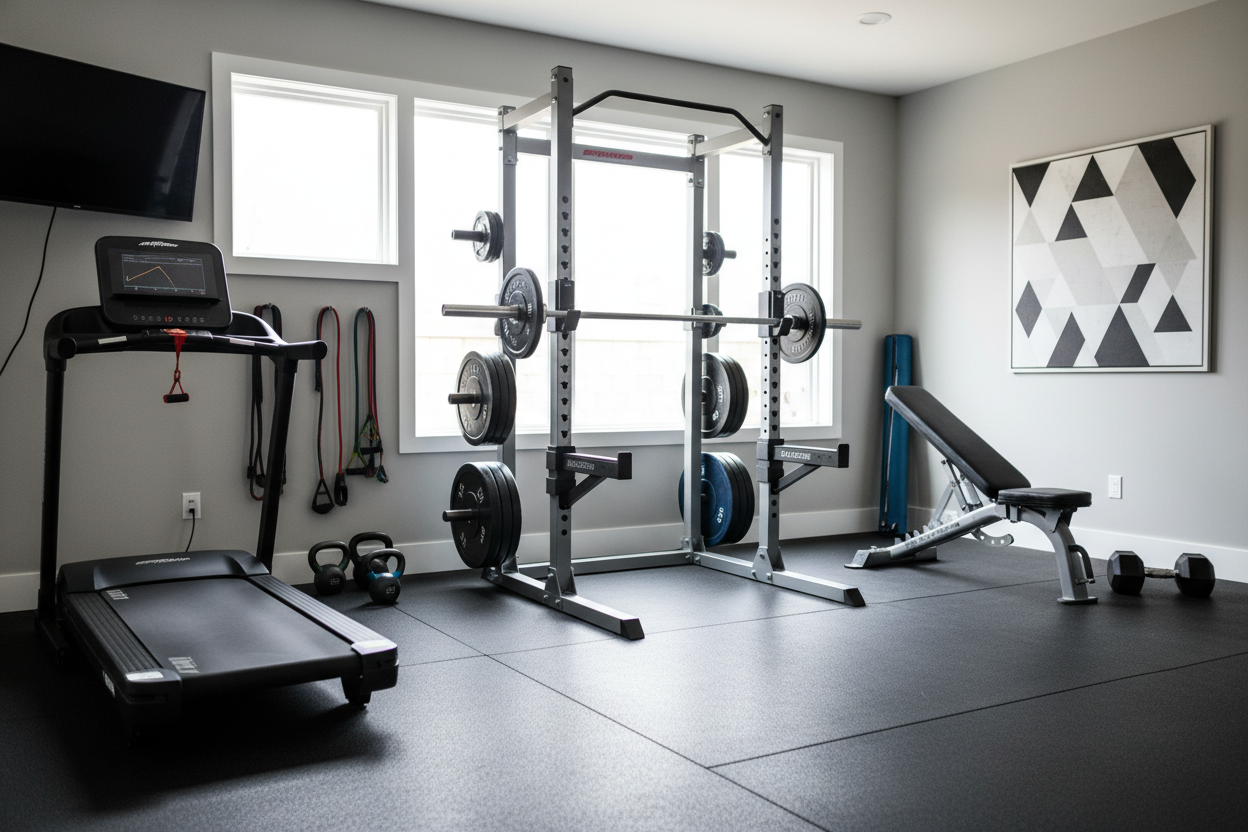
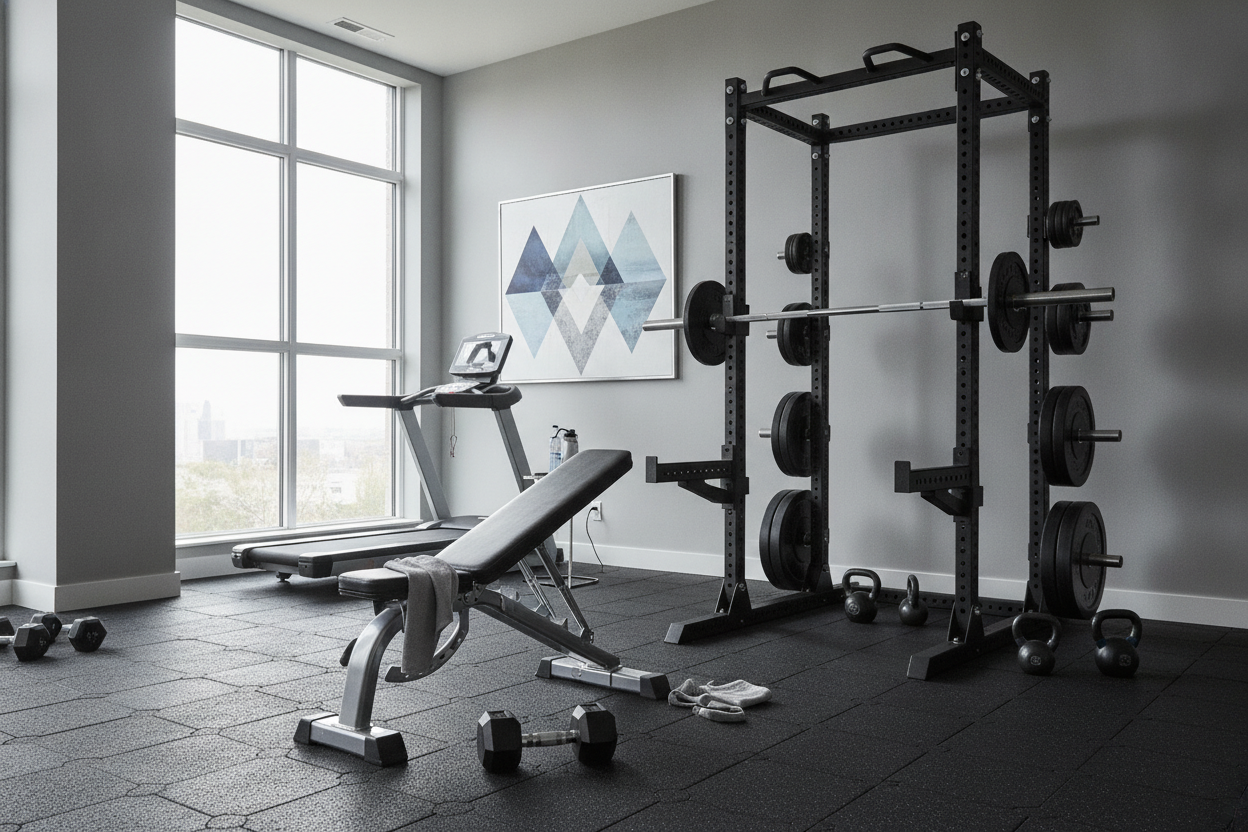
I stopped going to the local big-box gym because I got tired of waiting for a rack while some kid filmed a TikTok. Training at home allows you to control the environment, the tempo, and the safety. When you are weight training for men over 50, safety is your biggest performance enhancer. You cannot get strong if you are sidelined with a torn bicep.
If you have the space, I recommend a solid cage. The Gxmmat X6 Power Rack Weight Bench Package is a great example of a setup that handles heavy loads while providing the safety spotting arms you need when training solo. If you are still figuring out your floor plan, take a look at my guide on Choosing The Best Strength And Weight Training Equipment For Your Goals to avoid buying gear that will just end up as a clothes rack.
A No-Nonsense Weight Lifting Routine for Men Over 50
Forget the six-day-a-week grind. A three-day full-body split or a four-day upper/lower split is the sweet spot for a weight lifting routine for men over 50. Focus on four main movements: a hinge (deadlift variant), a squat, a push, and a pull. For your push movements, using a Gxmmat Adjustable Weight Bench allows you to hit incline presses, which are generally much kinder to the shoulder girdle than flat pressing.
Try this template: 3 sets of 8-12 reps. Why that range? It is heavy enough to spark a muscle building workout for men over 50 but light enough that you can maintain perfect form. Focus on a 3-second lowering phase. This 'time under tension' is what builds muscle, not the momentum of throwing the weights around like a caveman.
Recovery is Where the Magic Actually Happens
In my thirties, I could survive on six hours of sleep and a protein shake. Now? If I miss my sleep window, my lifts the next day are garbage. Your weight workout for men over 50 only works if you provide the raw materials for repair. This means hitting at least 0.8 to 1 gram of protein per pound of body weight. It sounds like a lot, but your muscles literally cannot rebuild without it.
Don't skip the mobility work either. Ten minutes of foam rolling or dynamic stretching before you touch a barbell isn't 'extra'—it is part of the session. Think of it as warming up the oil in a classic car before you take it out on the highway.
Personal Experience: My $1,200 Mistake
A few years ago, I bought a cheap, bolt-together power rack because I wanted to save a few hundred bucks. The first time I racked 315 lbs, the whole thing swayed like a willow tree in a hurricane. I realized then that when you are older and heavier, you cannot skimp on the gauge of the steel. I ended up selling it for half what I paid and buying a 14-gauge steel rack that actually felt planted. Buy once, cry once—especially when your safety is on the line.
FAQ
Is it too late to start lifting at 55?
Absolutely not. Research shows that even men in their 80s can increase muscle mass and bone density through resistance training. Start slow, focus on form, and you will see progress.
Should I do cardio or weights first?
Weights first. You want your central nervous system fresh for the heavy lifts. Save the walking or rowing for the end of the session or an 'off' day.
How do I know if I'm lifting too heavy?
If your form breaks down or you feel a 'sharp' pain rather than a 'dull' muscle burn, back off. At this age, a three-month injury layoff is a much bigger setback than lifting 10 pounds less today.