Your Carpet Is Ruining At Home Working Out (Here's the Fix)
I remember the day I finally quit my overpriced commercial gym. I thought I'd save ninety minutes a day and hundreds of dollars a year. Instead, I spent the first month staring at a pile of laundry next to my yoga mat, trying to find the motivation to move. at home working out sounds like a dream until you're actually trying to hit a PR three feet away from where you eat cereal.
The truth is, most people fail at doing workout at home because they treat it like a hobby rather than a discipline. Your house is designed for comfort, not for grit. If you want to succeed, you have to stop trying to 'fit in' a session and start building a environment that demands effort.
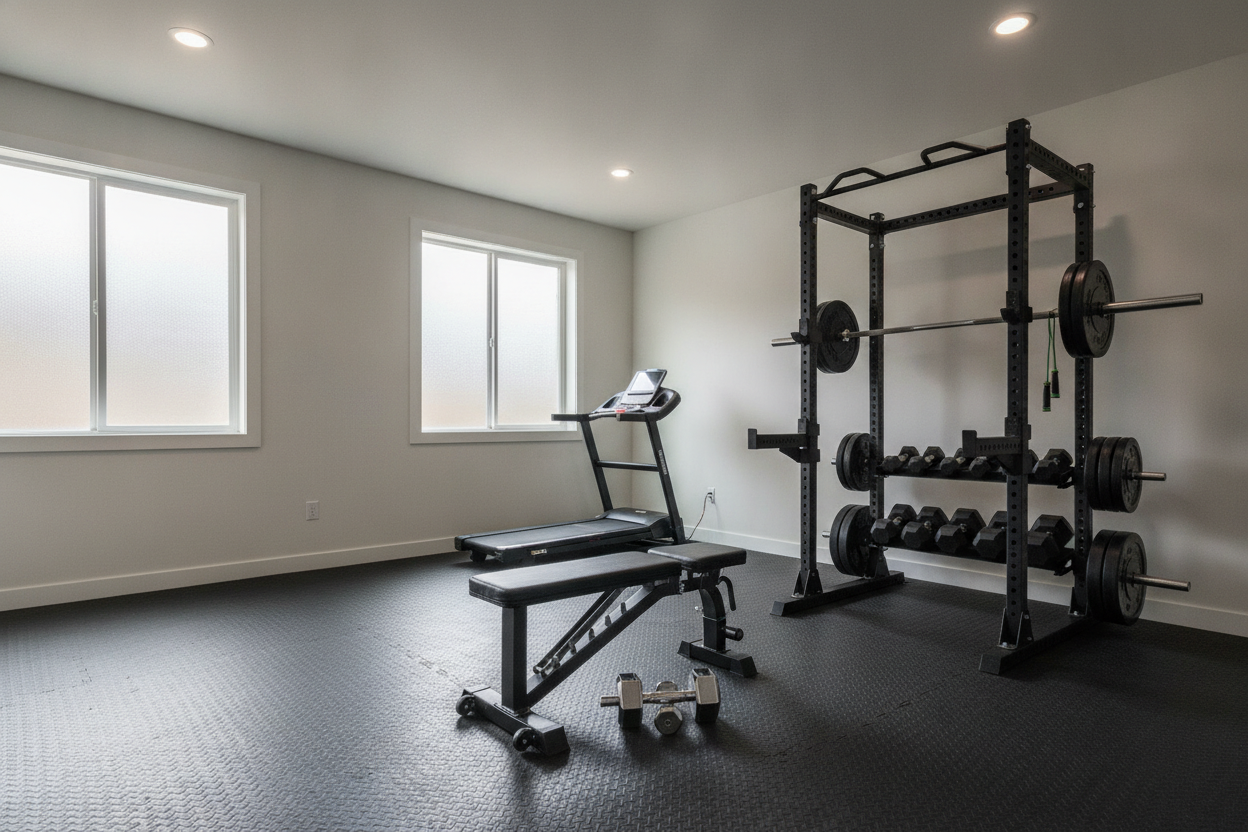
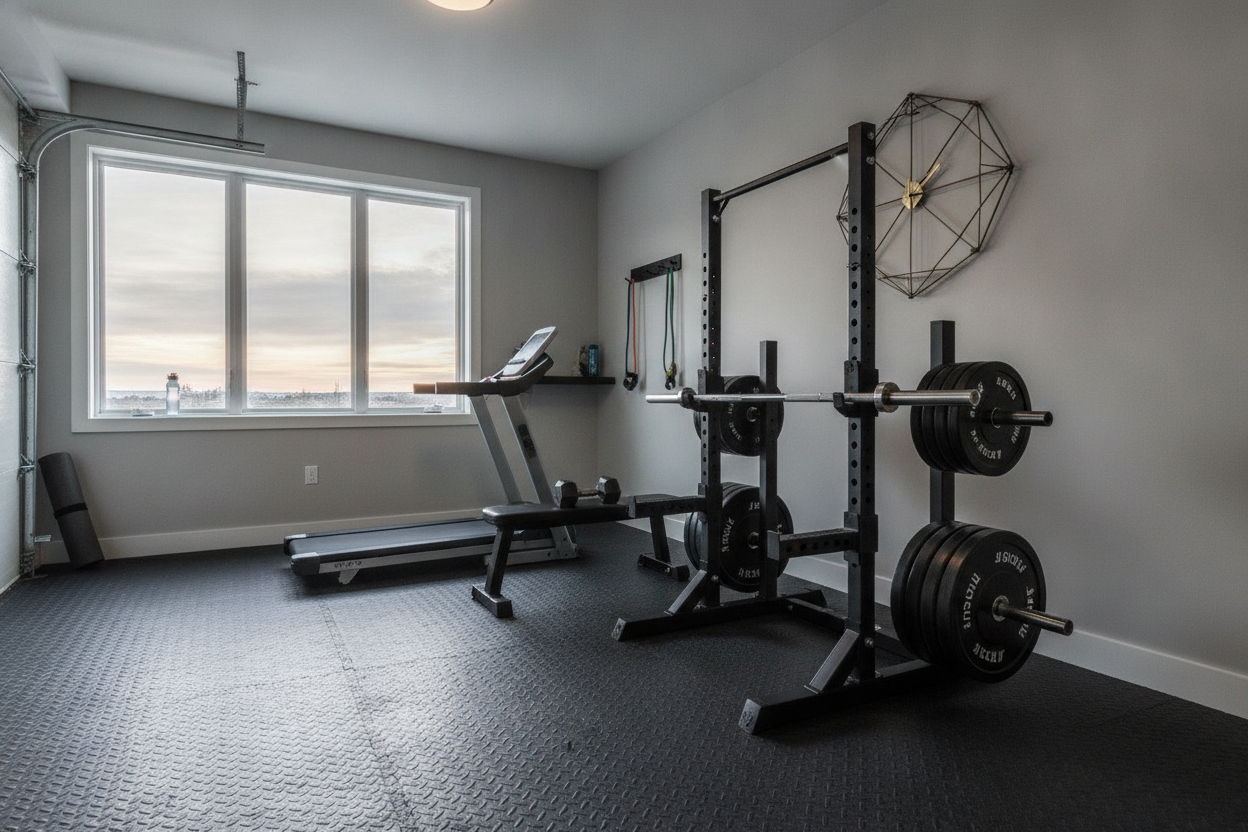
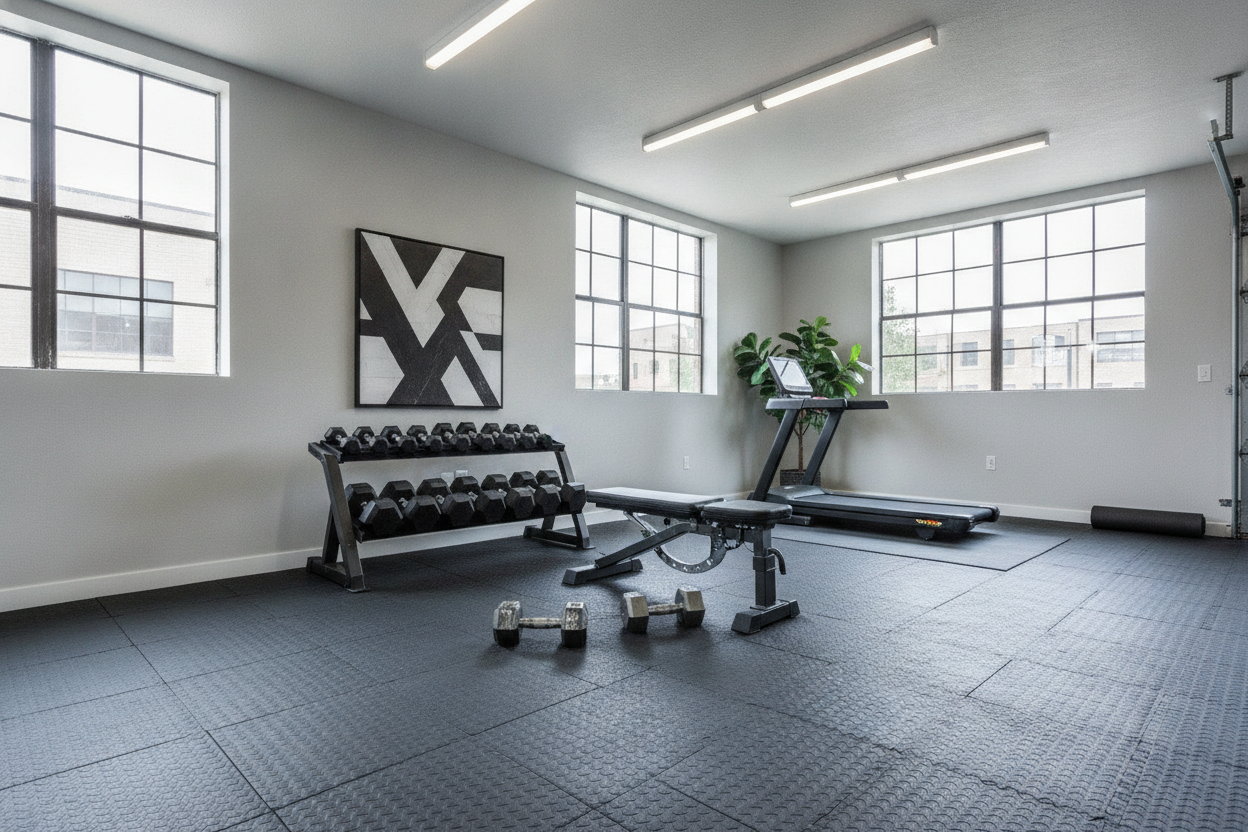
- Ditch the Carpet: Stability is the foundation of force; squishy floors kill your progress.
- Lighting Matters: Dim living room lights keep your brain in 'relax mode.'
- Buy for Growth: Stop purchasing light weights you'll outgrow in a month.
- The Ritual: You need a mental 'commute' to separate your life from your lifts.
The Commercial Gym Illusion (Why Your Living Room Sucks)
Ever wonder why you can crush a leg day at the local powerhouse but feel like a sloth when gyming at home? It isn't just the fancy machines. Commercial gyms are psychologically engineered to make you train. They use high-contrast lighting, mirrors for visual feedback, and a specific spatial layout that triggers 'workout mode' the second you badge in.
When you're trying to figure out how to workout at home, you're usually fighting your own furniture. Your brain associates the couch with Netflix, not heavy lunges. This is exactly why exercise in a gym feels different—the environment does half the work for you. To fix this, you need to carve out a dedicated zone that is off-limits for anything other than sweat.
Stop Slipping on the Carpet (Your Floor Is the First Problem)
If you're how to exercise in the house on a plush rug or bare hardwood, you're asking for a sub-par session. You cannot generate force if your feet are sliding or sinking into 2-inch pile carpet. It’s not just about comfort; it’s about proprioception. Your brain won't let your muscles fire at 100% if it feels like your ankles are on ice.
I’ve seen too many people try how to home exercise on surfaces that lead straight to a rolled ankle. The fix is a high-traction, high-density surface. A dedicated 6x8ft exercise mat provides enough 'real estate' to move without falling off the edge. It protects your subfloor from dropped weights and, more importantly, gives you the grip needed for explosive movements.
The 'Good Enough' Equipment Trap
One of the biggest hurdles in how to home workout is the 'toy' equipment trap. People buy those colorful, 5-lb neoprene dumbbells and wonder why they don't see results. If you want to know how can i workout at home effectively, you have to buy gear that scales. You need resistance that actually challenges your central nervous system.
Instead of a pile of cheap plastic, invest in a few heavy hitters. If you're tight on space, a large exercise mat for home gym use can serve as your anchor point for a set of adjustable dumbbells or a heavy kettlebell. This setup allows for home fitness exercises that actually build muscle, like goblet squats and overhead presses, without taking up a whole bedroom.
How to Program for the Space You Actually Have
You don't need a 2,000-square-foot garage to get fit. You just need to understand best ways to workout at home using mechanical tension. If you don't have a rack for heavy back squats, you do rear-foot elevated split squats until your quads scream. ways to exercise at home are about adaptation, not imitation.
For those in small apartments, a 6x4ft yoga mat is the minimum viable space for a solid session. You can perform almost any way to workout at home—from burpees to core work—within that footprint. The key to how can i do exercise at home is consistency over equipment variety. Pick five movements, master them, and add weight or reps every single week.
You Still Have to 'Commute' to Your Workout
The hardest part of how to do a home workout isn't the physical effort; it's the mental shift. When your 'gym' is ten feet from your bed, the temptation to skip is massive. You need a ritual. Put on your lifting shoes. Fill your water bottle. Turn off your phone notifications. Even if you're just doing workout at home in a spare room, you have to mentally leave the house.
My personal exercise guide at home always starts with music. The second the headphones go on, the house disappears. This is the only way to work out at home that actually lasts more than a week. Treat your training time as an appointment that cannot be moved, and your fitness in home training will finally start yielding the results you used to get at the commercial gym.
Personal Experience: My $400 Mistake
When I first started how to do exercise at home, I bought a cheap, wobbly pull-up tower from a big-box store. I thought I was being thrifty. Every time I used it, the thing creaked and tipped. I ended up avoiding my back workouts because I didn't trust the gear. I eventually trashed it and bought a wall-mounted bar. The lesson? If your equipment feels like a toy, you’ll treat your workout like a game. Buy gear that feels solid, and you’ll train solid.
FAQ
How much space do I really need for a home gym?
You can get a full-body burn in a 6x4 foot area. As long as you can lie down flat and reach your arms out, you have enough room for 90% of home fitness exercises.
Is it possible to build real muscle at home?
Absolutely. Your muscles don't know if you're in a $10 million facility or your garage; they only know tension. If you provide enough resistance and eat enough protein, you will grow.
How do I stop my equipment from sliding on the floor?
Stop using thin yoga mats for heavy lifting. Use a high-density rubber mat with a non-slip backing. It’s the only way to stay planted during how to do home exercise sessions.