I Skipped Workouts for Years — Here Are My Real Exercise Tips at Home
I spent three years paying for a big-box gym membership I used twice a month. I told myself the 20-minute drive was the problem, but when I finally bought a pair of adjustable dumbbells, they just ended up as expensive doorstops under my bed. The reality is that getting exercise tips at home to actually stick requires more than just buying gear; it requires a complete psychological shift in how you view your living space.
Quick Takeaways
- Schedule your session like a doctor's appointment—no 'whenever I'm free' logic.
- Invest in a dedicated floor space to save your joints and your floor.
- Eliminate transition friction; if setup takes 10 minutes, you won't do it.
- Upgrade to heavy machinery once you can no longer hit failure within 12 reps.
The Dangerous Myth of 'Whenever I Have Time'
The biggest trap of the home gym is its proximity. You’d think having a rack 20 feet from your desk would make training easier. In reality, it makes it easier to procrastinate. When the gym is always there, there is no urgency. I’ve fallen into the trap of saying 'I'll just hit my sets after this email,' which turns into 'after dinner,' which turns into 'I'm too tired, I'll do it tomorrow.'
Consistency at home isn't about motivation; it's about rigid scheduling. You need to treat your home fitness tips like a mandatory meeting. If you train at 6:00 AM, the weights need to be ready at 5:59 AM. Without a hard start time, your home exercise tips will just become a list of things you meant to do but didn't. I've found that setting a literal alarm on my phone—one that I have to walk across the room to turn off—is the only way to beat the 'anytime' complacency.
Establish Physical Boundaries (Or Your Joints Will Pay)
Most people start their home workout tips by clearing a small patch of carpet in the living room. This is a mistake. Standard residential flooring is not designed for the shear force of a lateral lunge or the impact of a 200-lb human jumping. If you're training on hardwood, you're begging for shin splints. If you're on carpet, you're losing power because the fibers absorb the energy you should be using to drive through your heels.
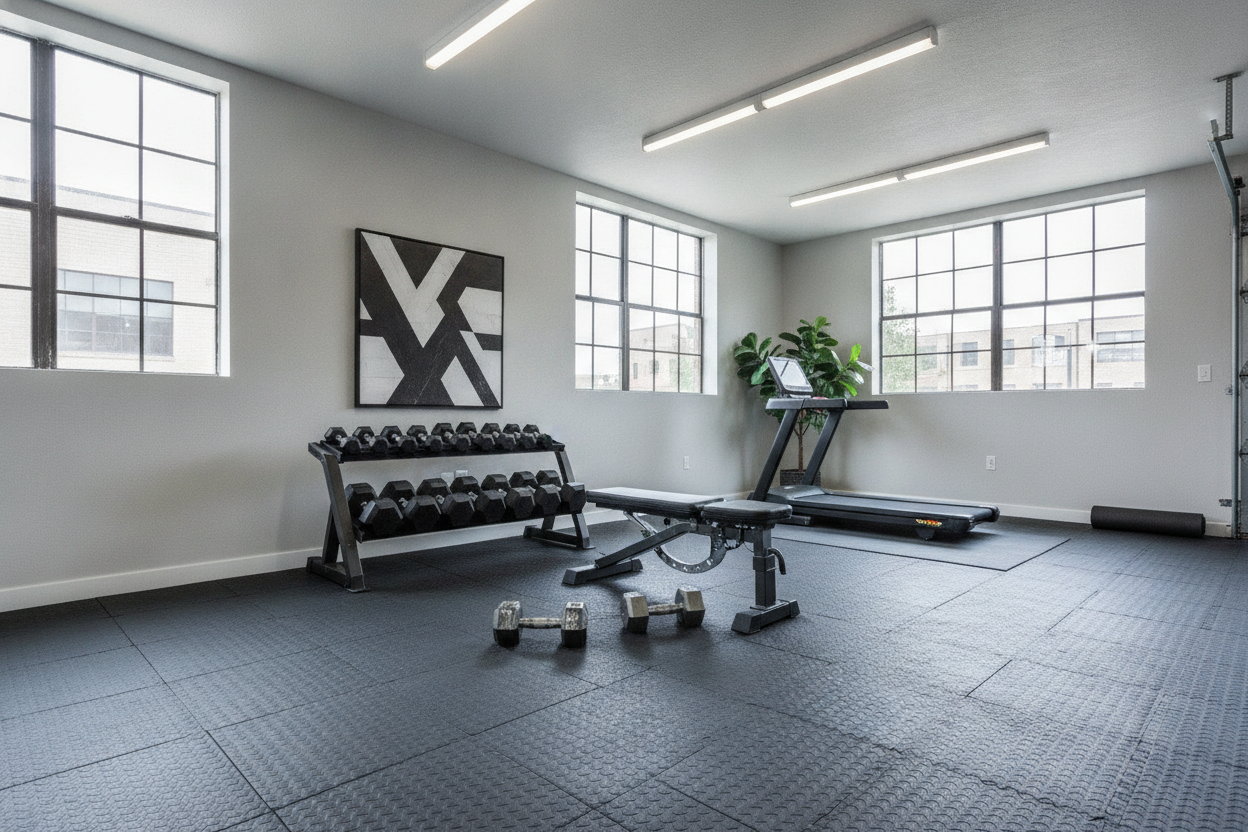
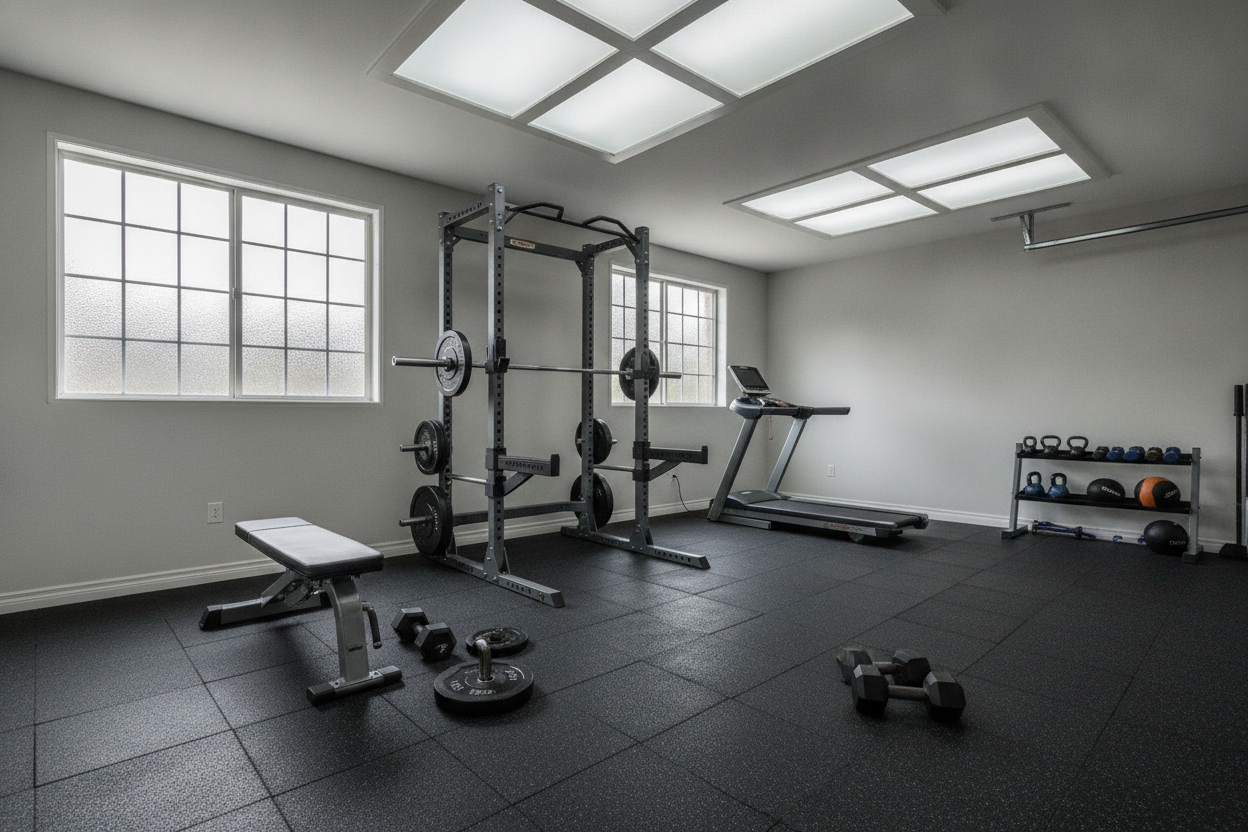
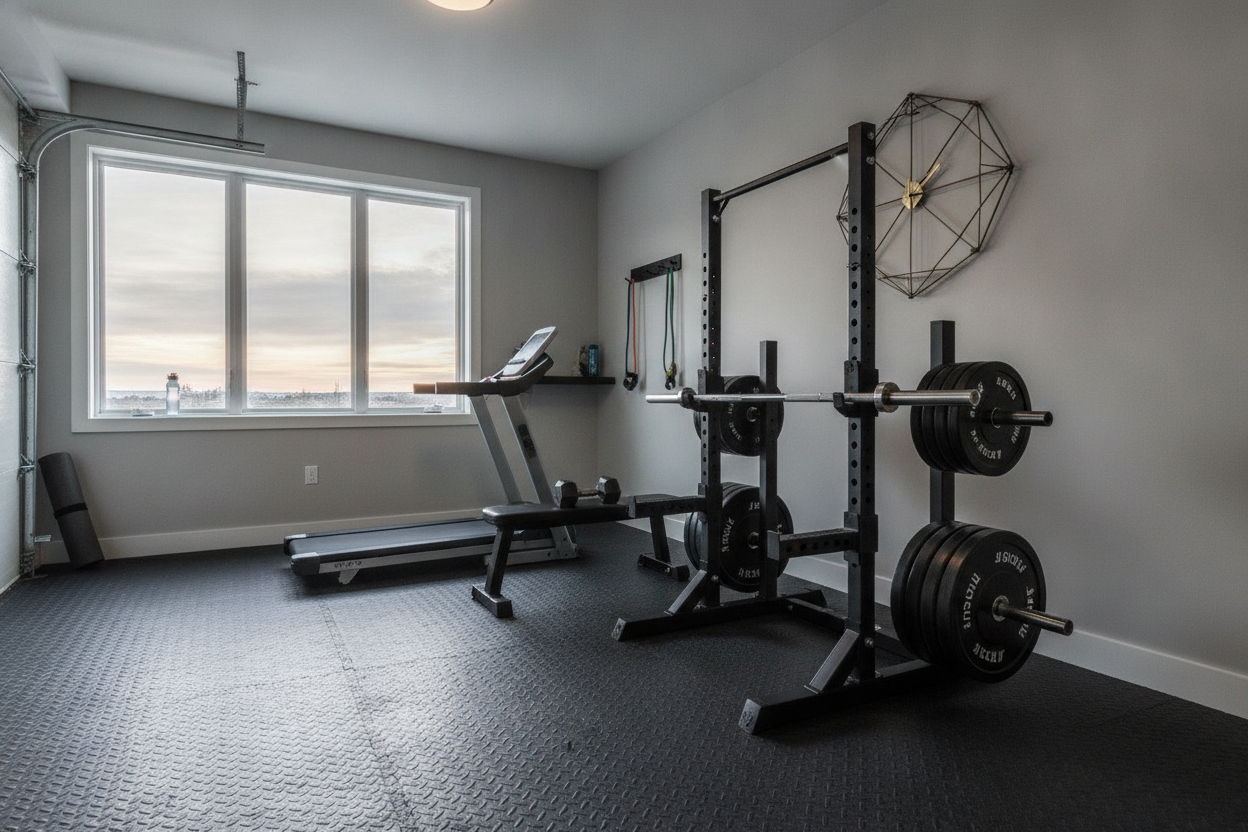
You need a dedicated training zone that provides actual grip and shock absorption. I personally use a 6x8ft exercise mat because it's the gold standard for a single-person footprint. It’s large enough for a full 7-foot barbell and gives you enough room to do burpees without your hands ending up on the cold tile. A high-density 7mm mat will save your subfloor from getting cracked and keep your knees from feeling like they’ve been hit with a hammer after a high-volume session.
Visual Cues: How to 'Claim' Your Lifting Space
Your brain is wired for environmental cues. When you walk into your kitchen, you get hungry. When you sit on your couch, you get sleepy. If you try to work out in the same spot where you eat chips and watch TV, your brain will constantly fight the urge to relax. You have to 'claim' a section of your house and make it look like a gym. This is one of the most overlooked tips for fitness at home.
Even if you're in a multi-use spare bedroom, laying down a large exercise mat for home gym use creates a visual boundary. It signals to your brain—and your family—that when you are on that rubber, you are at work. It’s a psychological 'do not disturb' sign. I’ve found that even just seeing the mat rolled out in the corner of my eye throughout the day acts as a silent nudge, reminding me that the space is ready whenever I am.
Mastering the One-Minute Transition
Friction is the silent killer of home fitness. If your workout requires you to move a coffee table, find your shoes in the closet, and hunt for your resistance bands, you’ve already lost. Every extra step is an opportunity for your brain to talk you out of it. The best way to workout at home is to make the transition as seamless as possible. I keep my gym shoes laced up and sitting right next to my mat.
The goal is to be able to start your today workout at home in under a minute. If you can go from 'sitting at my desk' to 'lifting my first warm-up set' in 60 seconds, your success rate will skyrocket. This is why I prefer fixed-weight dumbbells over plate-loaded ones for beginners—the less time you spend fiddling with collars and plates, the more time you spend actually working. Setup speed is a metric you should track just as closely as your bench press PR.
Knowing When to Upgrade Your Arsenal
Minimalism is great for building a habit. If you're just learning how to start gymming at home, a few bands and a kettlebell are plenty. But eventually, you'll hit a plateau. You can only do so many push-ups before you stop getting stronger and just start getting better at doing push-ups. Real progress requires progressive overload, and that usually means adding more iron or more complex resistance.
Don't be afraid to invest in 'real' equipment once you've proven you'll actually use it. If you find yourself doing sets of 30+ reps, you've outgrown your gear. That’s when you should look into the best at home exercise machines, like a functional trainer or a sturdy power rack. A machine that allows for 150+ lbs of resistance per side will do more for your physique than a decade of 'bodyweight hacks.' Buy once, cry once—invest in 11-gauge steel and hardware that won't wobble when you're under a heavy load.
My Personal Experience: The 'Basement Trap'
I once spent $500 on a fancy interactive bike thinking the screen would keep me motivated. It didn't. It became a very expensive laundry rack. The mistake I made was thinking the equipment would provide the discipline. I finally found success when I stripped everything back, bought a thick rubber mat, and moved my setup to the garage where it was cold and uncomfortable. The lack of comfort actually helped me focus. My advice? Don't buy the 'smart' gear until you've mastered the 'dumb' gear first.
FAQ
How do I stay fit at home with limited space?
Focus on vertical storage and multi-use gear. A 6x8 footprint is all you need for 95% of movements. Use adjustable dumbbells and a folding bench to maximize your square footage.
What is the most important piece of home gym equipment?
Flooring. If your floor is slippery or hard, you won't move with confidence. A high-quality rubber mat is the foundation for every other lift you do.
How do I properly workout at-home without a coach?
Record your sets. Your phone's camera is your best friend. Compare your form to reputable lifters online to ensure you aren't rounding your back or cutting your depth short.