You Use the Wrong Metrics to Define Muscle Strengthening Activities
I recently saw a government health brochure that suggested 'carrying heavy groceries' as a primary way to define muscle strengthening activities. I laughed, then I felt bad for the person who actually follows that advice and wonders why their physique hasn't changed in three years. If carrying a bag of milk from the car to the kitchen was enough to trigger hypertrophy, every suburban dad would look like a Greek god.
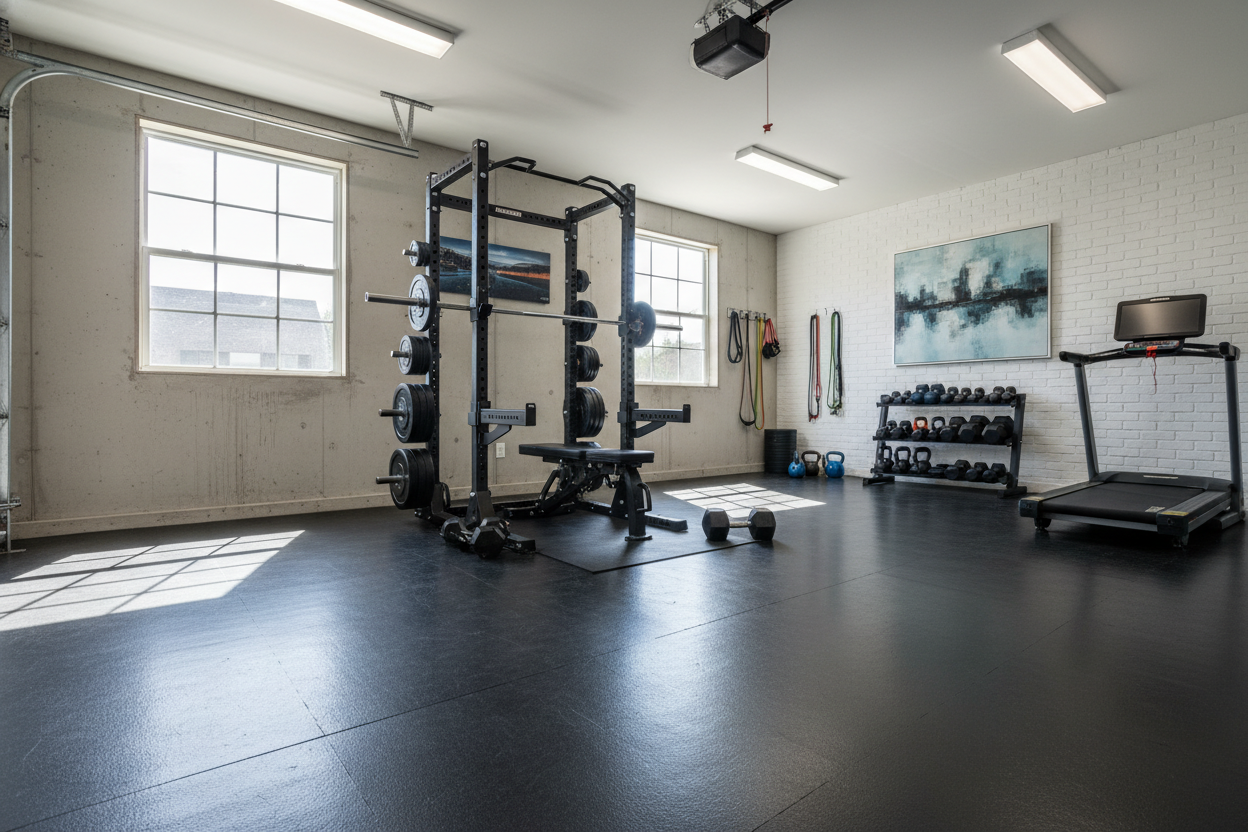
The truth is that most mainstream advice is designed for the lowest common denominator. It is meant to keep you from dying of total atrophy, not to help you build a body that can actually move weight. When I first started my garage gym, I fell for the 'just keep moving' trap. I did high-rep circuits with light dumbbells and wondered why my bench press stayed stuck at 185 pounds. I was sweating, sure, but I wasn't getting stronger.
Quick Takeaways
- Muscle strengthening requires mechanical tension, not just a high heart rate.
- Intensity is measured by your proximity to failure, not your sweat levels.
- Stability is a prerequisite for force production.
- If your rep speed doesn't naturally slow down, the set wasn't heavy enough.
The Vague Advice That Keeps Everyone Weak
Mainstream fitness magazines and health guidelines love to tell you to 'lift weights twice a week.' They never tell you how hard to lift them, what the tempo should be, or how to know if you're actually making progress. This lack of specificity is why people spend decades 'working out' without ever looking like they lift. They are performing movement, but they aren't performing muscle-strengthening activities.
To the average person, any activity that makes your muscles feel 'tight' or 'tired' qualifies. But the biological reality is much more demanding. Your body is an efficient machine that hates carrying extra muscle because muscle is metabolically expensive. It will only build more if you give it a reason that it cannot ignore. Doing 20 reps with a weight you could have moved 40 times isn't a reason; it's a waste of time.
So, What Is Muscle Strengthening Exercise, Actually?
If you want to know what is muscle strengthening exercise, you have to look at mechanical tension. This is the force created when a muscle fiber is stretched and then asked to contract against a significant load. This tension signals to your cells that the current structure is insufficient. It triggers the repair and growth process that actually leads to gains.
Moving a joint through its range of motion is just mobility. If I swing my arm in a circle, I'm moving. If I hold a 50-lb dumbbell and perform a controlled bicep curl, I am challenging the tissue. The difference is the load. Progressive overload—the act of adding a little more weight or one more rep every week—is the only way to ensure that the tension stays high enough to force an adaptation.
I have seen people spend $5,000 on a fancy cable machine only to use it for 'toning' exercises that don't even make them strain. You don't need the most expensive rack in the world, but you do need to understand that if the last rep feels as easy as the first, you aren't doing a strength activity. You're doing a low-intensity cardio session with handles.
The Secret Sauce: Muscle Strengthening Intensity
We need to talk about muscle strengthening intensity. This isn't about how loud the music is in your gym or how much you're grunting. It is a specific metric often measured by RPE (Rate of Perceived Exertion) or RIR (Reps in Reserve). If you finish a set of 10 and feel like you could have done 5 more, your RPE is a 5. For muscle growth and strength, you generally need to be in the RPE 8 to 10 range.
Doing 50 reps with a soup can or a 5-lb pink dumbbell might make your shoulders burn, but that burn is mostly metabolic stress and lactic acid buildup. It is not the same as the mechanical tension required for strength. High-threshold motor units—the ones responsible for the biggest strength gains—only get recruited when the load is heavy or when the muscle is nearing total fatigue.
In my own training, I wasted months doing 'AMRAP' sets with weights that were far too light. I thought the 'burn' was the goal. I eventually realized that I was just getting better at enduring discomfort, not getting stronger. Now, I pick a weight that forces me to fight for that 8th or 10th rep. That is where the actual 'strengthening' happens.
3 Rules to Audit Your Garage Gym Routine
Stop guessing if your workout is working. Use these three non-negotiable rules to determine if your routine actually counts toward your goals. If you can't check these boxes, you're just exercising; you aren't training.
Rule 1: It Demands External Resistance
Your body weight is a great starting point, but eventually, you become too efficient at moving it. To keep the intensity high, you need external resistance. This could be a 300-lb Olympic set, a pair of heavy adjustable dumbbells, or even high-tension resistance bands. The load must be significant enough that you cannot perform it indefinitely. If you can do more than 20-25 reps of a movement, it is time to add weight.
Rule 2: It Requires Absolute Stability
You cannot produce maximum force if you are wobbling. This is why I hate those 'core' workouts where people stand on Bosu balls while trying to overhead press. Your brain will literally shut down your muscle output if it feels like you are going to fall over. I always make sure my feet are planted on a high-quality large exercise mat 6x4 to ensure I have a non-slip, stable base. A dense mat allows you to drive your heels into the floor during a heavy squat or deadlift without the floor 'giving' under you.
Rule 3: The Reps Actually Slow Down
This is the ultimate 'tell' for a real strength set. When you are working at a high enough intensity, your nervous system struggles to keep up. Even if you are trying to move the bar as fast as possible, the actual velocity of the weight will slow down during the last few reps. This is called involuntary rep slowing. If every rep in your set looks identical in speed from 1 to 12, you didn't work hard enough.
Stop Blurring the Lines Between Modalities
People love to combine everything into one 'functional' soup. They want to get strong, lose fat, and improve their cardio all in the same 20-minute window. While circuit training is great for general health, it often dilutes the results of your strength work. Elevating your heart rate is excellent for your heart, but it completely changes how we define muscle strengthening.
If you are too out of breath to finish your set of lunges because your heart is racing, then your lungs are the limiting factor, not your legs. To get stronger, you need to rest enough between sets so that your muscles can perform at their peak. Keep your cardio and your lifting separate. Your garage gym is a place for progress, not just a place to get tired.
Personal Experience: The 'Light Weight' Mistake
A few years ago, I dealt with a nagging shoulder injury. Out of fear, I dropped all my weights and switched to high-rep 'rehab' style movements. I did hundreds of reps of band pull-aparts and light lateral raises. Six months later, my shoulder didn't feel any better, and I had lost significant muscle mass. It wasn't until I went back to heavy, stable, controlled presses—starting with just the bar and slowly adding plates—that my shoulder actually stabilized. I learned the hard way that 'easy' isn't the same as 'safe' or 'effective.'
FAQ
Is bodyweight exercise considered muscle strengthening?
Yes, but only if the movement is difficult enough to put you near failure within 5 to 20 reps. Once you can do 50 pushups, they become more about endurance than strength. You'll need to find a harder variation, like feet-elevated or one-arm pushups.
How many times a week should I do strength training?
For most people, 2 to 4 sessions per week is the sweet spot. The key is giving each muscle group about 48 hours to recover between intense sessions. It's not about the frequency; it's about what you do during those sessions.
Does soreness mean I had a good strength workout?
Not necessarily. Soreness (DOMS) is often just a reaction to a new movement or a lot of eccentric (lowering) work. You can be incredibly sore from a workout that didn't actually build much strength, and you can get much stronger without being sore at all.