You Only Need 3 Major Body Parts for Workout Sessions to Grow
I remember spending hours staring at a color-coded spreadsheet, convinced that if I didn't hit my serratus anterior and my long-head triceps on separate days, I was failing. I was buying every attachment for my power rack, trying to turn a 10x10 garage into a commercial health club. It was exhausting, and honestly, I wasn't getting any bigger. Most of us overcomplicate the list of body parts for workout routines because we've been conditioned to think more variety equals more growth.
Quick Takeaways
- Focus on three 'Hub' muscle groups to drive 80% of your progress.
- Stop treating every minor muscle as a standalone workout day.
- Compound movements are the most efficient way to hit multiple gym body parts at once.
- Recovery happens when you simplify, not when you add more sets.
The Spreadsheet Trap: Why Micro-Targeting Fails
The biggest mistake I see in home gyms is the attempt to replicate a 6-day pro bodybuilder split. Unless you have professional-grade recovery and four hours a day to kill, trying to isolate every tiny muscle group leads to a lot of junk volume. You end up doing three variations of lateral raises but your bench press hasn't moved in six months.
Micro-targeting usually results in central nervous system burnout. You're constantly 'on,' but you're never moving enough weight to actually trigger hypertrophy. In a garage gym setting, where you likely have a barbell, some plates, and maybe a bench, your goal should be density. You want to hit the most muscle mass in the shortest amount of time.
The Hub-and-Spoke System for Garage Gym Lifters
I transitioned to what I call the Hub-and-Spoke system. Instead of viewing your body as a collection of 20 different parts of the body to workout, view it as three major hubs. These hubs are the engines that move heavy weight. The 'spokes' are the smaller muscles that naturally assist those big movements.
When you organize your training this way, you stop worrying about a 15-item parts of the body to workout checklist. You focus on the hub, and the spokes take care of themselves. This approach saved my joints and finally let me add some real plate weight to my deadlift.
Hubs: The Primary Body Parts to Exercise First
Your hubs are the Chest (Pushing), the Back (Pulling), and the Legs (Squatting/Hinging). These are the body parts to exercise if you want to see a change in the mirror. If you spend 45 minutes destroying your back with heavy rows and pull-ups, your biceps have already done more work than three sets of concentration curls could ever provide.
For the lower body, focus on the essential lower body parts to workout: the quads, hamstrings, and glutes. A heavy set of back squats hits all of them. I used to waste time on leg extensions and calf raises before I even touched a barbell. Now, the barbell comes first, and if I have gas left in the tank, I'll play with the machines.
Spokes: The Minor Gym Body Parts You Can Hit Later
The 'spokes' are your arms, shoulders, and calves—the gym body parts that people obsess over. Here is the secret: these muscles exist to support the hubs. Your triceps are a spoke for your chest hub. Your forearms are a spoke for your back hub.
If you want to do isolation work, save it for the last 10 minutes of your session. Do two sets of curls or some face pulls and get out. Don't let these minor parts of body to workout cannibalize the energy you need for heavy compound lifts. I once spent a whole month prioritizing 'arm day' and my overhead press actually went down because my triceps were always too fried to stabilize the bar.
Figuring Out What to Hit at the Gym Each Day
The most common question I get is what to hit at the gym each day to stay balanced. If you're training at home, a 3-day or 4-day split is the sweet spot. For a 3-day split, go with the classic: Day 1: Push (Chest/Shoulders/Triceps), Day 2: Pull (Back/Biceps/Rear Delts), Day 3: Legs (Quads/Hams/Calves).
If you prefer a 4-day split, I recommend an Upper/Lower split. This allows you to hit every muscle group twice a week. On Upper days, you focus on the chest and back hubs. On Lower days, you crush the legs. This frequency is usually better for natural lifters who need that repeated stimulus to grow. Just make sure you aren't adding 10 isolation exercises to every day or you'll be in the gym for three hours.
Building Your Base: Equipment That Hits Everything
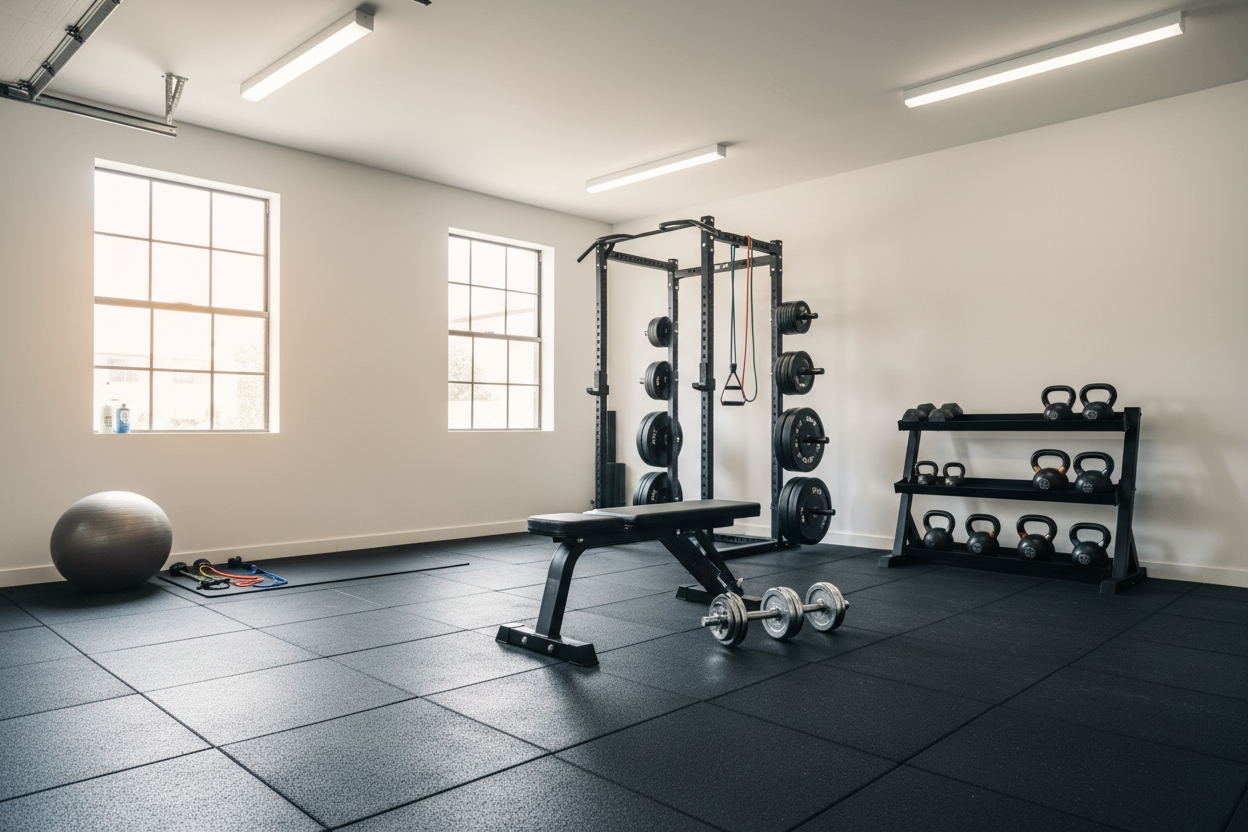
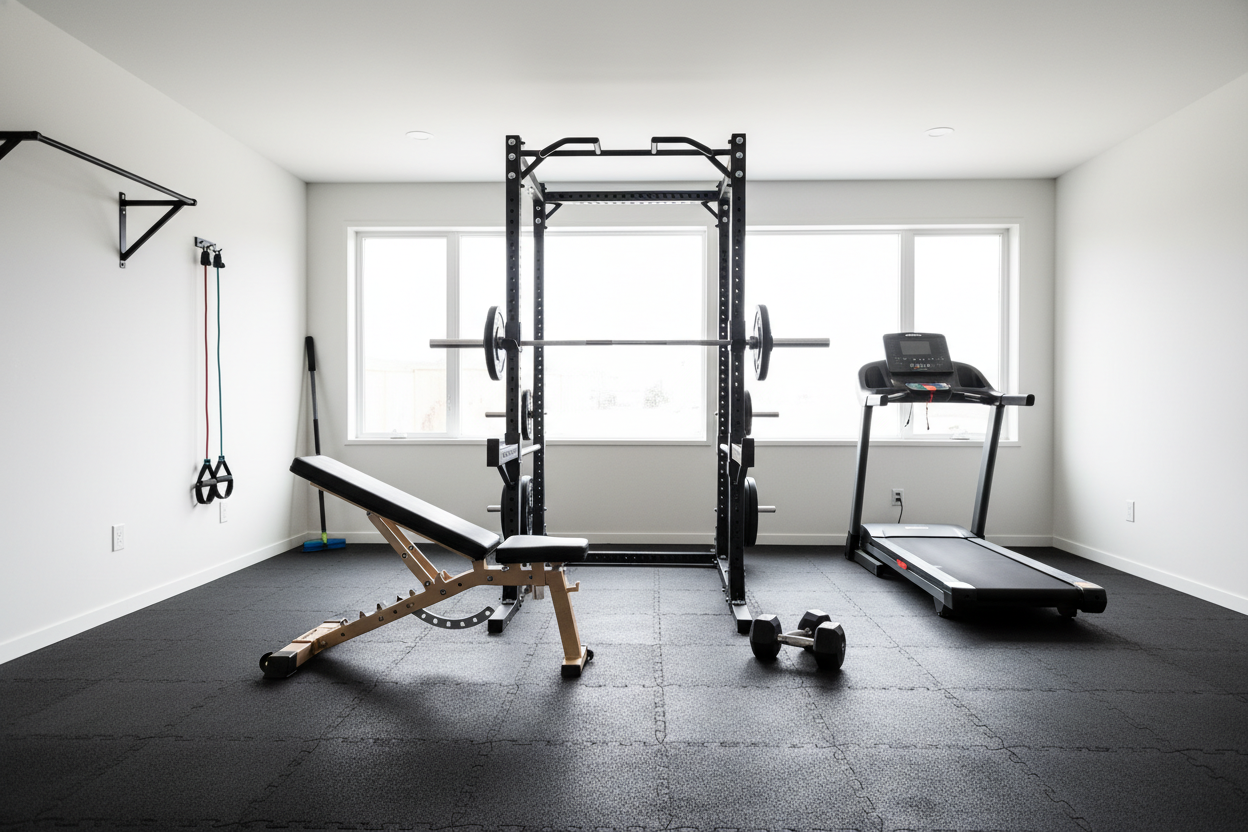
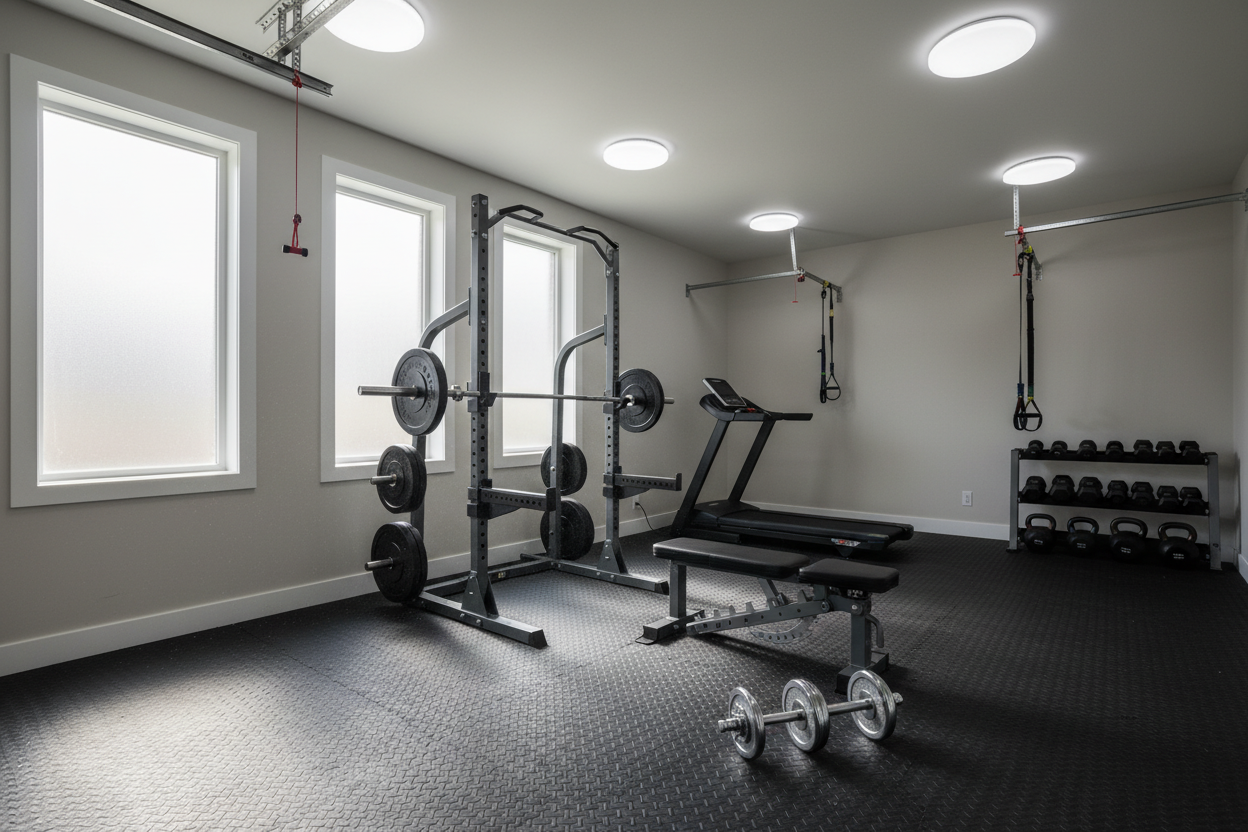
You don't need a 15-station cable jungle to hit all these body exercise parts. A solid power rack and a barbell cover 90% of your needs. However, the one thing people overlook is their floor. If you're doing heavy deadlifts or rows, you need a stable surface that won't compress or slide.
I cleared out a 6x8 ft section of my garage and laid down a large exercise mat for home gym use. It’s thick enough to handle a 300-lb bar drop without cracking the concrete. Having dedicated gym flooring for home workout sessions also gives you the grip you need for heavy split squats or lunges. If your feet are sliding, you aren't hitting the muscle; you're just trying not to fall over.
Stop Overthinking Your Gym Body Parts Workout
At the end of the day, a gym body parts workout is only as good as your intensity. You can have the most scientifically perfect list of body parts to workout, but if you aren't adding weight to the bar or reps to the set, you’re just exercising, not training. Simplify your routine down to the big hubs, move some heavy iron, and stop worrying about the minor details. The mass will follow the strength.
FAQ
How many body parts should I workout a day?
Focus on one major 'hub' (Chest, Back, or Legs) and two 'spokes' (Arms, Shoulders, or Calves). This keeps your sessions under an hour and ensures you have enough energy for the heavy stuff.
What are the 5 main body parts to workout?
Most people categorize them as Chest, Back, Legs, Shoulders, and Arms. However, if you group them into Push, Pull, and Legs, you can train more efficiently with fewer days in the gym.
Can I just do full body every day?
You can, but recovery becomes a nightmare once you start lifting heavy. A split usually works better for most people because it gives specific muscle groups 48-72 hours to actually repair and grow.