You Are Probably Overthinking the Best Gear for Gym Workouts
I remember staring at my gym bag three years ago and feeling a strange sense of guilt. It was packed to the gills with knee sleeves I barely used, a plastic 'waist trimmer' I bought during a late-night Amazon binge, and three different types of liquid chalk. I spent more time digging for the best gear for gym sessions than I did actually under the barbell. Most of us have been there—convinced that if we just find the right accessory, our plateau will magically disappear.
Quick Takeaways
- Stop buying 'gimmick' gear like weighted jump ropes and plastic sliders.
- Focus on the 'Core 3': Flat shoes, a leather belt, and basic grip support.
- For home gyms, high-density flooring is more important than a fancy rack.
- Effort and intensity will always outperform a bag full of expensive gadgets.
Why We Buy So Much Useless Fitness Junk
Gear Acquisition Syndrome (GAS) is a real disease in the lifting community. We see a professional athlete wearing a specific brand of compression pants or an elevation mask, and our brains trick us into thinking the gear is the secret sauce. Marketing departments are brilliant at this; they sell the image of the 'hardcore' athlete, and we buy the 12-piece mobility kit thinking it's one of the workout must haves for a 400-pound squat.
The truth is, most of that stuff is just noise. Beginners often walk into the gym looking like they’re ready for a tactical mission, yet they haven't mastered the mechanics of a basic hinge. You don't need a $200 pair of shoes to learn how to lunge. You don't need a vibrating foam roller to fix a bad posture issue caused by sitting at a desk for eight hours. We buy this junk because buying something feels like progress, whereas actually doing the hard work of a set of five feels like, well, work.
I’ve seen guys spend $500 on 'must-have' gadgets before they even hit a 135-pound bench press. It’s a distraction. If you’re spending more time adjusting your gear than you are resting between sets, you’ve fallen into the trap. Real progress is boring, and it usually requires very little equipment.
The Core 3: My Absolute Fitness Must Haves
If I had to strip my gym bag down to the bare essentials, there are only three items I’d keep. These are the actual fitness must haves that provide a measurable return on investment. First: flat-soled shoes. If you are squatting or deadlifting in running shoes with air bubbles in the heel, you are essentially standing on a bowl of marshmallows. You need a stable, non-compressible base like Chuck Taylors, Vans, or dedicated weightlifting shoes with a hard heel.
Second is a rigid leather belt. Forget those flimsy velcro belts you see at big-box retail stores. A 10mm or 13mm leather powerlifting belt gives your abs something solid to brace against, which stabilizes your spine under heavy loads. It’s not a 'crutch'—it’s a tool that allows you to safely move more weight by increasing intra-abdominal pressure. Third is grip support. Whether it's a block of chalk or a pair of high-quality lifting straps, you don't want your grip to be the limiting factor on a heavy set of rows or deadlifts.
I’ve found that focusing on these basics allows for much better focus during a session. Understanding full body workout gear what actually works is about realizing that less is often more. When you stop worrying about twenty different accessories, you can actually focus on the bar path and your bracing.
If You're Training at Home, Protect Your Foundation First
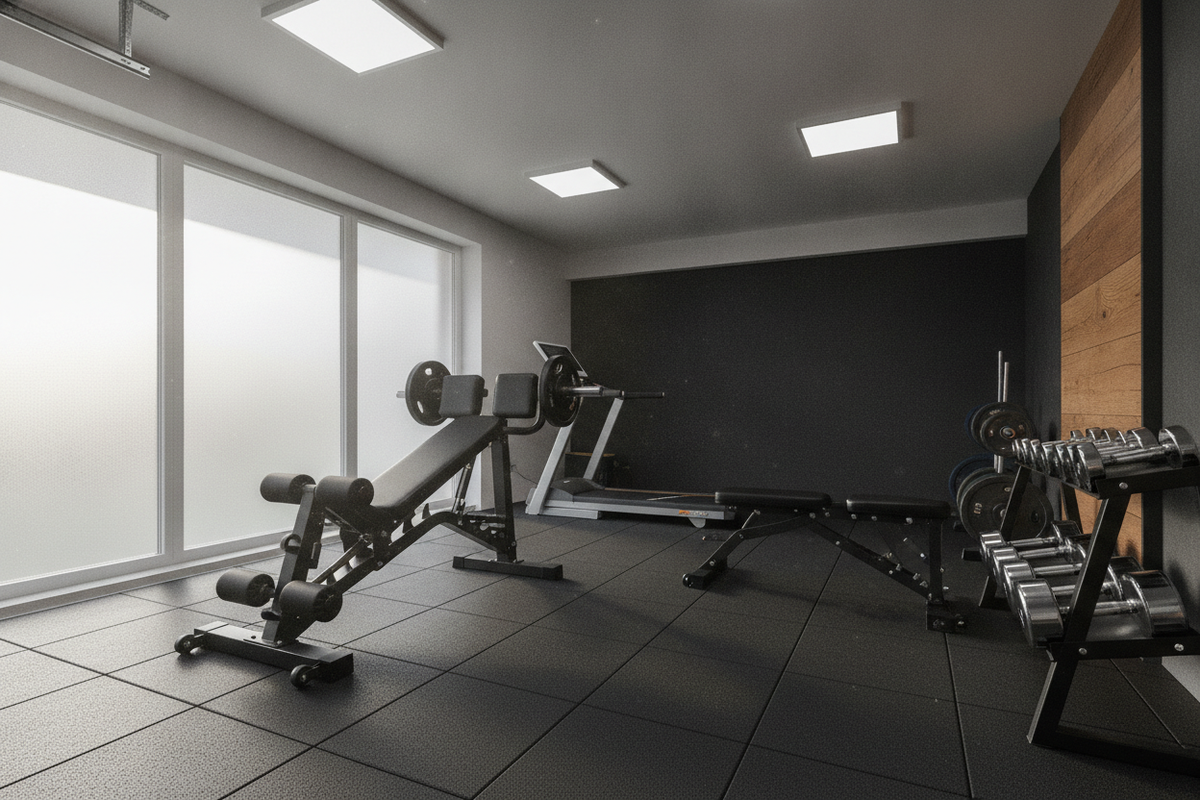
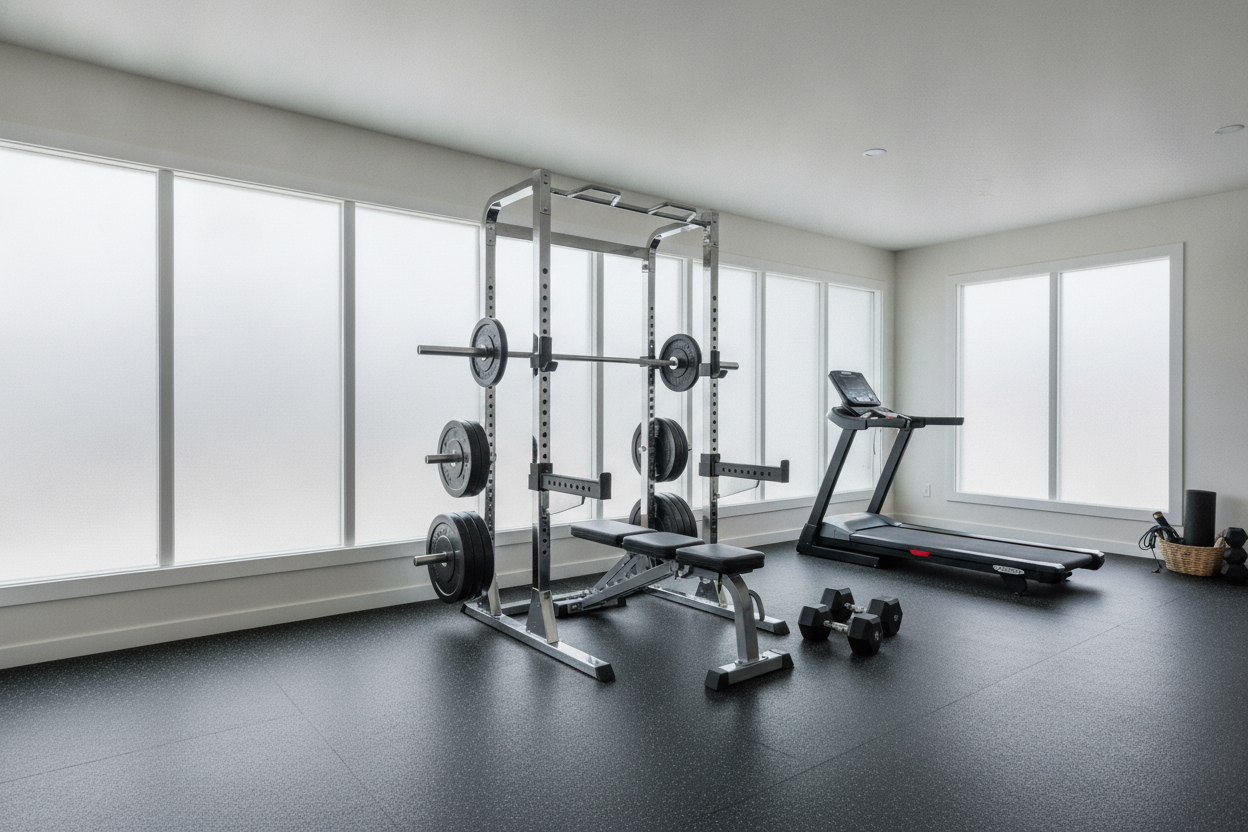
If you're building a space at home, I see people make the same mistake every time: they buy a $1,000 power rack and $800 worth of plates, then set them directly on their garage concrete or thin carpet. This is a recipe for cracked foundations and noise complaints. Before you buy the 'sexy' stuff, you need to invest in a heavy-duty gym flooring for home workout. I'm talking about high-density rubber that won't compress or shift when you're moving 300+ pounds.
A 6x8 ft space is usually enough for a standard rack and some room to move. Don't fall for the cheap foam puzzle mats; they are too soft and will slide around the moment you try to do anything explosive. You want something with a bit of 'grip' so your feet don't slip during a wide-stance squat. This is the ultimate must have equipment for home gym because it protects your house and your joints simultaneously.
I once tried to save money by using old horse stall mats that smelled like a tire fire for six months. It wasn't worth it. Get a dedicated fitness mat that is designed for indoor use. It’s the foundation of your entire training environment. If the floor is unstable, your lifts will be unstable. Period.
The 'Must-Have Workout Gear' You Can Actually Skip
Let’s talk about the must-have workout gear that is actually a total waste of money. Weighted jump ropes are high on the list. Unless you are a competitive cross-trainer, a standard $10 speed rope is all you need for conditioning. The 'weighted' versions often just mess with your mechanics and don't provide enough resistance to actually build significant muscle. Then there are plastic core sliders. They break, they only work on specific floor types, and you can get the same effect using a towel on a hardwood floor or just doing a standard plank.
I’d also tell you to skip the overly complex mobility gadgets. You don't need a $400 massage gun to warm up. A simple lacrosse ball and five minutes of dynamic movement will do more for your joint health than a vibrating piece of plastic ever will. Most of these items are designed to solve problems that don't exist for 95% of lifters. They take up space in your bag and mental energy in your brain. If it has 'As Seen on TV' vibes, leave it on the shelf.
Personal Experience: The Elevation Mask Mistake
I once spent $80 on one of those 'altitude' or elevation masks because I saw a highlight reel of a pro MMA fighter using one. I thought it would make my conditioning god-like. In reality, I just looked like a Batman villain in a suburban commercial gym, struggling to breathe while doing basic kettlebell swings. It didn't simulate altitude; it just restricted my airflow and made my workouts objectively worse because I couldn't maintain intensity. I eventually threw it in the trash. It taught me a valuable lesson: if a piece of gear makes it harder to perform the actual movement correctly, it’s not helping you.
Final Thoughts: Less Stuff, More Effort
At the end of the day, the must have fitness gear isn't something you can buy in a box. It's the willingness to show up when you're tired and the focus to execute every rep with perfect form. You can build a world-class physique with a pair of shorts, some flat shoes, and a heavy barbell. Don't let the 'gear junkies' convince you that you're missing out because you don't have the latest infrared-lined recovery sleeves. Pack light, keep your bag simple, and put that extra money toward high-quality food or a better gym membership.
Once you've cleared out the clutter and simplified your approach, you might find you have more energy to actually follow a structured plan. If you're looking for where to go next, check out our workout hub for programs that prioritize results over accessories.
FAQ
Do I really need a lifting belt?
If you're lifting heavy (usually 80% of your max or higher) on squats and deadlifts, a belt is a great safety tool. It helps you brace your core more effectively. If you're just doing machines and light dumbbells, you can skip it.
Are expensive gym clothes worth it?
Only if they make you feel confident enough to train harder. From a performance standpoint, as long as the fabric is moisture-wicking and doesn't restrict your range of motion, a $15 shirt works as well as a $70 one.
Can I just lift barefoot?
In a home gym, absolutely. It's great for foot strength. In a commercial gym, it's usually a hygiene violation. Stick to flat-soled shoes like Vans to get that 'close to the floor' feel without the health hazards.