Workout Rubber Mat: The Definitive Home Gym Protection Guide
You just bought a shiny new power rack or a high-end treadmill. You assembled it, stepped back to admire it, and then realized a critical error. You placed hundreds of pounds of steel directly onto your hardwood or laminate flooring. This is where a proper workout rubber mat becomes the most important piece of equipment you own.
Most people treat flooring as an afterthought. They buy the weights first and the protection second. But if you have ever heard the sickening crunch of a dropped dumbbell on a tiled floor, you know that mistake is expensive. Whether you are outfitting a garage gym or a corner of your living room, the barrier between your equipment and your subfloor dictates the longevity of your home.
Key Takeaways
- Material Matters: Always choose vulcanized rubber over EVA foam for heavy equipment; foam compresses and destabilizes heavy lifts.
- Thickness Rules: Use at least 8mm (5/16") for general cardio machines, but upgrade to 3/4" for heavy weight training.
- Carpet Challenges: A standard mat for exercise equipment on carpet often bunches up; you may need a plywood sub-layer for stability.
- Noise Reduction: High-density rubber significantly dampens the vibration from treadmills and dropped weights.
Why You Can't Skip the Equipment Mat
It is not just about aesthetics. A heavy duty exercise equipment mat serves three distinct mechanical functions that protect both your gear and your home infrastructure.
1. Impact Absorption and Load Distribution
When you use a floor mat for workout equipment, you are displacing energy. If you drop a 45lb plate, that force has to go somewhere. Without a buffer, it goes into your foundation. A thick rubber gym mat absorbs that kinetic energy, preventing concrete from cracking or wood from splintering.
2. Friction and Stability
Have you ever had a washing machine walk across the room during a spin cycle? A treadmill does the same thing. A gym machine mat provides a high-friction surface that locks the device in place. This is crucial for safety. You do not want your rack shifting while you are racking a squat.
3. Sweat and Moisture Protection
Gym equipment floor protectors are also barriers against biology. Sweat is corrosive. If it drips onto carpet or hardwood, it causes mold or warping over time. A rubber exercise equipment mat is non-porous, meaning you can wipe it down, keeping the subfloor dry.
Choosing the Right Mat for Specific Equipment
Not all mats for exercise equipment are created equal. The mat you put under a stationary bike will fail if you put a squat rack on top of it. Here is how to match the mat to the machine.
For Cardio Machines (Treadmills, Ellipticals)
You need a specific exercise machine mat here. The goal is to stop vibration and catch dust/lubricant. A PVC or vinyl mat is often sufficient, but a thin rubber mat for gym equipment (around 4mm to 6mm) is superior for noise reduction. If you are in an apartment, go for a specialized rubber gym equipment mat designed to dampen vibration to the floor below.
For Heavy Strength Training
Do not use yoga mats or puzzle tiles. You need a heavy duty exercise equipment mat. Look for "re-vulcanized" rubber. These mats for weight equipment usually come in 4-foot by 6-foot slabs. They are dense and heavy. If you are lifting heavy, you need a 3/4-inch thick rubber gym mat. This prevents the weights from bouncing dangerously and protects the barbell's bearings.
The "Carpet Problem": Mats on Soft Flooring
Placing a mat for exercise equipment on carpet is tricky. If the mat is too thin, it will conform to the carpet pile, making your treadmill or bench wobble. This instability is dangerous.
For deep pile carpet, you cannot rely solely on a rubber mat for weights. You need a sandwich method. Place a sheet of 3/4-inch plywood down first to create a rigid surface, then place your rubber floor mats for gym equipment on top of the wood. This ensures your squat rack sits dead level, regardless of how plush the carpet is underneath.
Common Materials: Rubber vs. Foam vs. PVC
When shopping for a floor mat for gym equipment, you will see three main materials. Knowing the difference saves you money.
- EVA Foam: Cheap, lightweight, and connects like a puzzle. Avoid this for heavy machinery. It compresses permanently under weight. It is fine for bodyweight stretching, but terrible as a machine mat.
- PVC (Vinyl): Great for a mat to put under exercise equipment like a Peloton. It is waterproof and thin but offers zero impact protection for dropped weights.
- Recycled Rubber: The gold standard for fitness equipment floor mats. It is durable, heavy, and offers the best grip. It is the only real option for a home gym equipment mat that involves barbells.
My Training Log: Real Talk
I want to be honest about something the product descriptions rarely mention: the smell. When I first outfitted my garage with heavy duty rubber floor mats for exercise equipment, I bought "low odor" recycled rubber mats. That was a lie.
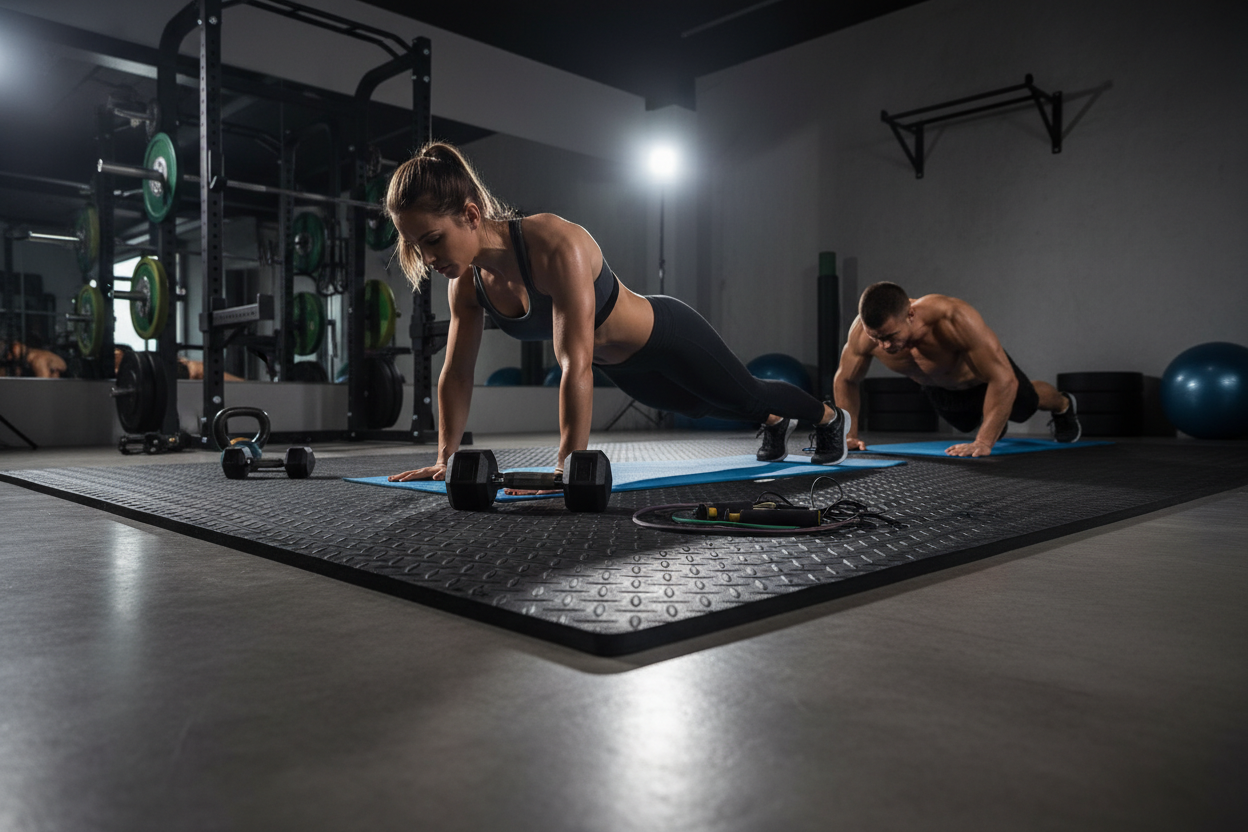
For the first three weeks, my gym smelled like a tire fire. It’s a distinct, sulfur-like rubber off-gassing scent. I had to leave the garage door open and run a box fan for days. Also, there is a residue. When I did pushups directly on the mat, my hands would turn black from the carbon black used in the rubber manufacturing. It took a good scrub with a mild degreaser to finally get them clean enough to touch without staining my clothes. If you are buying these for a bedroom, wash them outside with dish soap and let them bake in the sun for a day before bringing them indoors.
Conclusion
Your flooring is likely the most expensive part of the room, far more costly than the weights themselves. Skimping on a proper workout equipment mat is a financial risk. Whether you need a simple mat for weight machine stability or a full coverage rubber floor for deadlifts, prioritize density over softness. Get the foundation right, and the rest of your training will stand on solid ground.
Frequently Asked Questions
How thick should a rubber mat be for a home gym?
For general exercise and cardio machines, a 3/8-inch (8mm) mat is standard. However, if you are performing Olympic lifts or dropping weights, you need a thick rubber gym mat that is at least 3/4-inch thick to ensure adequate shock absorption.
Can I put a rubber gym mat over the carpet?
Yes, but stability is a concern. A thin mat will sink into the carpet pile. For heavy equipment, use a rigid sub-layer (like plywood) under the rubber exercise mat to prevent the equipment from wobbling or tipping over.
Do rubber gym mats damage hardwood floors?
High-quality rubber mats generally protect hardwood. However, some low-quality rubber compounds can react with certain wood finishes, causing discoloration over time. It is often recommended to place a thin barrier, like paper or a cloth sheet, between the hardwood and the rubber mat for fitness equipment to prevent chemical staining.