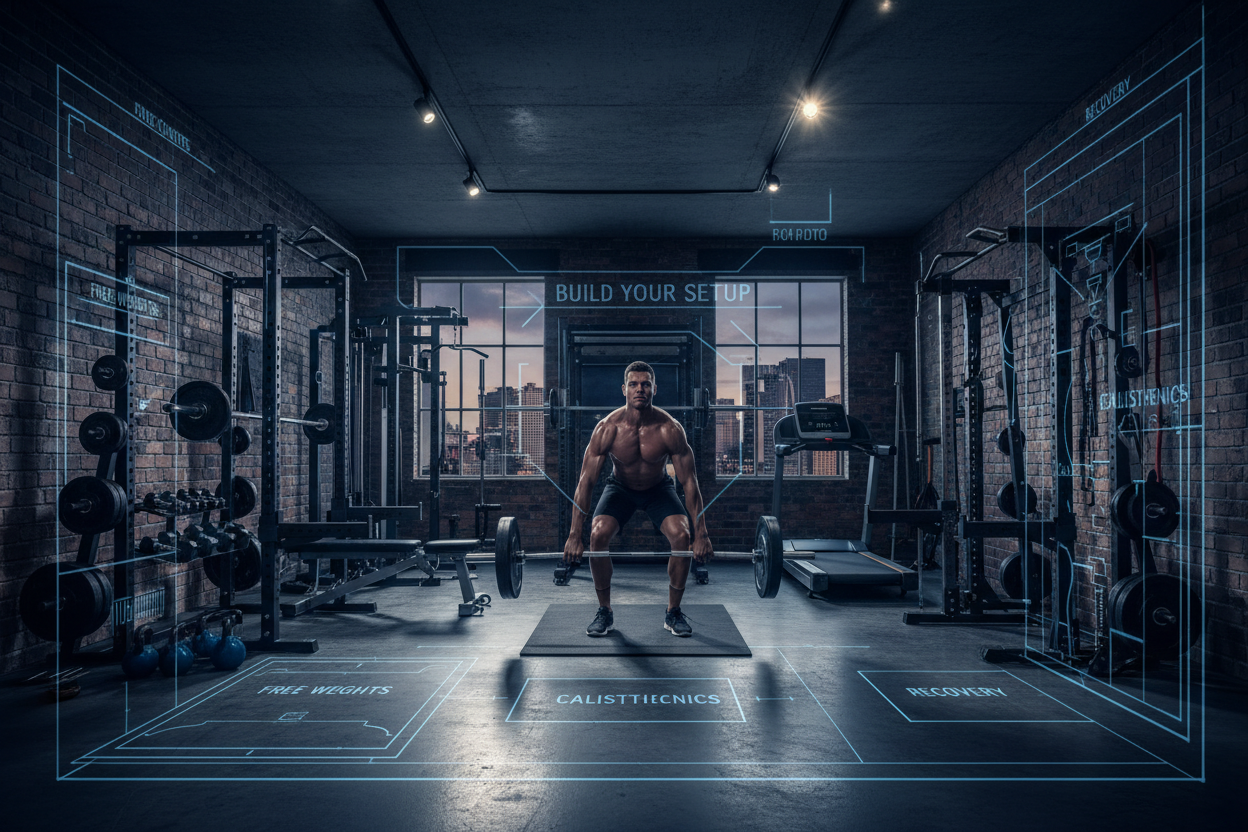
Workout Room Blueprint: Build Your Perfect Setup
Tired of fighting traffic just to wait in line for the squat rack? Creating a dedicated workout room is the ultimate investment in your long-term health and daily sanity. But transforming a spare bedroom, basement, or garage into a functional training space requires more than just dragging a treadmill inside.
Whether you are designing a compact exercise room in house or a fully outfitted garage strength center, this guide will help you optimize your layout, avoid costly equipment mistakes, and build an environment you actually want to train in.
Key Takeaways
- Measure vertically and horizontally: Always account for barbell clearance and overhead reaching limits before buying equipment.
- Protect your foundation: High-density rubber flooring is non-negotiable for any serious weight room at home.
- Prioritize multi-functional gear: Power racks and adjustable dumbbells maximize the footprint of an indoor gym at home.
- Control the climate: Proper airflow and humidity control prevent equipment rust and improve workout quality.
Space Planning & Layout Basics
The foundation of any great home exercise room starts with the tape measure. A common mistake is only measuring floor space while completely forgetting about ceiling height and equipment clearance.
Sizing Up Your Exercise Room
If you are building an at home workout room, you generally need a minimum of 50 to 100 square feet for a basic setup. For a comprehensive fitness room home design featuring a power rack, bench, and cardio machine, aim for at least 150 square feet. Always leave a 24-inch buffer zone around moving parts to navigate safely between sets.
Flooring: The Unsung Hero
Do not lift heavy weights on bare concrete, carpet, or cheap puzzle mats. A dedicated weight room home setup requires 3/4-inch thick vulcanized rubber flooring (like horse stall mats or commercial gym tiles) to protect your foundation, dampen noise, and provide a stable lifting surface.
Selecting the Right Equipment
When designing a workout room at home, your equipment choices should align directly with your training style and available square footage. Avoid single-use machines that eat up valuable real estate.
The Power Rack Anchor
If your goal is to build a proper weight room at home, center your room around a high-quality power rack. Look for a rack with a small footprint (like a 4-post or folding wall-mounted rack) if you are tight on space. Pair this with an adjustable bench and a set of adjustable dumbbells, and you have replaced 80% of a commercial gym's functionality.
Incorporating Cardio
For cardiovascular training in an at home fitness room, choose equipment that can be easily stored or moved. Rowers can be stored upright, and air bikes offer a brutal full-body workout without requiring a massive footprint or a dedicated power outlet.
From Our Gym: Honest Take
When I first converted my 10x12 spare bedroom into an indoor gym at home, I made a classic rookie mistake: I didn't check the ceiling height. At 6-foot-1, I bought a standard 84-inch power rack for a room with 8-foot ceilings. While the rack fit, I couldn't do overhead presses inside it without the barbell plates smashing into the drywall ceiling.
I ended up having to do all my overhead work seated or outside the rack. If you are building an exercise room in house with standard ceilings, I highly recommend looking into a 'shorty' rack (usually around 72 inches) or a half-rack. Also, a quick tip on rubber flooring: if you buy horse stall mats, leave them outside in the sun for a few days and wash them with a mild degreaser. The rubber off-gassing smell is intense for the first week if you put them straight into a small, enclosed room.
Frequently Asked Questions
How much space do I need for a home exercise room?
A basic setup for yoga and adjustable dumbbells requires about 50 square feet. For a fully equipped setup with a power rack and a barbell, you will need a minimum of 100 square feet to ensure safe clearance for a standard 7-foot bar.
Can I put a weight room home setup on a second floor?
Yes, but with caveats. Standard residential floors are built to handle around 30-40 pounds per square foot of live load. Keep heavy lifting setups in basements or garages, or use crash pads and distribute weight evenly with heavy plywood and rubber mats to avoid structural damage.
What is the most important investment for an at home fitness room?
Beyond flooring, invest your budget into the equipment that connects you to the weight: your barbell and your bench. A cheap bench is a safety hazard, and a low-quality barbell will bend or rust quickly. Save money on weight plates, but buy quality contact points.