Workout Plans for Beginner Success: Start One-Sided
I see it every January. A new client walks into my garage gym, frustrated and nursing a tweaked lower back. They tried following standard workout plans for beginner lifters they found online, loaded up a barbell in their cramped apartment living room, and immediately got hurt. The problem wasn't their effort; it was the equipment and the approach.
When you grab a 45-pound barbell with both hands, your body hides a dirty secret: your dominant side does 70% of the work. If you write with your right hand, your right side is likely compensating for a weaker left side. Before we ever touch a two-handed weight, I force my clients to strip it all down and start asymmetrically. Building your foundation with one-sided movements is the only way to bulletproof your joints from day one.
Quick Takeaways
- Start with unilateral (one-sided) exercises to fix left-right strength gaps before they cause injuries.
- Avoid two-handed barbell lifts until your non-dominant side catches up to your dominant side.
- One-sided movements force your core to engage heavily just to keep you from tipping over.
- Always start your sets with your weaker side to set the baseline rep count.
- A high-quality, non-slip floor is mandatory for safe single-leg stability work.
The Hidden Trap in Most Beginner Workout Programs
When I evaluate new clients, I almost never hand them a barbell on day one. Most beginner workout programs push the classic two-handed lifts: bench press, barbell squats, and standard deadlifts. It sounds great on paper. Structurally, however, it is a trap for anyone who hasn't built a symmetrical base.
Think about the mechanics of a standard squat. If you have a 20% strength deficit in your left leg, doing a two-legged squat allows your right leg to push harder to make up the difference. You won't even realize it is happening. Fast forward six months, and that 20% gap becomes a 40% gap because the strong side keeps getting stronger while the weak side lags behind.
Eventually, this uneven torque shifts to your joints. Your pelvis twists slightly during a heavy lift, and suddenly your lower back spasms. I learned this the hard way early in my career. I had a client develop severe shoulder tendonitis because his right pec and front delt were doing all the heavy lifting during push-ups and bench presses. The barbell was masking his massive left-side weakness.
Once we stripped away the two-handed movements and forced his left arm to work independently with a simple 15-pound dumbbell, the imbalances became glaringly obvious. By focusing exclusively on one side at a time, we rebuilt his foundation, and the shoulder pain vanished. Standard programs assume you are perfectly balanced. Unilateral training proves you aren't, and then fixes it.
Why a Unilateral Workout Program for Beginner Lifters Works
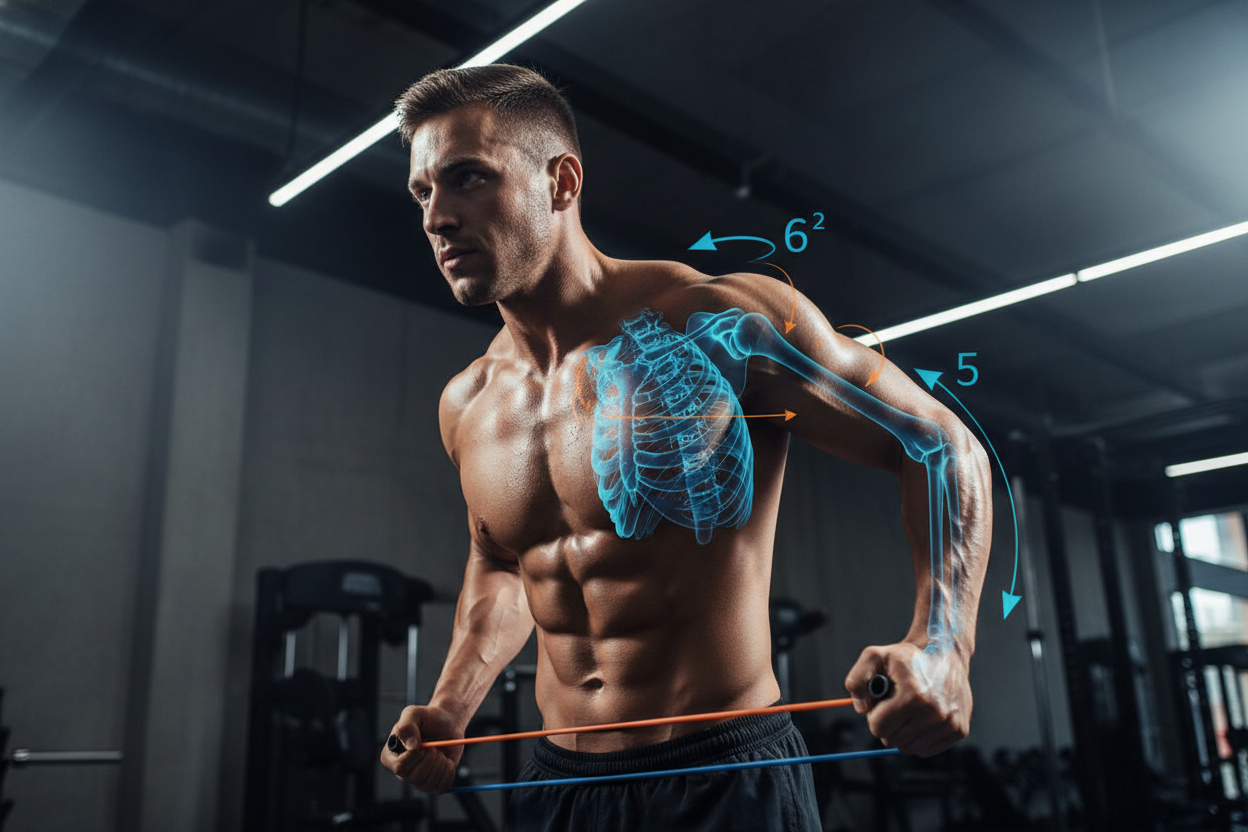
Shifting to a unilateral workout program for beginner lifters changes the entire physiological response to training. When you hold a dumbbell in just one hand, your center of gravity shifts dramatically. Your brain immediately panics and fires up your obliques, spinal erectors, and deep core muscles just to keep your torso standing straight.
Before you build muscle tissue, you build neural pathways. Your nervous system has to figure out how to recruit muscle fibers efficiently. By isolating one limb at a time, you force the brain to communicate directly with that specific muscle without the dominant side interfering. You are literally rewiring your brain to fire your muscles correctly.
I test dozens of home gym setups every year, and I always tell my clients that a single 10-pound dumbbell used unilaterally will build more functional core strength than a 50-pound barbell used bilaterally. When you perform a single-arm overhead press, you cannot cheat. If the left shoulder is weak, the weight simply will not move. This immediate feedback loop is exactly what absolute novices need to safely build their base.
Beyond the core engagement, unilateral training drastically improves joint stability. When you stand on one leg, the tiny stabilizer muscles around your ankle, knee, and hip have to work overtime. These are the exact muscles that prevent ACL tears and ankle sprains in daily life. Two-legged machines at the gym completely bypass these stabilizers, leaving you strong but fragile.
Structuring Your Asymmetrical Beginner Program
Setting up a unilateral beginner program doesn't have to be complicated. I recommend a three-day-a-week schedule, alternating between upper body and lower body focus. This provides ample recovery time, which is critical when your central nervous system is adapting to new balance demands.
Day 1 might focus on lower body pushing and pulling, utilizing movements like single-leg split squats and single-leg deadlifts. Day 2 targets the upper body with single-arm rows and single-arm overhead presses. Day 3 combines them for a full-body unilateral circuit to test your stamina and balance.
There is a golden rule you must follow: always start with your weaker side. If your left arm is weaker, do your 10 reps on the left first. Then, only match that number with your right arm. Even if your right arm could easily push out 15 reps, you must stop at 10. This is the only way to allow the weak side to catch up and close the strength gap.
If you need specific templates to plug into this three-day structure, I often point my clients to a reliable Workout Hub to grab accessory movement ideas. Just remember to adapt any two-handed exercises you find into their one-handed equivalents. If a routine calls for a barbell curl, swap it for alternating dumbbell curls.
I have to share one honest downside to this approach: unilateral training takes twice as long. If a set of 10 barbell squats takes 45 seconds, a set of 10 single-leg split squats per side takes nearly two minutes. You will spend more time resting between limbs. You have to be patient, but the injury-prevention payoff is massive. You are trading a few extra minutes in your home gym now for years of pain-free lifting later.
The Essential One-Sided Movements to Master First
Any solid beginner program workout needs a few foundational movements. Let's start from the ground up, focusing on exercises that give you the highest return on your time investment.
First, the Single-Leg Glute Bridge. Lie on your back, bend your knees, and plant your feet. Extend one leg straight out, then drive through the planted heel to lift your hips toward the ceiling. This isolates the glute and hamstring perfectly. Because you are pushing off the floor, traction is everything. I have my clients do these on a 6X8Ft Exercise Mat Yoga Mat Gym Flooring For Home Workout. It provides the exact grip needed for single-leg stability work without sliding around and pulling a hamstring, which happens frequently on bare hardwood floors.
Next, Bulgarian Split Squats. Elevate your rear foot on a bench or your living room couch. Drop your back knee straight down toward the floor while keeping your front foot completely flat. This movement exposes ankle mobility issues and quad weaknesses instantly. Keep a wall nearby to tap for balance if needed.
For the upper body, Single-Arm Dumbbell Rows are non-negotiable. Support your non-working hand and knee on a bench. Pull the dumbbell to your hip, not your chest, squeezing your shoulder blade at the top. Keep your torso parallel to the floor to prevent your lower back from twisting.
Finally, the Half-Kneeling Single-Arm Overhead Press. Drop down to one knee. If your right knee is on the floor, hold the dumbbell in your right hand. Press the weight straight up. The half-kneeling position locks your pelvis in place, forcing your core to stabilize the weight and preventing you from leaning back to cheat the rep.
Most workout guides for beginners skip these exercises because they are uncomfortable. Balancing on one leg or one knee is humbling. You will wobble. You will probably fall over a few times. But mastering these specific movements guarantees your hips, shoulders, and core are firing symmetrically.
Transitioning to Standard Machines and Bilateral Lifts
You won't stay strictly unilateral forever. The ultimate goal of this asymmetrical beginner training program is to graduate to heavy, bilateral lifting safely. So, how do you know when your body is actually ready?
I use the 'Two-Rep Rule' with my personal training clients. If your weak side can lift a 20-pound dumbbell for 10 clean reps, and your strong side feels like it could only do 11 or 12 reps with that same weight, the gap is effectively closed. Your strength is balanced within a 10-20% margin, which is normal and safe for human anatomy.
Once you hit that milestone, usually around week six or eight, you can start introducing symmetrical equipment. A great bridge between one-sided free weights and heavy barbells is machine work. Machines lock you into a fixed range of motion, letting you push heavier loads safely without worrying about dropping the weight. If you are transitioning from your home setup into a commercial gym setting, following a Beginner Gym Machine Workout The Blueprint For Safe Gains is the smartest next step.
From there, you can finally load up that 45-pound barbell. Only this time, your left and right sides will push in perfect harmony, keeping your joints safe and your progress steady.
Frequently Asked Questions
How heavy should my weights be for a unilateral beginner routine?
Start very light. I highly recommend a basic adjustable dumbbell set ranging from 5 to 52.5 pounds. For most novices, 10 to 15 pounds is plenty for lower body exercises, while 5 to 8 pounds works perfectly for upper body movements while you are still learning to balance.
Can I do unilateral exercises every day?
No. Even though you are using lighter weights, the neurological demand of balancing on one side is highly taxing. Stick to three or four days a week to allow your central nervous system and stabilizer muscles time to recover.
What if my balance is too poor for single-leg squats?
Use a physical support. Hold onto a wall, a sturdy chair, or a squat rack upright with your free hand. The goal is muscle isolation, not a circus balancing act. As your stabilizing muscles get stronger, you will naturally rely less on the hand support.