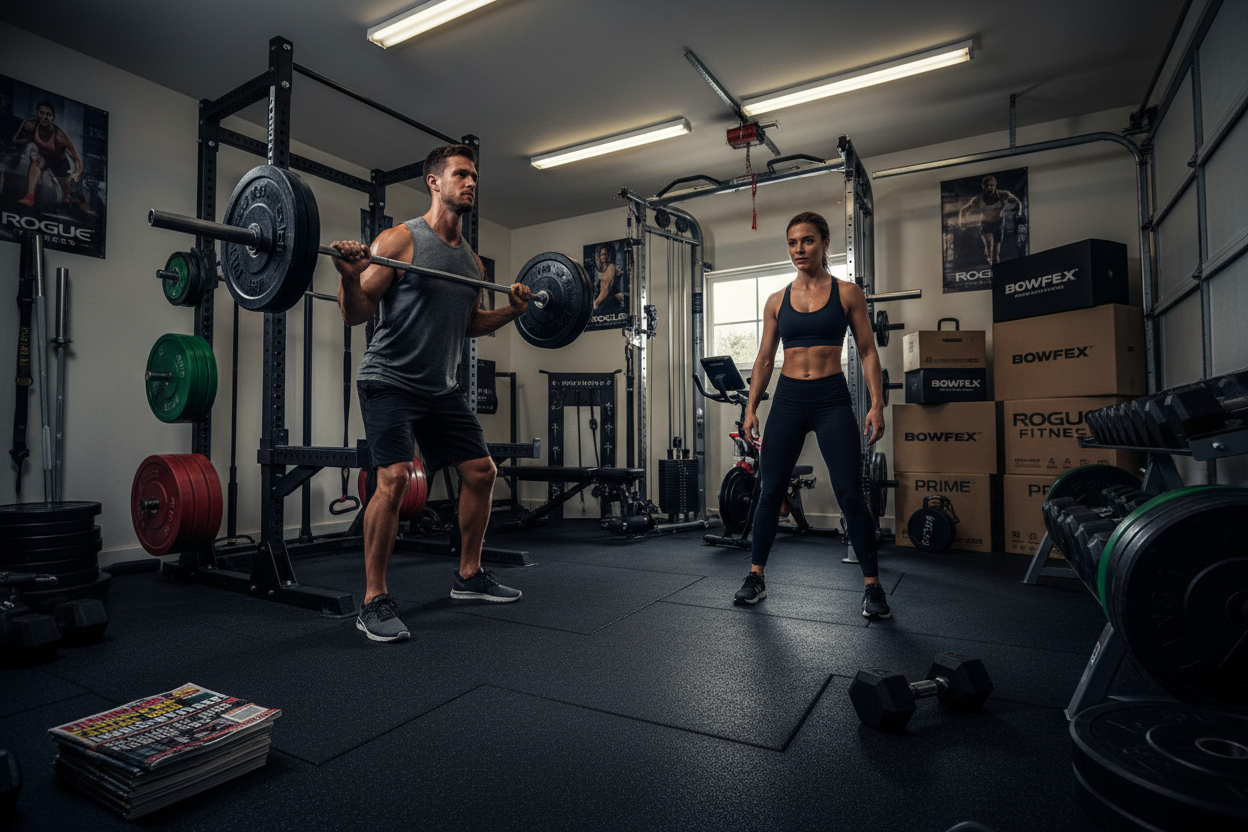
Workout Exercise Guide: Maximize Your Home Gym Setup
It is the classic North American home gym dilemma: you finally clear out the garage, invest in a beautiful power rack, load up on bumper plates, and then... you just stand there. Without a structured workout exercise guide, even the most premium fitness equipment can quickly turn into an expensive clothing rack.
Whether you are dealing with a cramped basement setup or a fully outfitted two-car garage, having a targeted plan is what bridges the gap between buying gear and actually seeing physical changes. In this breakdown, we will help you map out a strategy that fits your space, maximizes your equipment, and pushes you past those stubborn training plateaus.
Key Takeaways
- Match gear to goals: Your routine should dictate your equipment purchases, not the other way around.
- Respect the space: Factor in barbell clearance and bench footprints when planning your daily flow.
- Progressive overload is king: A reliable workouts guide prioritizes adding weight or reps over time.
- Keep it simple: Master compound movements before investing in single-use isolation machines.
Matching Your Equipment to Your Training Plan
Building a home gym is an ongoing project, but your training cannot wait until the setup is perfect. The best routines adapt to the tools you currently have while leaving room to grow.
Free Weights vs. Cables and Machines
If your space is dominated by a barbell and a squat rack, your focus should be on heavy, compound lifts. Squats, deadlifts, and presses offer the highest return on investment for both your body and your floor plan. However, if you have integrated a functional trainer or cable crossover, you can easily weave in isolation work that mirrors a commercial gym experience.
Structuring Your Weekly Split
A solid workouts guide will help you determine your frequency. For most garage gym athletes, an upper/lower split or a three-day full-body routine provides the perfect balance of intensity and recovery. Consider your schedule and be realistic about how many days you will actually brave the cold garage during the winter months.
Space Planning for Seamless Routines
Nothing ruins a good sweat session faster than having to constantly move heavy equipment just to transition to your next exercise. Flow matters.
Flow and Clearance Zones
When mapping out your daily routine, consider the physical footprint of your movements. A standard Olympic barbell is 7 feet long. If your basement is exactly 8 feet wide, loading plates becomes a frustrating, wall-scraping chore. Group your exercises by location—do all your rack work first, then move to your dumbbell corner—to keep your heart rate up and your workout time down.
From Our Gym: Honest Take
I have tested dozens of training programs over the years, and the biggest mistake I see is people blindly following commercial gym routines at home. When I first built my basement gym, I tried to run a standard bodybuilding split. The problem? My ceiling was only 82 inches high. Every time the routine called for a standing overhead press, I ended up punching my ceiling joists.
I had to adapt my personal workout exercise guide to feature seated Z-presses and kneeling landmine presses instead. It forced me to get creative, but it also highlighted a crucial lesson: your program must respect your environment. Do not buy a specialized piece of equipment for one exercise if it compromises your ability to move comfortably through the rest of your routine.
Frequently Asked Questions
Do I need a different workout exercise guide for a home gym?
Yes, typically. Home gym routines need to account for limited equipment variations. Instead of hitting the chest with four different machines, you might rely on a flat bench, incline dumbbell presses, and weighted push-ups.
How do I follow a workouts guide with limited equipment?
Focus on versatility. A simple pair of adjustable dumbbells and a high-quality flat bench can facilitate hundreds of movements. Swap out exercises you cannot do for biomechanically similar movements using the gear you own.
How often should I change my routine?
Avoid program hopping. Stick to a structured plan for at least 8 to 12 weeks. This gives you enough time to practice progressive overload and truly gauge if the volume and intensity are working for your body.