Why Your Squats Aren't Building Your Butt: The Science of Waking Up Your Glutes
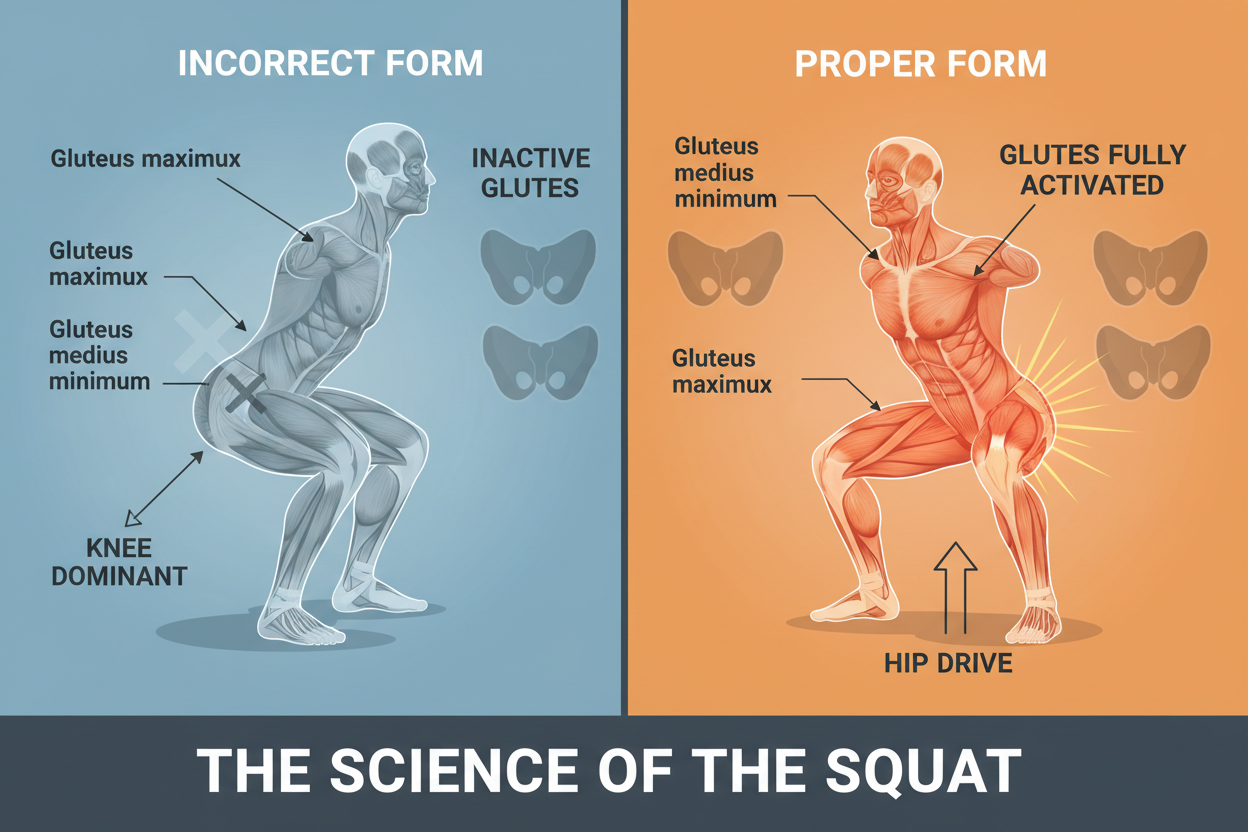
You spend hours in the squat rack, push heavy sleds, and lunge until your legs shake, yet your backside remains stubbornly flat or, worse, your lower back takes the brunt of the punishment. This is one of the most common frustrations in the gym. The problem usually isn't a lack of effort or strength in your legs; it is a neuromuscular disconnect. Your brain has forgotten how to properly recruit the largest muscle in your body. To fix this, you don't need heavier weights; you need to master specific gluteus maximus activation techniques before you even touch a barbell.
Most of us spend the majority of our lives sitting on the very muscles we are trying to build. This sedentary posture tightens the hip flexors at the front of the pelvis. Through a process called reciprocal inhibition, tight hip flexors signal the opposing muscles—the glutes—to relax and lengthen. Over time, this leads to "gluteal amnesia," where the muscle becomes dormant. When you try to squat, your body compensates by using your quadriceps and lower back erectors to move the weight. To break this cycle, you must perform targeted drills that force the mind-muscle connection to re-establish itself.
My Battle With Dormant Glutes
I learned this lesson the hard way a few years ago. I was chasing a deadlift personal record and ignored the nagging tightness in my lumbar spine. I assumed that because I was lifting heavy, my glutes had to be working. I was wrong. During a warm-up set, my back seized up, leaving me sidelined for weeks. My physical therapist gave me a humbling diagnosis: my glutes were essentially asleep. My lower back was doing the job of my hips.
The rehab didn't involve heavy weights. It involved lying on the floor, looking ridiculous, and trying to squeeze my left glute without tensing my hamstring. It was harder than a 300-pound deadlift. Once I learned how to intentionally fire that muscle, my back pain vanished, and my lifts skyrocketed. This experience taught me that glute max activation isn't just a buzzword; it is the foundation of heavy lifting and injury prevention.
The Mechanics of Proper Engagement
Before jumping into movements, you need to understand the feeling you are chasing. Many lifters mistake hamstring tension for glute work. If you perform a kickback and feel a cramp in the back of your thigh, you aren't using your glutes. You are compensating. To activate gluteus maximus fibers effectively, you often need to alter your pelvic position. A slight posterior pelvic tilt—tucking your tailbone under—can neutralize the lower back and isolate the hip extension mechanism.
Tactile cues are incredibly helpful here. Poking or tapping the muscle you are trying to work sends sensory feedback to the brain, reinforcing the neural pathway. Don't be afraid to put your hand on your glute during these warm-up drills to ensure it is actually hardening during the contraction.
Essential Glute Max Activation Exercises
These movements are not meant to be performed to failure. They are primers. The goal is to wake up the nervous system, not exhaust the muscle tissue. Perform these as part of your warm-up routine.
The Cook Hip Lift
Unlike a standard glute bridge, which allows for easy cheating via lumbar extension, the Cook Hip Lift locks the lumbar spine in place. Lie on your back and hug one knee to your chest. This flexion of the non-working hip prevents your lower back from arching. With the other foot planted, drive through the heel to lift your hips. Because your back is neutralized, the only way to lift your hips is by using the glute. This is one of the most humbling gluteus maximus activation exercises because the range of motion is short, but the contraction is intense.
Quadruped Hip Extension (Donkey Kick)
Get on your hands and knees. Brace your core as if you are about to be punched in the stomach. Without shifting your weight or arching your back, lift one heel toward the ceiling, keeping the knee bent at 90 degrees. The movement should come solely from the hip joint. If your lower back dips, you have gone too high. Focus on the squeeze at the very top. This movement directly targets the glute max's primary function: hip extension.
Banded Clamshells
While often associated with the gluteus medius (the side of the hip), the glute max also plays a role in external rotation. Lie on your side with a resistance band just above your knees. Keep your feet touching and open your top knee like a book. To bias this more toward glute max activation exercises, slightly extend the top hip so your knee is behind your torso line rather than in front of it. Hold the open position for two seconds before lowering.
Integrating Activation into Your Routine
The timing of these drills is critical. If you do them at the end of a workout, they are just fatigue work. To get the benefits, they must be done before your compound lifts. This is often called "potentiation." By firing up the neurons associated with the glute max, you prime the muscle to take on the load during your subsequent squats or lunges.
A typical warm-up sequence might look like this:
- 5 minutes of general cardio (brisk walk or cycle) to raise body temperature.
- Dynamic stretching for hip flexors (to reduce reciprocal inhibition).
- 2 sets of 10 Cook Hip Lifts per side.
- 2 sets of 15 Banded Clamshells.
Once you feel that deep burn in the muscle belly, you are ready to move to your main lift. You will likely notice that you feel more stable at the bottom of a squat and more powerful at the lockout of a deadlift. This is the power of proper gluteus maximus activation.
Troubleshooting Common Issues
If you still struggle to feel the muscle working, look at your feet. In many standing exercises, driving through the toes shifts emphasis to the quads. Shift your weight back toward your heels. In a leg press or squat, think about "spreading the floor" with your feet. This external rotation cue forces the glutes to engage to stabilize the femur.
Consistency is key. You cannot undo years of sitting with one session of bridges. It takes weeks of deliberate practice to rewire your movement patterns. Treat these activation drills with the same respect you give your heavy working sets. Your lower back will thank you, and your physique will finally reflect the work you are putting in.
Frequently Asked Questions
Why do I feel these exercises in my hamstrings instead of my glutes?
This is called synergistic dominance, where the hamstring takes over for a weak glute. To fix this, try bending your knee more during the exercise (like in a bridge), as this mechanically disadvantages the hamstring and forces the glute to do the work. Also, ensure you are not trying to extend your hip too high.
How often should I do glute activation exercises?
You can and should do them every time you train your lower body. If you have severe "glute amnesia" or sit all day for work, doing a light routine daily just to wake up the muscles can be highly beneficial without causing overtraining.
Can I build big glutes with just activation exercises?
Generally, no. Activation exercises are low-load movements designed to improve neuromuscular connection. To actually build significant muscle mass (hypertrophy), you need to apply that connection to heavy compound movements like squats, deadlifts, and hip thrusts using progressive overload.