Why Your Power Rack's Hole Spacing Matters More Than You Think
When I first started building my home gym, I'll be honest—I didn't give much thought to the little details like hole spacing on my power rack. I was focused on the big picture: getting strong, building muscle, and having the freedom to train whenever I wanted. But after a few months of serious lifting, I quickly realized that those seemingly minor details could make or break my training experience. The spacing between those holes on your power rack isn't just a technical specification—it's the difference between nailing your perfect setup and settling for something that's just 'close enough.'
Understanding Power Rack Hole Size and Spacing
Let's start with the basics. The power rack hole size refers to the diameter of the holes drilled into the uprights of your rack, which accommodate the safety pins and J-hooks. Most commercial and home power racks feature holes that are either 5/8 inch or 1 inch in diameter. The 5/8 inch size is the industry standard for most quality racks, providing a secure fit for attachments while maintaining the structural integrity of the uprights.
The power rack hole spacing, on the other hand, is the distance between each hole measured from center to center. This measurement determines how precisely you can adjust the height of your barbell, safety catches, and other attachments. Think of it this way: if you're setting up for bench press and the holes are spaced too far apart, you might end up with the bar either too high (making it awkward to unrack) or too low (forcing you into an uncomfortable starting position).
Standard Spacing vs. Westside Spacing
The most common power rack hole spacing you'll encounter is 2 inches throughout the entire rack. This standard spacing works perfectly fine for many lifters and provides reasonable adjustability for most exercises. However, there's another option that's gained serious popularity among serious lifters: Westside spacing.
What Is Westside Spacing on a Power Rack?
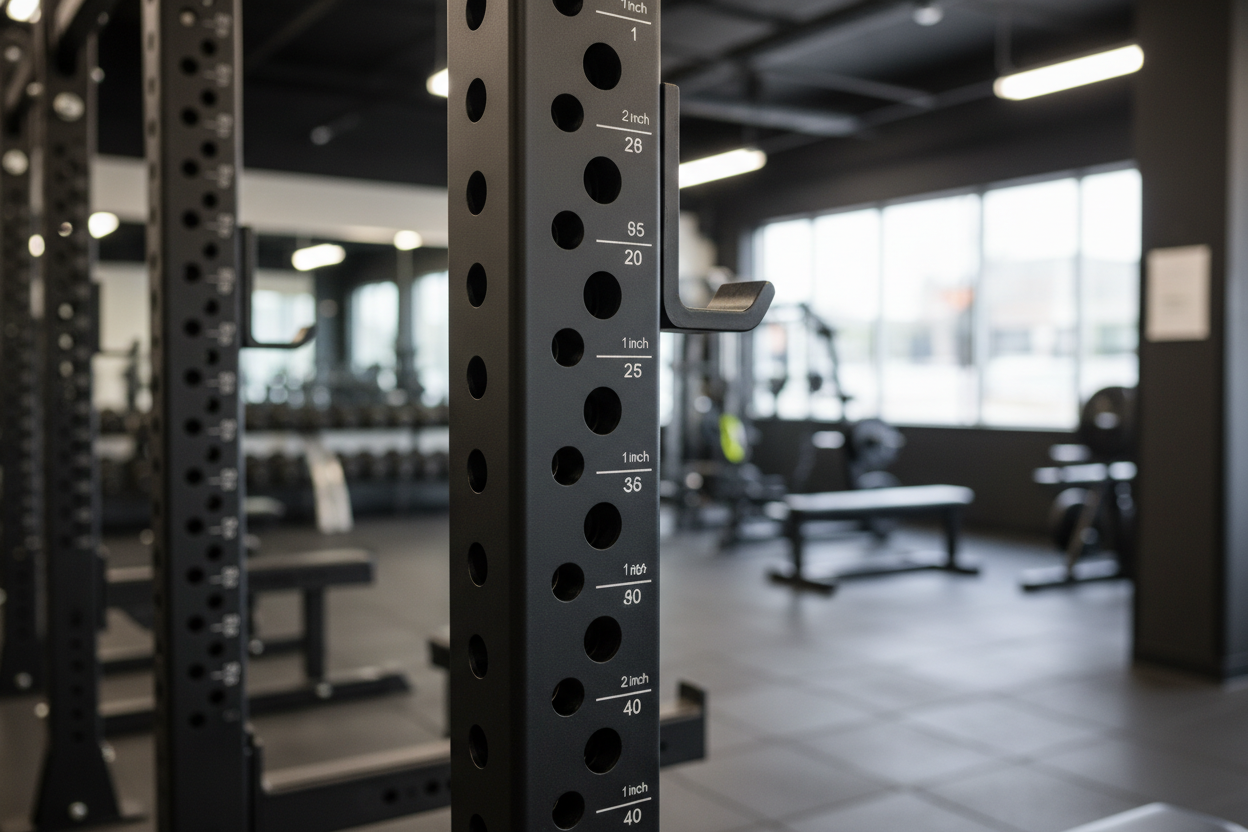
Westside spacing power rack designs feature a hybrid hole pattern that combines different spacing intervals in strategic zones. Named after the legendary Westside Barbell gym in Columbus, Ohio, this spacing pattern typically features 1-inch spacing in the bench press zone (roughly between 12 and 36 inches from the ground) and 2-inch spacing everywhere else on the uprights.
The genius behind this design is simple: it provides maximum adjustability exactly where you need it most. The bench press zone is where most lifters require the finest adjustments because even an inch can dramatically affect your setup, bar path, and overall pressing mechanics. Meanwhile, the 2-inch spacing in the lower and upper sections keeps the rack structurally sound without adding unnecessary weight or cost.
Why Westside Spacing Makes Sense for Home Gyms
I remember the frustration of trying to find the perfect height for my bench press with standard 2-inch spacing. The bar would either be slightly too high, forcing me to overextend my shoulders during the unrack, or too low, making me lift the bar several inches before I could even begin my set. Neither option was ideal, and both affected my performance and increased injury risk.
With Westside spacing, you get that precision where it counts. For bench pressing, overhead pressing from a seated position, and even some squat variations for shorter lifters, having 1-inch increments means you can dial in your exact starting position. This isn't just about comfort—it's about safety and performance optimization.
Practical Considerations for Different Exercises
The beauty of proper hole spacing becomes apparent across various exercises. For squats, especially if you're working with different bar heights for box squats, pause squats, or accommodating training with bands and chains, having precise adjustability lets you maintain consistent technique. Safety pins can be set at exactly the right height to catch a failed rep without the bar crashing down too far or sitting so high that it defeats the purpose.
For pulling movements like rack pulls or pin presses, the ability to adjust in smaller increments means you can target specific ranges of motion more accurately. This is particularly valuable if you're working around an injury or trying to strengthen a particular sticking point in your lift.
Choosing the Right Spacing for Your Needs
So how do you decide between standard spacing and Westside spacing? Consider your training style and goals. If you're primarily doing the big compound lifts—squats, bench press, deadlifts, and overhead press—and you value precision in your setup, Westside spacing offers clear advantages. It's particularly beneficial if you're shorter in stature, as you'll likely be working more frequently in that lower zone where the tighter spacing really shines.
However, if you're taller or primarily use your rack for squats and pull-ups, with less emphasis on bench pressing, standard 2-inch spacing throughout might serve you perfectly well. There's also the cost factor to consider—racks with Westside spacing often command a premium price due to the additional manufacturing complexity.
Installation and Compatibility
When selecting a power rack, pay attention to how the hole size and spacing affect compatibility with attachments. Most reputable manufacturers design their accessories to work with standard 5/8 inch holes, but it's worth verifying before making a purchase. The last thing you want is to invest in a quality rack only to discover that the dip attachment or landmine you want won't fit properly.
The structural integrity of your rack also depends partly on proper hole sizing and spacing. Too many holes too close together can weaken the uprights, which is why manufacturers carefully engineer their spacing patterns. This is another reason why Westside spacing limits the 1-inch pattern to the specific zone where it's most beneficial.
Making Your Decision
At the end of the day, your power rack is the centerpiece of your home gym. It's where you'll spend countless hours building strength, pushing your limits, and working toward your fitness goals. The hole spacing might seem like a minor detail when you're comparing specs online, but trust me—when you're under the bar, struggling through that last rep, or trying to set up perfectly for a new personal record, you'll appreciate having made the right choice.
Take the time to consider how you'll actually use your rack. Think about your height, your primary exercises, and whether that extra precision in the bench zone is worth the additional investment. There's no wrong answer here—just the right answer for your specific situation and training needs. Whether you opt for standard spacing or Westside spacing, understanding what these terms mean puts you in control of creating the perfect training environment for your fitness journey.