Why Your Novice Strength Program Should Feel Almost Too Easy
I remember my first week in the garage, staring at a 45-pound bar and thinking I needed to move it until my lungs burned. I’d seen the videos of guys collapsing after sets, so I figured that was the price of admission. I was wrong. A solid novice strength program isn't about how much you sweat; it’s about how much you can add to the bar next Tuesday.
- Linear progression is the fastest way to get strong.
- Exhaustion is a poor metric for progress.
- Stick to the big four: Squat, Bench, Deadlift, Press.
- Rest days are when the actual growth happens.
The 'Puking in a Bucket' Myth of Hard Work
Fitness marketing has done a number on our brains. We’ve been conditioned to think that if we aren't crawling out of the gym on all fours, we wasted our time. That might work for selling supplements, but it’s a disaster for building a foundation of strength.
When you start a new routine, your body is incredibly responsive. You don't need to 'shock' the muscle with high-volume circuits or 400-meter sprints between sets. You need to teach your nervous system how to fire. If you’re constantly red-lining, you’re just digging a recovery hole you can’t climb out of.
A good session should leave you feeling like you could have done one or two more reps. That leftover energy is what fuels the adaptation. If you leave it all on the floor every Monday, you’ll have nothing left for Wednesday.
The Magic of Linear Progression in a Novice Strength Program
The most effective beginning strength program ever devised is built on a simple, boring concept: Linear Progression (LP). You show up, you do your sets, and you add five pounds to the bar. Then you go home and eat.
The math is the magic. If you start with a 95-pound squat and add 5 pounds every time you train (three times a week), you’ll be squatting 215 pounds in just ten weeks. That is a massive jump in strength that no 'advanced' program can match.
The trap is thinking 5 pounds is too small. It feels light in week one, but by week eight, that 'easy' math starts to feel very heavy. Respect the process and don't skip ahead. The goal is to milk that 5-pound increase for as long as humanly possible.
Why You Need to Drop the Body Part Routines
Most beginners walk into a gym and try to train like a pro bodybuilder. They do 'Chest Day' on Monday and 'Arm Day' on Friday. This is a massive mistake because a novice can recover much faster than a seasoned pro. You don't need a week to recover from a bench press session yet.
You should ditch the bro split in favor of full-body movements. Squatting, pressing, and pulling three times a week allows you to practice the movements more often. Strength is a skill, and you don't master a skill by doing it once every seven days.
Focusing on compound movements uses the most muscle mass over the longest range of motion. This allows you to move the most weight, which provides the greatest stimulus for growth. Bicep curls have their place, but they shouldn't be the centerpiece of your week.
The Bare Minimum Gear to Make This Work
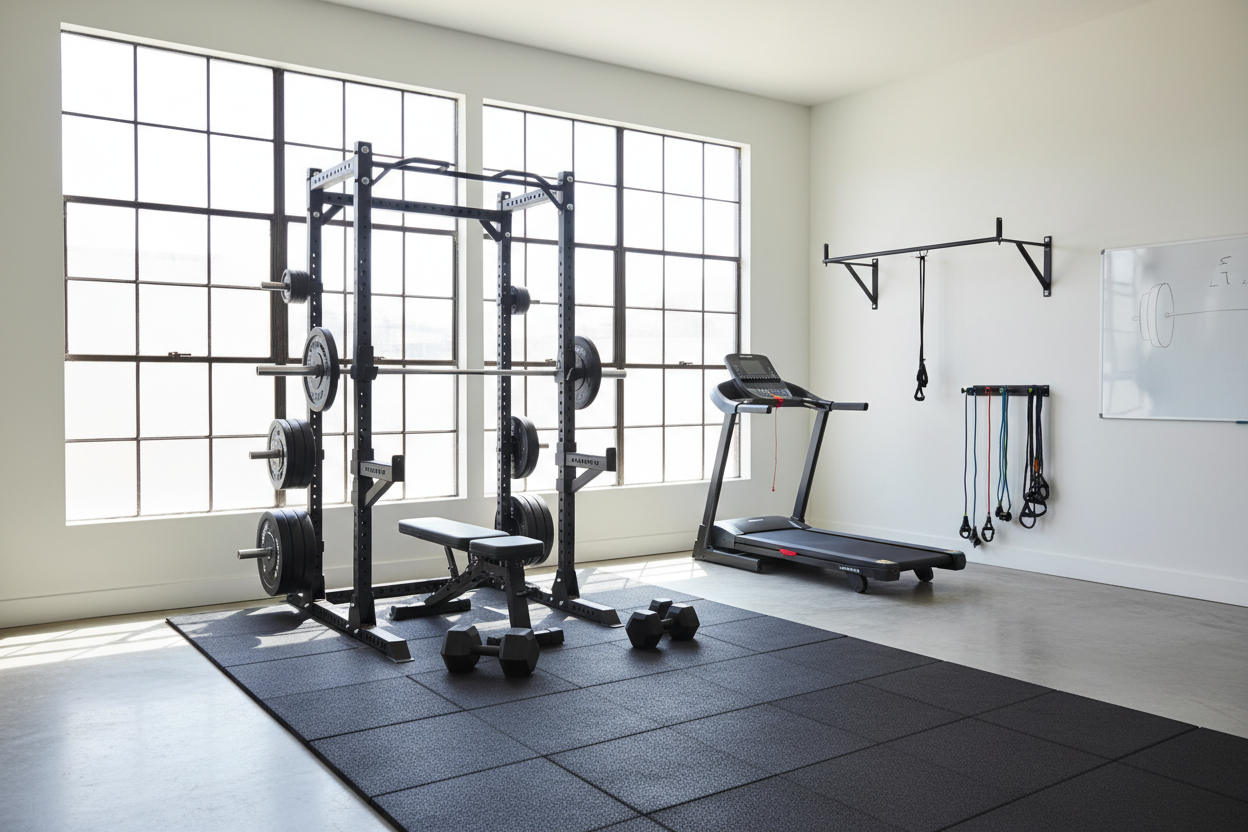
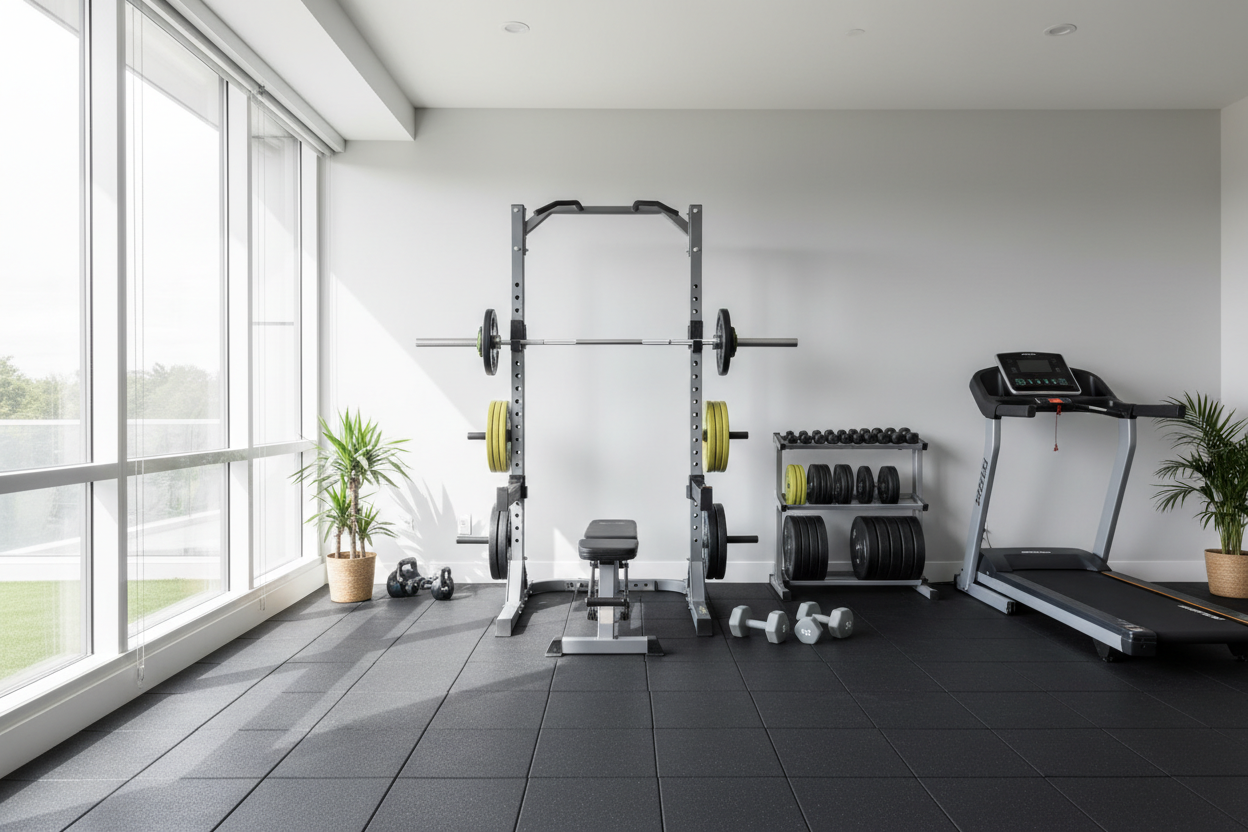
You don't need a $3,000 functional trainer or a vibrating platform. To run a successful novice strength training program at home, you need four things: a rack, a barbell, a bench, and plates.
Invest in basic strength equipment that is rated for at least 500 pounds. Even if you're starting with the empty bar, you'll be surprised how fast you'll need those 45-pound plates. I personally prefer a power rack over a half-rack for the safety of the spotter arms—especially when training alone in a garage.
Skip the fancy grip trainers and the weighted vests for now. Spend that money on a decent pair of lifting shoes with a hard sole. Squatting in squishy running shoes is like trying to lift while standing on a mattress; it kills your stability and wastes force.
How Long Should You Milk the Novice Phase?
The novice phase isn't a set amount of time; it’s a physiological state. You are a novice as long as you can show up to the next workout and add weight to the bar. For some, this lasts three months. For others, it’s nine.
You’ll know it’s ending when you hit a wall. If you’ve deloaded twice and still can’t make your reps, your strength training program is burning you out because you’ve reached the limit of simple recovery. This is when the math has to get more complex.
Don't rush to leave this phase. It is the only time in your lifting career where progress is guaranteed every single session. Once you move to intermediate programming, you’ll be fighting for 5-pound gains every month instead of every few days. Ride the novice wave until the wheels fall off.
My Personal Experience
When I started, I was too proud to use the 2.5-pound plates. I thought adding 10 pounds a week made me 'harder' than the guys following the program. I stalled in six weeks, my knees felt like they were full of gravel, and I ended up taking a month off just to recover. When I finally swallowed my pride and stuck to the 5-pound jumps, I added 120 pounds to my squat in a single season. Consistency is a better teacher than intensity.
Frequently Asked Questions
Can I add cardio to a novice program?
Yes, but keep it low impact. A 30-minute walk or light cycling is fine. Avoid high-intensity interval training (HIIT) on your off days, as it will interfere with the recovery your legs need for heavy squats.
What if I miss a workout?
Don't try to make it up by doing double the work the next day. Just pick up where you left off. The program is a marathon, not a sprint. One missed day won't ruin your gains, but an injury from overtraining will.
When should I buy a lifting belt?
You can start using a belt whenever the weights feel heavy enough that you need the extra tactile cue for bracing. Usually, this happens once you're squatting around your body weight. It’s a tool, not a crutch.