Why Your Machine Press for Shoulders Halted Growth (Fix It Now)
Let’s be honest: the barbell overhead press gets all the glory, but it isn’t always the best tool for hypertrophy. If you want to isolate your deltoids without worrying about dropping a loaded bar on your skull, the machine press for shoulders is your best friend. Yet, walk into any gym, and you’ll see lifters treating this machine like a recliner, heaving weight with zero tension on the target muscle.
You might think machines are "foolproof," but the fixed path of motion can actually work against you if your setup is off. This guide cuts through the noise to help you master the mechanics, safety, and execution of the overhead press machine.
Key Takeaways: Mastering the Machine Press
- Seat Height is King: Set the handles to align with your ears at the starting position to protect your rotator cuff.
- Elbow Position: Keep elbows slightly tucked (around 45 degrees), not flared out to the sides.
- Tension over Ego: Stop just short of locking out at the top to keep constant tension on the delts.
- Core Engagement: Press your lower back firmly into the pad to avoid turning the lift into an incline chest press.
Why Choose the Shoulder Press Machine?
The stigma that "machines are for beginners" is outdated. The stability provided by a shoulder press machine allows you to push closer to failure safely. When you remove the need to balance a barbell, your central nervous system can focus entirely on driving output through the deltoids.
This is particularly useful for:
- Isolation: Targeting the machine press delts specifically without stabilizer fatigue.
- Drop Sets: Safely stripping weight (or moving the pin) to extend the set.
- Injury Prevention: A seated shoulder press machine removes the lower back strain often associated with the standing military press.
How to Use the Shoulder Press Machine Correctly
Proper setup dictates whether you grow boulder shoulders or just aggravate your joints. Here is the step-by-step breakdown of shoulder press machine form.
1. The Setup
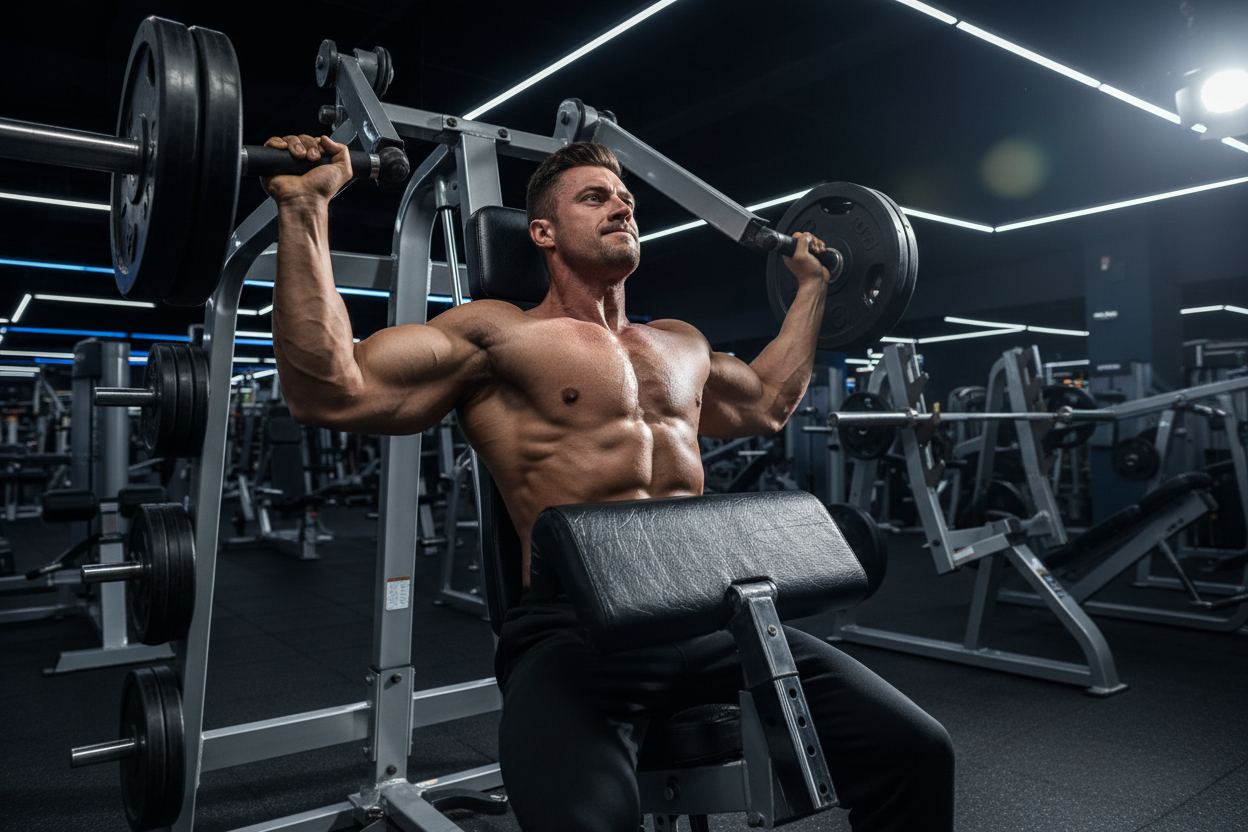
Adjust the seat height first. This is the most common error. If the seat is too low, you start the movement in a mechanically compromised position that strains the rotator cuff. If it's too high, you limit your range of motion.
When you sit down, the handles of the shoulder press equipment should be roughly at ear level or slightly below. Your feet should be planted flat on the floor for stability.
2. Hand Placement and Grip
Most modern units, like the standard shoulder press gym machine, offer two grip options: pronated (palms facing forward) and neutral (palms facing each other).
- Pronated Grip: Mimics the barbell overhead press machine. It hits the front and side delts but puts more stress on the shoulder joint.
- Neutral Grip: Often found on a seated machine military press. This is generally safer for the shoulders and places significant load on the anterior deltoid.
3. The Press
Brace your core. Exhale and drive the handles upward. As you perform the shoulder press machine exercise, imagine bringing your biceps toward your ears. Do not lock your elbows out completely at the top; stop one inch short to maintain tension on the muscle.
4. The Eccentric (lowering)
Control the weight on the way down. Do not let the weight stack slam. The lowering phase of the overhead machine press is where the micro-tears necessary for growth occur. Lower the handles back to ear level and repeat.
Common Mistakes Killing Your Gains
The "Chest Press" Arch
When the weight gets too heavy, lifters instinctively slide their hips forward and arch their lower back. This changes the angle of the lift, turning a vertical shoulder machine movement into an incline chest press. Keep your glutes glued to the back of the seat.
The Half-Rep Pulse
Using the full range of motion is non-negotiable. If you are only moving the handles three inches at the top, you aren't doing a shoulder press machine workout; you're just doing a tricep twitch. Lighten the load and go deep.
Variations: Machine Front Press vs. Behind the Neck
You may encounter older shoulder press gym equipment designed for behind-the-neck pressing. For 90% of the population, I advise against this. It requires extreme external rotation mobility. Stick to the machine front press (hands in front of the body) to keep your shoulders healthy for the long haul.
My Training Log: Real Talk
I remember the first time I swapped free weights for a dedicated block of machine work. I was using an old, plate-loaded Hammer Strength ohp machine—the kind with the gritty, textured handles that chew up your palms if you don't have calluses.
For years, I was a barbell purist. I thought if I wasn't standing, it didn't count. But my lower back was constantly fried, limiting how hard I could actually push my delts. I switched to the seated overhead press machine for six weeks. The first thing I noticed wasn't the strength gain—it was the "wobble" disappearing. Without wasting energy stabilizing the bar, I could feel the specific fiber bundles in my front delts firing in a way I couldn't with a barbell.
One specific nuance: on that machine, there was a "sticky" point about three inches off the bottom. I learned to explode through that grit. If I hesitated there, the set was over. That mechanical friction taught me to drive hard from the bottom, a habit that actually improved my barbell press when I eventually went back to it.
Conclusion
The machine press for shoulders isn't a shortcut; it's a precision tool. By stabilizing your body and locking in your range of motion, you can take your deltoids to absolute failure safely. Check your ego, adjust that seat height, and control the negative. Your shoulders will thank you.
Frequently Asked Questions
Is the shoulder press machine better than dumbbells?
Neither is strictly "better"; they serve different purposes. Dumbbells require more stabilization, recruiting more accessory muscles. The shoulder press gym machine offers more stability, allowing you to lift heavier loads safely and isolate the delts more effectively, especially towards the end of a workout.
Can I do a military press on a machine?
Yes, the seated machine military press is essentially the same movement pattern as the standing version but performed in a fixed path. It removes the core stability element but places higher isolation demands on the shoulder musculature.
How do I select a home shoulder press machine?
If you are looking for a home shoulder press machine, look for a unit with adjustable seat heights and multi-grip handles. Leverage arms (plate-loaded) often feel smoother and more natural than cheap cable stacks, which can have inconsistent drag.