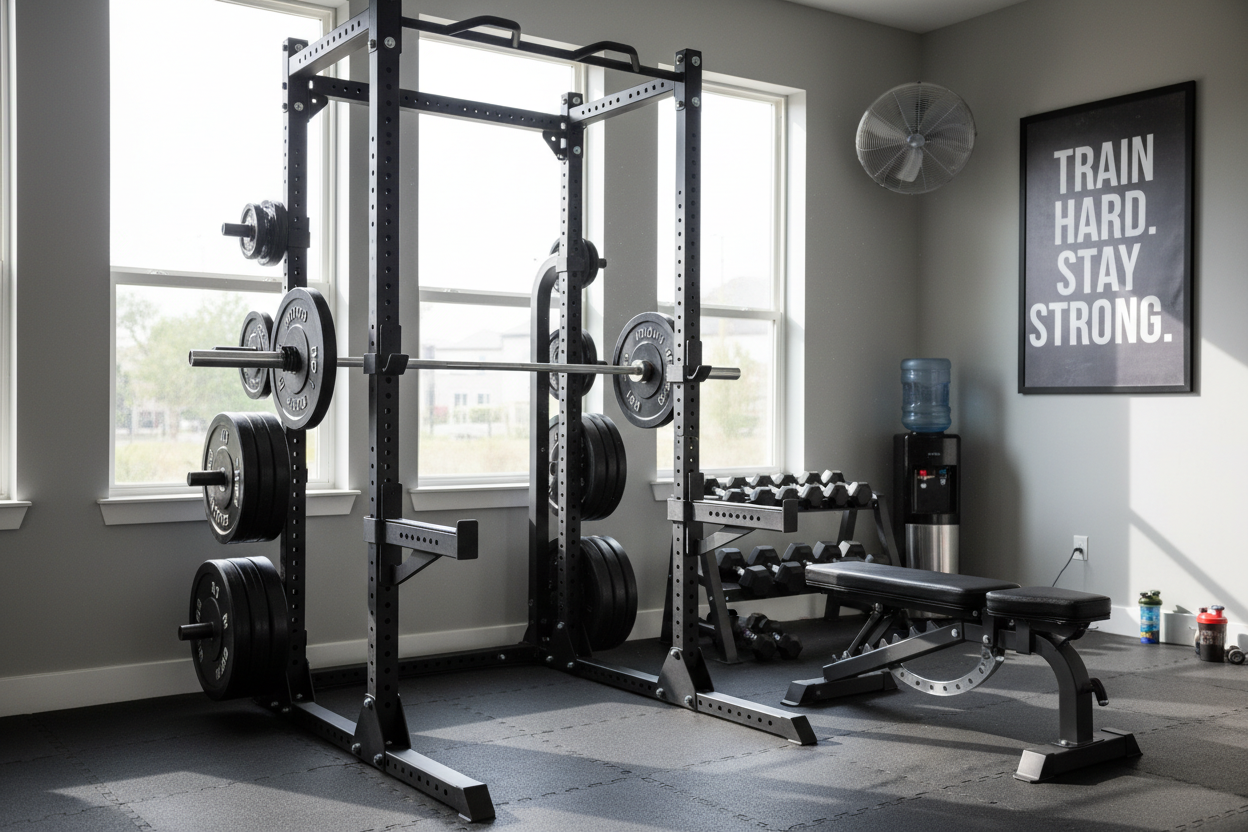
Why Your Home Gym Needs a Solid Power Rack (And Is ProForm Worth Your Money?)
Let's be honest—when you're building a home gym, the power rack is the absolute foundation of everything. It's not the flashiest piece of kit, and it certainly won't get as much attention on Instagram as your fancy dumbbells, but trust me, it's the workhorse that'll help you reach your strength goals safely and consistently. I've trained in commercial gyms with top-of-the-line equipment and in garage setups with budget-friendly gear, and I can tell you that having a reliable rack makes all the difference between a workout you look forward to and one you dread.
Whether you're squatting, bench pressing, doing pull-ups, or working on overhead presses, a quality power rack gives you the freedom to push yourself without needing a spotter standing by. That's especially important when you're training at home. The safety catches are there to protect you if you fail a rep, which means you can actually test your limits rather than playing it safe every single session.
What Makes a Power Rack Essential for Strength Training
A power rack, sometimes called a squat cage or power cage, is essentially a four-posted steel frame with adjustable safety bars and J-hooks. The beauty of this simple design is its versatility. You can perform nearly every major compound movement within the same footprint, making it incredibly space-efficient for home gyms where every square foot counts.
The adjustable J-hooks hold your barbell at various heights, so you can set up for squats, bench presses, or overhead presses at the perfect starting position. The safety bars or spotter arms sit below your working height, catching the bar if you can't complete a lift. This setup is absolutely crucial for solo training. I remember one particularly challenging squat session where I misjudged my fatigue level—those safety bars saved me from what could've been a nasty situation.
Beyond the basic barbell movements, most power racks come with pull-up bars built into the top frame. Some models include additional attachments like dip bars, landmine pivots, and band pegs. This transforms a single piece of equipment into a complete training station where you can work every muscle group effectively.
ProForm Power Rack Review: Breaking Down the Basics
When you start researching power racks for your home gym, ProForm inevitably comes up in the conversation. Known primarily for their cardio equipment like treadmills and exercise bikes, ProForm has ventured into the strength training market with their power rack offerings. The question is: does their expertise in one area translate to another?
The ProForm power rack is designed with the home user in mind. It typically features a compact footprint that fits into most garage or spare room setups without dominating the entire space. The frame is constructed from steel tubing, and the rack includes the standard features you'd expect: adjustable J-hooks, safety spotter arms, and an integrated pull-up bar.
One aspect I appreciate about ProForm's approach is their focus on accessibility. This isn't equipment designed for competitive powerlifters or professional athletes. Instead, it targets everyday fitness enthusiasts who want to build strength, improve their physique, and train safely at home. The assembly process is generally straightforward, with clear instructions that don't require an engineering degree to decipher.
ProForm Rack Review: The Practical Considerations
When evaluating any power rack, you need to look beyond the marketing photos and consider how it'll perform during actual training sessions. Weight capacity is the first critical factor. Most ProForm racks handle between 300-700 pounds depending on the specific model, which is adequate for the majority of home gym users. If you're squatting or bench pressing in the 200-400 pound range, you'll be well within safe limits.
Stability is another crucial element. A rack that wobbles or shifts during heavy lifts isn't just annoying—it's dangerous. The base dimensions and overall weight of the rack determine how stable it feels during use. ProForm racks generally measure around 48-50 inches wide and 50-54 inches deep, providing a reasonable stability base. However, if you're planning to rack heavy weights aggressively or perform explosive movements, you might want to consider bolting the rack to the floor or adding weight plate storage to the base for extra stability.
The adjustment mechanism for the J-hooks and safety bars matters more than you might think. You'll be moving these components frequently to accommodate different exercises and users. ProForm typically uses a pin-and-hole system, which is reliable and secure, though not quite as quick to adjust as some premium racks with numbered markings and spring-loaded pins.
Real-World Performance and Limitations
I've worked out on various power racks over the years, from basic budget models to high-end commercial units costing thousands. The ProForm rack sits comfortably in the mid-range category. It does what it's designed to do—provide a safe, functional space for barbell training—without the premium features or price tag of elite brands.
The pull-up bar is functional, though the grip options might be limited compared to racks with multiple grip positions. If pull-ups and chin-ups are central to your training, this is worth considering. The spacing between the uprights (usually around 22-24 inches internally) is standard, which means you can perform exercises comfortably but won't have excessive room for very wide-stance movements.
Where ProForm racks sometimes fall short is in the attachment ecosystem. Premium rack manufacturers offer extensive accessory options—dip attachments, lat pulldown systems, landmine attachments, monolift conversions, and more. ProForm's attachment selection is more limited, which might matter if you plan to expand your setup over time.
Who Should Consider a ProForm Power Rack?
This equipment makes the most sense for specific types of home gym owners. If you're new to strength training or returning after a long break, a ProForm rack provides everything you need to build a solid foundation without overwhelming complexity or expense. The straightforward design means you can focus on learning proper form and building consistency rather than fiddling with complicated adjustments.
For those with space constraints, the relatively compact footprint is a genuine advantage. You can set up a functional strength training area in a single-car garage or spare bedroom without sacrificing too much floor space. When you're not training, the rack doesn't dominate the room the way some larger commercial-style units might.
Budget-conscious gym builders will appreciate that ProForm offers decent quality at a more accessible price point than premium brands. You're not getting the absolute top-tier materials or features, but you're getting equipment that'll serve you well for years of consistent training if you maintain it properly.
Making the Right Choice for Your Home Gym
Choosing a power rack isn't about finding the perfect piece of equipment—it's about finding the right equipment for your specific situation. Consider your current strength levels, your training goals for the next few years, your available space, and your budget. Be honest about what you'll actually use versus what sounds good in theory.
If you're primarily focused on the big compound lifts—squats, bench press, overhead press, and pull-ups—and you're working with weights under 400 pounds, a ProForm rack will serve you brilliantly. It provides the safety and functionality you need without unnecessary bells and whistles that add cost but little practical value.
However, if you're an experienced lifter working with very heavy weights, planning to compete in powerlifting, or wanting extensive customization options, you might outgrow a ProForm rack relatively quickly. In that case, investing more upfront in a premium rack with greater capacity and expandability might make more financial sense over the long term.
Remember, the best power rack is the one you'll actually use consistently. A moderately priced rack that fits your space and meets your needs will deliver far better results than an expensive rack that sits unused because it was overkill for your situation. Build your home gym around your actual training habits, not your aspirational ones, and you'll create a space you genuinely look forward to using every single day.