Why Your Home Fitness Gym Shouldn't Look Like a Planet Fitness
I remember the night I decided to quit my $60-a-month commercial club. I was waiting for a squat rack while some guy did bicep curls in it, and I realized I was paying for the privilege of being annoyed. I went home and immediately started Googling equipment, convinced I could build a home fitness gym that mirrored my local globo-gym. I wanted the rows of weight lifting machine for home use, the specific bicep curl station, and maybe even a dedicated calf raise machine.
I was wrong. Dead wrong. After ten years of testing, breaking, and selling gear, I’ve learned that a residential space has different rules than a commercial one. You don't have 10,000 square feet and a maintenance crew. You have a two-car garage or a spare bedroom and a budget that actually matters. If you try to buy every workout machine for home gym use that you see at the club, you'll end up with a cramped storage unit where you can't actually move.
The Commercial Gym Trap (And Why We All Fall for It)
When you walk into a commercial facility, you see dozens of workout machines at home that serve exactly one purpose. There is a machine just for your inner thighs, a machine just for your rear delts, and a machine just for your lower back. This works for them because they have the space and they want to keep members moving from one station to the next. In a home gym resistance machine setup, that logic is a death sentence for your floor space.
Most beginners try to replicate this layout because it’s what they know. They look for a full-body home gyms system that promises 50 exercises but usually does none of them well. These massive, multi-station workout machines for home often use cheap plastic pulleys and thin cables that feel nothing like the smooth, selectorized machines you're used to. You end up with a home workout gym that feels like a toy store rather than a training center.
The reality is that your home lifting gym needs to be built around versatility. Every square foot is premium real estate. If a machine only lets you do one movement, it better be a movement you can't live without. Otherwise, you’re just buying a very expensive, very heavy clothes rack. I’ve seen too many people spend thousands on a home fitness system only to realize they can't even fit a barbell in the room because the leg extension machine is in the way.
Space vs. Value: The Brutal Math of Residential Lifting
Let’s talk about the math. A standard commercial leg press takes up about 25 to 30 square feet. In a typical 400-square-foot garage, that’s nearly 8% of your total space for one single exercise. When you start calculating the price home gym owners pay per square foot, those single-use weight machines home gym manufacturers sell start looking like a terrible investment. You need to realize you have to stop buying weight training equipment for home like a commercial gym if you want a setup that actually lasts.
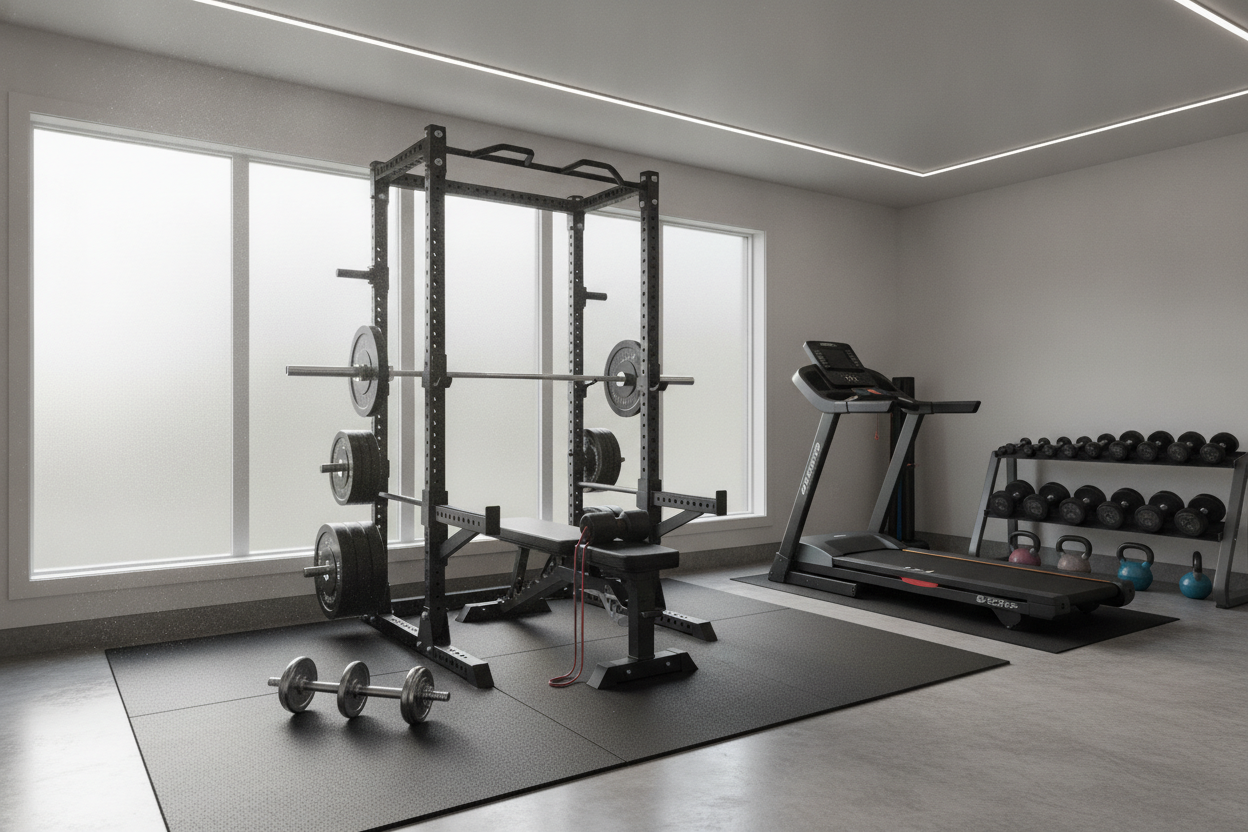
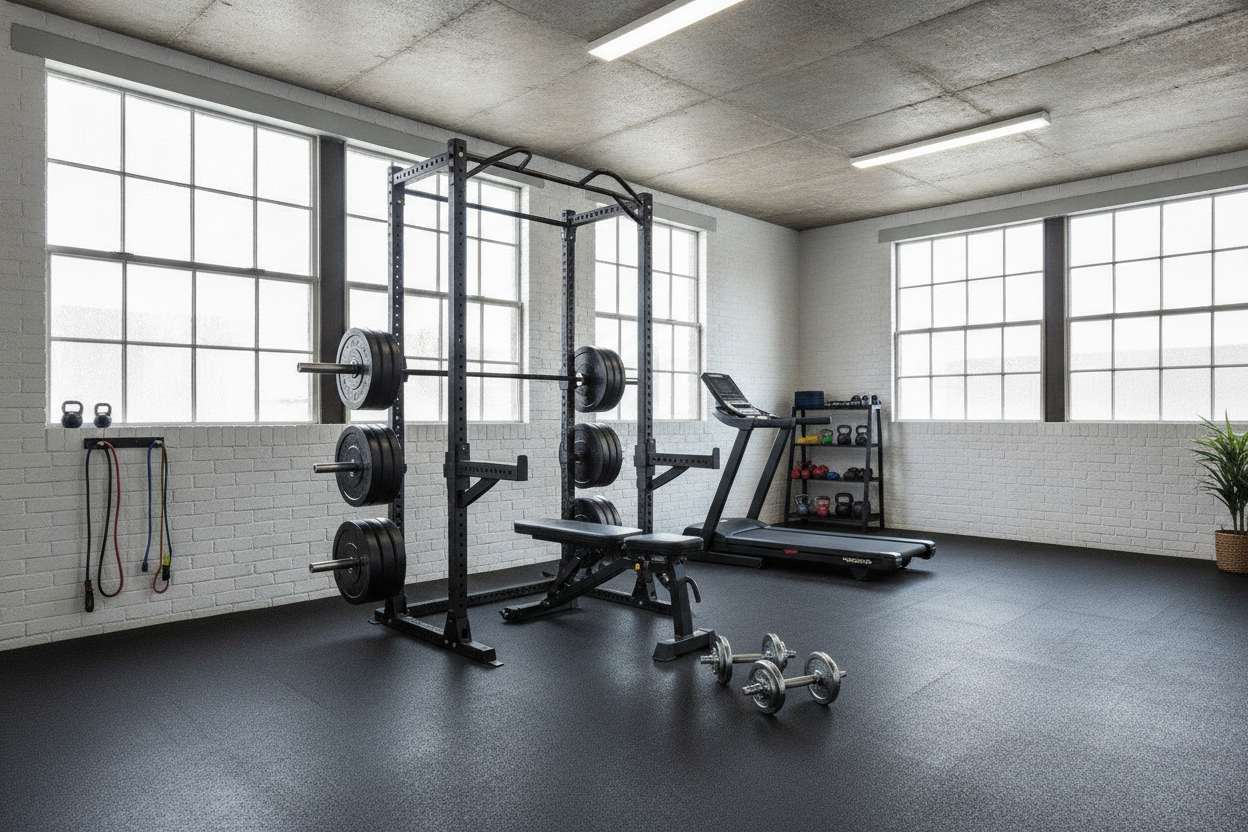
Instead of isolated machines, the smart money goes into a home workout systems approach that uses 11-gauge steel and functional footprints. Think about a power rack. A 3x3 inch rack with a 48-inch width can be the base for your squats, bench press, pull-ups, and even cable work if you add an attachment. That is a home workout system that grows with you. Compare that to a cheap weight training machine for home that you'll outgrow the moment you can lift more than 150 pounds.
I’ve tested 'all-in-one' home weight training systems that look like transformers. They have arms popping out everywhere and pulleys tucked into corners. While they look cool in a 3D render, they are a nightmare to maintain. Every joint is a failure point. If you’re serious about a strength training home gym, you want fewer moving parts and more high-quality steel. A residential gyms setup should be about efficiency, not equipment count. You want weight systems that offer consistent resistance, not a new workout machine that breaks after a month of heavy deadlifts.
The Only 3 Workout Machines That Actually Make Sense at Home
If you have the space and you're dying to add some selectorized or plate-loaded iron, don't just buy the first thing you see on Amazon. Finding the best weight training machines for every home gym means looking for pieces that offer the most 'bang for your buck' in terms of muscle recruitment and versatility.
- The Functional Trainer: This is the king of the at home weight machine category. Two independent cable columns with 200-lb stacks allow for hundreds of movements. It’s essentially a home gym resistance machine that replaces ten different stations. Look for one with a 2:1 ratio for longer cable travel.
- Lat Pulldown / Low Row Combo: If you want a thick back, you need a cable row. Buying a combo unit saves space and gives you that heavy-duty resistance training home gym feel without needing two separate towers. Make sure it has a footplate for the low rows.
- Leg Press / Hack Squat Hybrid: This is the only 'big' machine I ever recommend. It takes up a lot of room, but it’s the only way to safely push your legs to failure without a spotter. A good hybrid will have a 1,000-lb capacity and a smooth linear bearing system.
Avoid the 'home body gym' setups that use power rods or rubber bands as the primary resistance if you’re looking for serious strength training machine at home. They don't provide a consistent strength curve. You want iron or high-quality cables. An in home gym system is only as good as the tension it provides. If the resistance feels 'mushy,' you won't use it. Spend the extra money on a machine at home that uses real weight plates or a solid steel stack.
Don't Let Heavy Equipment Destroy Your Foundation
One thing people forget when building an in home gym set is that workout machines are heavy. A fully loaded leg press can easily exceed 1,200 pounds including the plates. If you put that on cheap, 1/2-inch interlocking foam tiles, those tiles will be crushed flat within a week. Worse, you could actually crack the concrete in your garage if you’re dropping weight on an unpadded floor.
You need to protect your floor with a large exercise mat for home gym setup or, better yet, 3/4-inch stall mats. I’ve made the mistake of using the 'pretty' foam flooring from a big-box store, and it was a disaster. It slid around during lunges and offered zero protection for my dumbbells. High-density vulcanized rubber is the only way to go for a work out home gym.
Think about the static load. A strength machine at home stays in one spot forever. Over time, that weight can cause 'pitting' in your subfloor. If you’re setting up a home lifting gym on a second floor, you absolutely must consult a structural engineer. Most residential floors aren't rated for a 500-pound functional trainer plus a 300-pound lifter in a concentrated 4x4 area. Keep the heavy steel in the garage or the basement.
How to Measure Your Space Before Committing to a Machine
Before you hit 'buy' on that at home workout system, get some blue painter's tape. Tape out the footprint of the machine on your floor. But here is the secret: don't just tape the machine's dimensions. Tape the 'working area.' If a lat pulldown is 4 feet long, but you need to sit 2 feet back to do rows, your functional footprint is 6 feet. If it’s plate-loaded, you need at least 18 inches on each side to actually slide the plates onto the pegs.
Check your ceiling height. Many a home training system has been returned because the owner didn't account for the pull-up bar or the top of the weight stack hitting a 7-foot ceiling. Also, consider your lighting and garage door openers. There’s nothing worse than finishing your home strength training machines assembly only to realize the garage door hits the top of the rack when it opens.
Finally, think about the 'flow' of your home exercise gyms. Can you move from your bench to your dumbbells without tripping over a cable? A crowded gym is a gym you’ll stop using. Leave yourself lanes to walk. A minimalist home indoor gym that is easy to navigate will always beat a cluttered room full of the latest 'as-seen-on-TV' workout system for home.
My Biggest Equipment Mistake
Years ago, I bought a 'complete' in home weight machines station from a liquidation sale. It looked like a beast—cables, a pec deck, a leg developer, the works. It took me six hours to build. The first time I used the pec deck, the cable snapped because the alignment was slightly off. I couldn't get replacement parts because the company had gone under. I ended up with a 400-pound paperweight in my garage that I had to pay someone to haul away. Now, I only buy from brands with a track record and real warranties.
Frequently Asked Questions
Are multi-station home gyms worth it?
Usually, no. They try to do too many things and end up being mediocre at all of them. You’re better off with a high-quality power rack and a separate cable tower or functional trainer. It’s more durable and offers a better range of motion.
How much should I spend on a home workout system?
For a solid, entry-level setup that won't break, expect to spend between $1,500 and $2,500. This covers a rack, a bar, plates, and a bench. If you want a selectorized weight lifting machine for home, add another $1,200 to $2,000 for a quality functional trainer.
Does a home gym increase home value?
Generally, no. Most buyers see a home fitness gym as a room they have to convert back into a bedroom or garage. However, a clean, well-organized residential gyms setup can be a selling point if the equipment is high-end and the flooring is professional.