Why Your Glutes Are Asleep and How to Wake Them Up for Bigger Lifts
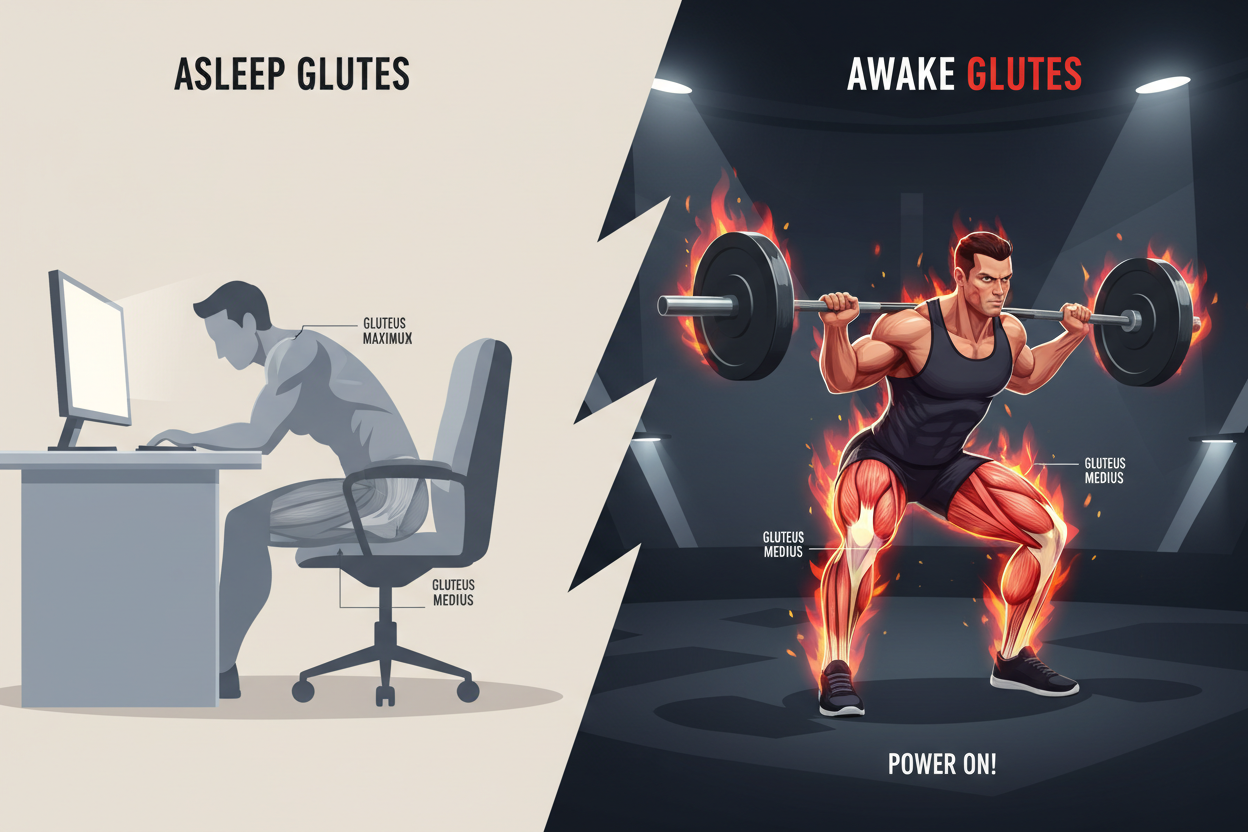
You spend hours in the gym squatting and deadlifting, yet your lower back takes the brunt of the load while your jeans fit exactly the same way they did six months ago. It is a frustrating reality for many lifters and desk workers alike. The issue usually isn’t a lack of effort; it is a lack of connection. Your glutes aren't weak in the traditional sense—they are simply dormant. This phenomenon, often called "gluteal amnesia," happens when the neural connection between your brain and your backside weakens, usually due to prolonged sitting.
To fix this, you don't need to pile more weight on the bar immediately. You need to re-establish that neural pathway. The best exercises for glute activation are low-load, high-focus movements designed to isolate the muscle before you integrate it into compound lifts. By performing these specific drills before your main workout, you ensure that your hips, not your spine or hamstrings, drive the movement.
The Science of the Sleeping Glute
Your glutes are comprised of three main muscles: the gluteus maximus (the power generator), the gluteus medius, and the gluteus minimus (the stabilizers). When you sit for eight hours a day, your hip flexors tighten up, causing reciprocal inhibition. Essentially, because the muscles on the front of your hip are short and tight, the opposing muscles on the back (your glutes) remain lengthened and switched off.
If you jump straight into a heavy squat with tight hip flexors and inactive glutes, your body compensates. Your lower back arches excessively, and your hamstrings take over the role of hip extension. This is a recipe for injury and stalled progress. Activation drills function as a wake-up call, priming the neuromuscular system to fire correctly.
My Battle with "Dead Butt" Syndrome
I learned this lesson the hard way a few years ago. I was chasing a 400-pound deadlift, but every time I got close to heavy loads, my lower back would spasm. I assumed my back was weak, so I did more hyperextensions. The pain got worse. I eventually saw a physical therapist who put me on a table and asked me to lift my leg backward while lying on my stomach. I couldn't do it without twisting my spine. My glutes were completely offline.
For two months, I wasn't allowed to touch a barbell. My prescription was entirely focused on small, boring, burning movements. It was humbling to struggle with a resistance band when I was used to moving iron plates, but it worked. Once I learned how to actually squeeze the muscle, my back pain vanished, and my lifts shot up. The carryover from these isolation movements to heavy lifting is undeniable once you experience it.
Top Movements to Fire Up Your Hips
Building a pre-workout routine doesn't require complex machinery. The best glute activation exercises rely on body weight or light resistance bands. The goal here isn't failure; it is firing. You want to feel a distinct burn and contraction.
1. The Glute Bridge
This is the foundational movement for horizontal hip extension. Lying on your back with knees bent and feet flat on the floor, drive through your heels to lift your hips. The nuance is in the pelvis; tuck your tailbone slightly (posterior pelvic tilt) before you lift. This prevents your lower back from arching and forces the glutes to do the work. Hold the top position for two seconds, squeezing hard enough to crack a walnut.
2. Banded Clamshells
While the bridge targets the maximus, the clamshell targets the gluteus medius, which is responsible for hip abduction and stability. Lie on your side with a mini-band looped just above your knees. Keep your feet touching and open your top knee like a clam. If you roll your hips backward, you are cheating. Keep your hips stacked vertically. You should feel a deep, nagging burn in the side of your hip socket.
3. Frog Pumps
Popularized by strength coach Bret Contreras, this variation of the glute bridge takes the hamstrings out of the equation almost entirely. Lie on your back and place the soles of your feet together, letting your knees fall outward (like a butterfly stretch). drive the edges of your feet into the floor to lift your hips. This awkward-looking movement is incredibly effective for isolating the gluteus maximus.
4. Lateral Band Walks
Place a resistance band around your ankles (harder) or knees (easier). Drop into a quarter-squat athletic stance. Step laterally, pushing out against the band. Do not let your knees cave inward; keep them tracking over your toes. This dynamic movement wakes up the stabilizers that prevent knee valgus (knee collapse) during heavy squats.
Structuring Your Activation Routine
You should perform these movements as part of your warm-up, specifically after you have done some general mobility work (like foam rolling) but before you touch a weight. A typical flow looks like this:
- Glute Bridges: 2 sets of 15 reps with a 2-second hold.
- Clamshells: 2 sets of 12 reps per side.
- Lateral Band Walks: 2 sets of 15 steps per direction.
Focus on the mind-muscle connection. If you are just going through the motions without feeling the specific muscle contract, you are wasting your time. Close your eyes if you have to. Poke the muscle with your thumb to provide tactile feedback. Whatever it takes to ensure the right muscle is driving the movement.
Common Pitfalls to Avoid
The most frequent mistake people make is turning activation work into a strength workout. If you use a resistance band that is too heavy, your body will recruit other muscles—like the TFL (tensor fasciae latae) or the lower back—to move the load. These exercises are meant to be subtle. If you are shaking uncontrollably or holding your breath, lighten the resistance.
Another error is speed. Rushing through these reps defeats the purpose. The neural connection requires time under tension and deliberate intent. Slow down the eccentric (lowering) phase of the movement and pause at the peak contraction. You are teaching your nervous system a pattern it has forgotten; patience is required.
Incorporating these drills does more than just improve your physique. It corrects posture, alleviates knee and back pain, and creates a stable foundation for athletic movement. When your glutes are awake, everything else falls into place.
Frequently Asked Questions
How long does it take to fix gluteal amnesia?
It varies by individual, but most people feel a significant difference within two to four weeks of consistent activation work. The key is consistency; doing these drills daily, even on rest days, accelerates the neuromuscular connection.
Can I build muscle size with just activation exercises?
Activation exercises are primarily for neuromuscular priming rather than hypertrophy. While they will provide some tone, building significant muscle mass requires progressive overload with heavier compound movements like hip thrusts, squats, and lunges once the glutes are firing correctly.
Should I do these exercises if I don't lift weights?
Absolutely. If you sit at a desk for work, your glutes are likely inactive regardless of your gym habits. Performing a quick circuit of bridges and clamshells in the morning can help improve your posture and reduce the risk of lower back pain associated with a sedentary lifestyle.