Why Your Full Body Home Workout Is Just Making You Tired
I spent years thinking that if I wasn't a puddle of sweat on my living room floor by the 30-minute mark, I hadn't actually worked out. I’d follow these high-intensity influencer videos, gasping for air while my actual strength stayed exactly the same for months. It’s a frustrating plateau that many of us hit when we transition from a commercial rack to a full body home workout.
The problem isn't your effort; it's the programming. Most people treat their living room like a spin class, chasing a high heart rate rather than mechanical tension. If you want to actually change how you look and move, you have to stop exercising and start training. There is a massive difference between being exhausted and being stronger.
Quick Takeaways
- Sweating and being out of breath are indicators of cardiovascular stress, not necessarily muscle growth.
- Hypertrophy requires mechanical tension, which usually means slower reps and longer rest periods.
- Flooring is the most underrated piece of equipment for generating force safely.
- Progressive overload is still king, even if you only have your body weight or a few bands.
The Trap of the 'Living Room Sweat Session'
We’ve all seen the videos: a shredded influencer doing 45 minutes of non-stop burpees, mountain climbers, and air squats. They call it a 'shred' or a 'burn,' but for most people, it’s just a recipe for burnout and joint pain. When you do a 45-minute non-stop circuit, your heart rate is the limiting factor, not your muscles. This ruins your full body muscle workout at home because you’re too winded to actually push your muscles to failure.
To build dense muscle, you need mechanical tension. This means your muscle fibers need to feel a load that they struggle to move. If you can do 50 reps of something without stopping, you aren't building much muscle; you're building endurance. While endurance is great, it won't give you that 'hard' look or the functional strength to lift a heavy box without throwing your back out. Chasing fatigue is a trap. You want to chase performance.
I see people all the time doing 'junk volume'—hundreds of reps of light movements. It feels productive because you're hot and sweaty, but your nervous system is just getting fried while your muscles barely get stimulated. If you're doing a full body workout at home, you need to treat it with the same respect as a heavy session in a power rack. That means focusing on the quality of each rep, not how many you can cram into a minute.
Stop Doing Circuits: The Muscle-First Programming Approach
If you want to see real changes, you need to ditch the 'no-rest' mentality. Real strength training requires rest. You need about 2 to 3 minutes between hard sets to let your ATP (the fuel for your muscles) replenish. If you jump straight from squats to pushups without breathing, your pushups will suffer because your heart is still hammering from the squats. This is why a total body workout strategy built on strength always beats a circuit for body composition.
Your routine should be built around four primary movement patterns: a push (like pushups or overhead press), a pull (rows or pull-ups), a hinge (deadlift variations or glute bridges), and a squat. By hitting these four, you ensure a total body workout home routine that doesn't leave any gaps. Instead of doing them all in a row, do all your sets for one exercise before moving to the next. This allows you to focus and drive the intensity where it belongs.
Don't be afraid of the 'boring' stuff. Doing 3 sets of 10 slow, controlled tempo pushups is infinitely more effective than 50 sloppy ones done as fast as possible. Control the eccentric (the lowering phase) for three seconds. Feel the muscle stretch. That is where the growth happens. When you prioritize load and tension over 'the burn,' you’ll find that you actually have more energy throughout the day because you aren't constantly redlining your central nervous system.
Stop Slipping on Your Carpet (Why Traction Equals Force)
You cannot produce force if you don't have a stable base. This is the biggest mistake I see in home setups. People try to do a whole body exercise at home on a hardwood floor or a thin, slippery yoga mat. If your feet are sliding out during a lunge, your brain will naturally 'brake' your muscles to prevent you from falling. You’ll never reach true failure because your stability gives out first.
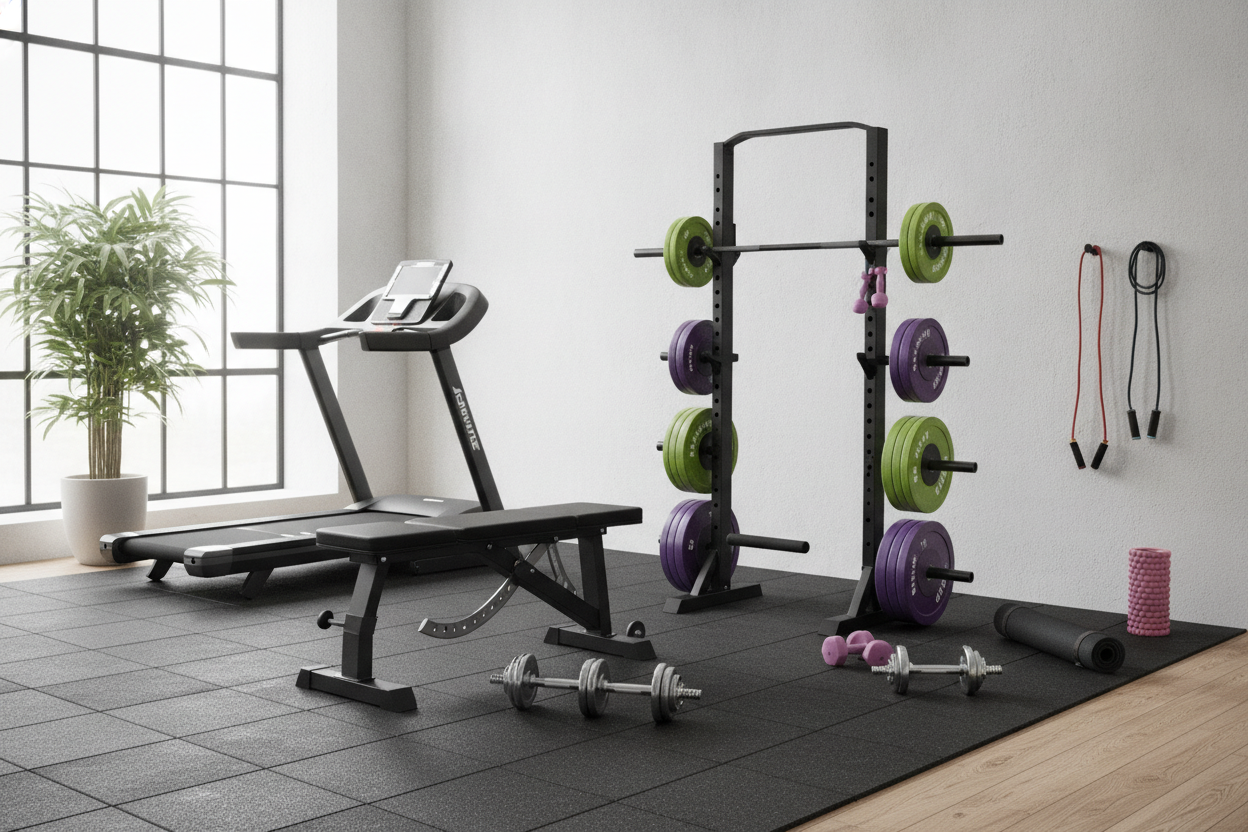
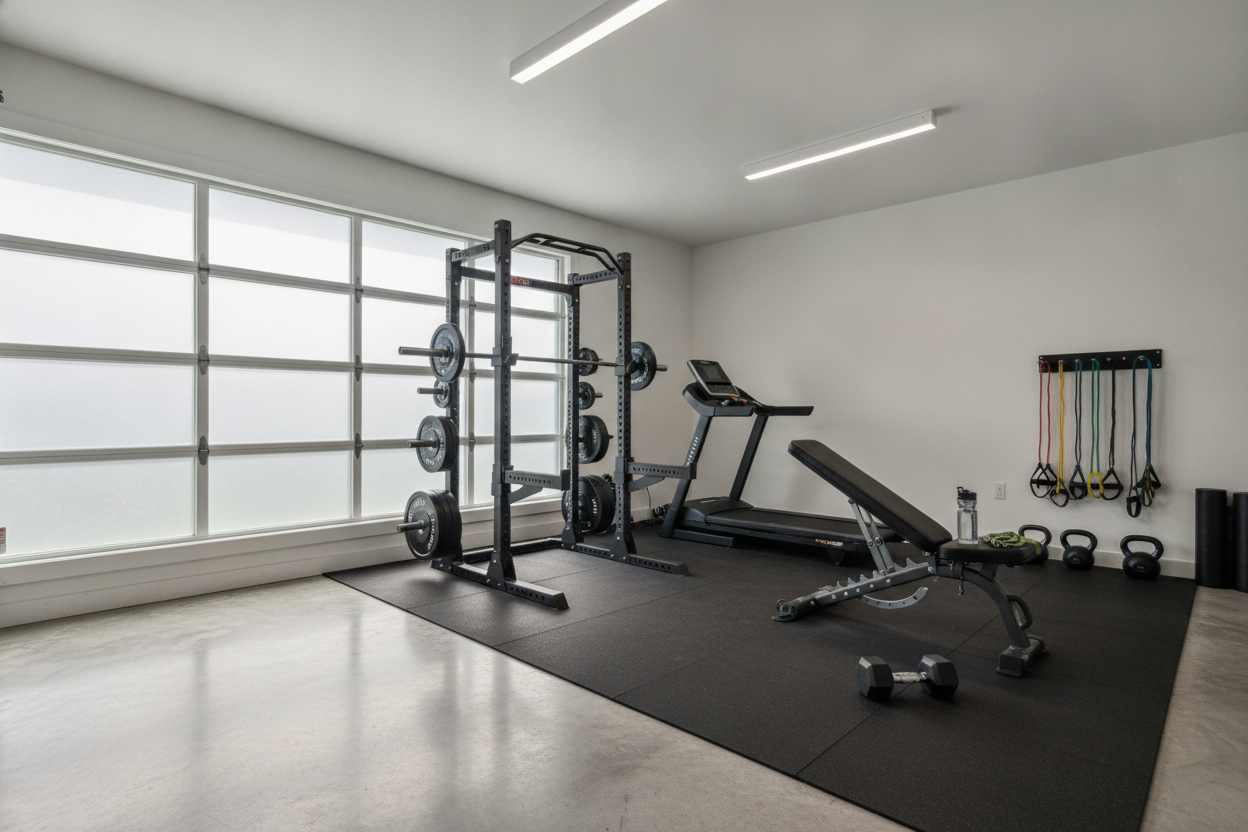
I learned this the hard way when I tried to do heavy Bulgarian split squats on a rug. I slipped, my back knee slammed into the floor, and I was out of commission for a week. Investing in a sturdy 6x8 exercise mat is probably the single best thing you can do for your home gym. It provides the friction you need to plant your feet and drive through the floor. It also saves your joints from the hard impact of plyometrics or lunges.
Density matters here. You don't want a squishy foam mat that feels like a marshmallow; you want something dense that mimics a commercial gym floor. When you have a dedicated space that doesn't move under your feet, your confidence in the movement goes up. Higher confidence leads to higher intensity, and higher intensity leads to the results you're actually looking for. Don't let a $20 rug be the reason your squats suck.
The 'No-Fluff' Living Room Routine
Here is a full-body workout routine at home that actually works. Perform this three times a week with at least one day of rest in between. Focus on the tempo: 3 seconds down, 1 second pause at the bottom, and explode up.
- Tempo Pushups: 3 sets of 8-12 reps. If these are too easy, elevate your feet on a chair. If they're too hard, do them on an incline.
- Single-Leg Glute Bridges or RDLs: 3 sets of 12 reps per side. This is your hinge. Focus on squeezing the glutes at the top.
- Inverted Rows or Doorway Rows: 3 sets of 10-15 reps. You need a pull to balance out the pushups. Use a sturdy table or a towel wrapped around a door handle if you don't have a bar.
- Goblet Squats or Split Squats: 3 sets of 12-15 reps. Hold whatever weight you have—a milk jug, a backpack full of books, or a dumbbell.
- Plank with Shoulder Taps: 3 sets of 45 seconds. Keep your hips as still as possible.
The key here is pushing close to mechanical failure. This means you should finish a set feeling like you could maybe do one or two more reps with perfect form, but no more. That 'buffer' ensures you're working hard enough to stimulate growth without injuring yourself. As you get stronger, don't just add more reps; make the reps harder by slowing down the tempo or decreasing your rest time slightly.
This isn't about being 'busy' for an hour. It's about being effective for 40 minutes. If you follow this full-body workout routine at home, you'll notice that you're actually getting stronger, not just getting better at being tired. Track your reps. If you did 10 pushups last week, try for 11 this week. That is progressive overload in its simplest form.
When to Finally Upgrade Your Gear
Bodyweight training is a fantastic foundation, but eventually, you’re going to hit a ceiling. You can only make a pushup so hard before you need external weight to keep the progress moving. If you find yourself doing 30+ reps of every exercise just to feel a challenge, it’s time to look into some real equipment to keep your full workout at home effective.
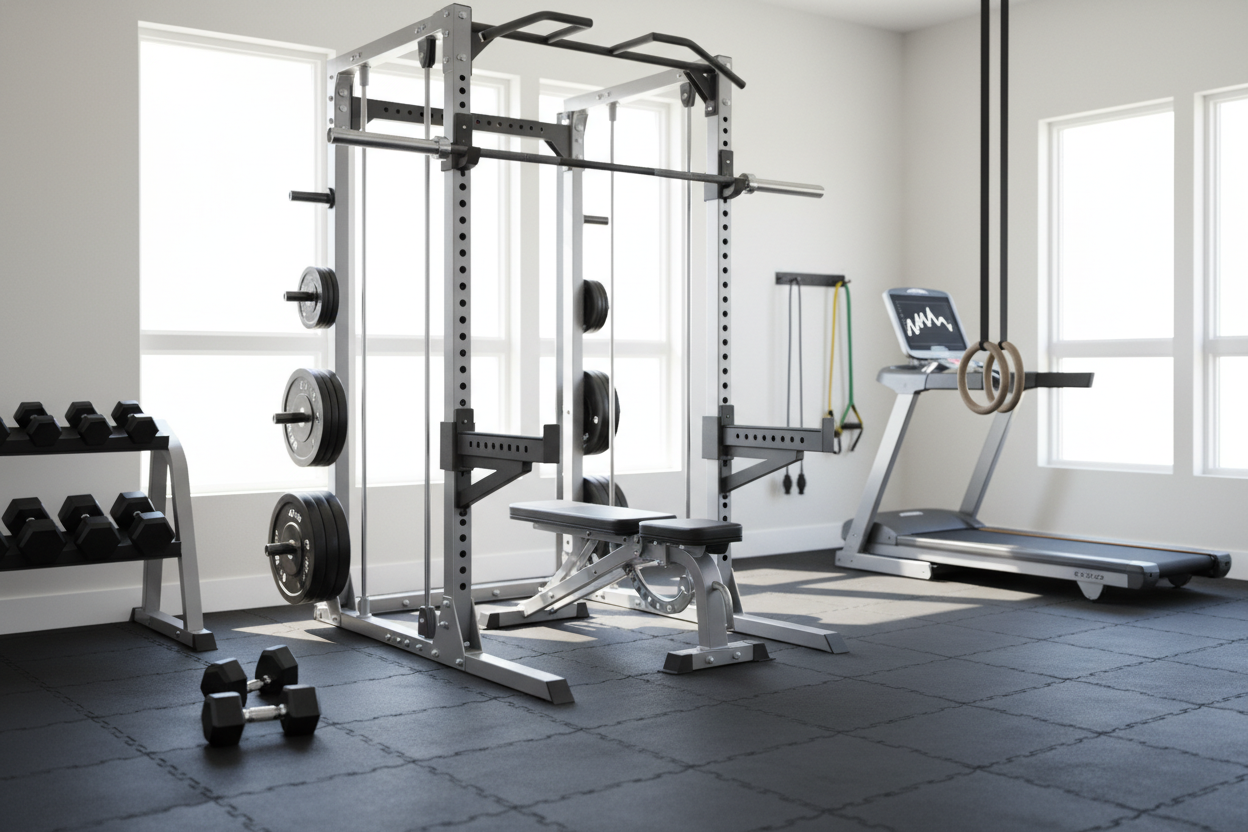
You don't need a full commercial setup, but a pair of adjustable dumbbells or some high-quality resistance bands can change everything. When you can no longer trigger a strength response with just your body, transitioning to at-home exercise machines or free weights is the only way to ensure you don't stall. Resistance is the language your muscles speak; eventually, you have to start speaking in heavier volumes.
I remember the day I finally bought a real barbell after months of trying to 'hack' my workouts with water jugs. The difference was night and day. My progress exploded because I could finally measure my gains in pounds, not just 'how much it hurt.' Don't be afraid to invest in yourself. A good piece of gear lasts a lifetime, while a cheap 'as seen on TV' gadget will end up as a clothes hanger within a month.
Personal Experience: My Hardwood Floor Disaster
Early in my home gym journey, I tried to do a 'total body' session in my socks on a polished wood floor. I was doing lateral lunges, feeling great, until my lead foot kept going and I ended up in an accidental (and very painful) split. I pulled my groin so badly I couldn't squat for three weeks. It was a ego-bruising lesson: your environment dictates your output. Now, I never train without a proper mat and the right shoes. It’s not just about safety; it’s about having the 'grip' to actually push my limits.
FAQ
Do I need to work out every day?
No. For a full-body approach, 3 to 4 days a week is plenty. Your muscles grow while you rest, not while you're working out. If you train every single day, you never give your tissues time to repair.
Can I build muscle without weights?
Yes, but it's harder to track. You have to use 'mechanical disadvantages' like slowing down the tempo, changing angles, or doing single-leg versions of exercises. Eventually, adding weight is the most efficient path.
What is the best time of day to train?
The time you will actually stick to. Some people love the 5 AM grind; I personally prefer 5 PM when I've had a few meals and my joints feel 'greased up' from moving all day. Consistency beats timing every time.