Why Your Fitness Plan for Home Needs Periodization
I remember staring at my laptop screen in a 400-square-foot apartment at 11 PM, exhausted after finishing another random 20-minute HIIT video. I was sweating, sure. But after three months of doing a different video every single night, my strength hadn't budged, and my knees ached constantly. That is the trap of the random workout cycle. If you want actual results, you need a structured fitness plan for home that relies on periodization, not just chasing a sweat.
Quick Takeaways for Home Training
- Stop relying on random daily videos; structure your training into distinct 4-week blocks.
- Phase 1 focuses on tendon strength and mastering movement patterns with 15-20 rep ranges.
- Phase 2 builds muscle by manipulating time-under-tension instead of just adding heavy weights.
- Phase 3 mimics heavy gym loads using mechanical disadvantage and unilateral movements.
- A dedicated, slip-resistant floor space is non-negotiable for safe, progressive training.
The Problem with Random Home Workouts
Most people treat their living room like a fitness buffet. Monday is a heavy dumbbell chest day, Tuesday is an intense plyometric circuit, and Wednesday is a low-impact core routine. This constant switching might prevent boredom, but it completely ignores the biological law of progressive overload. When you constantly change your workout home plan, your body never gets the chance to adapt, recover, and grow stronger.
You end up in a perpetual state of soreness without seeing any real changes in your physique or strength capacity. A highly effective workout plan for at home requires doing the same core movements week after week, slowly increasing the difficulty. This doesn't mean doing the exact same thing forever. It means applying a concept called periodization to your living room training.
What is Periodization in an In Home Workout Plan?
Periodization is just a technical term for organizing your training into specific phases, or blocks, where each block has a distinct biological goal. Professional athletes use this to peak for competitions. As a trainer, I use the Phase-Shift method for my clients' living room setups. This approach breaks your in home workout plan into consecutive 4-week blocks.
When you build a workout plan at home using 4-week phases, you force your body to adapt to a specific stressor—like endurance, muscle growth, or absolute strength—before shifting the goalposts. This prevents the dreaded plateau. Instead of doing a random mix of reps, you spend an entire month mastering a specific rep range and intensity level. It is the secret sauce that turns casual living room exercise into a serious training protocol.
Phase 1: Base Building and Joint Integrity
The first four weeks of your at home daily workout plan should focus entirely on base building. We are aiming for higher rep ranges, typically 15 to 20 reps per set. The goal here isn't to build massive biceps; it is to strengthen your tendons, ligaments, and joints to prepare them for the heavier work coming in later phases.
During this phase, establishing proper form on a stable surface is critical. Doing high-rep goblet squats or walking lunges on a slippery hardwood floor or a plush living room rug is a recipe for a rolled ankle. I always have my clients set up a dedicated large exercise mat for home gym use. This gives you the traction needed to safely establish foundational movement patterns without your feet sliding out from under you.
Phase 2: The Home Bodybuilding Routine (Hypertrophy)
Once your joints are prepped, weeks 5 through 8 shift into a home bodybuilding routine. This is the hypertrophy phase, where the primary goal is muscle growth. The rep range drops to 8 to 12 reps. But there is a catch: most people don't have a rack of heavy dumbbells at home that go up to 100 pounds.
To stimulate muscle growth with limited equipment, you have to manipulate time-under-tension. You do this by slowing down the eccentric, or lowering, portion of the lift. A 50-pound adjustable dumbbell feels like 100 pounds if you take four seconds to lower it. Understanding the power of tempo is how you force your muscles to grow without needing an entire commercial facility's worth of iron.
Phase 3: Adapting a Gym Plan at Home for Pure Strength
Weeks 9 through 12 are all about pure strength. Adapting a traditional gym plan at home for this phase requires creativity. In a commercial facility, you would just load up a barbell for sets of 3 to 5 reps. At home, you need to use mechanical disadvantage and unilateral movements to make lighter weights feel incredibly heavy.
Instead of standard push-ups, your in house workout plan will shift to archer push-ups or deficit push-ups using books. Instead of two-legged squats, you will transition to Bulgarian split squats or pistol squats. We also introduce paused reps—holding the bottom of a squat for three full seconds before exploding up. This eliminates the stretch reflex and demands maximum force production from your muscles.
Designing Your At Home Workout Planner
Putting this all together requires a solid at home workout planner. I recommend a four-day upper and lower split. Monday and Thursday are for upper body movements like push-ups, pull-ups, and overhead presses. Tuesday and Friday are dedicated to the lower body, including squats, lunges, and glute bridges. Wednesday and the weekend are for active recovery.
The best at home workout plan is the one that fits your actual schedule. If you only have three days a week, switch to a full-body routine. Just make sure you stick to the 4-week phase progression. Write down every workout, track your reps, and note how the exercises feel. If you hit the top of your rep range with perfect form, it is time to increase the difficulty in the next session.
Creating the Right Environment for Your Home Exercise Workout Plan
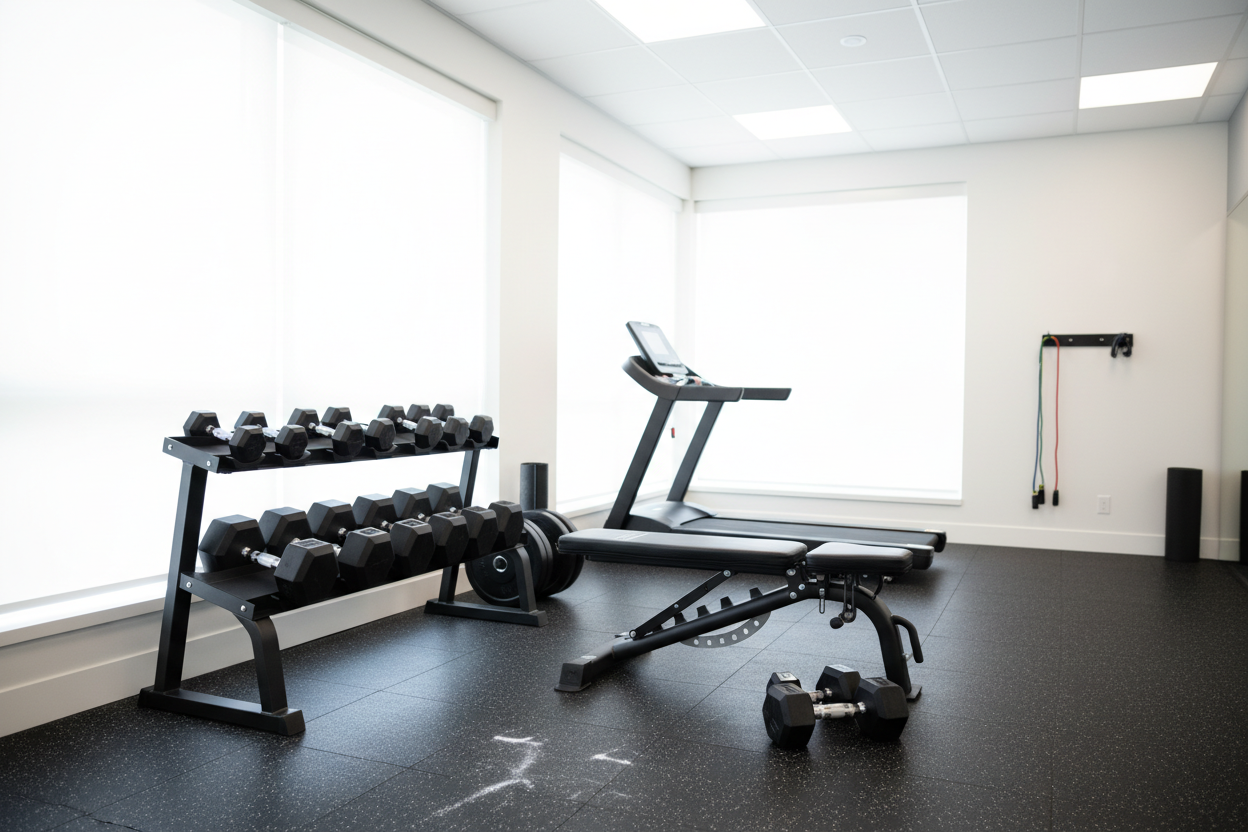
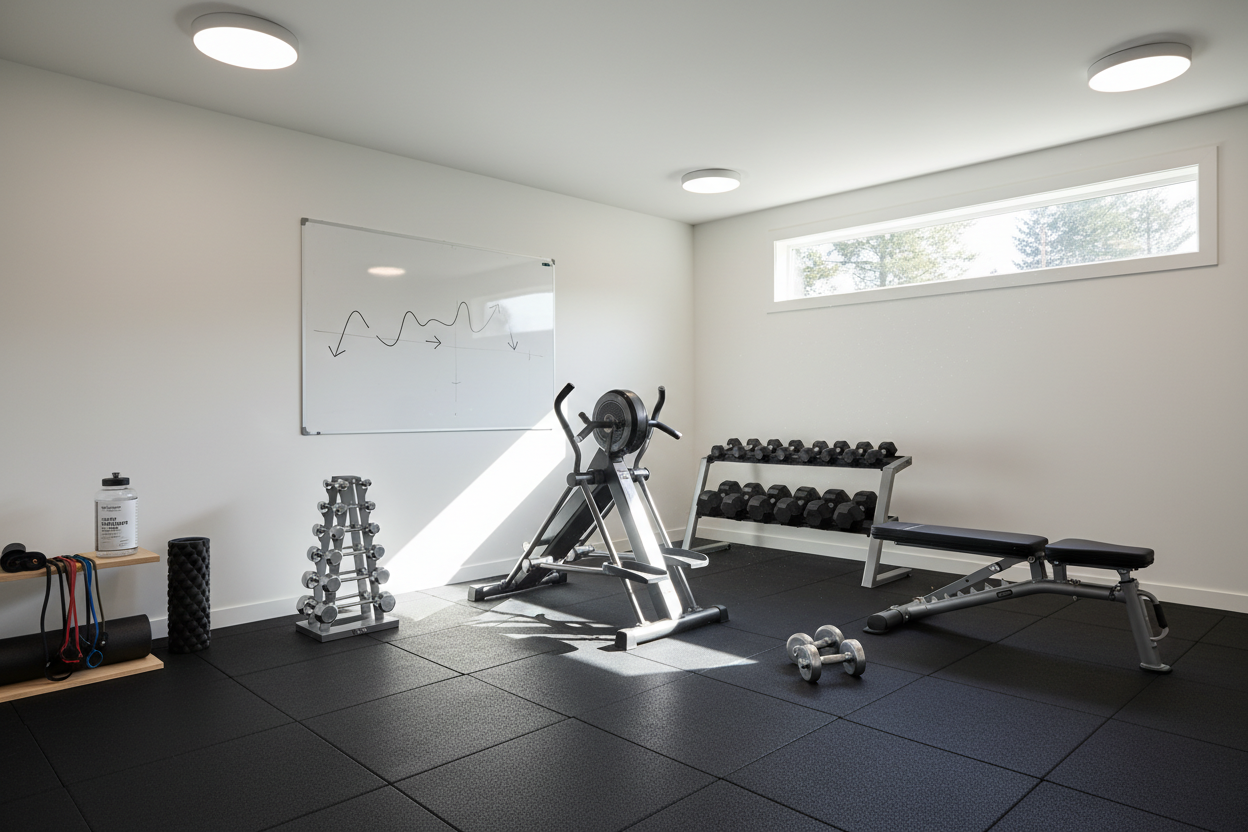
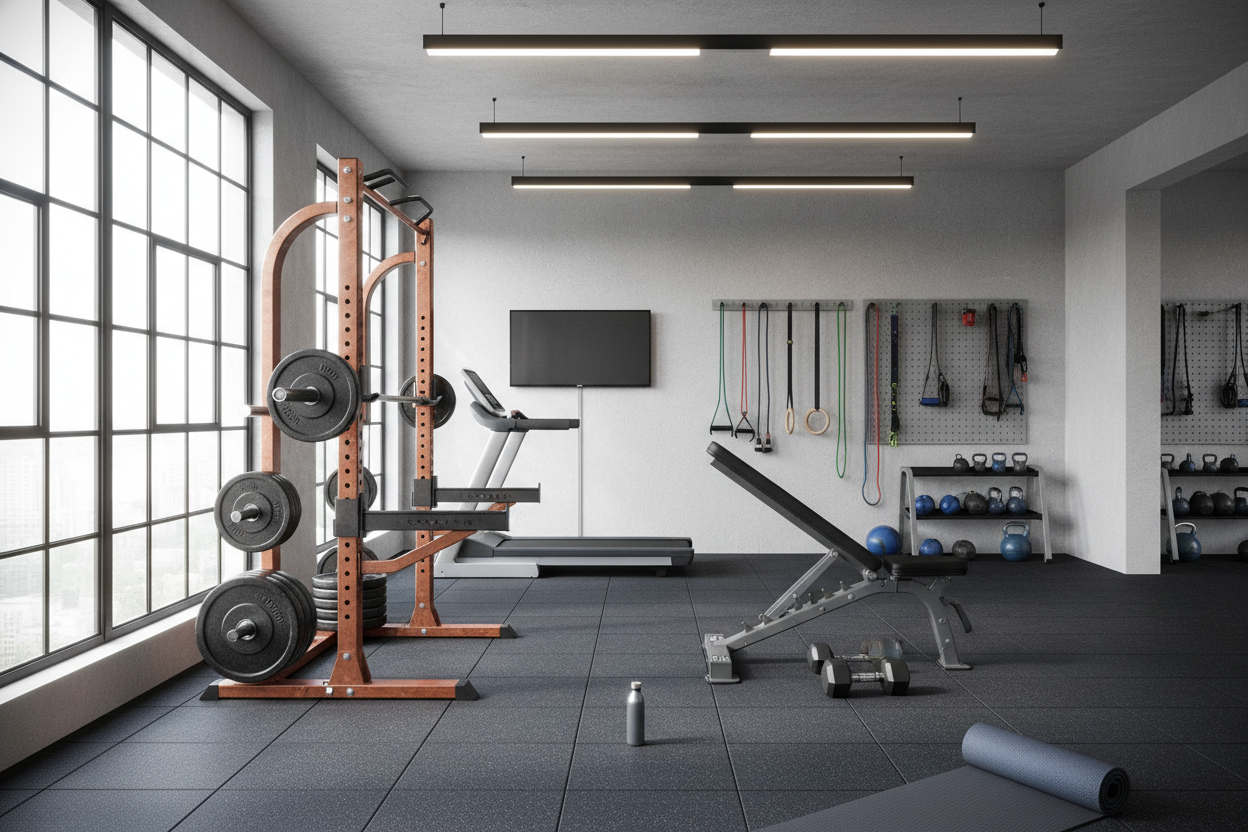
I have built out dozens of garage and spare bedroom setups, and I can tell you firsthand that your environment dictates your effort. When testing equipment for a client's home exercise workout plan last year, we tried using cheap interlocking foam tiles. The honest downside? They constantly pulled apart during heavy lateral lunges and burpees, creating a massive tripping hazard.
I quickly swapped them out for a single, heavy-duty 6x8ft exercise mat. Having a seamless, high-density surface completely changed the client's training intensity. A mat this size fits perfectly into a standard 6x6 foot clearing in a living room, protects your floors from dropping a 52.5 lb adjustable dumbbell, and most importantly, defines your workout zone. When you step onto that mat, your brain knows it is time to work.
Next Steps for Your Long-Term At Home Workouts Plan
After you complete the full 12-week cycle, take one week to deload. Cut your volume in half, focus on mobility, and let your central nervous system recover. Then, you simply restart the cycle.
Your long-term at home workouts plan is just a continuous loop of these phases. Because you are stronger now, Phase 1 will require harder variations or more weight than it did three months ago. This is how a basic fitness routine at home evolves into a lifetime of physical progress. Track your numbers, respect the phases, and watch your body transform.
Frequently Asked Questions
Can I build real muscle with a gym workout routine at home?
Absolutely. Muscle tissue only recognizes tension, not the logo on the equipment. By applying progressive overload, slowing down your tempo, and eating in a slight caloric surplus, you can achieve significant hypertrophy outside of a commercial facility.
How long should my daily sessions be?
If you are pushing close to failure and resting 60 to 90 seconds between sets, a highly effective session should take between 40 and 55 minutes. Anything longer usually means you are resting too much or doing junk volume.
Do I need heavy dumbbells for the strength phase?
While adjustable dumbbells are incredibly helpful, you can build pure strength using bodyweight progressions. Mastering the pistol squat or the one-arm push-up requires immense absolute strength without lifting a single iron plate.