Why Your Daily Gym Workout Routine Fails After 3 Weeks
You’ve been there. It’s 11 PM on a Sunday, you’ve just finished a YouTube marathon of elite bodybuilders, and you’ve convinced yourself that starting tomorrow, you are a new person. You print out a rigid spreadsheet, buy a fresh tub of pre-workout, and declare that your new daily gym workout routine is now a non-negotiable part of your identity.
By day ten, your elbows ache. By day fifteen, a late night at work makes you skip a session, and the guilt is so heavy you decide the whole week is a wash. By week three, that expensive power rack in your garage is mostly just a high-end clothes hanger for your wet laundry. The problem isn’t your willpower; it’s the math of your expectations.
Quick Takeaways
- Rigid 7-day splits ignore real-life stressors like poor sleep or long work hours.
- Training every day requires auto-regulation—adjusting intensity based on how you feel.
- Distinguish between 'Base Days' (heavy lifting) and 'Flex Days' (mobility and recovery).
- Investing in joint protection, like a quality floor surface, is mandatory for daily volume.
The Problem With the 'No Days Off' Mentality
Social media loves the 'No Days Off' hashtag, but your Central Nervous System (CNS) absolutely hates it. When you try to redline your body seven days a week with heavy compounds and high-intensity intervals, you aren't building muscle; you're digging a recovery hole that eventually caves in on you. I’ve seen guys go from 405-lb deadlifts to being unable to move their own body weight because they ignored the signs of systemic fatigue.
CNS fatigue isn't just 'feeling tired.' It's your grip strength failing on weights you usually crush. It’s waking up at 3 AM with your heart racing. If you treat every session as a PR attempt, you’ll burn out before the first month is over. A real gym workout daily routine needs to account for the fact that you aren't a professional athlete with a full-time recovery team.
What a Sustainable Daily Gym Workout Routine Actually Looks Like
Sustainability comes from the 'High/Low' approach. This doesn't mean you sit on the couch; it means you change the definition of what 'training' is. Some days are meant for moving heavy iron, and some days are meant for moving your joints through their full range of motion. If you want to train 365 days a year, you have to stop thinking of 'rest' as the absence of movement.
I personally use a 3-day-on, 1-day-active-recovery split. On the active days, I might just do some kettlebell swings or a long walk. This keeps the habit of the 'daily' habit alive without destroying my tendons. It’s about building forward momentum, not just racking up a high score on a heart rate monitor.
Base Days vs. Flex Days
Base Days are your anchors. These are the sessions where you hit your primary lifts—squats, presses, pulls. These require focus and high energy. Flex Days are your insurance policy. If life gets chaotic or you’re feeling beat up, you swap a Base Day for a Flex Day. This keeps you in the habit of showing up without the physical toll.
For example, if you're crunched for time but still want to move, a 30 minute gym workout female routine can serve as a perfect Flex Day. It’s enough to get the blood flowing and maintain your momentum without requiring two hours of your life. The goal is to finish the session feeling better than when you started, not like you were hit by a freight train.
How to Auto-Regulate Your Gym Workout Daily Routine
Auto-regulation is the secret sauce of lifters who stay in the game for decades. It’s the ability to walk into your gym, realize your gym workout daily routine calls for a heavy 5x5, but acknowledging that you only got four hours of sleep. Instead of grinding out ugly, dangerous reps, you pivot. You drop the weight by 20%, focus on tempo, or switch to a completely different movement.
I used to feel like a failure if I didn't hit the exact numbers on my spreadsheet. Now, I use a RPE (Rate of Perceived Exertion) scale. If a weight that usually feels like a 7 feels like a 10, I dial it back. This isn't being lazy; it's being smart. Your body doesn't know what's written on the paper; it only knows the stress it's under.
Protecting Your Joints When You Train Every Day
If you're training daily, the friction adds up. Doing core work or mobility drills on a cold, hard concrete garage floor is a fast track to bursitis and lower back grumpiness. I learned this the hard way after trying to do daily burpees on a thin yoga mat that slid around like it was on ice. My knees were shot within a week.
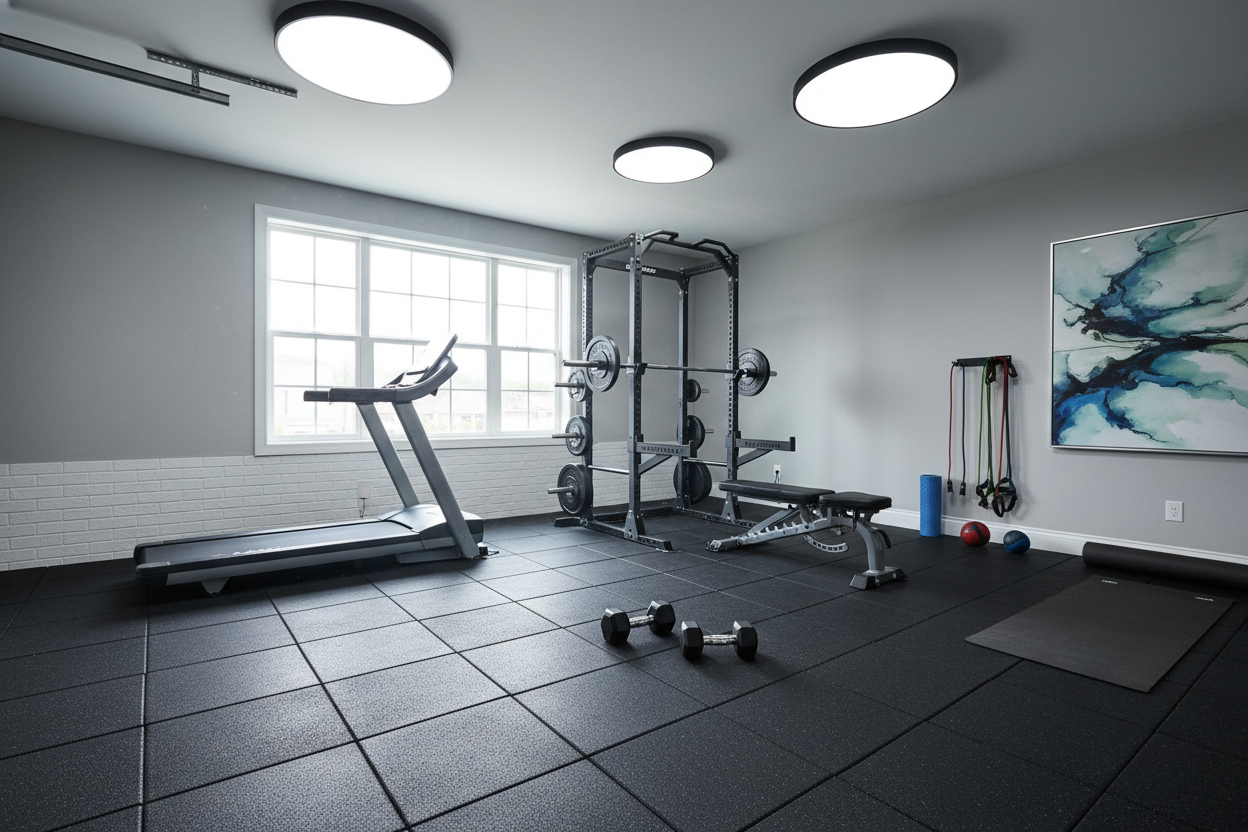
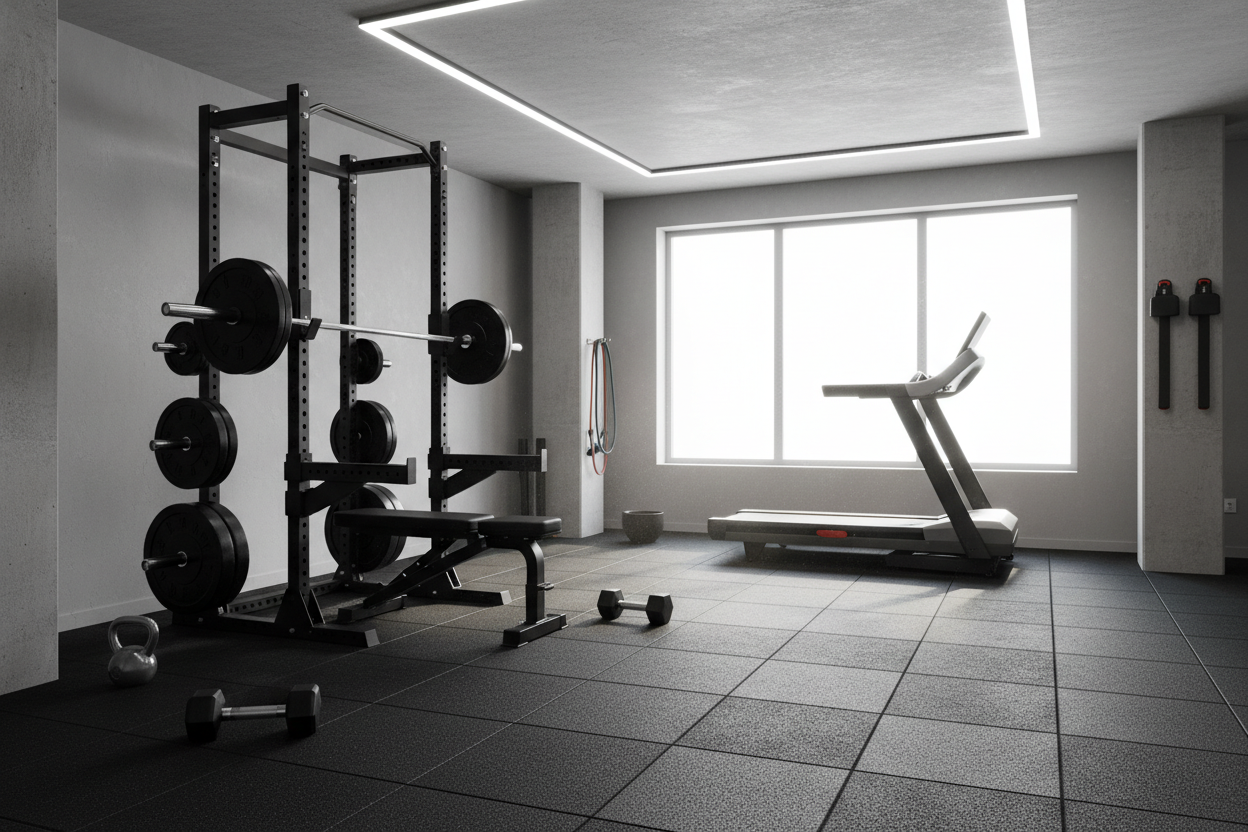
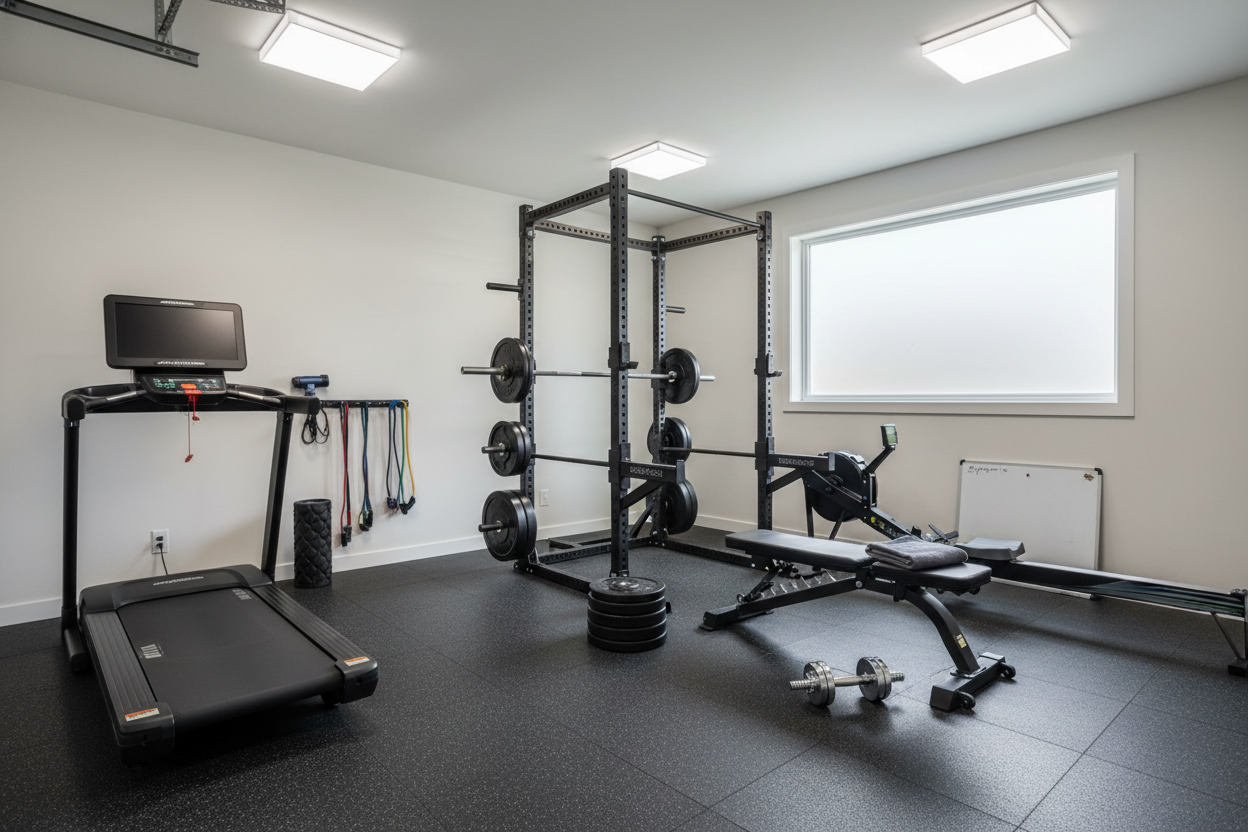
You need a dedicated space that absorbs impact. Investing in a large exercise mat for home gym use is probably the single best thing you can do for your longevity. It gives you a designated zone for those Flex Day mobility sessions and saves your joints during high-rep accessory work. If your gear makes you hurt, you won't want to use it.
Stop Punishing Yourself for Having a Life
The biggest reason these routines fail is the 'all or nothing' trap. You think if you can’t do the full 90-minute session, the day is a zero. That’s nonsense. A 10-minute session of foam rolling and stretching counts as your daily workout. It keeps the neurological pathway of 'I am a person who trains' active.
Stop viewing your workout as a punishment for what you ate or a test of your toughness. View it as a service to your future self. Some days that service is a 400-lb deadlift; other days, it’s just showing up to move. Both are wins.
Personal Experience: The 60-Day Crash
A few years back, I tried a high-frequency Bulgarian-style squat program. I squatted every single day for 60 days. By day 45, I was strong, but I was also miserable. I couldn't sleep, my appetite vanished, and I was snapping at my family. I had the 'routine' down, but I had no flexibility. When I finally hit a wall and missed a day, I didn't just miss one day—I quit lifting for two months. I learned that a rigid plan is a brittle plan. Now, I prioritize the habit over the specific exercise, and I haven't missed a week in three years.
FAQ
Is it okay to work out every day?
Yes, provided you vary the intensity. You cannot train at 90% of your max every day without injury. Mix heavy lifting with low-impact movement like walking or mobility work.
What if I miss a day of my routine?
Don't try to 'make it up' by doing a double session the next day. That's a recipe for injury. Just resume your schedule as if it never happened. One day doesn't ruin a year of progress.
Do I need expensive equipment for a daily routine?
Not necessarily, but you need the right environment. A solid floor surface and a few versatile weights (like kettlebells or adjustable dumbbells) are enough to keep a daily habit alive regardless of your schedule.