Why Your Build Muscle Nutrition Plan Fails After 3 Weeks
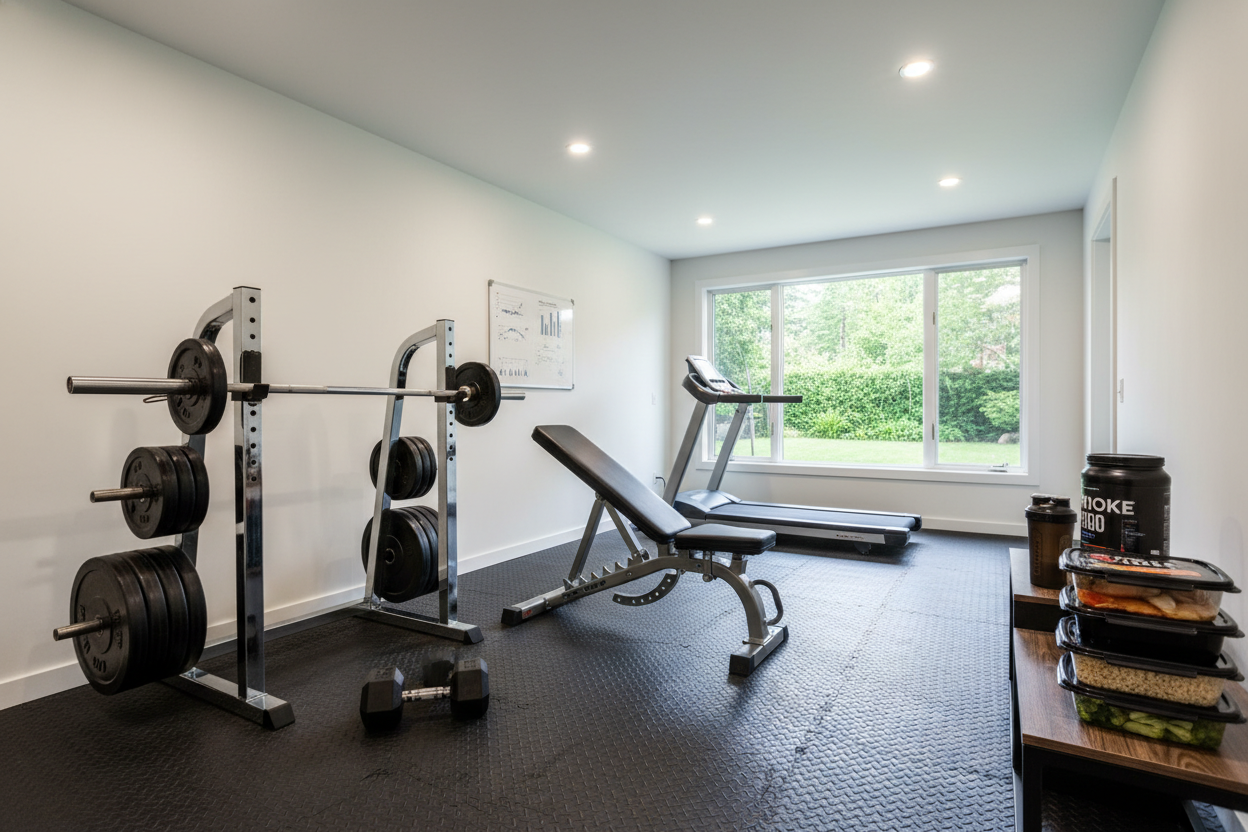
I remember my first real bulking attempt in my garage gym. I bought three family-sized tubs of peanut butter and a 20lb bag of rice, thinking I would be a house by Christmas. By day 20, I was so bloated I could barely tie my lifting shoes, let alone squat. This is why your build muscle nutrition plan usually dies a painful death before the first month is up. You are asking your digestive system to go from zero to sixty without a warm-up, and it is stalling out.
Quick Takeaways
- Stop jumping 1,000 calories overnight; your gut cannot handle that sudden volume.
- Use caloric step-loading to add food incrementally as your training intensity increases.
- Prioritize calorie-dense foods over high-volume 'clean' foods to avoid premature fullness.
- Schedule 3-day nutritional deloads to reset your appetite and insulin sensitivity.
The Week Three Wall (And Why You Keep Hitting It)
Most guys start a diet program to build muscle with a massive surge of motivation. They calculate their maintenance, add 800 calories, and start shoveling. For the first two weeks, it feels like a superpower. By week three, the lethargy hits. You wake up feeling like you swallowed a medicine ball, and the thought of another chicken breast makes you want to sell your power rack.
This is the biological shock of a sudden caloric surplus. Your enzymes, gut microbiome, and insulin response are not ready for the workload. Instead of building tissue, your body spends all its energy trying to process the backlog. You are not growing; you are just fermenting. This leads to the 'perma-bloat' that makes most people quit their nutrition plan muscle gain goals before the real gains start.
Progressive Overload Isn't Just for Barbell Squats
We all know you cannot add 50 pounds to your squat every single session. So why do we try to do it with our nutrition plans for building muscle? The most successful bulks I have ever run treat food like a linear progression program. You start slightly above maintenance and add 'plates' to your plate every week.
If your maintenance is 2,500 calories, do not start at 3,500. Start at 2,700. Stay there for a week. See how your weight and your lifts respond. If the scale is stagnant and you are still crushing your sets, bump it to 2,900. This deliberate approach ensures that the weight you are gaining is actually functional tissue, not just a thicker waistline. It turns the bulk into a marathon rather than a three-week sprint to obesity.
Expanding Your Capacity Without the Crash
Your digestive system is a muscle in its own right. It needs to be trained to handle higher throughput over time. Just like upgrading to a large exercise mat for home gym use gives you more physical room to train, caloric step-loading gives your digestive system room to expand its capacity. You are literally teaching your body how to process more fuel without the systemic inflammation that causes that heavy, sluggish feeling in the morning.
A Muscle Gain Meal Plan Male Lifters Can Actually Digest
The biggest mistake in a muscle gain meal plan male lifters follow is trying to eat 'clean' with massive volumes of fiber. If you are trying to hit 4,000 calories using only broccoli, beans, and sweet potatoes, you are going to fail. You will be full long before you hit your macros. You need calorie density.
I swap massive bowls of oatmeal for cream of rice. I use white rice instead of brown because it digests faster, clearing the way for the next meal. You want foods that move through you efficiently. If you are just starting out, check out The Simplest Meal Plan Muscle Gain Actually Responds To for a solid foundation before you start scaling up the volume. Once you have the basics down, you can start adding the density needed for a true surplus.
When to 'Deload' Your Nutrition Plan Muscle Gain Style
Even the best nutrition plan muscle gain strategy needs a break. After 6-8 weeks of pushing the calories, your body gets 'sticky.' Your hunger cues disappear, and your insulin sensitivity starts to dip. This is when you take a nutritional deload. It sounds counterintuitive to eat less to grow more, but it works.
For 3 to 4 days, drop your calories back down to maintenance. Cut out the extra snacks and the massive shakes. This brief respite allows your digestive tract to clear out and resets your body’s demand for nutrients. Usually, by day four, you will be ravenous again and ready to push the next block of growth with renewed vigor.
Pairing Your Scaled Diet with the Right Training Volume
You cannot eat like a pro bodybuilder and train like a couch potato. If you are increasing the fuel, you have to increase the work. This is where most home gym owners mess up—they eat for a 5x5 program but only put in 30 minutes of low-intensity work. The extra calories need a job to do, or they will just settle as fat.
I recommend pairing this progressive eating strategy with a high-frequency, high-intensity program. The Best Exercise Plan to Gain Muscle Fits on an Index Card is a perfect companion here. It provides enough stimulus to ensure those extra calories are being driven into muscle protein synthesis rather than just sitting in your gut. If you aren't straining under a bar, that extra steak is just going to your midsection.
My Personal Bulking Disaster
A few years back, I decided I was going to hit 220 lbs no matter what. I was drinking a 1,200-calorie shake every night before bed, loaded with raw oats and olive oil. I got to 220, alright, but I also developed a double chin and lost my ability to breathe comfortably while tying my shoes. My blood pressure spiked, and my workouts actually got worse because I was too lethargic to move. I learned the hard way that 'forced feeding' is a recipe for a bad time. Now, I never add more than 200 calories at a time, and I feel ten times better.
FAQ
How do I know if I am eating too much?
If you are waking up with zero appetite and feeling 'heavy' or bloated all day, you have outpaced your digestive capacity. Scale back 10% and hold there for a week until your hunger returns.
Can I just use mass gainer shakes?
You can, but most are loaded with cheap maltodextrin that will spike your blood sugar and leave you crashing. I prefer making my own with cream of rice, whey, and nut butter for better digestion.
What is the best way to track progress?
Track your scale weight as a weekly average, but more importantly, track your strength in the 8-12 rep range. If the calories go up but your strength is stagnant, you are likely just gaining fat.