Why Your Bodybuilding Workout Plan for Mass Failed in the Garage
I remember scrolling through a glossy fitness mag years ago, trying to map out a chest day that required three different cable heights and a Pec Deck. I was standing in my garage next to a rusty squat rack and a pair of 50-pound dumbbells. It didn't work. Trying to force a commercial bodybuilding workout plan for mass into a home gym usually results in a lot of wasted time and creative setups that just end up hurting your shoulders.
- Commercial routines rely on machine-guided paths; home gyms require manual stability.
- Stop chasing pump through volume and start chasing tension through tempo.
- Gravity is your best friend when you don't have a cable stack.
- Your floor matters more than you think for force production.
Why That Magazine Routine Turned Into a Junk Volume Nightmare
Most mass routines you find online are written for guys training at a Gold's Gym. They assume you have access to a Hammer Strength chest press and a leg extension machine. When you try to swap a machine press for a barbell press while following the same high-volume rep scheme, your joints pay the price. You can't do five sets of 15 reps on a barbell bench with the same recovery capacity as a machine.
The stability demands are higher, and the fatigue is systemic, not just local. You end up with junk volume—reps that don't build muscle but definitely keep you from lifting heavy the next day. In a garage, you have to prioritize movements that give you the most bang for your buck without wrecking your connective tissue.
How to Recreate Machine Tension With Free Weights
Machines provide constant tension throughout the entire range of motion. A cable crossover doesn't get easier at the top, but a dumbbell fly does. To fix this, you have to use your brain. I started using 3-second negatives and 1-second pauses at the bottom of every rep. It forces the muscle to work harder without needing a 400-lb stack.
This shift in focus is why I ran the same mass bodybuilding workout for 6 months and actually saw growth instead of just getting better at swinging weights around. Use gravity to your advantage. If an exercise gets easy at the top, stop just short of lockout to keep the muscle loaded. It’s about making 50 pounds feel like 80.
A Garage-Friendly Bodybuilding Workout Program for Mass
You don't need 20 machines. You need a rack, a bench, and the discipline to stick to an upper/lower split. This bodybuilding workout program for mass prioritizes the big movers: weighted dips, pull-ups, squats, and RDLs. If you want the specific rep ranges I used to blow up my legs without a leg press, head over to our comprehensive workout hub for the full breakdown.
The key is progressive overload—adding 5 lbs or one extra rep every single week. In a home gym, you are the architect of your own intensity. You don't have rows of machines to keep you busy, so you have to make the barbell your best friend. A 4-day split allows for maximum recovery while hitting every muscle group with enough frequency to trigger hypertrophy.
Don't Ignore Your Floor When Chasing a Pump
I spent two years lifting on bare concrete before I realized why my lunges felt so shaky. It wasn't my balance; it was the lack of friction. When you're running a mass program bodybuilding style, you're often doing high-rep lunges or heavy dumbbell pullovers. If your feet are sliding or your bench is shifting an inch every rep, you're leaking power.
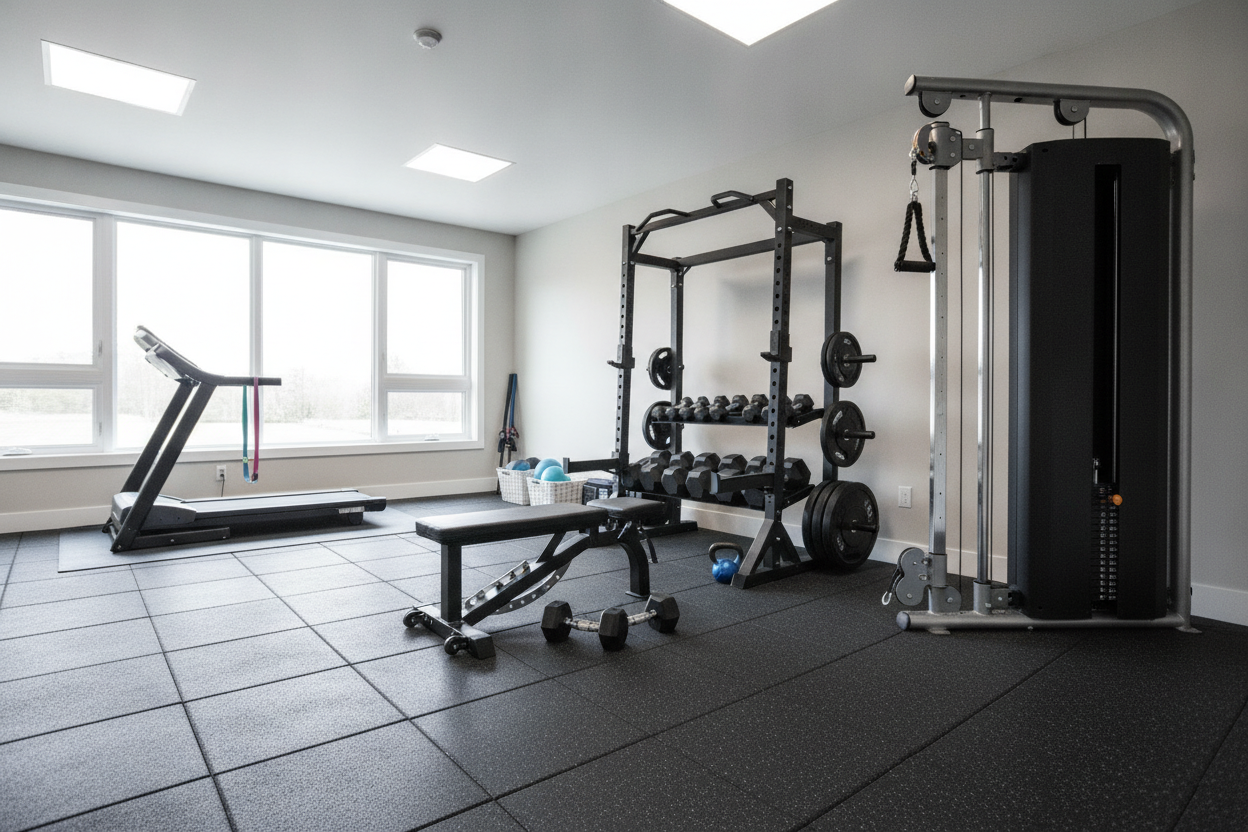
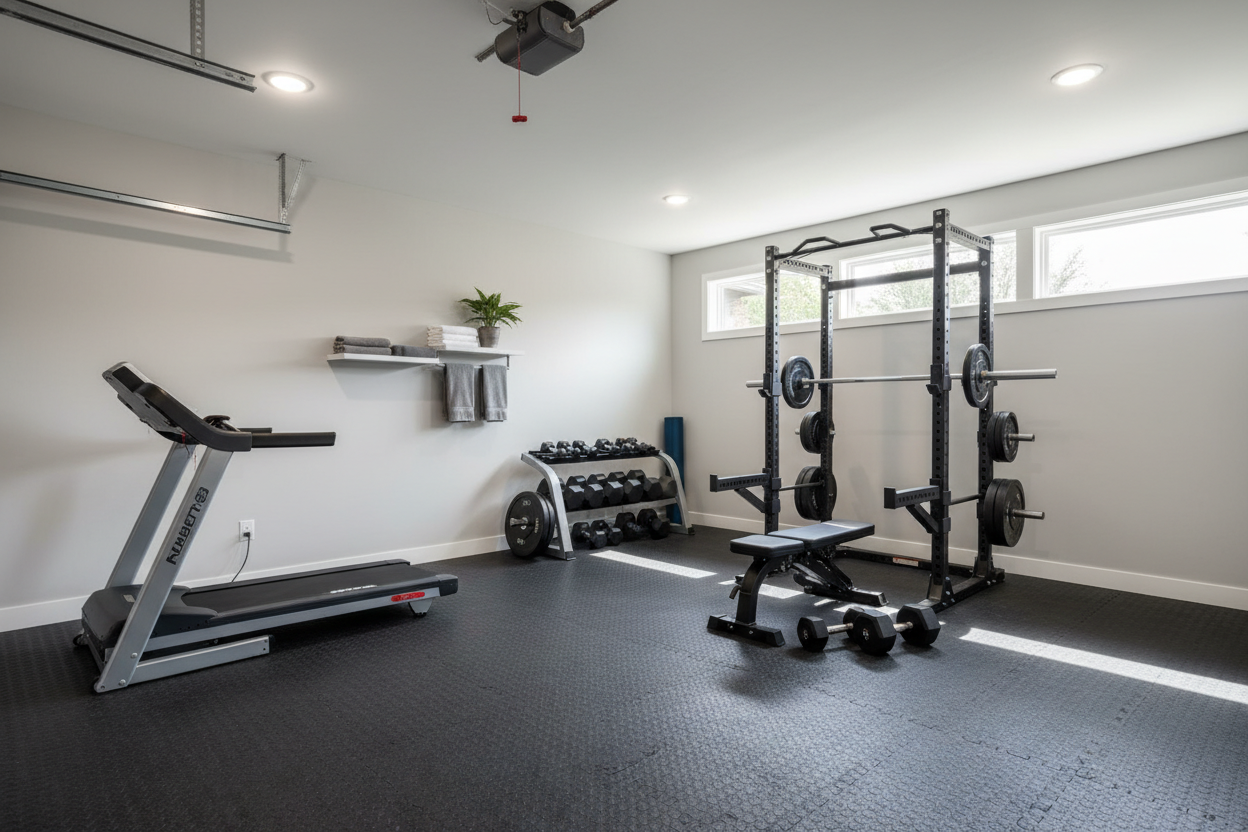
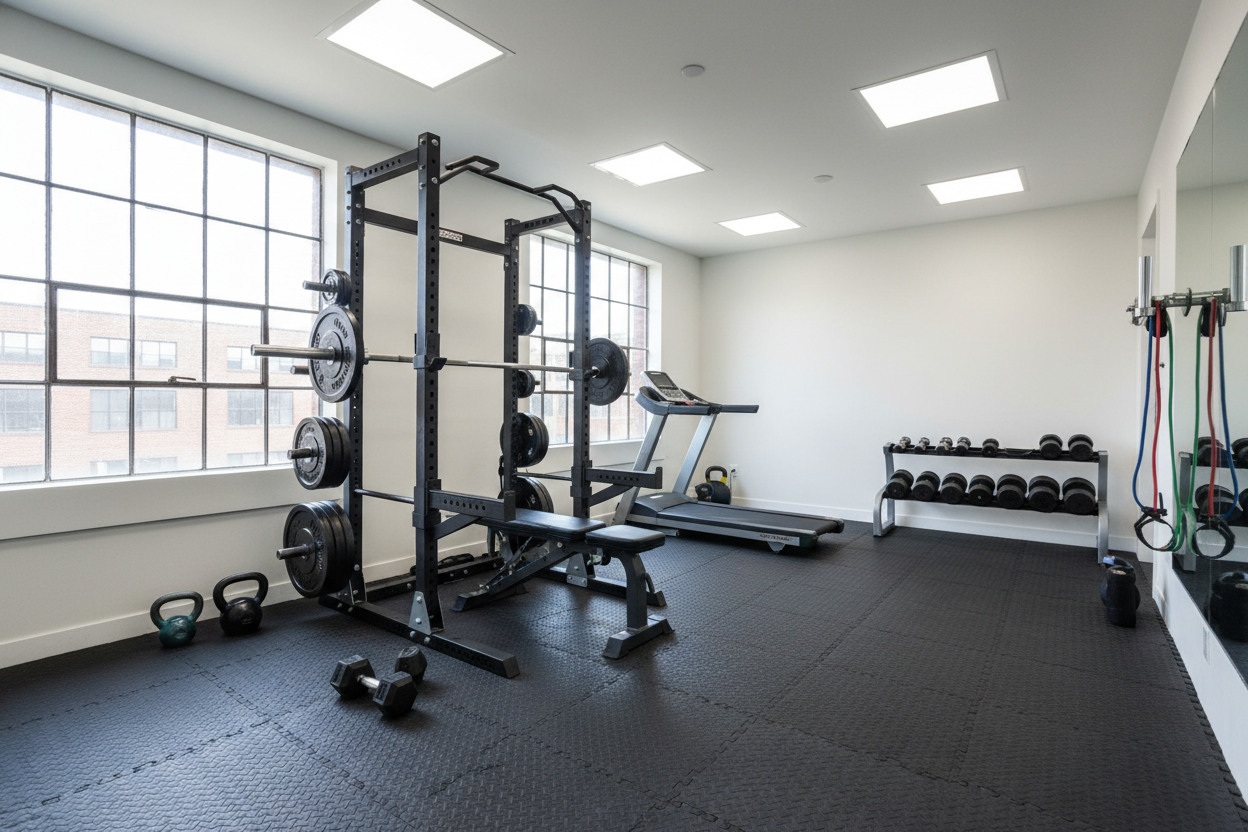
Investing in proper gym flooring for home workout setups isn't just about protecting the concrete or dampening the noise of a deadlift. It's about creating a stable platform. You can't produce maximum force if you're subconsciously worried about your bench sliding during a heavy press. It’s the most underrated equipment upgrade you can make.
The Reality of a True Mass Program Bodybuilding Style
A real mass building program bodybuilding routine in a garage is harder than in a commercial gym. There’s no machine to lock you in or guide your path. You have to stabilize every pound yourself. It requires a level of focus that most people lack. If you can't feel the muscle working, you're just moving weight from point A to point B.
I once tried to replicate a 6-day pro split in my 400-square-foot garage. By week three, my elbows were so inflamed I couldn't even grip a coffee mug. I was trying to do 30 sets of chest per week with just a flat bench and a barbell. I learned the hard way that garage bodybuilding is about quality over quantity. Now, I do fewer sets but make every single one a battle against gravity.
Can I build mass without machines?
Absolutely. Machines are just tools to provide resistance. Your muscles don't know if the tension comes from a cable or a 45-lb plate. You just have to be more intentional with your form.
How many days should I train?
For most home lifters, 4 days is the sweet spot. It allows for enough intensity to grow without burning out your central nervous system.
Do I need a power rack?
If you're training alone and going heavy, yes. It's your only spotter. Safety bars save lives and allow you to train to true failure safely.