Why Your Best Strength Building Workout Shouldn't Make You Sweat
I remember the first time I walked into a real powerlifting basement. It didn't smell like the eucalyptus towels at Equinox; it smelled like rust and old chalk. I watched a guy squat 500 pounds, sit on a bench for five minutes scrolling through his phone, and then do it again. No gasping, no puddles of sweat, no frantic burpees between sets. It blew my mind because I was still stuck in the 'more is more' trap, thinking the best strength building workout had to leave me crawling to my car.
If you're tired of being the hardest worker in the room but having a bench press that's been stuck at 185 for two years, you're likely making the same mistake I did. You're training for fatigue, not force. Real strength isn't about how much you can suffer; it's about how much your brain can command your muscles to perform.
Quick Takeaways
- Strength is a neurological skill—treat your heavy sets like practice, not a 'workout.'
- Rest periods of 3-5 minutes are non-negotiable for CNS recovery.
- Stop at RPE 8; leaving 1-2 reps in the tank prevents form breakdown.
- Focus on the 'Big Three' (Squat, Bench, Deadlift) rather than a dozen accessory moves.
Stop Treating the Barbell Like a Treadmill
The biggest hurdle for most lifters is the psychological need to feel 'beat up' to believe the session was effective. We've been conditioned by high-intensity classes to think that if our heart rate isn't at 160 BPM, we're lazy. But when you're looking for the best weightlifting workouts, the metrics change. You aren't burning calories; you're building capacity.
When you rush your sets, you're training under metabolic stress. That's great if you want to lose five pounds before beach season, but it's garbage for moving heavy iron. If you're huffing and puffing when you unrack a heavy bar, your core isn't stable, your bracing is weak, and your focus is split. The best strength workout routine should feel almost boring at times. You do a set, you feel the weight, you nail the technique, and then you sit down. If you're doing it right, the hardest part is the mental discipline to stay focused during those long rest periods.
Strength is a Neurological Skill, Not a Muscle Test
Your muscles are just the engines; your central nervous system (CNS) is the driver. To get strong, you have to teach that driver how to floor it. This is called motor unit recruitment. When you lift something near your limit, your brain has to coordinate hundreds of thousands of muscle fibers to fire in perfect synchronicity. If your brain is tired because you did 40 minutes of 'cardio-strength' before your heavy sets, it simply won't fire those fibers.
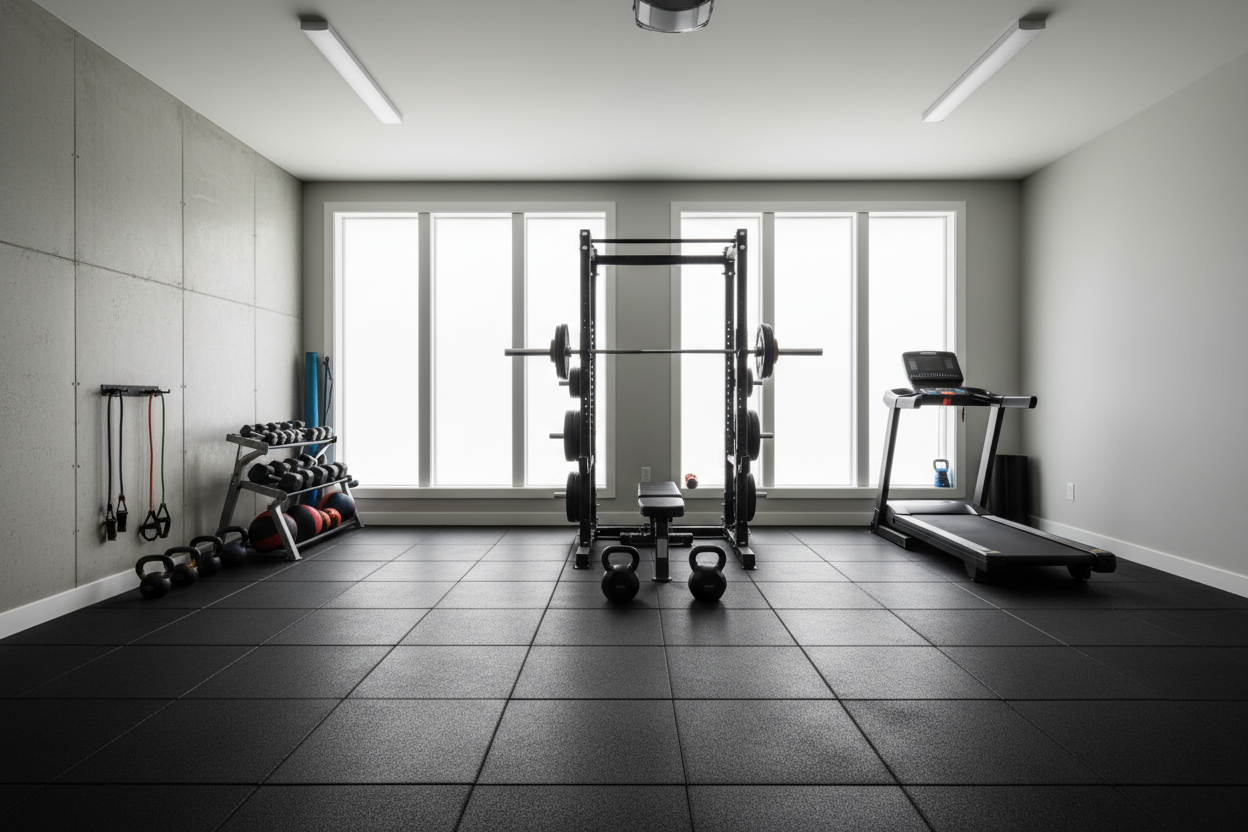
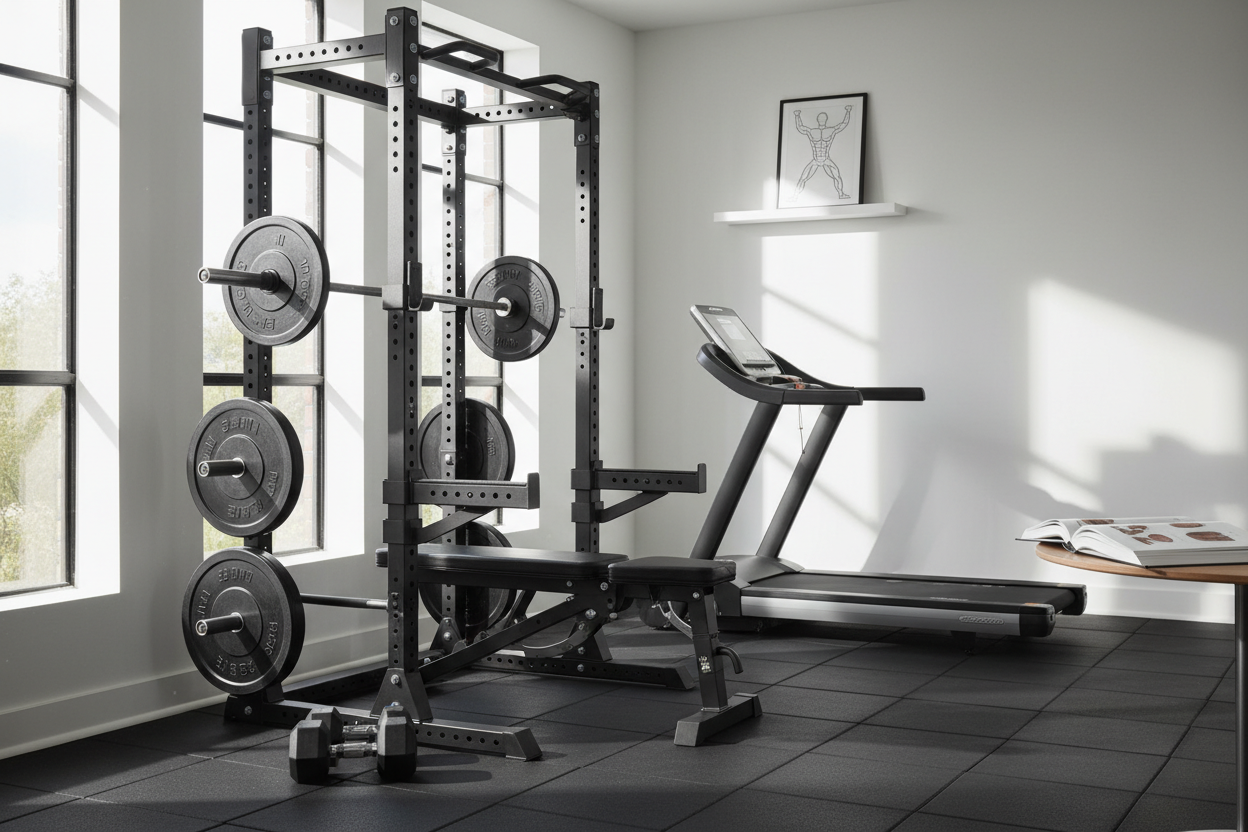
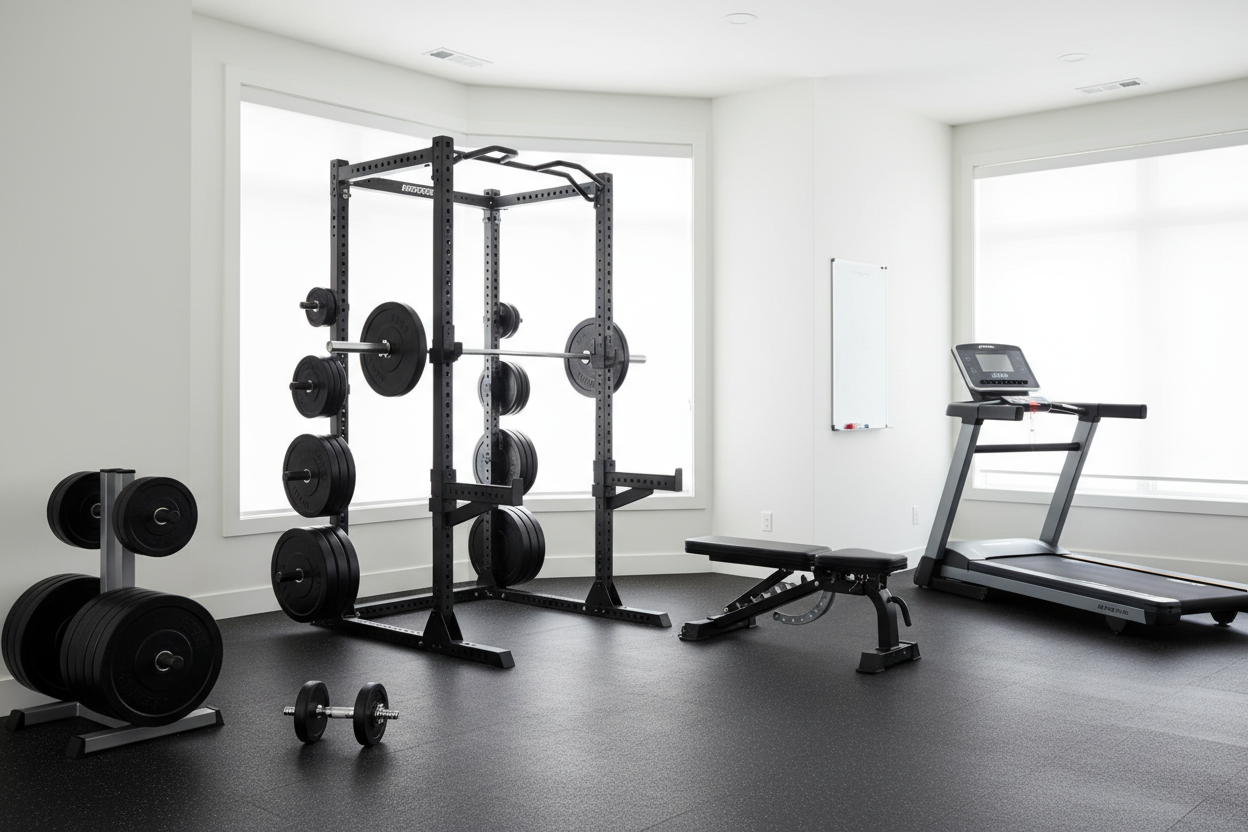
This is why the best routine for strength training relies on high-quality, crisp repetitions. You also need to feel safe to exert maximal force. Your brain has a built-in 'governor'—if it senses that your equipment is unstable, it will literally shut down your power output to protect your spine. Investing in the best strength and weight training equipment, like a rock-solid 11-gauge steel power rack, isn't just about luxury. It’s about signaling to your nervous system that it’s safe to go all out. When you know those 1-inch thick safety pins are there to catch a failed rep, you can actually commit to the lift.
The 'Practice' Mindset vs. The 'Workout' Mindset
Think of a heavy squat like a concert pianist practicing a difficult concerto. They don't play it as fast as possible until their fingers bleed and they start hitting wrong notes. They play it perfectly, slowly, and with total focus. The best lifting routine for strength follows this 'practice' logic. Every rep should look identical. If your fourth rep is a shaky, grinding mess where your hips rise faster than your chest, you haven't 'pushed through'—you've just taught your brain a bad habit.
Grinding through 'ugly' reps is the fastest way to hit a plateau. You're essentially training your nervous system to be inefficient. The best weight lifting program emphasizes 'greasing the groove.' You want the movement to be so ingrained in your motor cortex that you could do it in your sleep. That only happens when every rep is a 'good' rep.
The 3 Rules of a Real Strength Protocol
If you want to build a best strength workout plan that actually delivers, you have to follow the math of the CNS. Rule one: keep your reps low. We’re talking 1 to 5 reps. Anything higher and you're moving into hypertrophy and endurance territory. To move the needle on your 1-rep max, you need to spend time in the 80-90% range.
Rule two: leave something in the tank. Use the RPE (Rate of Perceived Exertion) scale. A 10 is a total grind where you might die. You want to live at an 8. This ensures you're lifting heavy enough to spark adaptation without frying your system for the rest of the week. Rule three: rest like you mean it. I’m talking 3 to 5 minutes. If you’re using heavy strength equipment at home, use that time to check your form on video or adjust your belt. Don't do jumping jacks. Let your ATP-CP energy system fully recharge so the next set is just as powerful as the first.
Building Your Bare-Bones Strength Blueprint
The best weight training program doesn't need 20 different machines. In fact, the more variables you add, the harder it is to track progress. A simple 3-day split focusing on the Squat, Bench Press, and Deadlift is the gold standard. You can add a few pull-ups or rows to keep your shoulders healthy, but the 'Big Three' are your bread and butter. This is the core of the best strength training routines used by world-class lifters for decades.
Don't let gear hold you back, either. Using strength training accessories like a stiff 10mm leather belt or some liquid chalk isn't 'cheating.' It’s about removing bottlenecks. If your grip fails at 315 lbs but your legs can squat 400, your grip is holding your strength development hostage. Use the tools available to ensure your target muscles and your CNS are the things being tested, not your ability to hold onto a smooth bar. A good best workout routine for strength is about efficiency, not making things unnecessarily difficult.
My Hardest Lesson in Strength
I used to be the guy who thought a 90-minute session was better than a 45-minute one. I was running a 'best strength training routine' I found online, but I was adding 'finishers' at the end—kettlebell swings, burpees, the works. I was constantly sore, my joints ached, and my deadlift wouldn't budge past 405. It took a veteran lifter telling me I looked 'metabolically exhausted' to change my mind. I cut the fluff, started resting 4 minutes between sets, and focused on three movements. Within two months, I pulled 455 like it was a warm-up. I wasn't 'working harder,' I was just working smarter.
Strength Training FAQ
How long should the best strength building workout take?
Usually 45 to 75 minutes. Because you're resting so much between sets, you won't get through 20 exercises. If you're in the gym for two hours, you're either talking too much or doing too much 'junk volume' that isn't helping you get stronger.
Do I need to do cardio if I'm on a strength program?
You should do some low-intensity steady-state (LISS) cardio, like walking, for general health. But don't do it right before or after your heavy lifting. Keep it separate so it doesn't interfere with your CNS recovery. Your best strength routines should be the priority.
Can I get strong without a power rack?
For bench and squat, a rack is a safety requirement. You can't reach the intensity needed for the best workout routine for strength if you're constantly worried about how to ditch the bar safely. If you're training alone at home, a rack with spotter arms is non-negotiable.
Why am I not sore after a strength workout?
Soreness (DOMS) is usually a result of new movements or high-volume eccentric work. Since strength training uses lower volume and familiar movements, you won't always feel sore. That’s a good thing—it means you can train again sooner and with more intensity.