Why Your bench shoulder exercises Are Missing the Best Angles
I remember the day I realized my adjustable bench was more than a $200 seat. I was struggling with nagging AC joint pain and capped delts that looked more like flat pancakes. I was doing standard bench shoulder exercises every week, but I was stuck in the '90-degree trap'—sitting perfectly vertical and wondering why my front delts were fried while my side delts stayed small.
Most lifters treat their bench like a kitchen chair. You sit upright, you press, you leave. But if you aren't playing with the pins and adjusting the incline, you're leaving about 40% of your shoulder growth on the garage floor. It is time to stop treating the bench as a passive seat and start using it as a precision tool for isolation.
Quick Takeaways
- Stop pressing at 90 degrees; a 75-degree incline is the sweet spot for joint health and heavy loading.
- Chest-supported variations eliminate the 'cheat' swing that kills lateral delt gains.
- Prone Y-raises are the secret to fixing 'gamer posture' and building rear delt thickness.
- Leaning away from the bench keeps tension on the muscle at the bottom of the rep where standing raises fail.
Stop Using Your Bench as Just a Chair
If you walk into any commercial gym, you see a row of dudes sitting perfectly vertical, arching their lower backs like they're trying to win a limbo contest. This is the classic shoulder bench workout mistake. When you sit at a dead 90-degree angle, your anatomy often forces your elbows to flare out in a way that pinches the subacromial space. It feels 'strong' because you're using your upper chest to cheat the weight up.
By treating the bench as a tool for stabilization rather than just a seat, you open up a 3D deltoid routine. Utilizing different incline settings transforms a basic shoulder bench workout into a focused attack on the lateral and rear heads. We want to hit all three heads without the ego-lifting momentum that usually takes over when we stand up and start 'hip-hinging' our way through a set.
Chest-Supported Laterals to Kill Momentum
Standard lateral raises are the most cheated exercise in the gym. People start using their hips, their traps, and a weird little calf raise to get the weight moving. To fix this, set your bench to a high incline (around 60-70 degrees) and face the backrest. By leaning your chest against the pad, it becomes physically impossible to swing the weights up.
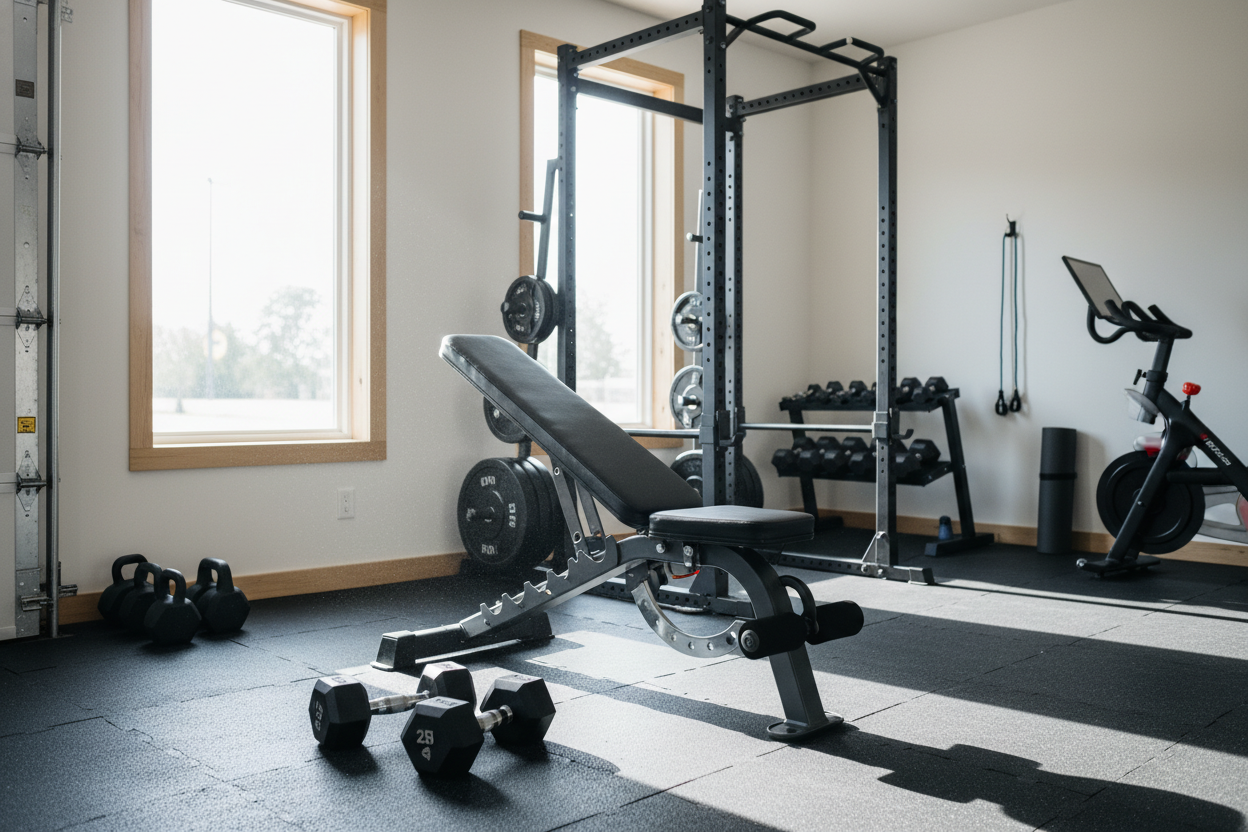
This specific shoulder exercise on bench isolates the lateral head with surgical precision. You'll probably have to drop your weight by 10 pounds, but your shoulders will actually grow because the muscle is doing 100% of the work. A stable piece of equipment like the Gxmmat Adjustable Weight Bench is crucial here so it doesn't wobble or tip when you lean your full body weight into the backrest.
The Prone Y-Raise for Bulletproof Rear Delts
Most home gym owners have overdeveloped front delts and almost nothing in the back. It makes your shoulders look 'rolled forward' and narrow from the side. The prone Y-raise is my go-to shoulder workout on bench for fixing this. Lay face down on an incline bench and raise light dumbbells in a 'Y' shape, focusing on the squeeze between your shoulder blades.
This isn't just about aesthetics. Building the rear delts and upper back through these specific strength shoulder exercises creates a much more stable platform for your heavy chest days. If your bench press has plateaued, it is usually because your 'brakes' (the rear delts) aren't strong enough to support your 'engine' (the pecs).
Leaning Single-Arm Raises for Constant Tension
When you do a regular standing lateral raise, there is zero tension at the bottom of the movement. Gravity is just pulling the weight straight down into your thigh. By grabbing the top of your bench backrest and leaning your body away at a 30-degree angle, you change the gravity curve entirely. This simple tweak makes the exercise significantly harder.
This shoulder workout with bench ensures the side delt is under load from the very start of the rep. When comparing this leaning technique to a standard standing dumbbell arm shoulder workout, the difference in the 'burn' is night and day. You don't need heavy weight; you just need that constant mechanical tension that only the lean provides.
Why the 75-Degree Angle Wins for Heavy Presses
I am going to be blunt: the 90-degree vertical press is overrated and often annoying for your rotator cuffs. Dropping the bench back just one notch to roughly 75 degrees is the smartest move you can make for your shoulder workouts on bench. This slight tilt allows your shoulder blades to move more naturally and prevents that extreme lower back arching.
This angle allows you to move significantly more weight while keeping the stress on the muscle rather than the joint. If you're looking to upgrade your home setup to handle these loads, getting a solid weight set and bench that can handle heavy pressing without shaking is the best investment you will make for your upper body development.
How to Program These Angles Into Your Week
You don't need to do all of these in one session. Pick one 'heavy' press at 75 degrees and one 'isolation' move like the chest-supported lateral. Three sets of 8-12 reps on the press and 3 sets of 15-20 on the laterals is plenty for a push day. If you're doing a dedicated shoulder workouts bench day, start with the Y-raises to prime the joint, move to the heavy press, and finish with the leaning single-arm raises.
Personal Experience: The Wobbly Bench Lesson
I once bought a cheap $60 bench from a big-box store. The first time I tried a chest-supported lateral raise, the whole thing tipped forward because the footprint was too narrow. I ended up face-planting with a pair of 25s. Since then, I only use benches with a wide rear stabilizer and a high weight capacity. Don't skimp on the foundation of your gym; it is the difference between a good pump and a trip to the ER.
FAQ
Should I use a barbell or dumbbells for bench presses?
Dumbbells are usually better for shoulder health because they allow for a more natural grip angle. Save the barbell for the rack if you have cranky shoulders.
How do I stop my traps from taking over during raises?
Think about pushing the dumbbells 'out' toward the walls rather than 'up' toward the ceiling. This keeps the tension on the delts and off the neck.
Is it okay to do these shoulder moves every day?
No. Shoulders are small muscles that recover quickly, but the joints are delicate. Twice a week is plenty for most lifters to see real growth.