Why Your Barbell Upper Body Weight Exercises Are Making You Lopsided
I was three weeks into a heavy pressing cycle when I noticed my right tricep was doing all the heavy lifting while my left felt like it was on a coffee break. My bench press looked like a seesaw, and my right shoulder was starting to click like a Geiger counter. This is the trap of relying solely on upper body weight exercises that use a fixed bar.
We love the barbell because it lets us move the most weight possible. But that heavy steel bar is also a master at hiding your flaws. If you have been grinding away at your home gym setup and your numbers have hit a wall, the problem isn't your effort—it is your symmetry.
Quick Takeaways
- Barbells allow your dominant side to mask significant strength imbalances.
- Unilateral training forces core engagement and kills 'cheating' momentum.
- Isolating one limb is the fastest way to fix nagging joint pain and plateaued lifts.
- A 4-week unilateral block can add 10-20 lbs to your standard barbell bench.
The Big Lie Your Barbell Is Telling You
When you grab a barbell for a standard weight upper body workout, your brain has one goal: get the weight up. It doesn't care if your right pec is doing 60% of the work while your left is coasting at 40%. This compensation is a silent progress killer. Over time, your dominant side gets overworked and cranky, while the weaker side stays small and stubborn.
This lopsided loading is why so many lifters complain about 'one-sided' shoulder impingement. You are essentially dragging a dead weight with one half of your body. In a typical upper extremity workout, you might not even feel it until you hit 90% of your max and the bar starts to tilt. By then, the technical breakdown has already happened, and you are just begging for a strain.
Why Single-Arm Lifts Actually Expose Your Weaknesses
The moment you drop the bar and grab a single dumbbell or kettlebell, there is nowhere to hide. You can't lean into your 'good' side. Single-arm weight exercises upper body movements introduce a massive element of anti-rotation. Your core has to fire like crazy just to keep you from falling off the bench.
I have seen guys who can bench 315 lbs for reps struggle to control a 100-lb dumbbell for a single-arm press. That gap is where your potential is hiding. When you eliminate the ability to compensate, you force the nervous system to recruit motor units that have been dormant for years. You are not just building muscle; you are rewiring your mechanics to be more efficient.
4 Unilateral Movements to Add to Your Next Session
Stop thinking of these as 'accessory' moves. Treat them like your primary lifts for a few weeks to see real change in your upper body weights.
- Single-Arm Floor Press: This is the ultimate shoulder-saver. By lying on the floor, you eliminate the leg drive and limit the range of motion to where the chest actually does the work. It is brutal for tricep lockout strength.
- Dead-Stop Dumbbell Rows: Set up on a heavy-duty adjustable weight bench for maximum stability. Let the weight rest on the floor between every single rep. This kills momentum and forces your lats to initiate the pull from a dead stop.
- Half-Kneeling Overhead Press: Get down on one knee. Pressing a weight over your head from this position removes the ability to 'lean back' into the lift. If your core is weak, you will tip over.
- Side-Lying Lateral Raises: Lie on your side on an incline bench. This changes the resistance curve, making the bottom of the movement—where the shoulder is usually resting—the hardest part.
How to Program This Without Losing Your Max Strength
You don't need to turn your session into a 'light' upper body workout only. The goal is to keep the intensity high. If you usually do 5x5 on the bench, swap it for 5x5 per arm on the floor press. Use weights that actually challenge you. I’m talking about dumbbells that require a bit of a struggle to get into position.
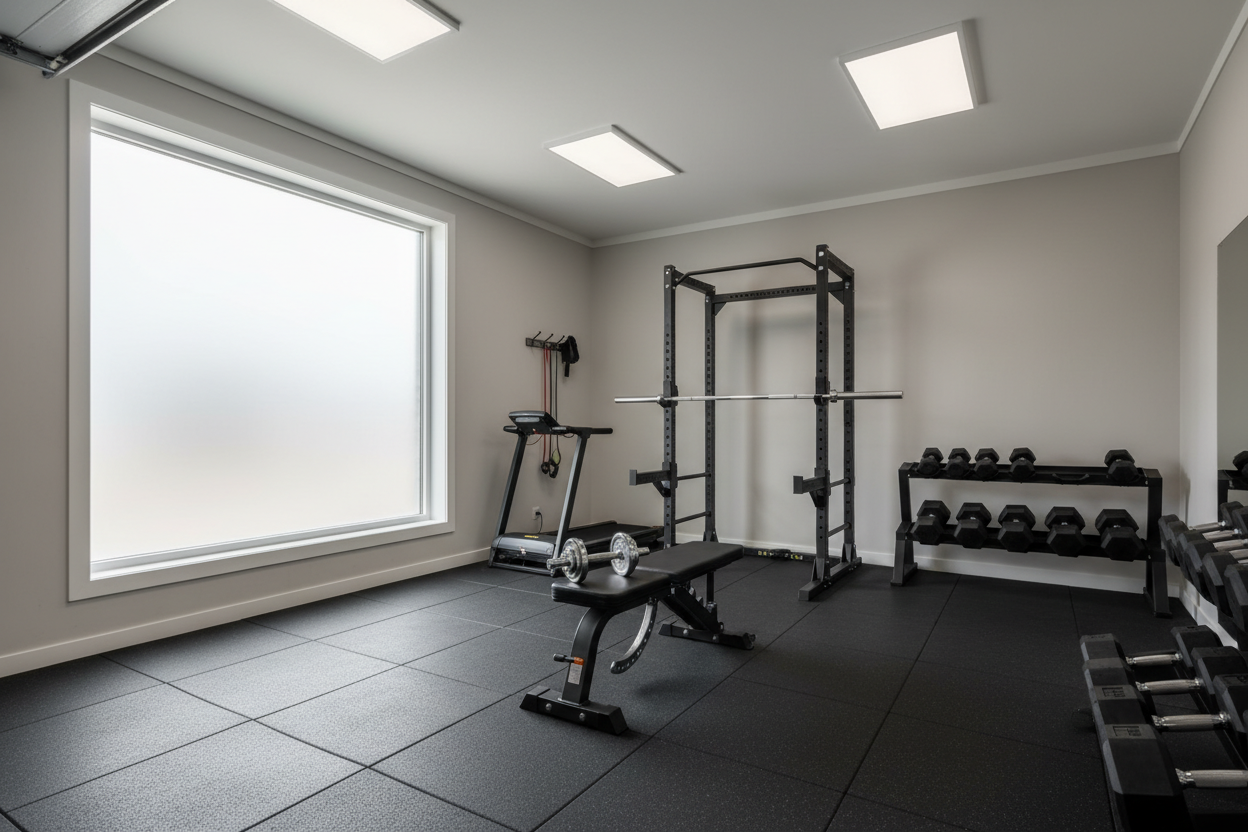
If you are training in a garage, you can even use a versatile power rack package to set up single-arm landmine presses or seated overhead presses using the J-hooks as a starting point. It is about being creative with the space you have. For a full breakdown on how to slot these into your week, check out this upper body weight workout routine that balances unilateral and bilateral volume.
When It's Time to Go Back to the Bar
You don't have to abandon the barbell forever. Run a free upper body workout block focused on one-sided movements for about 4 to 6 weeks. Once you can press 80% of your usual 'half-weight' with total control on both sides, go back to the bar. You will find that your 'seesaw' bench has disappeared, and your lockout feels like it is powered by hydraulics. Fixing the weak link is always faster than trying to out-train a bad pattern.
My Personal Experience with the 'Lop-Side'
A few years back, I bought a pair of cheap 50-lb adjustable dumbbells because they were on sale. They rattled, the handles were too thin, and honestly, they felt like toys compared to my Rogue bar. But I committed to using them for a month of single-arm work. I discovered I could do 12 reps on my right side with the 50s, but I could barely squeeze out 7 on my left. It was embarrassing. I had been 'powerlifting' for five years and didn't realize my left side was 15% weaker. Once I leveled that out, my barbell bench jumped 20 lbs in a month. Sometimes you have to take a step back to actually move forward.
FAQ
Can I use kettlebells instead of dumbbells?
Absolutely. Kettlebells are actually better for overhead work because the offset center of gravity pulls your shoulder into a more stable, packed position. Just don't let the bell smash your forearm.
Will unilateral training make my workouts twice as long?
It can, but you can save time by supersetting your 'off' arm with a lower body movement or a core exercise. Don't rush the rest periods between arms, though; the second arm shouldn't suffer because the first one tired you out cardiovascularly.
How do I know if I have a strength imbalance?
The 'Rep Test' is the easiest way. Take a weight you can move for about 10 reps. Perform as many as possible on your weak side, then try to match it on your strong side. If you can do 3 or more extra reps on your dominant side, you have a problem that needs fixing.