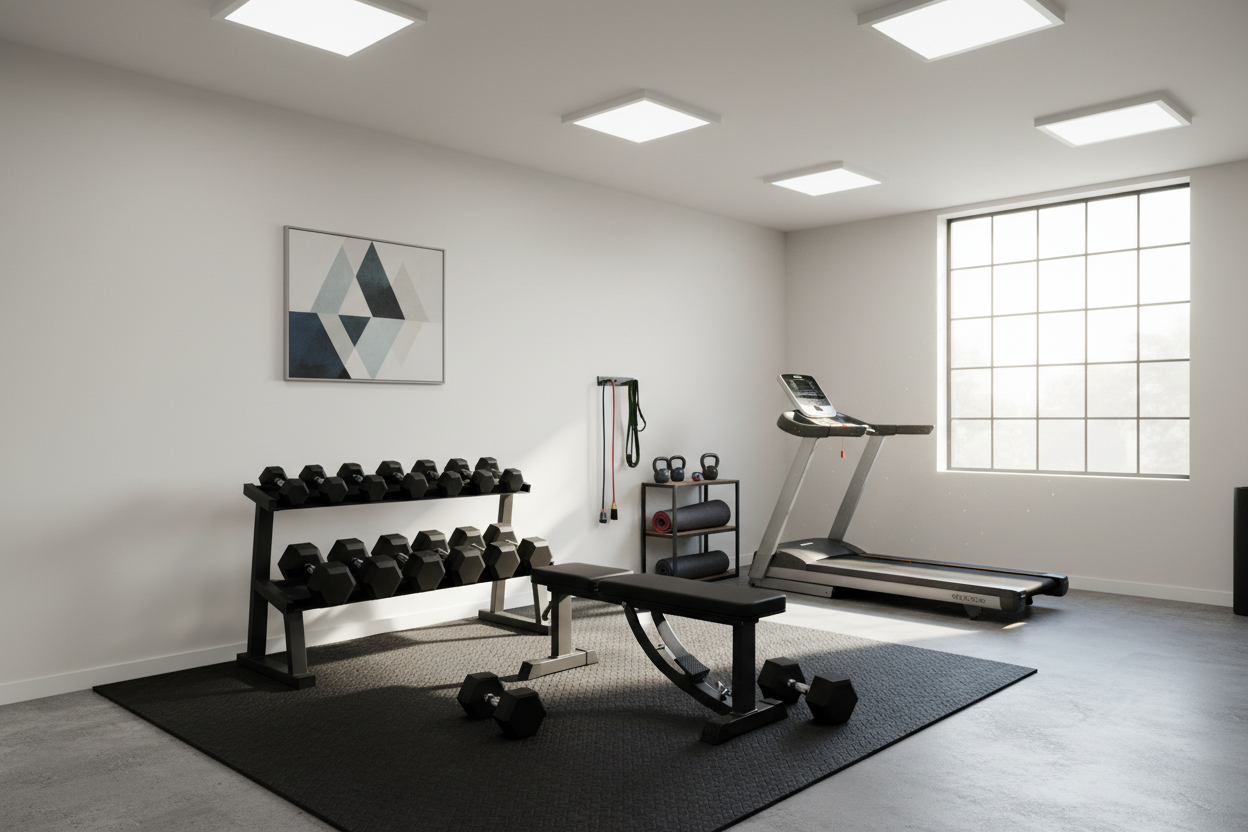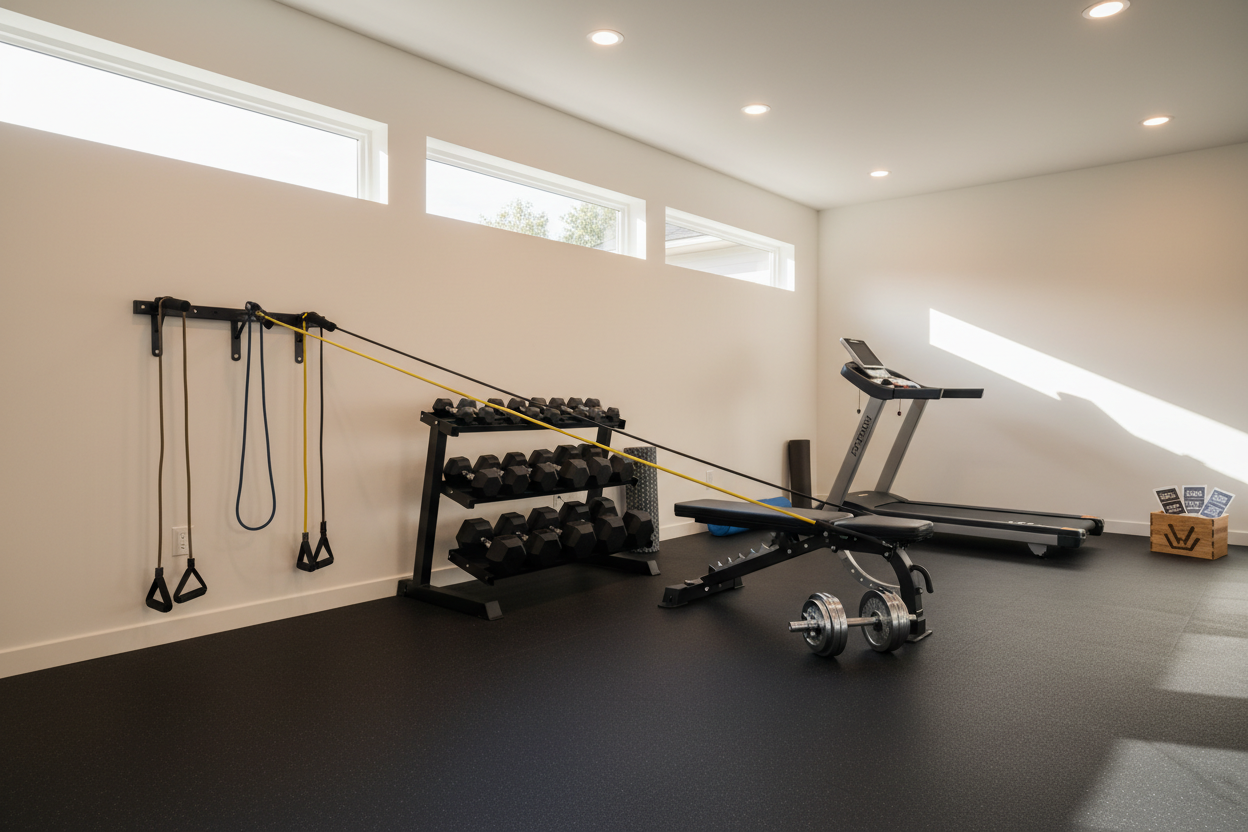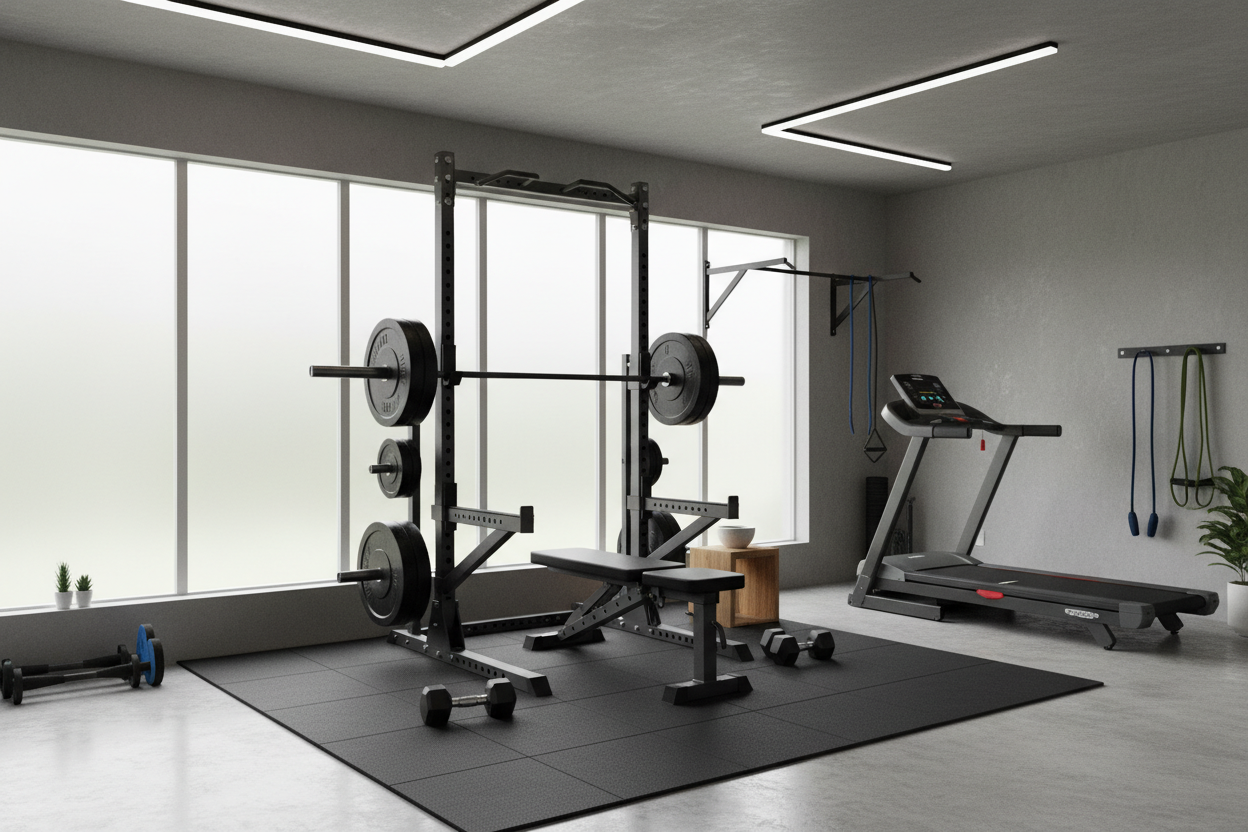
Why Your At-Home Workouts Need Poor Mechanical Leverage
I remember staring at a pair of dusty 15-pound dumbbells in my cramped 10x10 spare bedroom, wondering how I was supposed to maintain my chest strength. When the local gyms shut down, I thought my at-home workouts were doomed to become endless, boring sets of 50 push-ups. It is incredibly frustrating to feel like you are outgrowing your limited living room equipment.
But the truth is, you don't need a massive power rack to push your muscles to failure. You just need to understand physics. By intentionally putting your body in terrible biomechanical positions, you can force light weights to feel incredibly heavy. This is the concept of mechanical disadvantage, and it completely changed how I train my clients outside of a commercial gym.
Quick Takeaways
- Intentionally creating poor mechanical leverage makes light weights feel heavy.
- Extending your limbs shifts the center of gravity, doubling the tension on target muscles.
- You don't need heavy barbell plates to stimulate muscle growth in your living room.
- A high-traction floor is mandatory to safely perform extended-lever movements.
The Secret to At-Home Workouts That Actually Work
Most people fail at training in their living rooms because they try to mimic commercial gym machines. You cannot easily replicate a 200-pound leg press without heavy iron. When trainees hit a wall with standard squats or presses, their first instinct is to just do more reps. But doing 80 air squats isn't building strength; it is just endurance training.
To build at home workouts that actually work, we have to flip the script. Instead of finding ways to lift more weight with good leverage, we need to lift light weight with terrible leverage. I teach my clients the concept of mechanical disadvantage. By intentionally putting your body in a position where a movement is biomechanically harder, you force your muscles to generate massive amounts of tension to overcome the resistance. This is the exact mechanism that causes muscle fibers to adapt and grow, completely bypassing the need for a massive rack of weights.
What is Mechanical Leverage in an In Home Work Out?
To understand how to hack your in home work out, you need a basic physics refresher. In biomechanics, your joints are the axes, your bones are the levers, and your muscles are the force generators. When you hold a weight close to your joint, the lever arm is short, making the weight feel manageable.
As you move that exact same weight further away from the joint, the lever arm lengthens, and the perceived weight drastically increases. This means an effective home exercise does not necessarily require adding physical plates to a bar. You just have to change the distance of the resistance from the working muscle.
When I consult with clients about outfitting their spaces, I often point them toward the top home workout equipment for an effective at home gym. But I always add a caveat: a basic pair of 20-pound dumbbells or a simple pull-up bar can offer years of progression if you know how to manipulate your leverage. It is all about torque. If you hold a 10-pound weight straight out in front of you, your front deltoids have to work exponentially harder than if you held it by your side.
Shifting Your Center of Mass
One of the easiest ways to create an effective workout at home is by altering your body angle. Gravity pulls straight down. If you change your position relative to gravity, you shift where the resistance lands.
Take the standard push-up. If you place your feet on a 12-inch chair, you shift a significantly higher percentage of your body weight directly over your anterior deltoids and upper chest. Suddenly, a bodyweight movement you could easily do 20 times becomes a grinding 8-rep max. You can apply this to almost any movement. Shifting your weight forward onto your toes during a dip or leaning back during a bodyweight row drastically changes the force curve.
Extending the Lever Arm
Straightening your arms or legs is a brutal but highly effective way to create at home workouts that work. Think about a standard abdominal crunch versus a hollow body hold with your arms extended past your ears.
The weight of your torso hasn't changed, but the extended lever makes your core work overtime to stabilize your spine. You can do this with lateral raises, triceps extensions, and lunges. By simply keeping a slight bend in the elbow instead of a 90-degree angle, you multiply the tension on the target muscle without needing heavier dumbbells.
Upper Body Application: Pushes and Pulls
Let us put this into practice. If you only have light weights, standard dumbbell bench presses will quickly become too easy. To create at home workouts that actually work, switch to dumbbell flyes. Because your arms are extended wide, a 15-pound dumbbell can easily stimulate the chest fibers as effectively as a 50-pound dumbbell on a standard press.
For bodyweight pushing, the pseudo-planche push-up is my go-to. By leaning forward so your hands are aligned with your hips rather than your shoulders, you severely disadvantage your chest and triceps. It feels like someone stacked a 45-pound plate on your back. For pulling movements, try an extended-lever inverted row. Instead of pulling to your chest, pull the rings or bar toward your waist while keeping your body perfectly rigid.
If you want a structured routine to plug these into, check out this effective chest and back workout with dumbbells at home. The key is strict, controlled tempo. Do not use momentum to overcome the poor leverage. Pause for two seconds at the hardest part of the movement.
Lower Body Application: Hinging and Squatting
Legs are notoriously hard to train without heavy barbells, but mechanical disadvantage makes it the best workout from home possible. Enter the deficit Bulgarian split squat. By elevating your front foot on a 2-inch book and your rear foot on a bench, you increase the range of motion and stretch the glute under severe tension. Your bodyweight alone will leave you sore for days.
For the hamstrings, we use the sliding leg curl. Lie on your back, bridge your hips up, and slowly slide your feet away from your body until your legs are almost straight. The further your feet get from your glutes, the worse your leverage becomes, and the harder your hamstrings have to contract.
Because these movements require extreme ranges of motion and joint stability, you need a safe surface. Slipping during an extended-lever lunge is a quick way to pull a groin muscle. I highly recommend training on a 6x8ft exercise mat yoga mat gym flooring for home workout. It provides the exact cushion and grip needed to safely push your lower body to failure.
Creating a Stable Environment for Extended Levers
When you intentionally put your body in a biomechanically weak position, stability becomes your limiting factor. If your feet are sliding or your hands are slipping, your nervous system will naturally downregulate muscle recruitment to protect your joints. You cannot produce maximum force in an unstable environment.
This is the hidden secret of any truly effective home workout. You need absolute traction. Training on carpet or bare hardwood floors usually leads to compromised form. When I test these routines, I always ensure the floor is locked down.
A large exercise mat for home gym is non-negotiable for me. It anchors your hands during pseudo-planche push-ups and keeps your feet planted during deep deficit lunges. If you are going to challenge your muscles with poor leverage, do not let a slippery floor be the reason you miss a rep.
Structuring Your Disadvantage Routine
I have personally tested this specific training style using just a pair of 5-52.5 lb adjustable dumbbells and a high-density floor mat in a 6x6 foot space. The results were fantastic for maintaining hypertrophy, though I will admit one honest downside: tracking progressive overload is trickier. You cannot just write down that you added 5 lbs. You have to track the exact angle of your lean or how far you extended your arms.
Here is a sample 3-day split:
- Day 1 (Push): Pseudo-planche push-ups (4x8), extended-lever dumbbell flyes (3x12), overhead triceps extensions with a deep stretch (3x15).
- Day 2 (Pull): Waist-line inverted rows (4x8), straight-arm dumbbell pullovers (3x12), strict slow-eccentric bicep curls (3x15).
- Day 3 (Legs): Deficit Bulgarian split squats (4x10 per leg), slider hamstring curls (4x12), single-leg calf raises with a 3-second pause (3x15).
Keep your rest periods strict at 90 seconds. Focus on the stretch and contraction.
Frequently Asked Questions
Can I build muscle with just bodyweight using these techniques?
Yes. By extending lever arms and shifting your center of mass, you can easily create enough mechanical tension to trigger hypertrophy without external weights.
Is training with poor leverage safe for my joints?
It is safe if you control the eccentric (lowering) phase and avoid using momentum. Start with a slight disadvantage and gradually increase the angle as your connective tissue adapts.
How often should I change the leverage angles?
Stick with a specific angle or lever length for 4 to 6 weeks. This gives your body time to adapt and allows you to accurately track your strength progress before making the movement harder.