Why Your 30 Day Workout Plan to Gain Muscle Is Just Cardio
I remember scrolling through my feed at 2 AM, looking at some fitness influencer with lighting that cost more than my power rack, promising a total body transformation in four weeks. I bought into it. I spent a month doing 50-rep sets of air squats and mountain climbers until I wanted to puke. I lost five pounds, but I didn't look like I lifted; I just looked tired. Most people looking for a 30 day workout plan to gain muscle are actually being sold a high-intensity interval training (HIIT) nightmare that burns calories but leaves your muscle fibers completely unbothered.
Quick Takeaways
- Muscle growth requires mechanical tension (heavy weights), not just getting sweaty.
- Ditch the 20-rep circuits; stick to the 6-12 rep range for hypertrophy.
- Analog tracking (paper and pen) beats buggy fitness apps every time.
- Rest days are when the actual tissue repair happens—don't skip them.
The Dirty Secret About Most Monthly Muscle Challenges
Most of these 30-day challenges are designed to make you feel like you've worked hard because you're breathing heavy. They use 'metabolic conditioning' as a buzzword for 'doing a lot of stuff really fast.' If you’re doing 30 burpees followed by 30 jumping lunges, you aren't building a chest like a silverback; you're just doing cardio with extra steps. Real muscle growth, or hypertrophy, requires you to challenge the structural integrity of the muscle fiber.
Influencers love these plans because they produce immediate scale weight loss, which people mistake for progress. But if your goal is size, you need to stop moving fast and start moving heavy. You need a routine that prioritizes the 'Big Three'—squat, bench, and deadlift—supplemented with rows and overhead work. If you aren't adding weight to the bar or reps to the set over those four weeks, you’re just maintaining, not growing.
Stop Chasing the Pump: The Science of Real Growth
There is a massive difference between 'the pump' and actual growth. The pump is just metabolic stress—blood and fluid rushing to the muscle. It feels great in the mirror for twenty minutes, but it doesn't necessarily trigger the protein synthesis required for long-term size. For a 30-day workout challenge to gain muscle to actually work, you have to focus on mechanical tension. That means lifting weights that are roughly 70-85% of your one-rep max.
I used to think I needed two hours in the gym to see results. I’d spend forever on isolation machines and cable flyes. I eventually realized I could see better results by cutting the fluff and shrinking my workout plan for muscle gain to just 45 minutes. By focusing on high-intensity sets and longer rest periods (2-3 minutes), I actually gave my nervous system time to recover so I could push the next set even harder.
The Blueprint: A 30-Day Workout Plan for Muscle Gain
This isn't a 'daily' challenge. You shouldn't be lifting seven days a week. We are looking at a four-day split: Upper/Lower or Push/Pull. This allows every muscle group to be hit twice a week, which is the gold standard for hypertrophy. If you are unsure about the form on these heavy compound movements, visit our workout hub for detailed demonstrations. You don't want to blow out a disc trying to ego-lift a deadlift on day three of your 30 day workout plan for muscle gain.
Weeks 1 & 2: Finding Your True Working Weight
The first 14 days are about data collection. Most people under-load their bars. They pick a weight they can do for 12 reps, but they stop at 10 because it starts to burn. In these first two weeks, your goal is to find your 'Rate of Perceived Exertion' (RPE). You want to be finishing your sets with maybe 1 or 2 reps left in the tank. If you could have done 5 more, the weight is too light.
Don't worry about 'feeling' the muscle yet. Just move the weight with perfect technical proficiency. If your squat form breaks down after five reps, that's your limit. Use this time to dial in the mind-muscle connection without hitting absolute failure. You're building the foundation for the intensity that comes in the second half of the month.
Weeks 3 & 4: Progressive Overload in Action
Now we turn up the heat. This is the core of the 30 day build muscle challenge. For every lift, you either add 2.5 to 5 lbs to the bar or you perform one more rep than you did the previous week with the same weight. This is progressive overload. It’s the only way to force your body to adapt and grow. If you did 225 lbs for 8 reps last week, you’re doing 225 lbs for 9 reps today, or 230 lbs for 8.
This is where the 30-day muscle gain challenge gets difficult. Your central nervous system will start to feel the fatigue. This is why we keep the volume low—maybe 3 sets per exercise—but the intensity through the roof. If you aren't slightly dreading your top set of squats, you probably aren't lifting heavy enough to trigger real growth.
Why You Need a Physical 30 Day Muscle Gain Chart
I’ve tried every app on the market. They all suck for one reason: they live on your phone. Your phone is a distraction machine. You go to log a set of rows, see a text from your boss, and suddenly your three-minute rest period has turned into a ten-minute scroll through an email thread. For a 30 day muscle gain chart to be effective, it needs to be physical.
I’m a huge advocate for the analog approach. There is something visceral about slamming a pen onto paper after a heavy set. I suggest you grab a 30-day muscle building workout plan PDF, print it out, and clip it to a board in your gym. It keeps you focused on the numbers that matter, not the notifications that don't.
Recovery: The Most Ignored Part of Getting Big
You don't grow in the gym. You grow in your sleep. If you're hitting the weights hard but only sleeping five hours a night and living on caffeine, you're going to crash by day 20. Your body needs resources to repair the micro-tears you're creating. This means a caloric surplus and plenty of protein. If you aren't eating at least 0.8g of protein per pound of body weight, you're just spinning your wheels.
Also, don't neglect your joints. Heavy lifting on bare concrete is a recipe for tendonitis. I use a 6x8ft exercise mat gym flooring to create a dedicated zone for mobility work and stretching. Taking ten minutes after a session to roll out your quads or stretch your hip flexors makes the difference between waking up ready to train and waking up feeling like you were hit by a truck.
What Actually Happens After Day 30?
Let’s be real: you aren't going to look like a pro bodybuilder in 30 days. Anyone who tells you otherwise is trying to sell you a proprietary blend of sawdust and caffeine. However, a solid 30-day workout plan for muscle gain will reset your baseline. It teaches you how to train with intensity and how to track your progress. By the end of the month, you should see increased vascularity, better muscle density, and most importantly, higher numbers on your log sheet. The real 'challenge' is taking what you learned in these 30 days and turning it into a 365-day habit.
Personal Experience: My 100-Rep Mistake
A few years back, I fell for the '100 reps of curls every day' challenge. I thought I'd have 18-inch arms by the end of the month. By day 15, my elbows were so inflamed I couldn't even pick up a coffee mug, let alone a dumbbell. I had to take two weeks off just to recover. It taught me that more isn't better; better is better. I swapped that junk volume for three sets of heavy weighted chin-ups and my arms actually started growing. Listen to your joints—they’re smarter than your ego.
FAQ
Can I gain 10 pounds of muscle in 30 days?
No. Natural muscle growth is slow. A beginner might gain 1-2 pounds of actual lean tissue in a month. Any more than that is likely water weight or fat from a 'dirty bulk.'
Do I need a full rack for this plan?
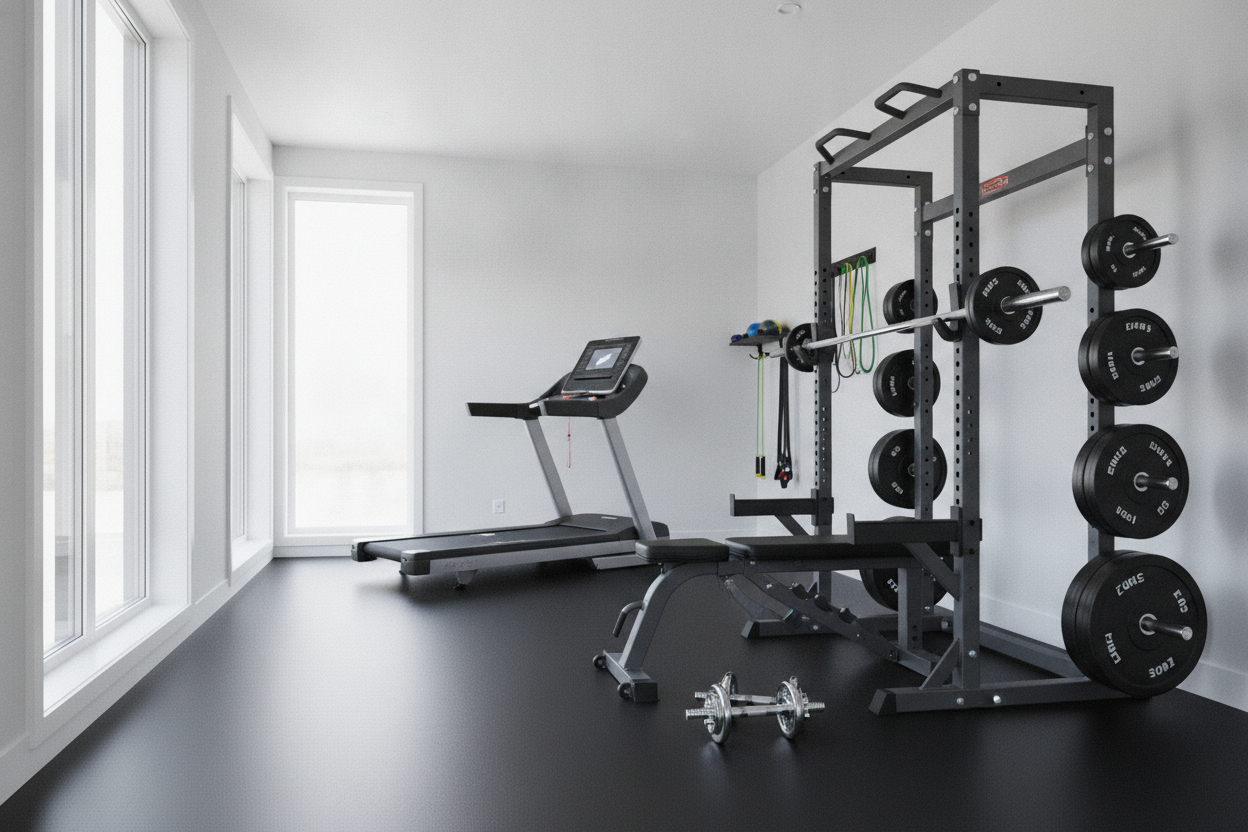
A power rack and a barbell are ideal, but you can get 90% of the way there with a solid set of adjustable dumbbells and a bench. The key is the ability to increase the weight over time.
How many rest days should I take?
At least three days a week. A Monday/Tuesday, Thursday/Friday lifting schedule is perfect. It gives your CNS time to recover between the heavy sessions.