Why the Standard Gym Exercise for Ladies Is Wasting Your Time
I remember walking into a big-box gym for the first time and being pointed toward the 'wellness studio' where the heaviest weight was a 10-lb neoprene dumbbell. It felt like being sat at the kids' table at Thanksgiving. If you have ever felt like the typical gym exercise for ladies was designed more for aesthetics than actual human capability, your gut is right.
We have been sold a lie that women need 'low impact' and 'high reps' to avoid getting bulky. In reality, that approach is the fastest way to plateau and stay there. Real strength comes from moving heavy things through a full range of motion, not from standing in a circle doing arm circles with half-pound weights.
Quick Takeaways
- Muscle tissue does not have a gender; it responds to tension and load.
- Isolation movements like banded kickbacks are accessories, not the main event.
- Free weights build core stability and functional strength that machines cannot replicate.
- A home setup with a solid floor and a barbell beats a commercial machine circuit every time.
The Problem with the 'Toning' Aisle
The fitness industry loves the word 'toning' because it sounds safe. It suggests you can magically firm up without the effort of building muscle. But 'tone' is just a combination of muscle mass and low body fat. You cannot get there by doing endless repetitions of a lady gym exercise that doesn't challenge your nervous system.
When you stay in the lightweight zone, you are essentially doing cardio with a slightly heavier hand. It is not enough stimulus to force your bones to get denser or your muscles to grow. Most marketing for women's fitness is designed to keep you paying for classes, not to make you strong enough to stop needing them. I have seen more progress in women who move to the power rack in three weeks than those who stay on the elliptical for three years.
Why Your Current Lady Gym Exercise Routine Is Falling Short
Biology is blunt. To see a change in your physique, you need to trigger hypertrophy. This requires mechanical tension—basically, lifting something heavy enough that your body says, 'I need to get stronger so this doesn't happen again.' If you are doing 30 reps of a glute bridge and barely breaking a sweat, you aren't training; you're just moving.
Endless banded glute kickbacks might give you a temporary 'pump,' but they do nothing for your overall metabolic rate. Compound movements—squats, deadlifts, and presses—recruit multiple muscle groups at once. This burns more calories during the session and keeps your oxygen consumption higher for hours after you finish. If your routine is 90% isolation fluff, you are leaving 90% of your potential results on the table.
Machines vs. Free Weights: Taking Back the Floor
Commercial gyms are packed with seated machines because they are easy to use and hard to break. While you can Maximize Your Fitness The Best Exercise Machines For Home And Gym by using them to finish off a workout, they shouldn't be your foundation. A leg press machine removes the need for balance. A barbell squat, however, forces your entire core to fire just to keep you from falling over.
When you transition to the floor, you develop 'real-world' strength. This is the kind of strength that makes carrying three bags of groceries or a 40-lb toddler feel like nothing. Machines lock you into a fixed path of motion that might not even fit your specific limb lengths, which is a recipe for joint pain over time. Free weights allow your body to move the way it was designed to.
Setting Up Your Space for Real Lifting
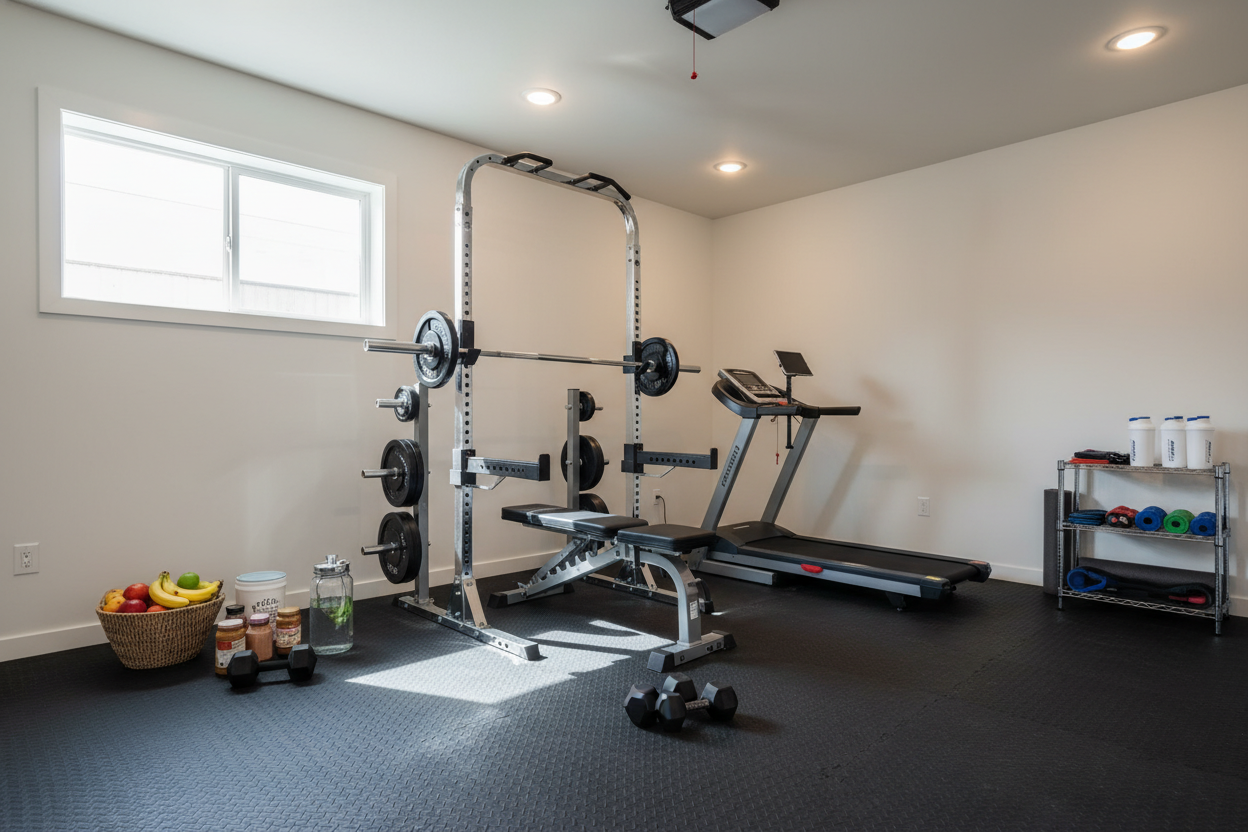
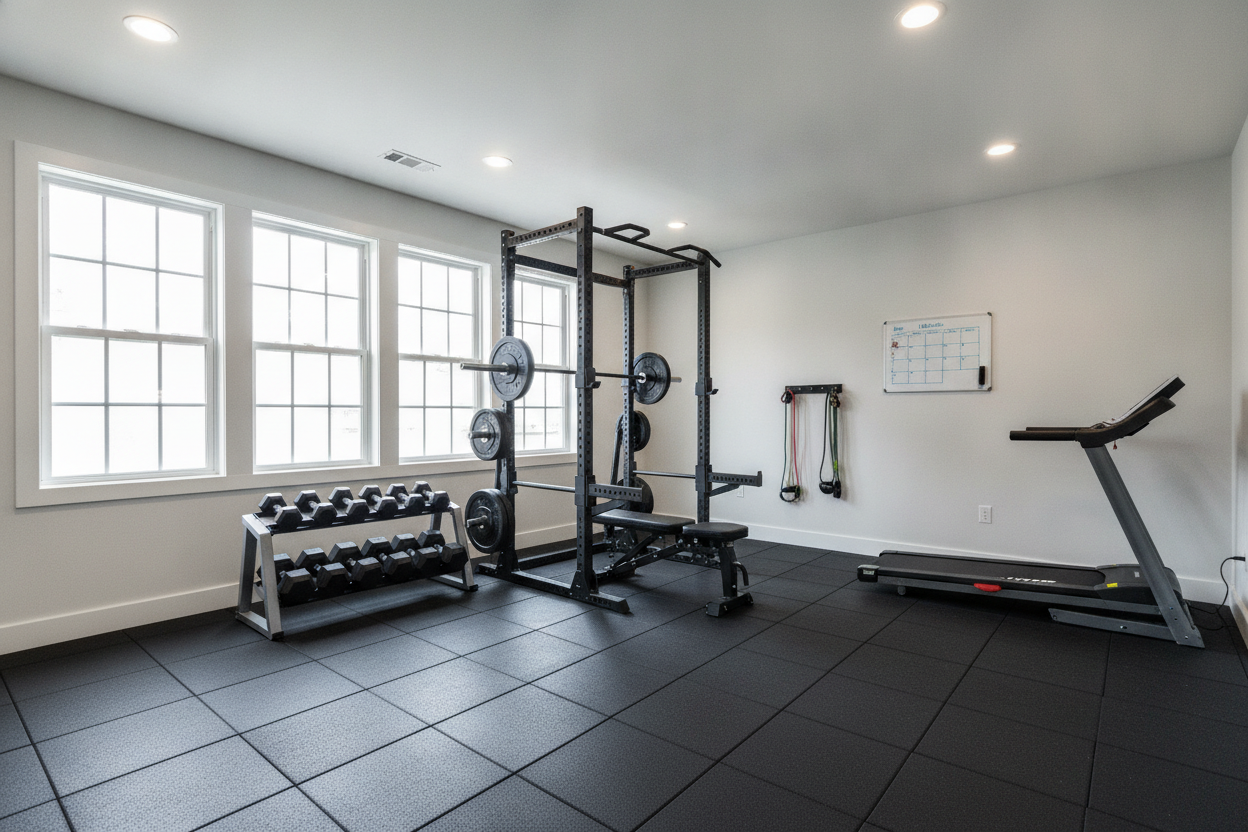
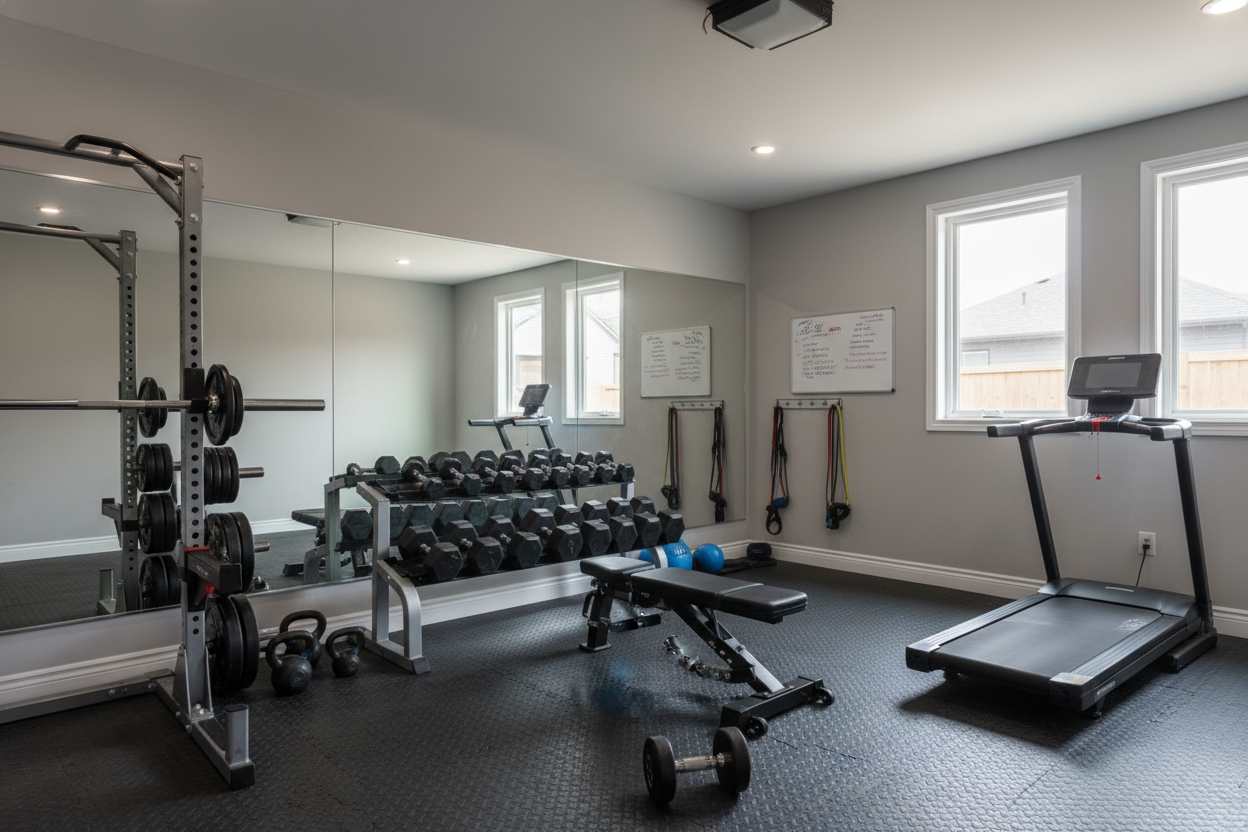
You do not need a 5,000-square-foot commercial facility to get strong. In fact, most of the best lifters I know train in garages or spare rooms. The biggest mistake people make is buying 'feminine' equipment that is flimsy and lightweight. You need gear that can handle a 300-lb load, even if you are only lifting 95 lbs today.
The foundation of any home space isn't the rack—it is the floor. If you are lifting in a spare room, you need a Large Exercise Mat For Home Gym to protect your subfloor and dampen the noise. I once tried lifting on a cheap yoga mat over hardwood; I ended up with a cracked floor and a bruised ego. A high-density mat provides the stability you need for heavy dumbbell lunges or deadlifts without the 'squishy' feeling that ruins your balance.
A Barebones Strength Plan You Can Do Anywhere
Effective training is boring. It is the same five or six movements done consistently with increasing weight. Stop looking for the 'secret' move. Instead, focus on the big rocks: Squats, Deadlifts, Overhead Press, Rows, and Bench Press. If you do those three times a week, you will see more change than any 'bootcamp' could ever offer.
To get started, you only need a few Top Picks For The Best Home And Gym Exercise Equipment like a solid pair of adjustable dumbbells or a basic barbell set. Start with a weight where the last two reps of a set of eight are genuinely difficult. If your form is perfect and the weight is moving fast, it is too light. Don't be afraid of the 45-lb plates. They are the key to the physique most women are trying to find in the 5-lb dumbbell rack.
Personal Experience: The 'Pink Weight' Trap
Years ago, I bought my wife a set of those colorful, vinyl-coated dumbbells because I thought they were 'beginner-friendly.' Within a month, she was trying to tape them together because she had outgrown the 15-lb max. It was a waste of $60. We eventually bought a real Olympic bar and a set of iron plates. She was intimidated by the 'scary' bar at first, but once she hit her first 135-lb deadlift, her confidence exploded. The lesson? Don't buy equipment you'll outgrow in a month. Buy for the athlete you're becoming, not the one you are today.
FAQ
Will lifting heavy weights make me look like a man?
No. Women don't have the testosterone levels to build massive amounts of muscle without extreme intentionality, specific dieting, and usually 'assistance.' You'll just look like a firmer, stronger version of yourself.
Do I really need a special floor mat?
Yes. Standard carpet or bare concrete will either get ruined or ruin your joints. You need a dense surface that doesn't compress under load so you have a stable base to push from.
How many days a week should I train?
Three days of full-body strength training is the sweet spot for most people. It allows for enough intensity to see results while giving your central nervous system time to recover between sessions.