Why the Best Workout Program for Building Muscle Feels Too Easy
I remember staring at my squat rack at 10 PM, drenched in sweat and feeling like I’d been hit by a truck. I’d just finished a two-hour session that left me shaking, yet my measurements hadn't budged in months. Finding the best workout program for building muscle isn't about how much you can suffer; it's about how much you can recover from. If you're constantly redlining your central nervous system, you aren't building tissue—you're just digging a hole.
- Muscle growth is driven by mechanical tension, not just being tired.
- Doing too many exercises (junk volume) actually stalls your progress.
- Progressive overload in the 8-12 rep range is the gold standard for hypertrophy.
- Your environment and recovery tools are just as important as the barbell.
The 'Destroy Yourself' Myth in Home Gym Culture
We’ve all seen the social media clips of guys collapsing after a set of leg presses. In the home gym community, we tend to wear our exhaustion like a badge of honor. If you aren't sweating through your shirt in a freezing garage, you aren't trying, right? Wrong. Hypertrophy—the actual process of muscle fibers thickening—doesn't require you to redline your heart rate every single session.
When you focus on just 'working hard,' you often end up doing cardio with weights. You get tired, but your muscles don't actually get the specific stimulus they need to grow. The best muscle building training program prioritizes the quality of the contraction over the quantity of your suffering. If you leave the gym feeling like you could have done one more solid set, you’re probably exactly where you need to be.
Why Your Current Routine Leaves You Stagnant
Most lifters fall into the trap of 'junk volume.' This is when you do five different variations of a chest fly because you saw a pro bodybuilder do it on a sponsored post. By the third exercise, your nervous system is fried, and you're just moving weight without any real intensity. You're essentially just making yourself tired for the sake of being tired, which is a fast track to tendonitis, not bigger biceps.
I see guys all the time who have every accessory under the sun, but their main lifts haven't moved in a year. A routine that ignores your spreadsheet full of 20 different isolation moves and focuses on three or four high-effort sets will always win. If you can't add a rep or five pounds to the bar every few weeks, you aren't building muscle; you're just exercising. You need enough volume to trigger growth, but not so much that you can't come back and beat your numbers next week.
The Core Traits of the Best Muscle Building Training Program
The secret sauce isn't a secret: it’s mechanical tension. This means taking a muscle through a full range of motion under a heavy enough load to recruit the high-threshold motor units. To do this, you need to stay around an RPE (Rate of Perceived Exertion) of 8 or 9. You should feel like you could have done maybe one or two more clean reps, but no more. Going to absolute failure on every set is a great way to burn out by week three.
You also need rest. If you're only resting 30 seconds between sets to keep your heart rate up, you're killing your strength for the next set. Give yourself two to three minutes. Let your ATP stores recover so you can actually move heavy weight again. If you're looking for routines that actually respect these physiological limits instead of just trying to make you puke, check out our workout hub for structured, tension-focused plans.
Do You Actually Need Fancy Equipment to Grow?
I’ve built muscle with a pair of rusty dumbbells and a flat bench, and I’ve built muscle with a $5,000 power rack. Your biceps don't have eyes; they don't know if the resistance is coming from a premium stainless steel bar or a sandbag. While high-end gear makes the experience more enjoyable, the best training programs for muscle gain rely on consistent tension, not brand names.
A solid barbell and a rack are the gold standard because they allow for easy progressive overload. It’s much easier to add 2.5-lb plates to a bar than it is to find a slightly heavier rock in the yard. But don't let a lack of 'pro' gear stop you from starting. Focus on the movements first. If you can create tension, you can create muscle.
How to Build Your Training Environment for Recovery
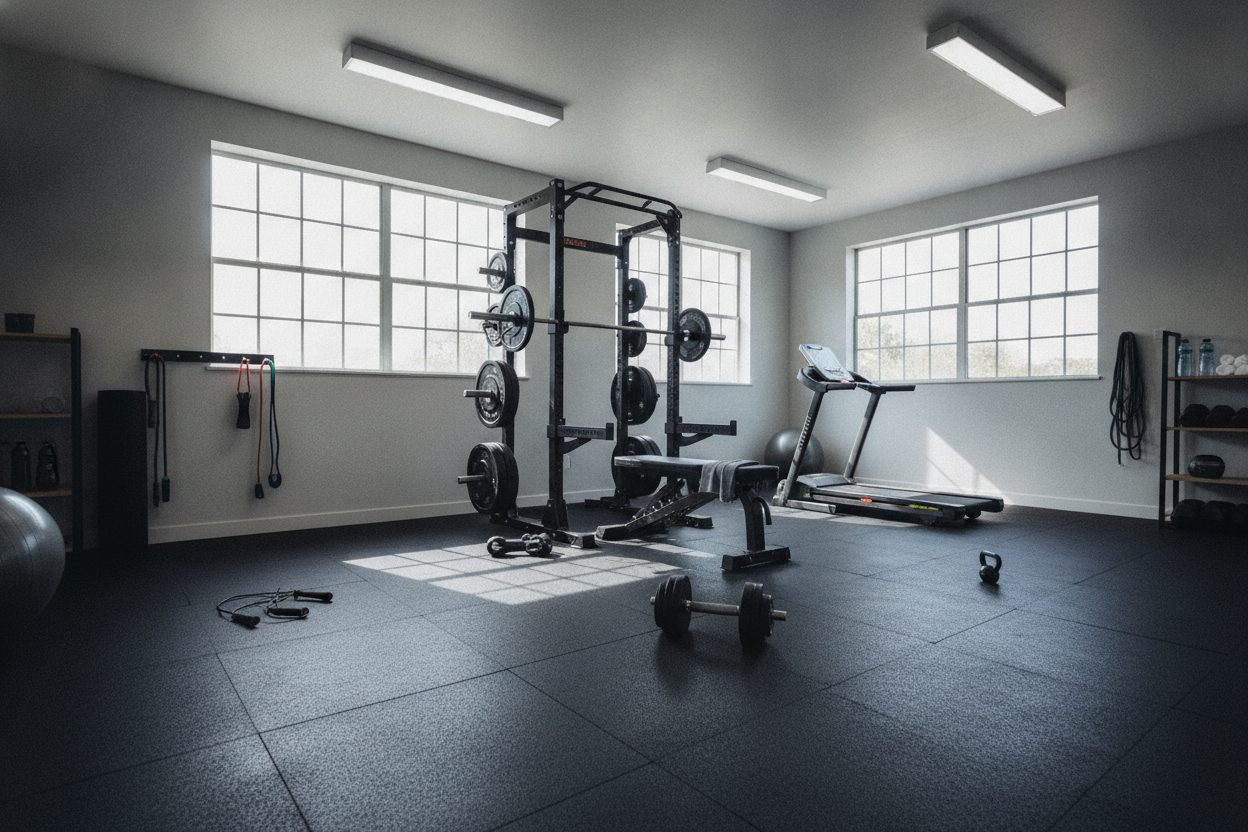
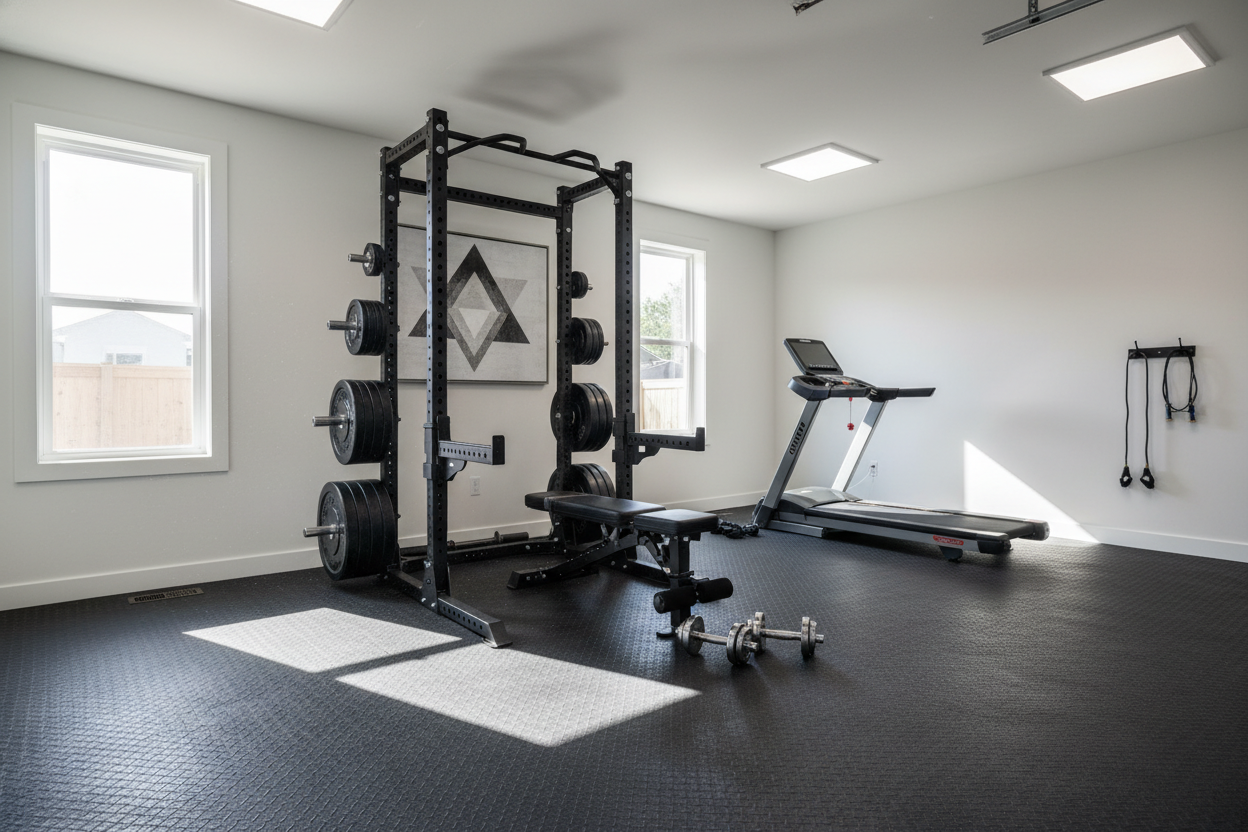
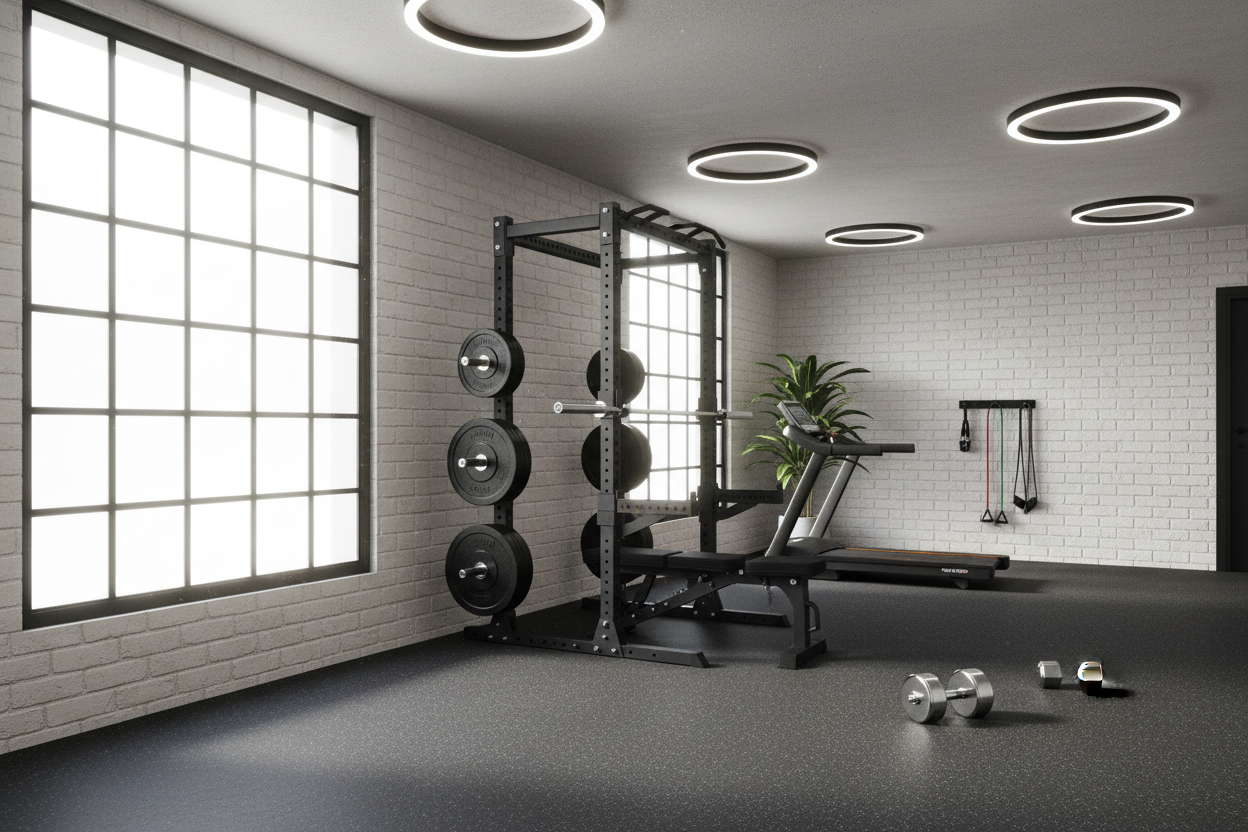
If your gym feels like a dungeon you want to escape, you won't stay there long enough to see results. I used to lift on bare concrete, and my joints absolutely hated me for it. Creating a space where you can actually spend time on accessory work and mobility is huge for long-term growth. Muscles grow when you're relaxed and recovering, not when you're stressed and cramped.
Even something as simple as laying down a large exercise mat can change the vibe of a garage. It gives you a dedicated spot for the 'boring' stuff like stretching and core work that keeps you injury-free. If you're beat up, you can't train hard. If you can't train hard, you won't grow. Your recovery environment is just as vital as your squat rack.
The Litmus Test: Is Your Routine Actually Working?
Stop asking yourself 'How do I feel?' and start asking 'What does the logbook say?' If you are stronger today than you were three weeks ago in the 8-12 rep range, you are building muscle. It’s that simple. If your joints feel like glass and you’re dreading your workouts, you’re likely overreaching and need to scale back the volume.
My Biggest Programming Mistake
A few years back, I tried a high-frequency 'squat every day' program. I thought I was being a beast. In reality, my knees started clicking like a Geiger counter, and I actually lost size in my legs because I never gave them a chance to repair. I was doing 'the most,' but getting the least. I switched to a boring, three-day-a-week full-body split and gained more size in two months than I had in the previous six. More isn't better; better is better.
FAQ
How long should a muscle-building workout take?
Usually 45 to 75 minutes. If you’re in there for two hours, you’re either talking too much or doing too much junk volume that isn't helping you grow.
Is soreness necessary for growth?
No. DOMS (Delayed Onset Muscle Soreness) is just a sign of novel stimulus or connective tissue strain. You can grow plenty without ever feeling 'sore' the next day.
Can I build muscle with just bodyweight?
Yes, but it's harder to scale. You eventually have to move to more difficult variations—like one-arm pushups or Bulgarian split squats—to keep the tension high enough for hypertrophy.