Why the Best Training Programs for Muscle Gain Feel Like a Second Job
I remember the night I finally quit my 6-day-a-week bodybuilding split. I was standing in my garage at 10 PM, staring at a barbell, feeling like I'd been hit by a truck. My joints ached, my strength was plateauing, and frankly, I was bored of spending twelve hours a week in a cold shed with nothing to show for it but dark circles under my eyes. I realized that the best training programs for muscle gain aren't the ones that demand you live in the gym—they're the ones that actually let you recover.
- Frequency: 3-4 days per week is usually superior to 6 days for natural lifters.
- Progression: If you aren't adding weight or reps, you aren't growing.
- Selection: Big compound movements (squats, presses, rows) should be your bread and butter.
- Recovery: Muscle is built while you sleep, not while you're grinding out junk volume.
The 6-Day 'Bro Split' Trap That's Killing Your Gains
Most of the fitness influencers you see on your feed are either 22 years old with the recovery capacity of a Wolverine or they're using 'extra-curricular' assistance. For the rest of us training in a garage after a long day of work, a 6-day-a-week high-volume split is a fast track to burnout. When you hit the same muscle group with 20 sets once a week, you're creating a massive amount of localized damage that your central nervous system (CNS) has to repair. For a natural lifter, that's often too much to handle.
I've seen it a thousand times: a guy starts an intense workout plan to gain muscle, hits it hard for three weeks, and then his performance falls off a cliff. He's not overtraining his muscles; he's frying his brain's ability to recruit them. You start missing reps you hit easily ten days ago. That's the CNS redline. A gym schedule to build muscle needs to account for the fact that your body has a finite amount of 'recovery currency' to spend each week. If you spend it all on Monday and Tuesday, you're bankrupt by Thursday.
The 'Bro Split' (Chest Day, Back Day, Leg Day, etc.) often leaves too much time between stimulating the muscle again. By the time you hit chest again next Monday, the muscle protein synthesis window has long since closed. You want a muscle gaining training program that hits every group at least twice a week, but with lower daily volume so you can actually walk the next morning.
What the Best Training Programs for Muscle Gain Actually Share
The secret to the best workout program for muscle building isn't some 'hidden' exercise or a special drop-set technique. It's boring, relentless progressive overload. If you are doing the same 225-lb bench press for 8 reps that you were doing three months ago, you haven't gained any significant muscle. It doesn't matter how much you sweat or how 'pumped' you feel. The best routine for building muscle forces your body to adapt to a greater stimulus over time.
This is where ego becomes the enemy. I've been guilty of it—loading the bar with 45-lb plates because I didn't want the neighbors to see me lifting 'light.' But if your form breaks down, you're just shifting the load to your joints. If you want to actually grow, you need to leave your ego at the door and start with the lightest weights to master the movement before adding plates. A real muscle building plan tracks every single set. If I did 10 reps with 135 lbs last week, I'm aiming for 11 reps or 140 lbs this week. That's it. That's the 'magic.'
Mechanical tension is the primary driver of hypertrophy. This means lifting relatively heavy weights through a full range of motion. The best muscle building program will prioritize movements like the overhead press, the pull-up, and the Romanian deadlift. These movements allow you to move the most weight and create the most tension across multiple muscle groups simultaneously.
How to Spot a Fake Gym Program for Building Muscle
The internet is a dumpster fire of bad advice. You'll see an 'intense workout routine for muscle gain' that features thirty different cable fly variations but no mention of a squat rack. Red flag number one: if the program has more than 5 or 6 exercises per session, it's probably junk volume. You can't put 100% effort into twelve different movements. You'll end up putting 50% effort into all of them, which is a waste of time.
Another red flag is the lack of a clear progression scheme. A top muscle-building workout plan should tell you exactly what to do when you hit your rep targets. Does it tell you to add 5 lbs? Does it tell you to increase the sets? If the plan just says '3 sets of 10' forever, it's not a plan—it's a list. You need a roadmap. Instead of following a random PDF from a guy with better lighting than logic, stick to a trusted workout hub library that prioritizes long-term adaptation and proven strength cycles.
Avoid any plan that claims to 'confuse' the muscle. Muscles don't have brains; they don't get confused. They respond to tension and metabolic stress. Changing your exercises every week just makes you 'sore' because of novel movement patterns, but it prevents you from getting truly strong at the lifts that actually build mass.
A Realistic Weekly Workout Schedule to Build Muscle at Home
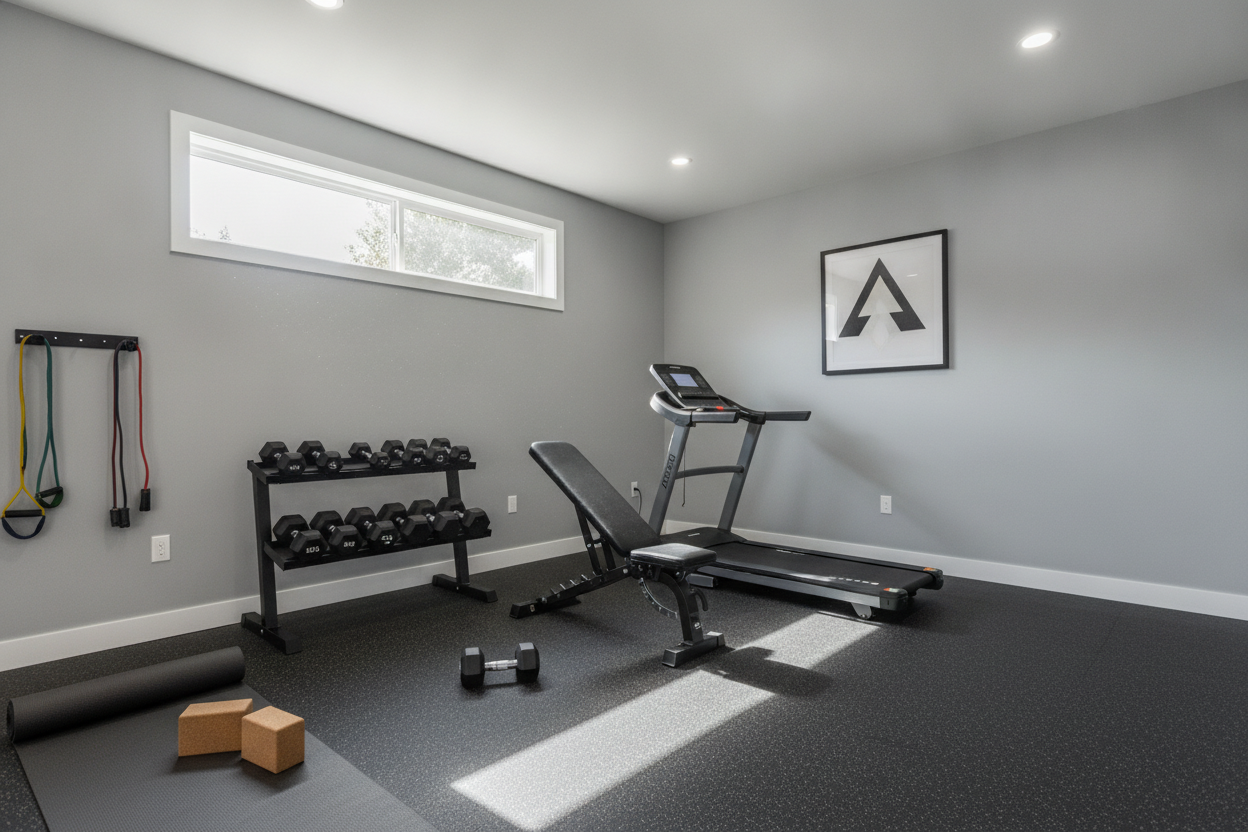
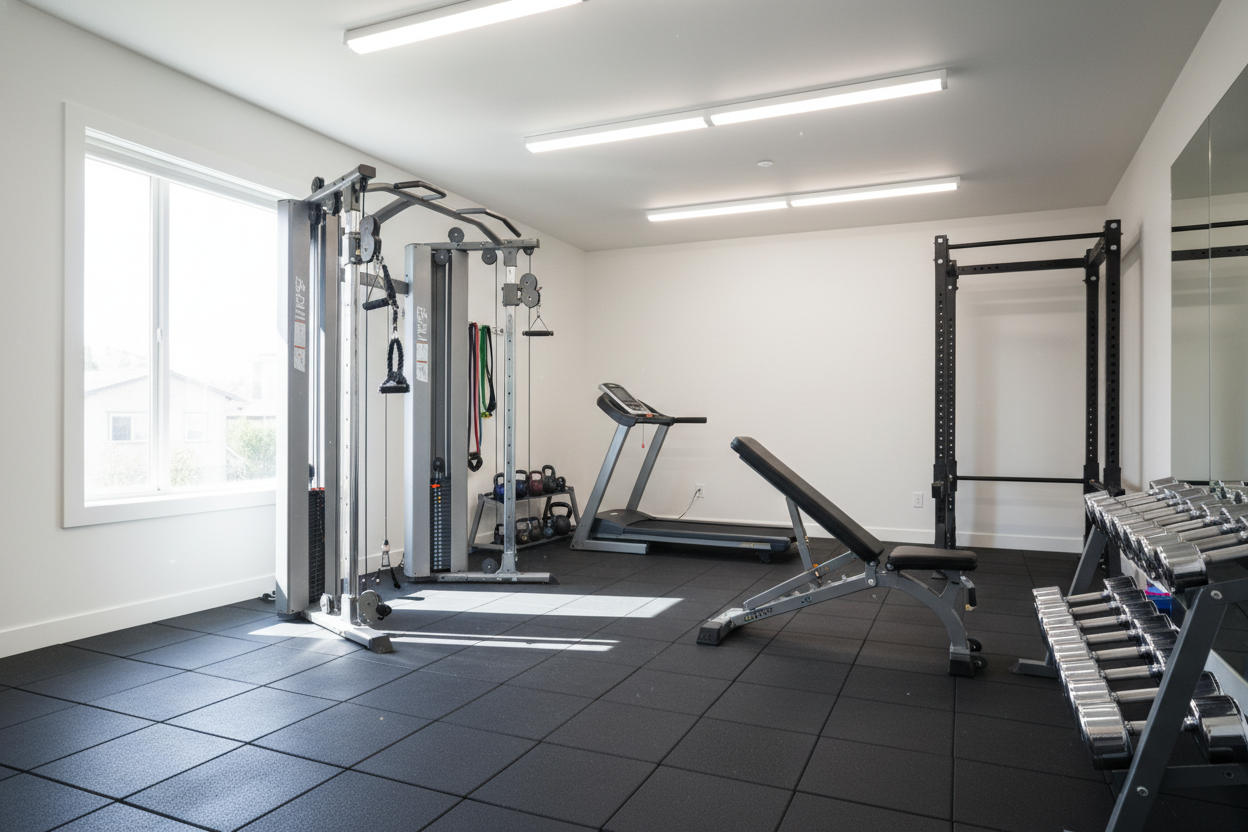
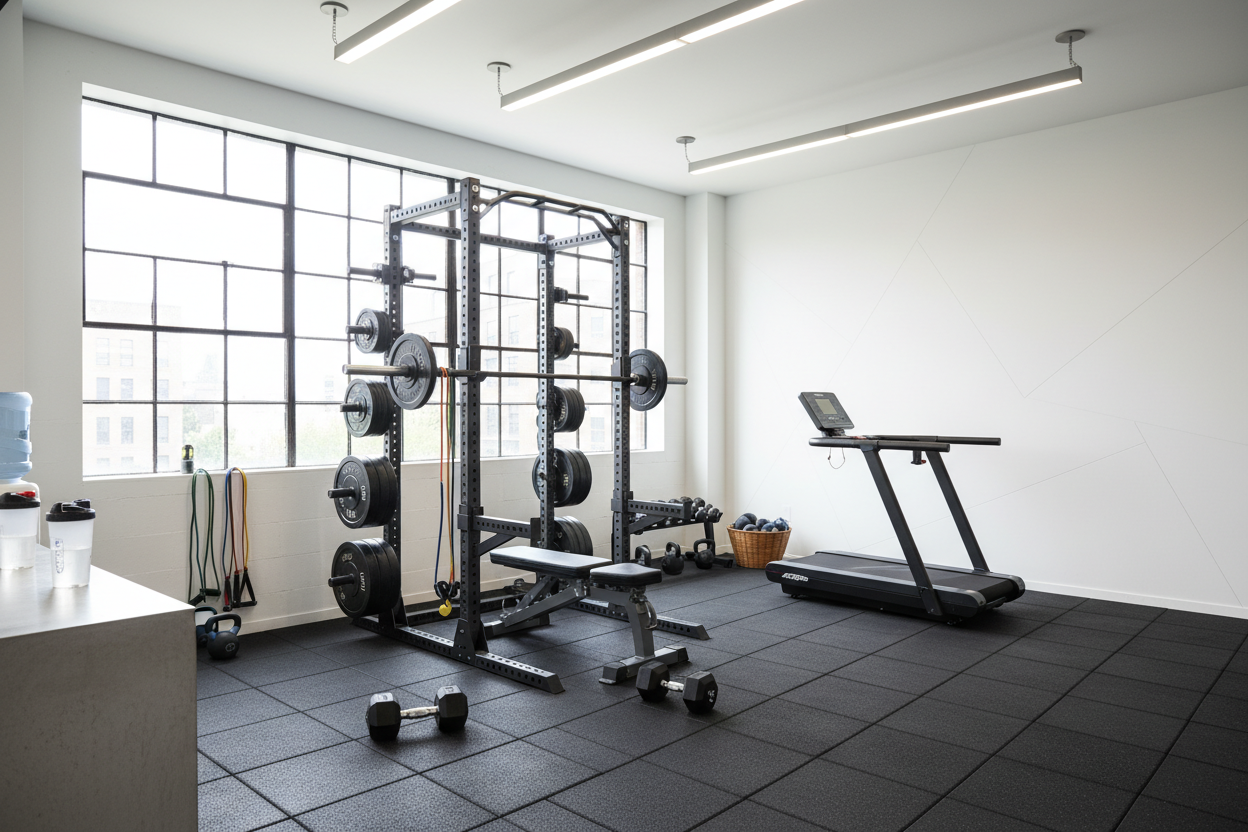
If you're training in a garage or spare bedroom, you don't need a 20-machine circuit. You need a solid rack, a barbell, and some floor space. For most of us, a 4-day upper/lower split is the gold standard. You train Monday/Tuesday, rest Wednesday, train Thursday/Friday, and rest the weekend. This hits every muscle twice a week and gives you three full days of recovery. It's the best workout routine to build muscle because it balances frequency with intensity.
In a home gym environment, safety is paramount. You're often lifting alone. When you're pulling heavy deadlifts or dropping dumbbells after a grueling set of rows, you need large protective gym flooring to save your concrete and your equipment. I've cracked a garage floor before because I thought a thin yoga mat was enough protection for a 400-lb pull. It wasn't. Get the right foundation before you start chasing heavy PRs.
A 3-day full body split is also an incredible muscle plan for those with busy lives. You hit everything on Monday, Wednesday, and Friday. It sounds simple, but hitting squats three times a week will pack more mass on your frame than any 'arm day' ever could. You just need the basics: a bench, a rack, and the discipline to stick to the schedule.
Stop Blaming the Routine When Your Recovery is the Real Issue
I've spent thousands on the 'perfect' weight lifting plans to build muscle, only to realize I was self-sabotaging in the kitchen and the bedroom. You can run the most scientifically optimal what is the best workout program for muscle building, but if you're sleeping five hours a night and eating like a bird, you won't grow. Muscle is metabolically expensive. Your body doesn't want to build it; you have to force it to by providing an excess of calories and plenty of rest.
Consistency is the boring truth. People want the 'intense' part, but they don't want the 'every single day for three years' part. The best muscle gain program is the one you can actually follow when you're tired, when the garage is cold, and when you'd rather be on the couch. Stop looking for the 'secret' and start looking at your sleep log. If you aren't getting 7-8 hours of shut-eye, that's your biggest bottleneck—not your choice of tricep extensions.
My Personal Experience: The Volume Trap
A few years ago, I fell for a 'high-intensity' bodybuilding plan that had me doing 30+ sets per workout. I bought all the supplements, pre-workouts, and gear. Within a month, my elbows felt like they were filled with glass, and I was so tired I was falling asleep at my desk by 2 PM. I was 'working hard,' but I wasn't getting results. I stripped everything back to a basic 4-day split, focused on three main lifts per day, and finally broke my two-year plateau. More isn't better; better is better.
FAQ
How many days a week should I lift to gain muscle?
For most natural lifters, 3 to 4 days is the sweet spot. This allows you to train with high intensity while leaving enough recovery time for your central nervous system and muscle tissues to repair.
Can I build muscle with just a home gym?
Absolutely. As long as you have a way to create progressive overload—usually through a barbell or heavy dumbbells—your muscles don't know if you're in a $50,000 commercial facility or your own garage.
How long should a muscle-building workout last?
If you're training with focus, you should be done in 60 to 75 minutes. If you're there for two hours, you're either resting too long or doing too much 'junk volume' that isn't contributing to growth.
What is the most important lift for muscle gain?
There isn't just one, but the 'Big Three' (Squat, Bench Press, Deadlift) plus the Overhead Press and Rows form the foundation of almost every successful hypertrophy program ever created.