Why the Best Mass Gaining Workout Plan Ignores Your Biceps
I spent my first three years in a commercial gym chasing a pump that never stayed. I’d spend forty minutes on alternating dumbbell curls and cable flyes, wondering why my t-shirts still felt loose around the shoulders. It was frustrating. I was doing the work, but I was building a house on a foundation of toothpicks. If you are stuck in that same loop, it is time to admit that the best mass gaining workout plan isn't found in the isolation section.
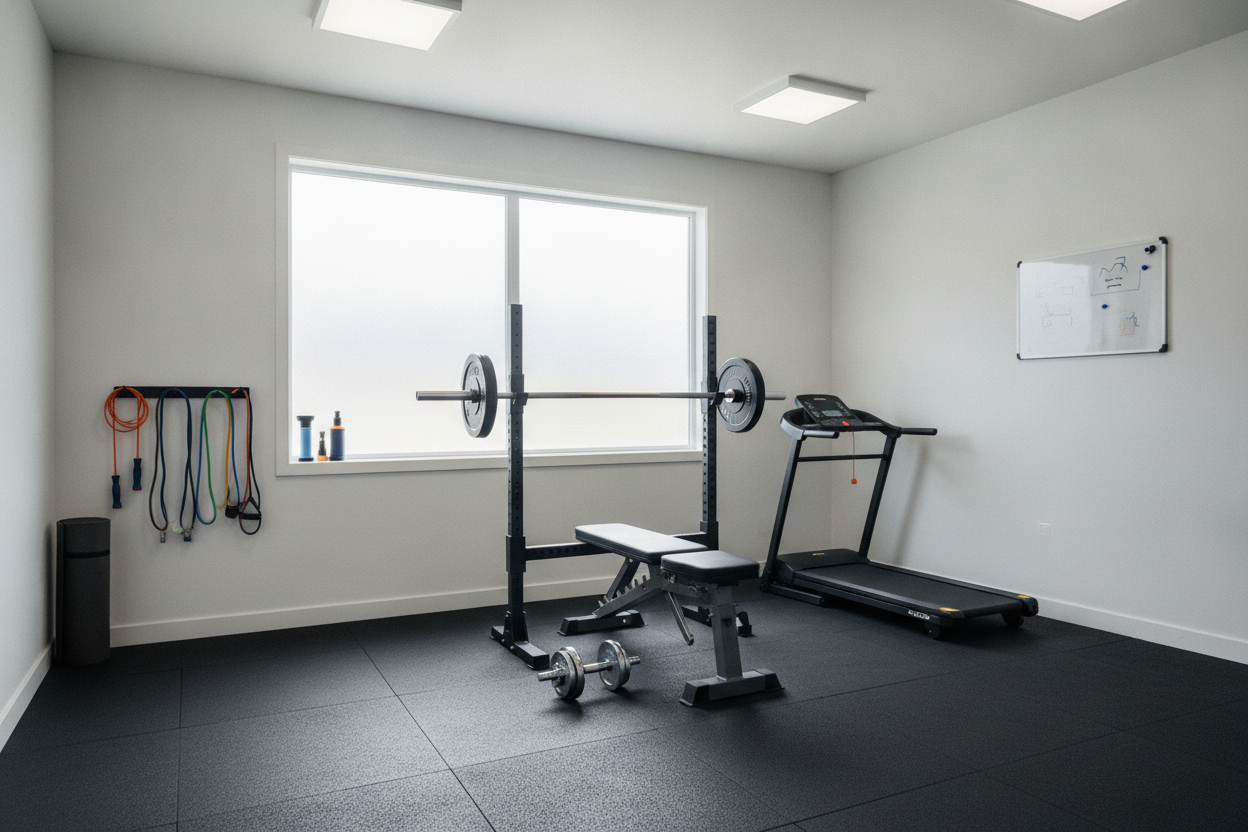
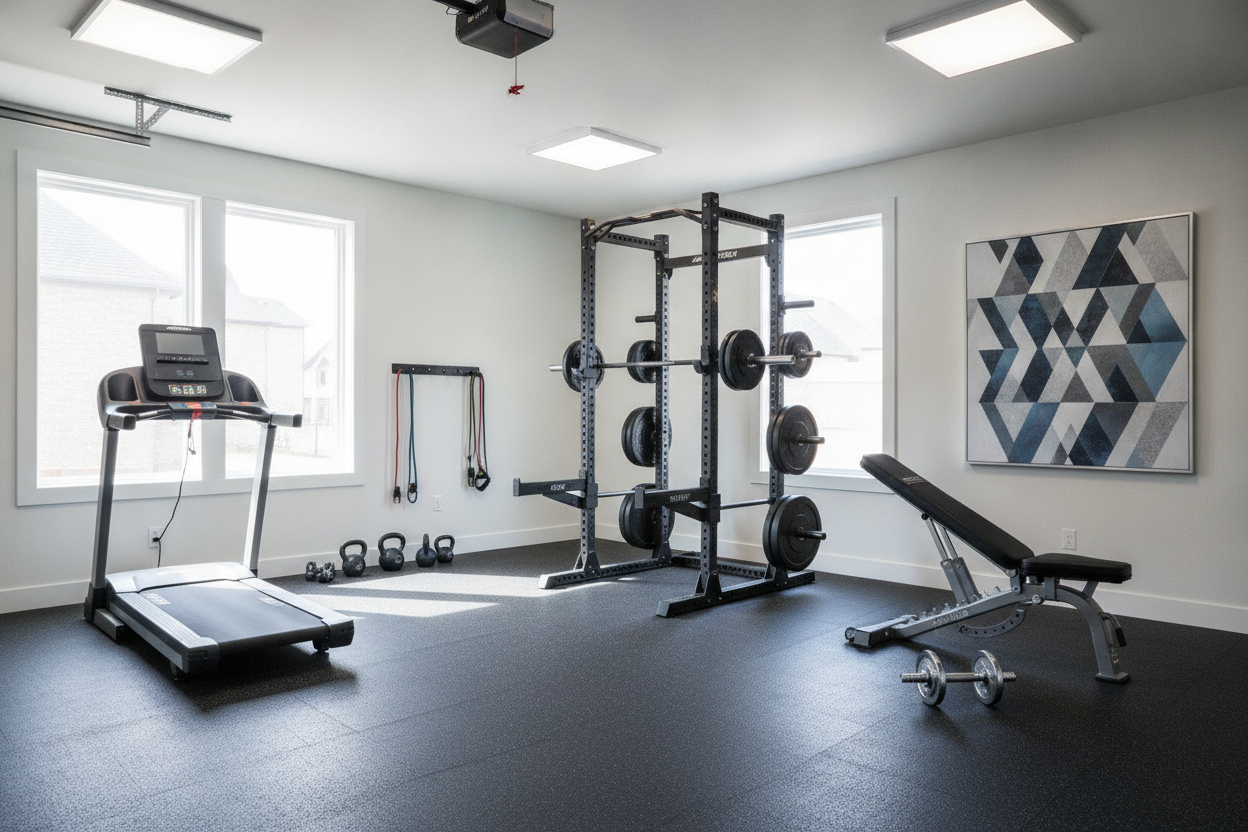
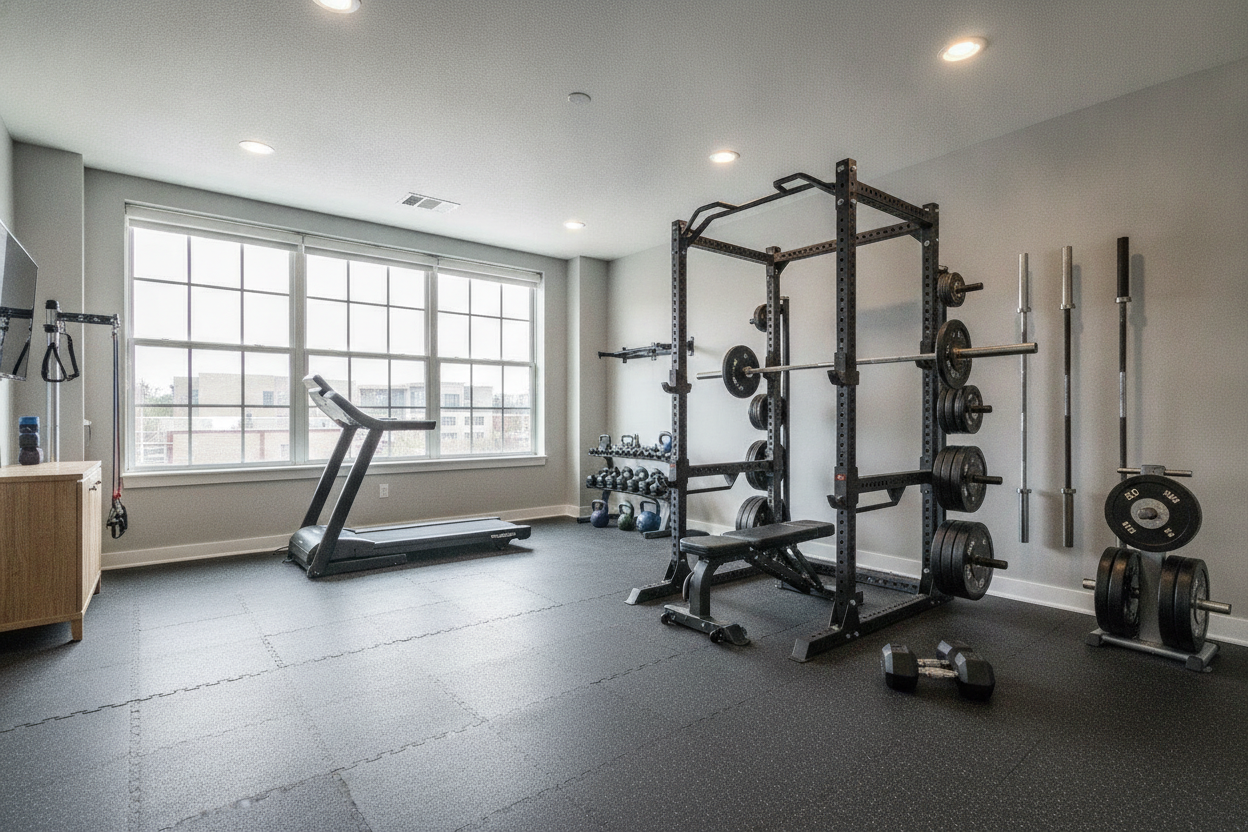
Real growth—the kind that makes people ask if you’ve been hitting the steak and heavy iron—comes from systemic stress. You need movements that force your entire central nervous system to adapt. In my home gym, that meant trading the preacher curl bench for a heavy-duty power rack and a pile of iron plates. We are going to stop chasing the burn and start chasing the load.
Quick Takeaways
- Prioritize compound movements like rows and deadlifts over isolation curls.
- Focus on systemic stress to trigger a natural hormonal response for growth.
- Loaded carries are the most underrated tool for building thick, dense muscle.
- Recovery is a resource; don't waste it on small muscle groups early in the session.
- A stable, high-quality floor surface is non-negotiable for heavy lifting.
Stop Wasting Your Best Energy on 'Arm Day'
Every lifter has a finite amount of 'recovery capital.' Think of it like a daily budget. If you spend $50 of your $100 energy budget on bicep curls and tricep extensions, you only have half your resources left for the movements that actually move the needle. When your goal is pure mass, 'Arm Day' is a luxury you can’t afford. I’ve seen guys spend an hour on lateral raises and then wonder why their overhead press has been stalled for six months.
In a home gym environment, efficiency is king. You don’t have the luxury of twenty different machines. You have a bar, some plates, and maybe a bench. By focusing your peak energy on small, isolation movements, you are leaving massive gains on the table. You need to hit the big muscle groups when your focus is highest and your glycogen stores are full. Save the fluff for the end—or better yet, skip it entirely until you can deadlift double your bodyweight.
What the Best Mass Gaining Workout Plan Actually Demands
The secret to a best mass gain routine isn't a secret at all: it’s systemic overload. When you squat 315 pounds or pull a heavy triple from the floor, your body doesn't just think, 'I need bigger legs.' It thinks, 'I am being crushed, and I need to get stronger everywhere to survive.' This triggers a cascade of growth hormones and testosterone that a concentration curl simply cannot replicate.
You need to pick movements that allow for the greatest amount of weight to be moved through a full range of motion. This is why Why the Best Shoulder Workout for Mass Starts From a Dead Stop is such a vital concept. By removing momentum and forcing your body to generate force from a static position, you recruit more motor units and build a thicker, more resilient frame. Mass is a byproduct of force production.
Why Heavy Pulls Build Bigger Arms Anyway
If you’re worried your arms will shrink without curls, look at the forearms and biceps of someone who rows three plates. When you perform heavy barbell rows or weighted pull-ups, your biceps are working as primary movers under loads they would never see during a curl. A 100-pound bicep curl is impressive; a 275-pound row is a mass builder. The mechanical tension placed on the elbow flexors during heavy compound pulling is more than enough to stimulate hypertrophy. My arms actually grew an inch when I stopped curling and started focusing on chest-to-bar pull-ups with a 45-pound plate hanging from my waist.
Loaded Carries: The Missing Link for Thick Muscle
Nothing builds 'old man strength' and thick traps like carrying heavy stuff. Farmer’s walks, suitcase carries, and sandbag bear hugs are the ultimate mass builders. They force every muscle from your grip to your calves to stay under tension for extended periods. If you want that thick, powerful look through the upper back and neck, stop doing shrugs and start walking with the heaviest dumbbells you can hold. I usually finish my sessions with three rounds of 40-yard carries. It’s brutal, it’s simple, and it works better than any machine in a fancy commercial gym.
How to Structure Your Best Mass Gain Routine
Programming for mass doesn't mean living in the gym. In fact, most people overtrain and under-recover. A high-frequency approach often leads to nagging joint pain rather than new muscle. I’ve found that The Best Lean Muscle Mass Workout Plan Only Takes 3 Days per week if you are truly pushing the intensity on compound lifts. This allows for 48 to 72 hours of recovery between sessions, which is when the actual muscle building happens.
Structure your week around a 'Push, Pull, Legs' or an 'Upper/Lower' split. Start every session with your heaviest, most demanding movement. For a best mass gaining workout routine, this might mean Squats on Monday, Overhead Press on Wednesday, and Deadlifts on Friday. Fill the rest of the session with high-volume accessories like dips, rows, and lunges. If you have anything left in the tank at the end, that is when you can throw in your curls—but I bet you won't feel the need.
Protecting Your Joints When the Weights Get Heavy
When you start moving serious weight, your environment matters. I learned this the hard way when I tried to do heavy farmer's walks on a slick, uneven concrete garage floor. I nearly rolled an ankle and dropped a 100-pound handle on my toes. To support a real mass-building program, you need a stable foundation. This means investing in a 6X8Ft Exercise Mat Yoga Mat Gym Flooring For Home Workout to absorb the shock of heavy pulls and provide the grip you need for loaded carries.
Good flooring isn't just about protecting your concrete; it's about joint longevity. A dense mat provides just enough compression to take the edge off your knees and ankles during high-impact movements without being so squishy that it kills your power output. If your floor is shifting under your feet, your brain will subconsciously limit your strength to keep you from falling. Don't let bad equipment cap your gains.
Why the Best Mass Gaining Workout Routine Takes Time
We’ve been conditioned to think in six-week transformations. Real, dense muscle tissue—the kind that stays with you even if you take a week off—takes months and years to build. A compound-heavy approach is a marathon. You aren't just inflating muscle cells with water; you are increasing the diameter of the muscle fibers and strengthening the tendons. If you're looking for more specialized guidance, check out our Workout Hub for programs that prioritize these foundational principles.
Personal Experience: My Biggest Mistake
I once spent four months doing a 'high volume' arm program I found in a magazine. I was doing 20 sets of biceps twice a week. My joints hurt so bad I couldn't even hold a heavy grocery bag, and my actual 'big' lifts—my bench and row—tanked. I was overtrained and under-built. It wasn't until I stripped everything back to basics and focused on adding 5 pounds to my barbell row every two weeks that my physique actually changed. Don't fall for the pump; fall for the progression.
FAQ
How many days a week should I train for mass?
For most natural lifters, 3 to 4 days is the sweet spot. This provides enough stimulus to trigger growth while allowing your central nervous system to recover between heavy compound sessions.
Do I need a power rack for a mass gaining plan?
While not strictly mandatory, a rack is the safest and most versatile tool for heavy squats, presses, and rows. It allows you to push to failure without worrying about being pinned under the bar.
Can I build big arms without any curls?
Yes. Heavy weighted chin-ups and rows provide massive mechanical tension to the biceps. Many elite powerlifters have huge arms despite rarely, if ever, performing a traditional curl.