Why the Best Gym Workout Plan to Build Muscle Starts Too Light
I have spent years in my garage, surrounded by iron and the smell of rubber flooring, trying to figure out why some programs click while others leave me feeling like a rusted hinge. We have all been there: you download a new template, load the bar to your absolute limit on Monday, and by Wednesday, your joints are screaming. Most people fail because they treat day one like a powerlifting meet instead of the start of a long-haul hypertrophy block.
If you want the best gym workout plan to build muscle, you have to get comfortable with looking a little weak for the first fortnight. It is about building a runway so long that by the time you are actually pushing your limits, your body has the structural integrity to handle the load without snapping. I have seen more gains from starting with 'embarrassing' weights than I ever did by grinding out grinders in week one.
Quick Takeaways
- Start your first week with 3-4 Reps in Reserve (RIR) to avoid early burnout.
- Focus on 'tonnage' over 8 weeks rather than your max weight in 1 week.
- Use light weeks to fix technical flaws like soft lockouts or poor foot drive.
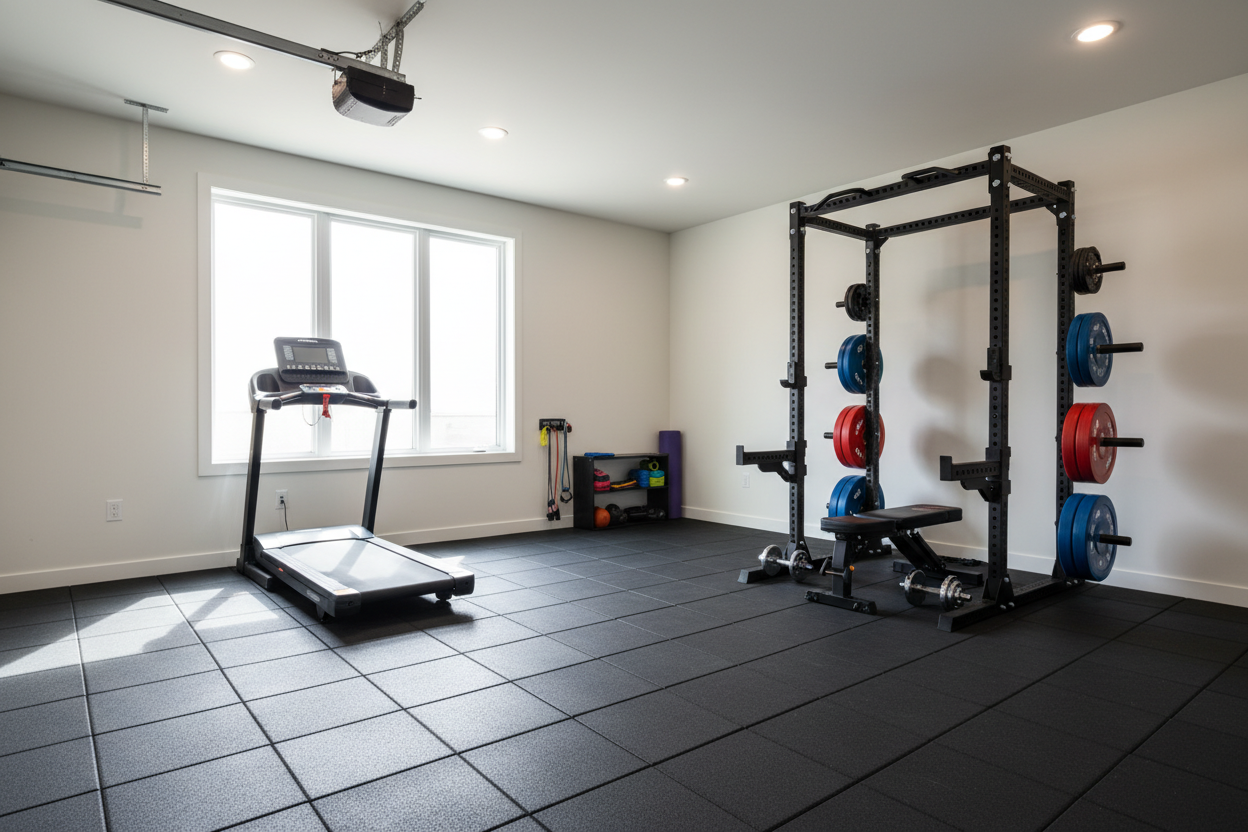
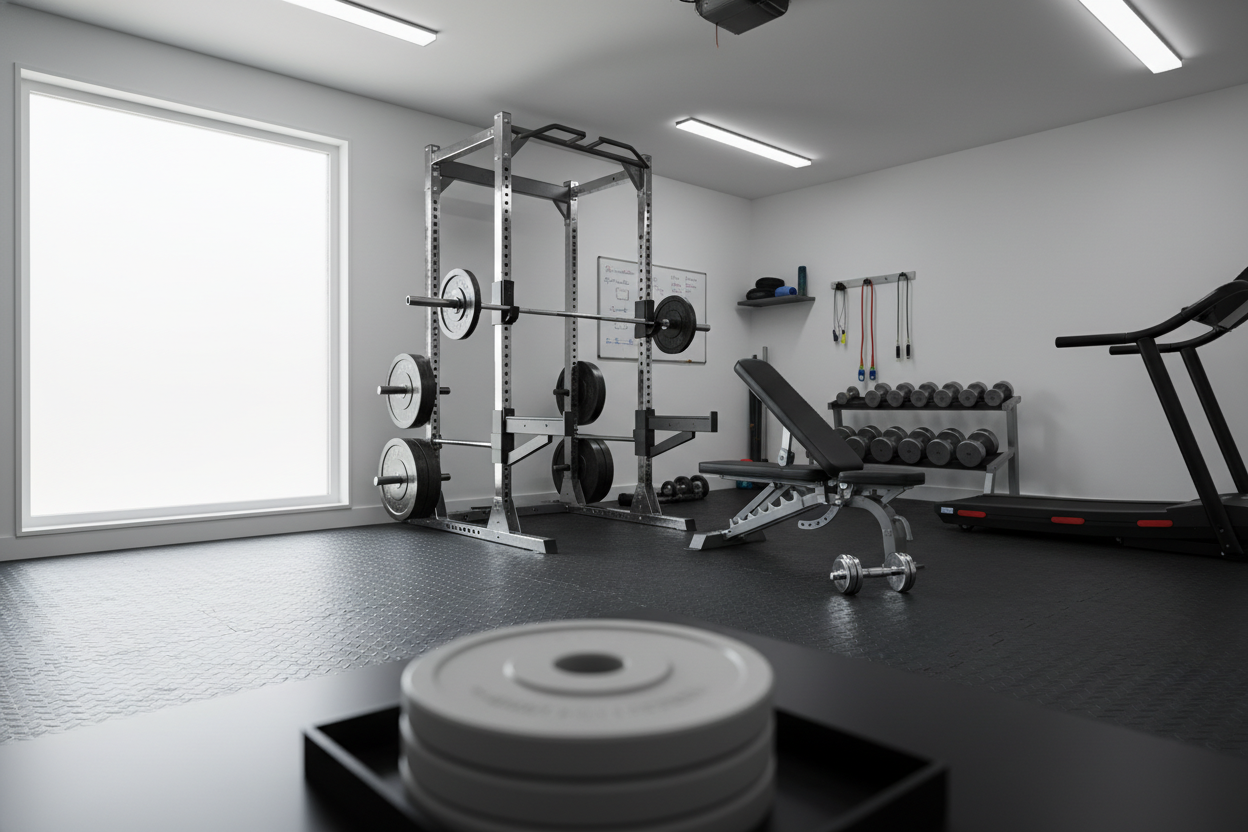
- A stable, non-slip floor is non-negotiable for heavy force transfer.
The Week One Trap That Kills Your Gains
The biggest mistake I see in home gyms is the 'Day One Ego.' You get a new rack, you're hyped, and you immediately try to find your 5-rep max. This is a death sentence for a hypertrophy cycle. When you max out immediately, you leave yourself nowhere to go. You hit a wall by week three, your central nervous system is fried, and you end up resetting the program before you've even built any actual tissue.
I have learned that The Best Gym Workout to Gain Muscle Starts With the Lightest Weights because it allows you to build momentum. Think of it like a plane taking off. If the runway is ten feet long, you’re crashing into the woods. If the runway is a mile long, you have plenty of time to gain speed before you lift off. Dropping your initial load by 10-15% feels soft, but it is the smartest move you can make for long-term progress.
Building Your Progressive Overload 'Runway'
Hypertrophy is about volume and progressive tension. In those first two weeks, I aim for submaximal volume. This means leaving 3 or 4 reps in the tank on every set. If you can squat 225 for 10, you should be doing 185 or 195. It feels easy. You aren't even sweating that much. But your tendons and ligaments are waking up and adapting to the frequency.
By staying submaximal early on, you accumulate 'clean' volume. You aren't using momentum or hitching the weight. You are making the muscle do 100% of the work. This creates a physiological environment where your body expects more weight next week. If you start at 100% intensity, your body just tries to survive; it doesn't try to grow.
The Simple Math of Adding 5 Pounds
Let's look at the math. If you start a squat cycle at 200 lbs and add 5 lbs a week for 8 weeks, you finish at 240 lbs. Your total tonnage over those 8 weeks is massive. If you start at your limit of 225 lbs, you might hit 230 in week two, stall in week three, and get injured or discouraged by week four. The person who started lighter ends up lifting more total weight over the two-month block, and that total tonnage is what drives muscle thickness.
Dialing In Your Stance and Setup
When the weight is light, you have the mental bandwidth to focus on the boring stuff. I use my 'easy' weeks to audit my biomechanics. Am I shifting to my left hip? Is my foot drive consistent? This is the time to experiment with your setup. For example, is the best gym workout plan to build muscle actually barefoot? For many, shedding the squishy running shoes allows for better sensory feedback from the floor.
However, you can't have good foot drive if your floor is slick or uneven. I’ve wasted sessions trying to squat on cheap, thin foam tiles that compressed under load. Investing in a high-density Large Exercise Mat For Home Gym gives you a predictable, non-slip surface. When you eventually reach those heavy weeks, you need to know that your feet aren't going to migrate outward during a heavy set of lunges or squats.
The Blueprint: The Best Gym Workout Routine to Gain Muscle
To make this work, you need a structured 4-week progression that repeats. This is the best gym workout routine to gain muscle because it forces discipline. Here is how I structure a typical month-long block:
- Week 1: 60-65% of 1RM. Target RIR 4. Focus on slow eccentrics and perfect form.
- Week 2: 70% of 1RM. Target RIR 3. Add one set to your main lifts.
- Week 3: 75% of 1RM. Target RIR 2. This is where it starts to feel 'heavy.'
- Week 4: 80-85% of 1RM. Target RIR 0-1. This is your 'real' work week where you push close to failure.
After Week 4, you don't just keep going until you break. You take a deload week—dropping the weight back to Week 1 levels—then start the next month 5-10 lbs heavier than where you began the previous cycle.
Knowing When to Finally Empty the Tank
You can't stay in the 'light' zone forever. Eventually, the runway ends, and you have to fly. You’ll know you’ve reached the end of a mesocycle when your recovery starts to lag. If you’re waking up with a dull ache in your elbows or your motivation to hit the garage is tanking, you’ve exhausted the runway. This is the time to take those final sets to true, technical failure.
Once you’ve spent a week or two grinding, pull back. Don't wait for an injury to tell you to stop. A planned deload is a sign of an advanced lifter; an unplanned injury is the sign of an amateur. Empty the tank, then refill it by starting the next cycle 'too light' all over again.
Personal Experience: My Ego vs. My Elbows
A few years ago, I decided I was too 'advanced' for light weeks. I jumped straight into a high-intensity overhead press program using my 1RM as the baseline for week one. By week three, I had developed such bad lateral epicondylitis (tennis elbow) that I couldn't even pick up a 10-lb plate. I had to take six weeks off. If I had just spent the first two weeks lifting 20 lbs less than I 'could' have, I would have gained five pounds of muscle instead of six weeks of physical therapy. Now, I never start a program without feeling a little bit embarrassed by the weights on the bar in week one.
FAQ
How do I know if I'm starting too light?
If you finish a set of 10 and you feel like you could have done 20, you're in the right spot for week one. It should feel like a very thorough warmup. Trust the process; the weight will get heavy soon enough.
Should I use this method for isolation exercises too?
Yes. Bicep curls and lateral raises benefit even more from this. Starting light allows you to eliminate momentum. If you can't pause at the top of a lateral raise, the weight is too heavy for a hypertrophy block.
Can I still do cardio on this plan?
Absolutely. In fact, doing low-intensity steady-state cardio during the 'light' weeks helps improve blood flow and recovery, preparing your system for the brutal weeks at the end of the month.