Why Squats Are Still the King of Lower Body Development
If you want to build a powerful, functional, and aesthetic lower body, you simply cannot ignore the squat. It is the foundational movement pattern that dictates how well you move in the gym and in daily life. While machines and isolation movements have their place, the classic leg exercise squat remains the gold standard for inducing muscle growth and strength gains. It recruits the quadriceps, hamstrings, glutes, and core simultaneously, providing a metabolic demand that leg extensions or curls just can't match.
The Mechanics of a Perfect Squat
Many gym-goers shy away from the rack because the movement feels unnatural or uncomfortable. Often, this boils down to poor mechanics rather than a lack of strength. To perform a safe and effective squat, stance width and foot angle are paramount. You need to find a position that allows your hips to open up so your femur can track properly without impingement.
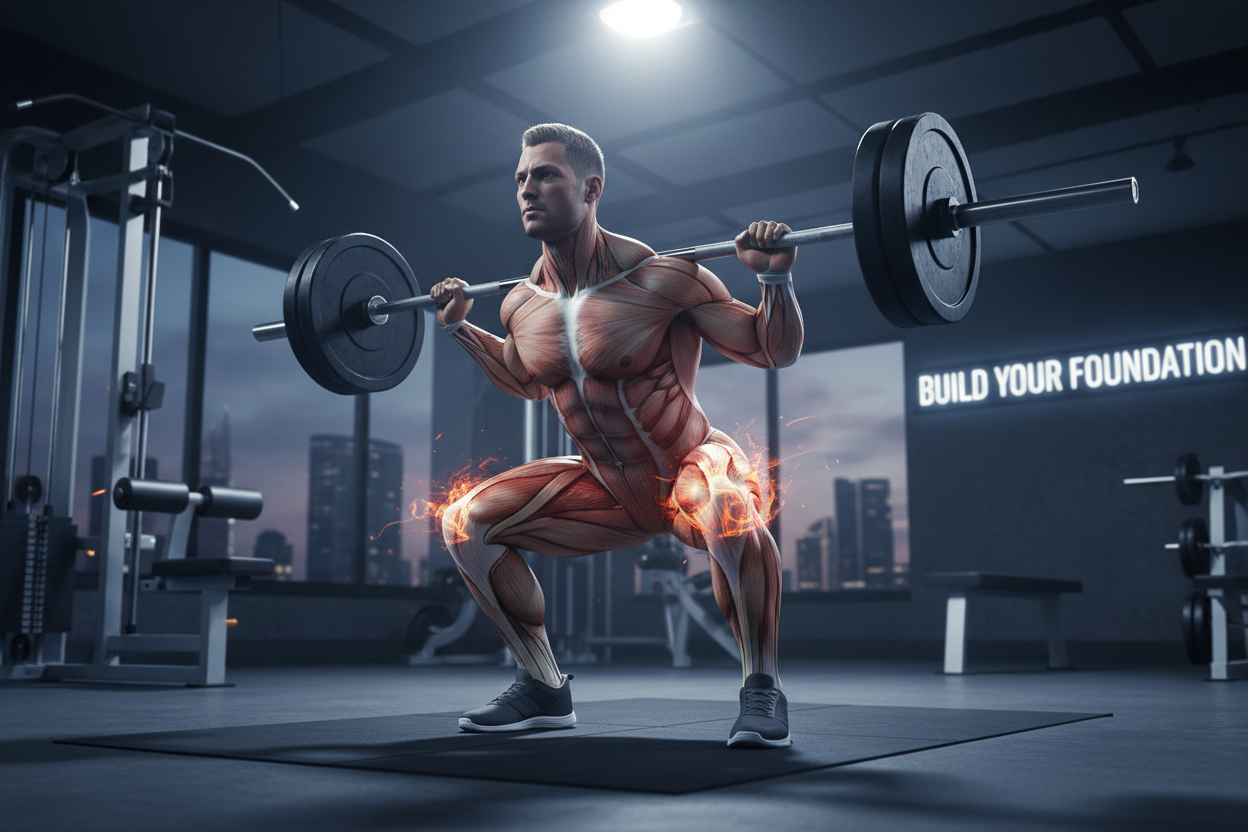
Start with your feet roughly shoulder-width apart, toes pointed slightly outward. As you descend, drive your knees out in line with your toes. This cue prevents the knees from collapsing inward—a common cause of injury. Keep your chest up and your spine neutral. The descent should be controlled, lowering until your hip crease is below the top of your knee, assuming your mobility allows for it. Explode back up through your mid-foot, keeping the tension on your legs rather than shifting the load to your lower back.
My Personal Battle with the Barbell
I spent the first few years of my training avoiding the squat rack entirely. I convinced myself that leg presses were a sufficient substitute because every time I tried to build a squat leg workout, I left the gym with lower back pain rather than quad fatigue. It wasn't until I dropped the ego, stripped the weight off the bar, and actually filmed my form that I realized the issue. I was initiating the movement by bending my knees forward first, rather than hinging at the hips. This put immense shearing force on my knees and forced my lower back to round at the bottom.
Once I learned to brace my core properly—expanding my stomach against a lifting belt rather than just sucking it in—and initiate the break at the hips, the pain vanished. The progress that followed was rapid. My legs grew more in six months of proper squatting than they had in three years of machine work. This experience taught me that a leg workout with squats is only as good as the technique used to execute it.
Structuring Your Leg Day
Building a routine around this compound lift requires strategic planning. You shouldn't throw heavy squats at the end of a session when your core is fatigued. They demand high neurological alertness and physical energy. Place your primary leg squat workout movements at the beginning of your training session after a thorough dynamic warm-up.
Warm-Up and Mobility
Never walk in cold and put plates on the bar. Spend ten minutes working on ankle dorsiflexion and hip mobility. Tight ankles are the silent killer of squat depth; if your knees can't travel forward because your ankles are locked up, your body compensates by folding your torso forward. A few sets of bodyweight squats and hip openers will prime the nervous system.
Volume and Intensity
For hypertrophy (muscle growth), working in the 6 to 12 rep range is generally most effective. If your goal is pure strength, lower reps (3 to 5) with higher intensity work better. A comprehensive leg day squats session might look like this:
- Barbell Back Squats: 4 sets of 6-8 reps (Heavy compound focus)
- Romanian Deadlifts: 3 sets of 10-12 reps (Posterior chain focus)
- Bulgarian Split Squats: 3 sets of 12 reps per leg (Unilateral balance)
- Leg Extensions: 3 sets of 15-20 reps (Metabolic burnout)
Variations to Keep Progressing
Doing the exact same movement every week can eventually lead to a plateau. Fortunately, the squat is versatile. If you find that your lower back is the limiting factor in a back squat, switch to Front Squats. By holding the barbell across your front deltoids, you are forced to maintain a more upright torso, which shifts the load heavily onto the quadriceps and reduces shear on the lumbar spine.
Goblet squats are another excellent alternative, particularly for beginners or those working through mobility restrictions. Holding a dumbbell or kettlebell at chest height acts as a counterweight, allowing you to sit deeper into the squat with better form. Incorporating these variations ensures that your leg squat workout remains challenging and targets the musculature from slightly different angles.
Common Pitfalls to Avoid
Ego lifting is the enemy of leg development. Half-reps might allow you to put more weight on the bar, but they rob you of the tension needed for growth. The bottom portion of the squat, where the muscle is stretched under load, is where the most significant hypertrophy signaling occurs. If you cut the depth short, you are doing half the work for none of the glory.
Another frequent mistake is the "good morning" squat. This happens when your hips rise faster than your chest out of the hole, turning the leg exercise into a lower-back hinge. This usually indicates a weak core or weak quads. If you feel this happening, lower the weight and focus on driving your upper back into the bar as you ascend.
Recovery and Frequency
Leg training is systemic. A heavy session taxes your central nervous system significantly. You need to prioritize sleep and nutrition to recover from a rigorous leg workout with squats. Most natural lifters find that training legs twice a week allows for sufficient volume without exceeding recovery capacity. One day can be focused on heavy, low-rep strength work, while the second day focuses on higher-rep hypertrophy work or variations like the front squat or hack squat.
Consistency is the final piece of the puzzle. You won't see massive tree-trunk legs after a month. But if you respect the movement, prioritize technique over weight, and progressively overload the bar over time, the squat will transform your physique more than any other exercise in your arsenal.
Frequently Asked Questions
How deep do I really need to squat for muscle growth?
You should aim to break parallel, meaning your hip crease drops slightly below the top of your knee. While "ass-to-grass" (full depth) offers great range of motion, breaking parallel is sufficient for maximum muscle activation without placing unnecessary stress on the joints if your mobility is limited.
Can I squat if I have bad knees?
Yes, but you must modify the movement. often, knee pain comes from poor tracking or weak hips rather than the squat itself. Try box squats or goblet squats to reduce the load while maintaining the movement pattern, and limit the range of motion to a pain-free zone until you build strength.
Is it better to squat with a wide or narrow stance?
This depends entirely on your hip anatomy. A narrower stance generally targets the outer quad (sweep) but requires more ankle mobility, while a wider stance recruits more glutes and adductors. Experiment with different widths to find the position that feels strongest and most comfortable for your skeletal structure.