Why Skipping Unilateral Glute Exercises Is Ruining Your Squat
I remember staring at my 1RM squat video in slow motion, wondering why my hips shifted three inches to the right the second I hit the hole. I was loading 400 lbs, but my left glute was essentially a passenger. It’s a common trap: you think your big barbell lifts are building a symmetrical powerhouse, but you're actually just getting really good at compensating. If your progress has stalled, it’s likely because you’ve neglected unilateral glute exercises in favor of just adding more plates to the bar.
Quick Takeaways
- Bilateral lifts like squats allow your dominant side to mask significant strength deficits.
- Unilateral work forces the gluteus medius to stabilize the pelvis, fixing the dreaded 'hip shift.'
- B-stance and single-leg variations offer higher glute activation with less spinal loading.
- A stable, high-traction floor is non-negotiable for heavy single-leg accessory work.
The Bilateral Illusion: Why Two Legs Hide Your Weaknesses
The human body is a master of efficiency, which is just a polite way of saying it’s lazy. When you’re under a heavy barbell, your CNS doesn’t care about symmetry; it cares about not getting crushed. If your right glute is 15% stronger than your left, your lower back and your dominant quad will happily pick up the slack to finish the rep.
This is the bilateral illusion. You see the numbers on the bar go up, but the gap between your strong side and your weak side is actually widening. Eventually, that gap becomes a canyon. You hit a plateau that no amount of 'squatting more' will fix because the foundation is crooked. You aren't weak; you're just lopsided.
How Unilateral Exercises for Glutes Fix the 'Hip Shift'
When you strip away the support of the second leg, there is nowhere to hide. Isolating one side forces the gluteus medius—the unsung hero of hip stability—to actually do its job. Without that stabilization, your pelvis tilts, your knee caves, and you realize just how much you've been relying on momentum and grit. Shifting to home gym setups using the unilateral method is the most effective way to balance out these deficits without needing a commercial leg press or a dedicated cable machine.
By incorporating unilateral exercises for glutes, you stop the 'hip shift' before it starts. You’re teaching your brain how to fire the glute in sync with the rest of the posterior chain. This isn't just about aesthetics; it's about making sure that when you go back to the squat rack, both cylinders are firing equally. It turns a shaky, grindy rep into a smooth, vertical drive.
3 Brutal Unilateral Movements for Glutes You Actually Need
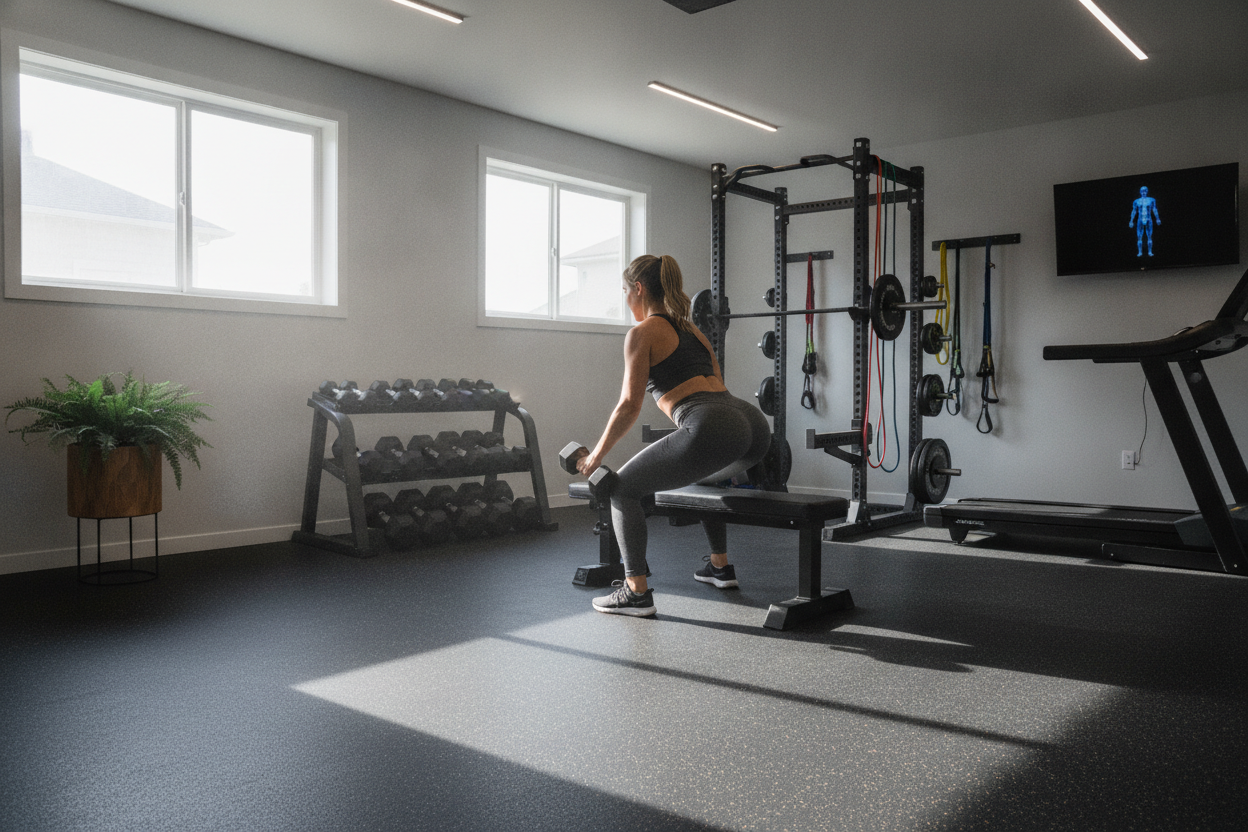
Forget the 3-lb ankle weights and the 'burn'—we are talking about loaded, high-tension movements. First up is the B-stance hip thrust. By staggering your feet, you put 80% of the load on the working glute while using the other foot just for balance. It’s the easiest way to load a 'single' leg heavy without your balance being the limiting factor.
Next, the glute-biased Bulgarian split squat. Most people do these too upright, making them a quad-killer. Take a slightly wider stance and lean your torso forward about 30 degrees. This stretch at the bottom of the movement is pure misery for the glutes, but the hypertrophy gains are unmatched. Finally, the single-leg RDL. This is the ultimate test of hip hinge mechanics. If you can't do this without falling over, you have no business trying to pull 500 lbs off the floor.
These unilateral movements for glutes are draining. They require more focus and more time than your standard sets of ten, but they pay dividends in joint health and raw power.
Setting Up Your Garage Floor for Heavy Single-Leg Work
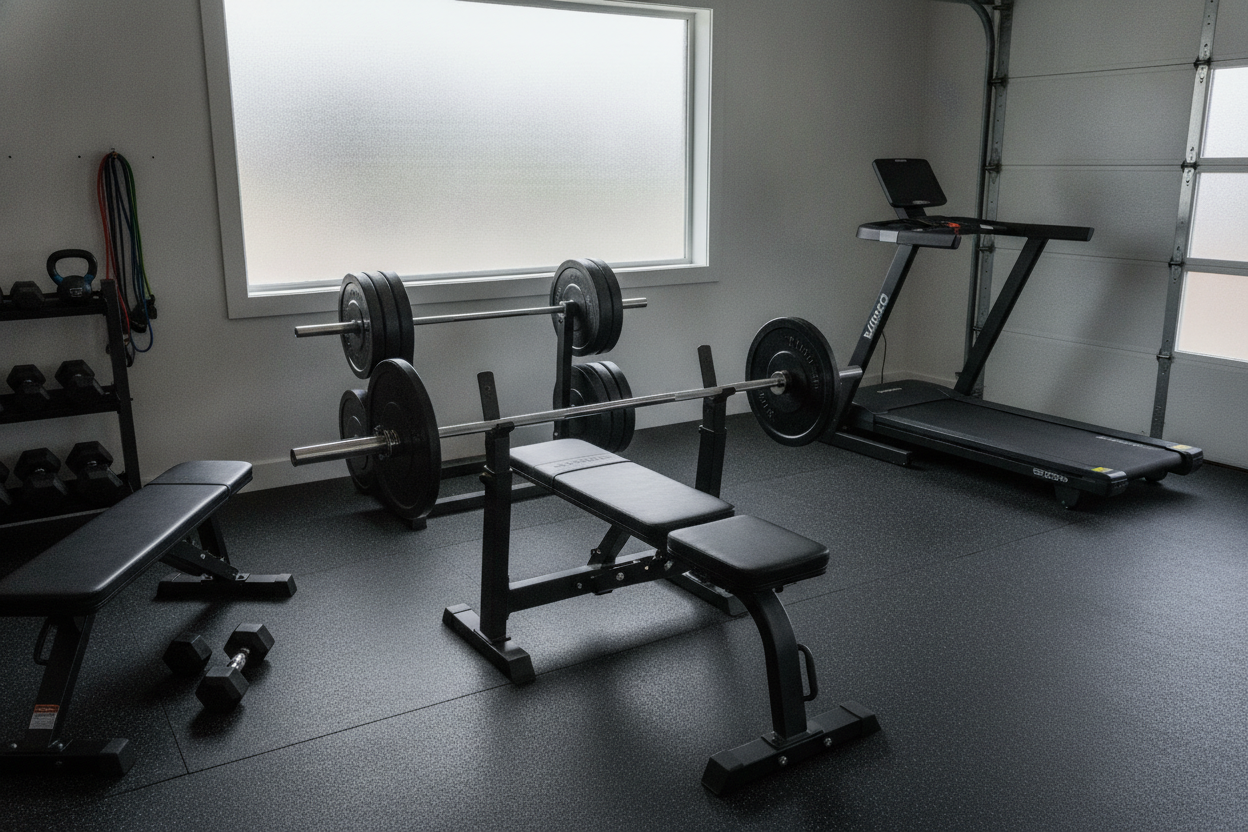
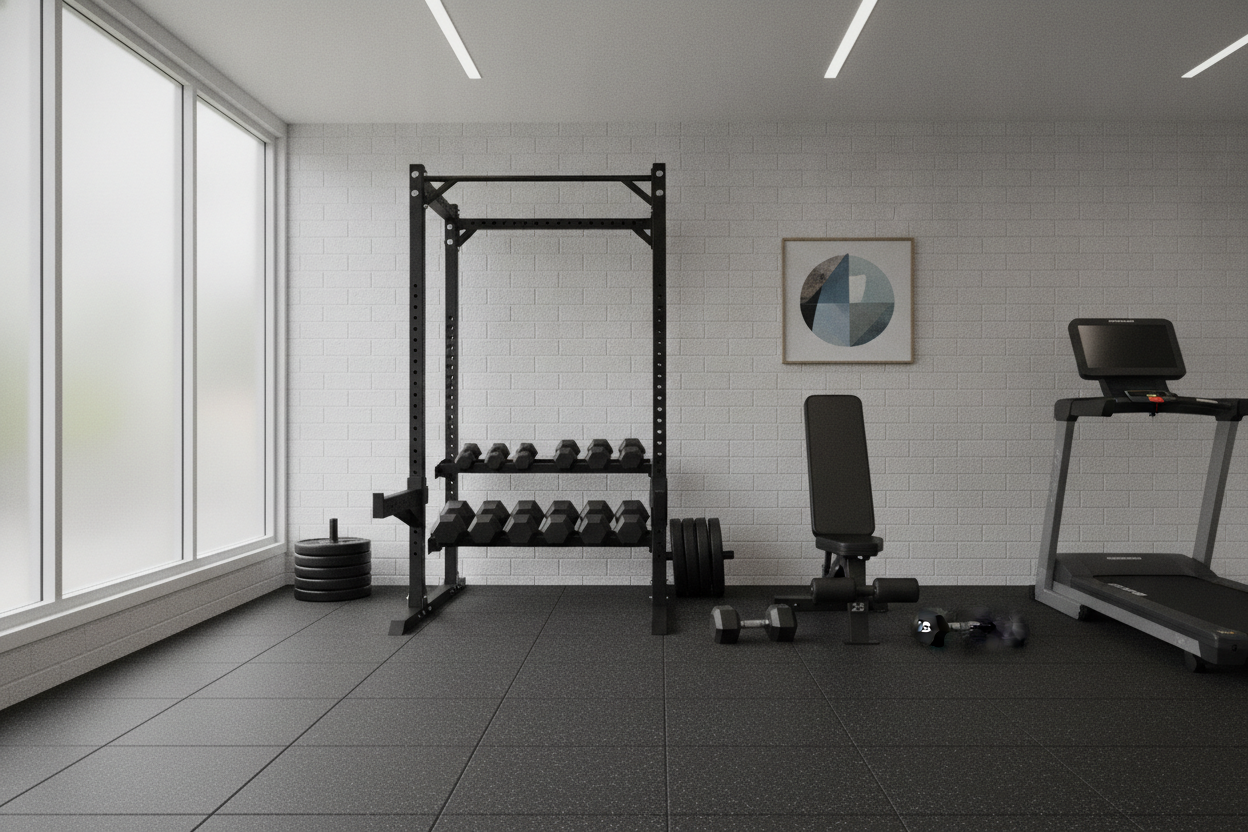
If you're training in a garage, you know that bare concrete is the enemy of stability. Doing a heavy B-stance thrust or a Bulgarian split squat requires a surface that won't let your foot slide an inch. I've tried doing these on cheap, thin yoga mats, and it’s a recipe for a rolled ankle. You need a large exercise mat for home gym use that can actually handle the pressure of your body weight plus a 100-lb dumbbell.
I personally recommend a 6x8ft exercise mat for home workouts because it gives you enough real estate to move. When you're grinding out that last rep of a single-leg RDL and your balance wavers, you need a high-traction surface that bites back. Plus, if you need to ditch a dumbbell, you won't be cracking your foundation or waking up the neighbors with the sound of iron hitting concrete.
How to Program This Without Destroying Your Central Nervous System
Don't make the mistake of treating these as 'light' finishers. These are high-effort accessories. I like to program them immediately after my primary lift. If today is Squat Day, your first accessory should be the Bulgarian split squat or the B-stance thrust. Aim for 3 sets of 8-12 reps per leg. If you can do 15 reps with perfect form, the weight is too light.
Because you're working one side at a time, these sets take twice as long. Don't rush the rest periods. Give yourself 60-90 seconds between legs if you need it. You want the muscle to fail, not your lungs. Over time, you’ll notice your bilateral lifts feel 'tighter' and more explosive because you've finally plugged the leaks in your strength.
Personal Experience: The Lesson I Learned the Hard Way
I spent two years ignoring single-leg work because it was 'boring' and didn't look cool on Instagram. I eventually developed a nagging SI joint pain that wouldn't quit. My physical therapist took one look at my single-leg RDL—which involved me wobbling like a drunk toddler—and told me my glutes were basically decorative. It took six months of dedicated unilateral work to fix the mess I made. Now, I never start a lower body block without at least two of these movements in the rotation. My squat is higher, and my back doesn't ache after a heavy session.
FAQ
Do I have to use dumbbells for these?
No, but they are usually better for balance. A barbell can work for B-stance thrusts, but for split squats and RDLs, dumbbells or kettlebells allow for a more natural center of gravity and easier bailing if you lose your footing.
Should I do my weaker leg first?
Always. Start with your 'bad' side, count the reps, and then only do that many reps on your strong side. This prevents the gap from getting wider and eventually forces the weak side to catch up.
Can I replace my squats with these?
You can, but you don't have to. These are designed to supplement your big lifts. However, if you have a back injury that prevents heavy axial loading, these movements are a fantastic way to keep your legs huge without compressing your spine.