Why Skipping Leg Anatomy Is Killing Your Gains (Plus How to Test Yourself)
Most people walk into the gym, head straight for the squat rack, and move weight from point A to point B without fully understanding the machinery moving that load. You might know you need to train your "quads" and "hams," but a superficial understanding often leads to superficial results. True hypertrophy and strength development require a mind-muscle connection that is difficult to achieve if you cannot visualize the specific fibers you are trying to recruit. This is where anatomical knowledge bridges the gap between a plateau and a personal best.
I learned this lesson the hard way a few years into my own training journey. I suffered from chronic knee pain that I attributed to "bad joints," but the reality was a severe imbalance in my quadriceps development. I was hammering my rectus femoris but completely neglecting the vastus medialis. It wasn't until I sat down, looked at a diagram, and essentially gave myself a leg muscles quiz that I realized I was training only half my leg. Once I understood the insertion points and functions, I changed my foot placement and exercise selection. The pain vanished, and my squat numbers shot up. Understanding the map is the only way to navigate the terrain of your own body.
The Architecture: Bones of the Lower Limb
Before you can worry about muscle bellies, you have to understand the chassis. The skeletal structure dictates your leverage, your squat depth, and your risk of injury. When you look at a skeletal system lower extremity quiz, you aren't just memorizing Latin names; you are looking at the levers that determine your biomechanical reality.
The femur, tibia, and fibula form the primary struts of the lower body. If you attempt a lower limb bone quiz, you will quickly realize that the length of your femur relative to your torso dictates whether you should be high-bar squatting or low-bar squatting. A lifter with a long femur and short torso will naturally lean forward more to keep the center of gravity over the mid-foot. Ignorance of this leads many to think they have "bad form" when they actually just have different anatomy.
Furthermore, the foot mechanics—governed by the tarsals and metatarsals—act as the foundation. A comprehensive bones of the leg quiz would highlight the calcaneus (heel bone) and how its alignment affects knee valgus. If you cannot pass a basic lower extremity bone quiz, you might struggle to troubleshoot why your knees cave in during heavy loads. It usually starts at the feet and the hips, the two anchors of the leg bones.
The Engine: Upper Leg Musculature
The thigh is home to some of the largest and strongest tissues in the human body. When fitness enthusiasts take a muscles of the leg quiz, they usually ace the quadriceps section but fail miserably on the adductors and posterior chain. The quadriceps are not just one block of meat; they are four distinct muscles with different lines of pull. The rectus femoris crosses the hip, meaning it helps lift your leg up, while the vastus muscles only cross the knee. This distinction changes how you should train them.
On the flip side, the hamstrings are often woefully misunderstood. A lower extremity muscle quiz will remind you that the hamstrings are primarily knee flexors and hip extensors. If you are only doing leg curls, you are missing half the function. If you are only doing deadlifts, you are missing the other half. A proper lower limb anatomy quiz would force you to identify the biceps femoris, semitendinosus, and semimembranosus. Knowing that the biceps femoris has two heads (long and short) helps you understand why seated leg curls might hit the muscle differently than lying leg curls due to hip position.
The Forgotten Zone: Lower Leg Anatomy
The calves are often the punchline of bodybuilding jokes, but the anatomy of the lower leg is complex and vital for athletic performance. A lower leg muscles quiz reveals that the "calf" is actually comprised of the gastrocnemius and the soleus. This isn't just trivia; it changes your workout. The gastrocnemius crosses the knee joint, meaning it is most active when the leg is straight (standing calf raises). The soleus does not cross the knee, so it takes over when the knee is bent (seated calf raises).
Beyond the calves, a muscles of the lower leg quiz will introduce you to the anterior tibialis. This is the muscle on the front of your shin responsible for dorsiflexion (pulling your toes up). Neglecting this muscle is a one-way ticket to shin splints and poor squat depth. If you take a muscles of the lower limb quiz and cannot identify the anterior compartment, you are likely leaving stability gains on the table.
Gamifying Your Knowledge for Better Gains
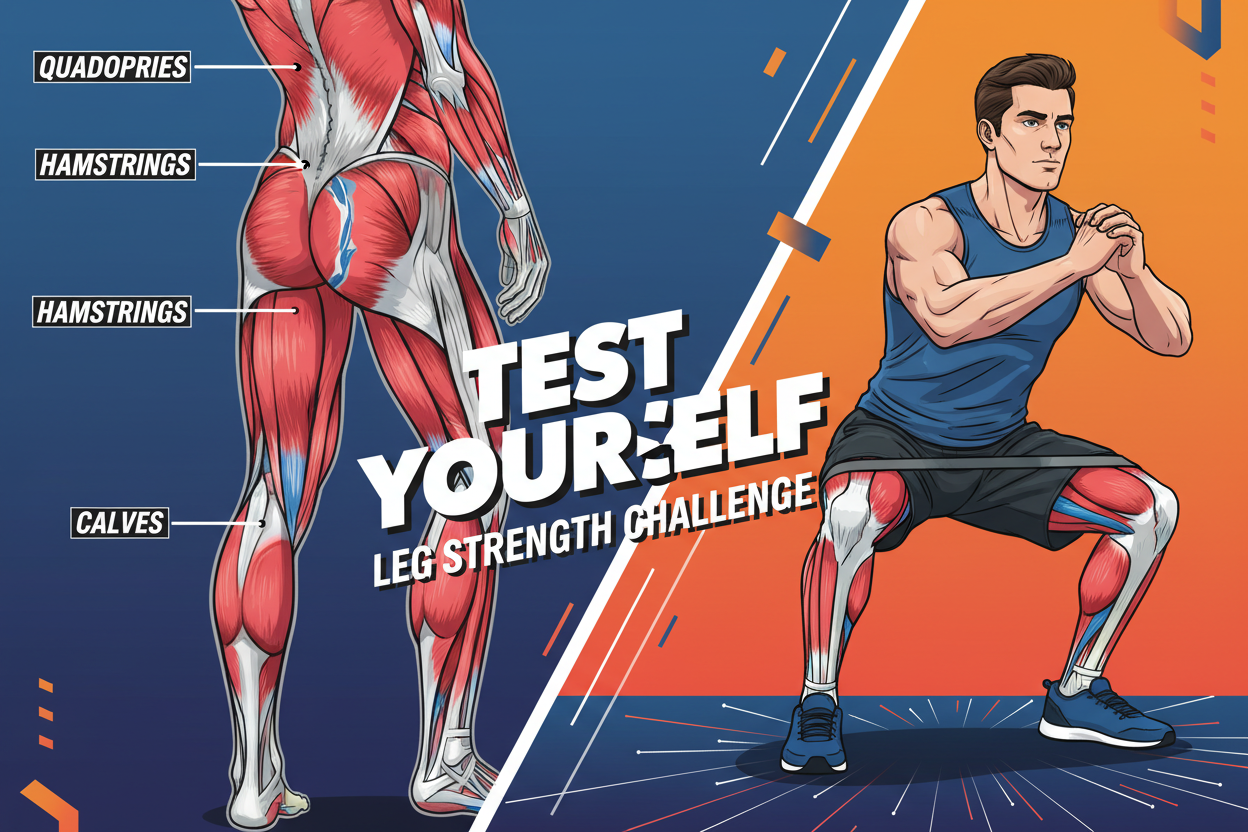
Rote memorization can be dry, which is why turning this learning process into a leg muscle game can be highly effective. Visualizing the muscles firing during a set is easier when you have practiced active recall. Using a leg muscle quiz label exercise, where you have to pin the name to the muscle on a blank diagram, forces your brain to map the territory.
Think of it as a muscles of the leg labeling quiz for your own body. When you feel a burn on the outside of your hip, can you identify it as the tensor fasciae latae or the glute medius? If you turn this into a muscles of the leg game, you start to develop a coach's eye for your own physique. You stop guessing which exercise hits which area and start prescribing movements with surgical precision.
Advanced Anatomy: Beyond the Basics
For those looking to push their understanding further, a lower limb anatomy quiz that delves into nerve innervation and blood supply can be eye-opening. While a lower limb cadaver quiz is typically reserved for medical students, the level of detail it requires highlights just how interconnected our systems are. The sciatic nerve, for instance, runs deep through the posterior chain. Tight piriformis muscles can compress this nerve, mimicking a disc herniation. Understanding this relationship through a lower extremity anatomy quiz can save you months of misguided rehab.
Even if you never plan to dissect a cadaver, reviewing lower limb anatomy questions helps you communicate better with physical therapists and coaches. If you can articulate that your pain is near the insertion of the patellar tendon rather than "my knee hurts," you get to the solution faster. A lower limb bones anatomy quiz might seem academic, but knowing the difference between the medial and lateral malleolus helps you understand ankle mobility restrictions that ruin your squat depth.
Practical Application
You do not need a degree to benefit from this. Simply searching for a leg anatomy quiz or a lower limb quiz online and spending ten minutes testing yourself can change your perspective. Look for a lower leg anatomy quiz that focuses on function rather than just naming. When you understand that the popliteus unlocks the knee joint, or that the sartorius is the longest muscle in the body and assists in crossing your legs, you start to respect the complexity of the machine you are operating. Treat your knowledge base like a muscle; train it, test it with a lower extremity quiz, and watch your performance improve as a result.
Frequently Asked Questions
How often should I review leg anatomy to help my training?
You don't need to study daily, but reviewing a muscle chart or taking a quick quiz once every few months is helpful. It is especially useful to review anatomy right before starting a new training block to ensure your exercise selection aligns with your goals.
Do I need to know the Latin names of muscles to get fit?
Strictly speaking, no, but knowing the specific names helps you find better information. Searching for "vastus medialis exercises" yields far more specific and useful results than searching for "inner thigh exercises."
What is the difference between the lower leg and the thigh in anatomy terms?
In anatomical terminology, the "leg" specifically refers to the segment between the knee and the ankle (lower leg), while the segment between the hip and the knee is called the "thigh." Quizzes often make this distinction, so be careful when reading questions.