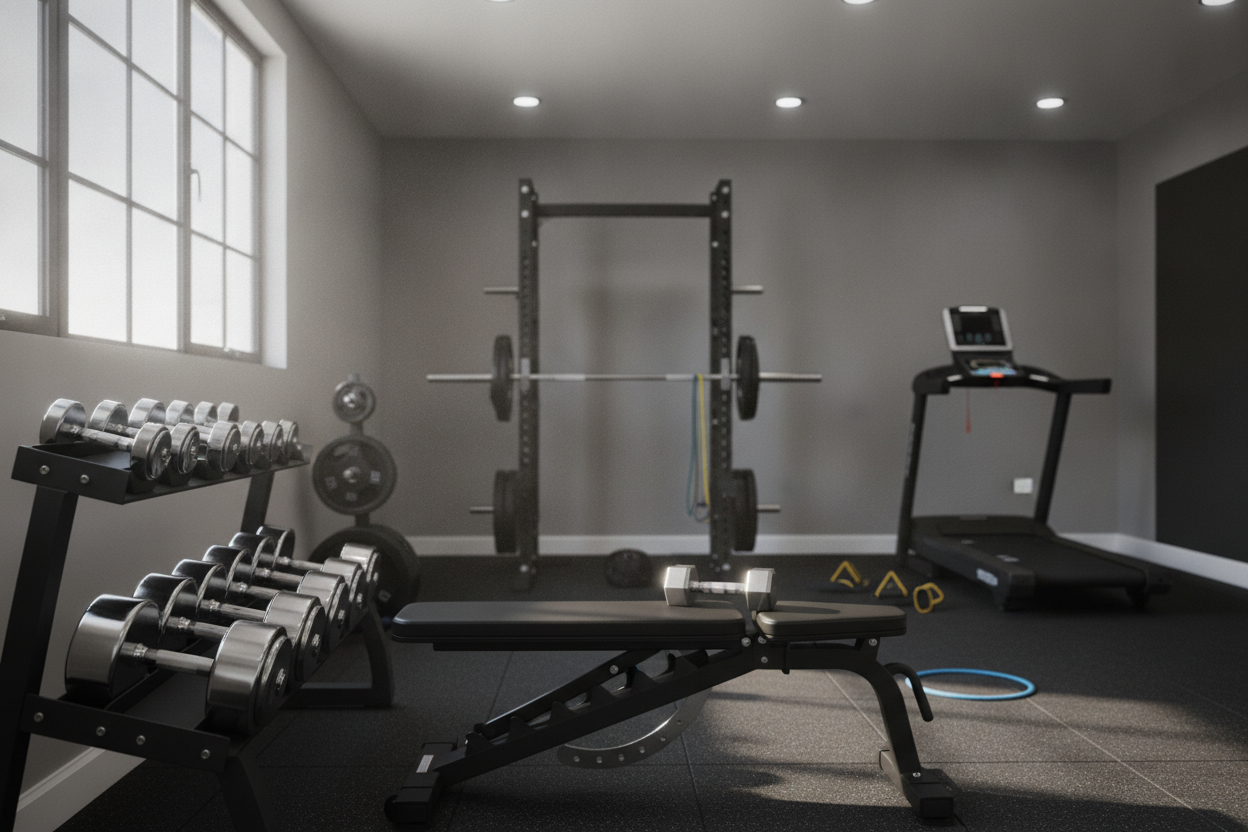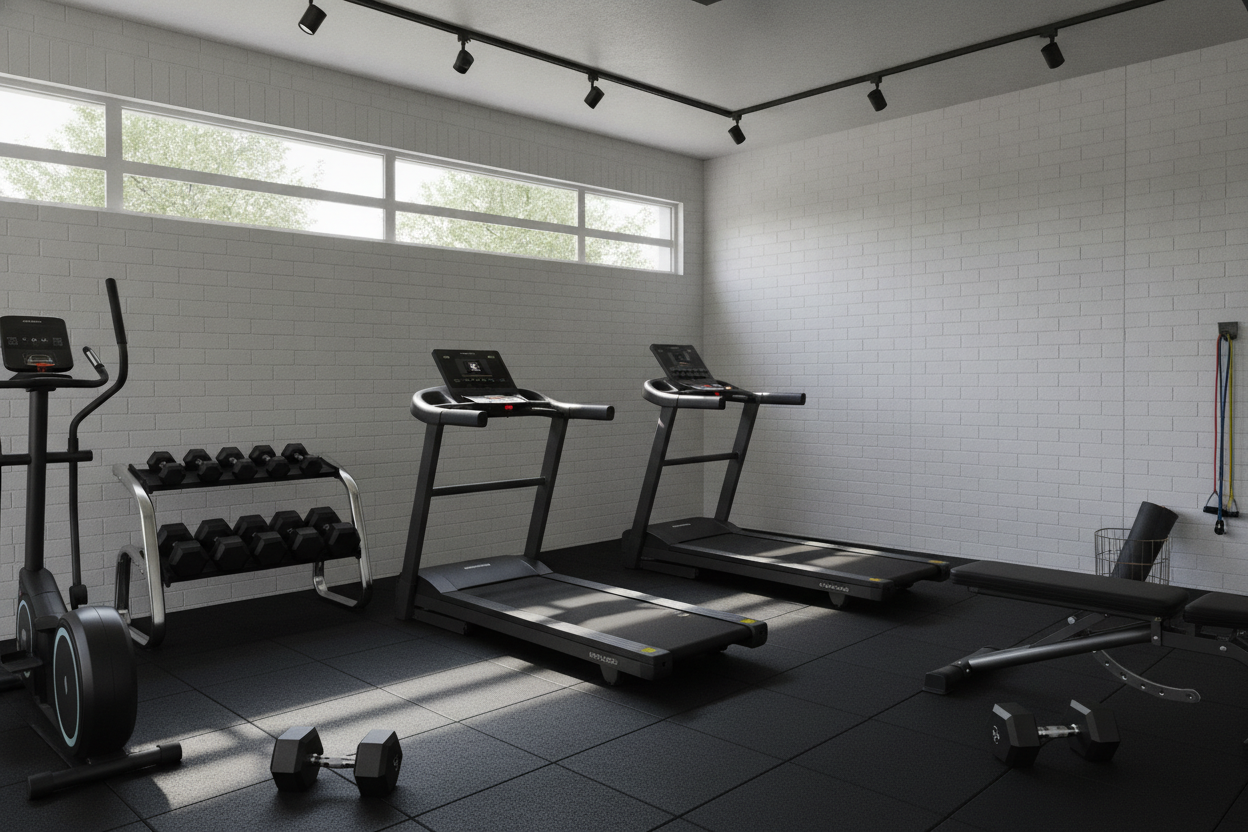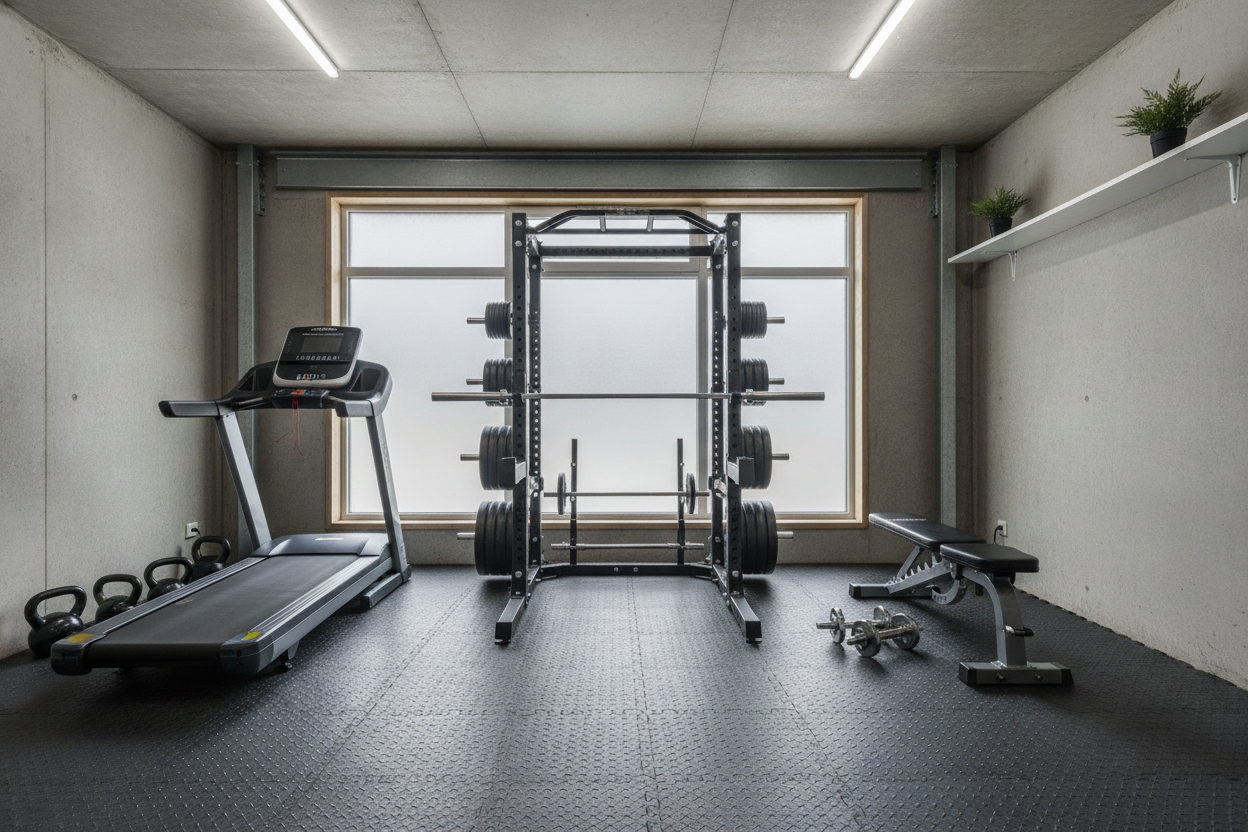
Why Professional Exercise Equipment Might Ruin Your Spare Room
I remember the day I finally had enough of my $150 'heavy-duty' bench. I was halfway through a set of 225-lb presses when the frame groaned like a haunted house door, and the whole thing shifted three inches to the left. That's usually the moment we start doom-scrolling for professional exercise equipment, dreaming of 11-gauge steel and machines that don't move when you breathe on them. We want the stuff the local powerhouse gym has because we think it’s the final boss of home training.
- Commercial gear is built for 18 hours of daily abuse, not 3 hours a week.
- Ceiling height is the number one killer of home gym dreams.
- Standard residential flooring will fail under the weight of club-level iron.
- Most 'pro' machines don't fit through standard 30-inch doorways.
The Allure of Overbuilding Your Home Setup
We’ve all seen the influencers training in garages that look better than most Equinox locations. They’ve got the custom-color racks, the selectorized cable stacks, and the 3x3-inch steel uprights. It’s intoxicating. When you’re tired of wobbly pull-up bars and plates that rattle like cheap silverware, the 'professional' label feels like a guarantee of quality. You want something that can handle a 500-lb squat without breaking a sweat.
Buying professional workout equipment is often a reaction to the 'buy once, cry once' philosophy. You tell yourself that if you spend $3,000 on a rack now, you'll never need another one. While that's true, you're also buying a piece of hardware designed to be bolted into a concrete slab and used by 300-lb linemen. In a spare bedroom, that 11-gauge steel is often overkill that creates more problems than it solves.
The Brutal Reality of Professional Gym Equipment for Home
The biggest shock isn't the price tag; it's the sheer scale. A commercial-grade power rack often stands 90 to 100 inches tall. If you’re in a basement with 7-foot ceilings, you’re literally going to have to cut a hole in the drywall to finish a pull-up. Most professional gym equipment for home users ends up being a logistical nightmare because residential architecture wasn't built for it.
Then there’s the footprint. A commercial leg press can easily take up a 5x8-foot area. By the time you add a rack and a cable machine, you've completely consumed a two-car garage. If you compare this to the top home workout equipment designed for residential use, you'll notice the consumer stuff is foldable or uses vertical storage. Professional gear assumes you have 5,000 square feet of open rubber flooring and a loading dock.
Say Goodbye to Your Residential Flooring
You cannot put an 800-lb functional trainer on top of builder-grade carpet or thin foam puzzle mats. I’ve seen guys punch holes straight through their subfloor because they dropped a 100-lb dumbbell on a surface that wasn't reinforced. Professional machines concentrate thousands of pounds of pressure into four small feet. If you don't have a solid concrete base and a high-density 6x8ft exercise mat gym flooring, your floor is going to warp or crack within six months.
Where Professional Workout Equipment Actually Makes Sense
I’m not saying you should buy the cheap stuff. There are specific pieces where going 'pro' is the only way to go. If you are a competitive powerlifter or you're training for a 600-lb deadlift, a professional-grade power rack is a safety requirement, not a luxury. You need those 1-inch bolts and the massive weight capacity when things go wrong mid-set.
Similarly, a high-end functional trainer with a 2:1 ratio and smooth aluminum pulleys is a different beast entirely compared to the plastic-pulley versions found at big-box stores. When deciding on your essential home gym equipment, prioritize the pieces that involve moving parts or safety catches. A professional barbell or a heavy-duty rack is worth the floor space; a commercial-grade treadmill that weighs 450 lbs and requires a dedicated 20-amp circuit probably isn't.
Smarter Alternatives to the Commercial Giants
The sweet spot for most of us is 'prosumer' gear. This is equipment that uses the same 11-gauge steel as the pros but is scaled down for 84-inch ceilings and standard doorways. You get the stability of a commercial rig without needing a forklift to move it. Look for brands that offer 'short' versions of their racks or 'compact' footprints for their cable machines.
Before you drop five figures, keep an eye out for home gym equipment deals on high-tier residential brands. You can often find a rack that handles 1,000 lbs for half the price of a Life Fitness or Hammer Strength unit. You want the heavy-duty feel, but you also want to be able to park your car in the garage occasionally.
My Biggest Mistake
I once bought a used commercial GHD (Glute Ham Developer) from a local gym closing down. It was a tank. It also weighed 200 lbs and didn't have wheels. I had to take the door off the hinges just to get it into my spare room, and once it was in, I couldn't move it to vacuum. I eventually sold it for half what I paid just because I was tired of stubbing my toe on it. Now, I use a compact version that folds against the wall. The 'pro' version was better, but the compact version actually gets used.
FAQ
Is commercial gym equipment always safer?
Not necessarily. While the weight capacities are higher, many commercial machines are designed to be bolted to the floor. If you use them 'freestanding' at home, they can actually be more dangerous and prone to tipping than equipment designed for home use.
What is the difference between 11-gauge and 14-gauge steel?
11-gauge is thicker (about 1/8 inch) and is the standard for professional gear. 14-gauge is thinner and lighter. For most home users, 14-gauge is fine for accessories, but 11-gauge is preferred for the main uprights of a power rack.
Can I run a commercial treadmill on a standard outlet?
Usually, no. Most true commercial treadmills require a dedicated 20-amp circuit and a NEMA 5-20R outlet. If you plug one into a standard 15-amp home outlet, you'll likely trip the breaker every time you hit a sprint.