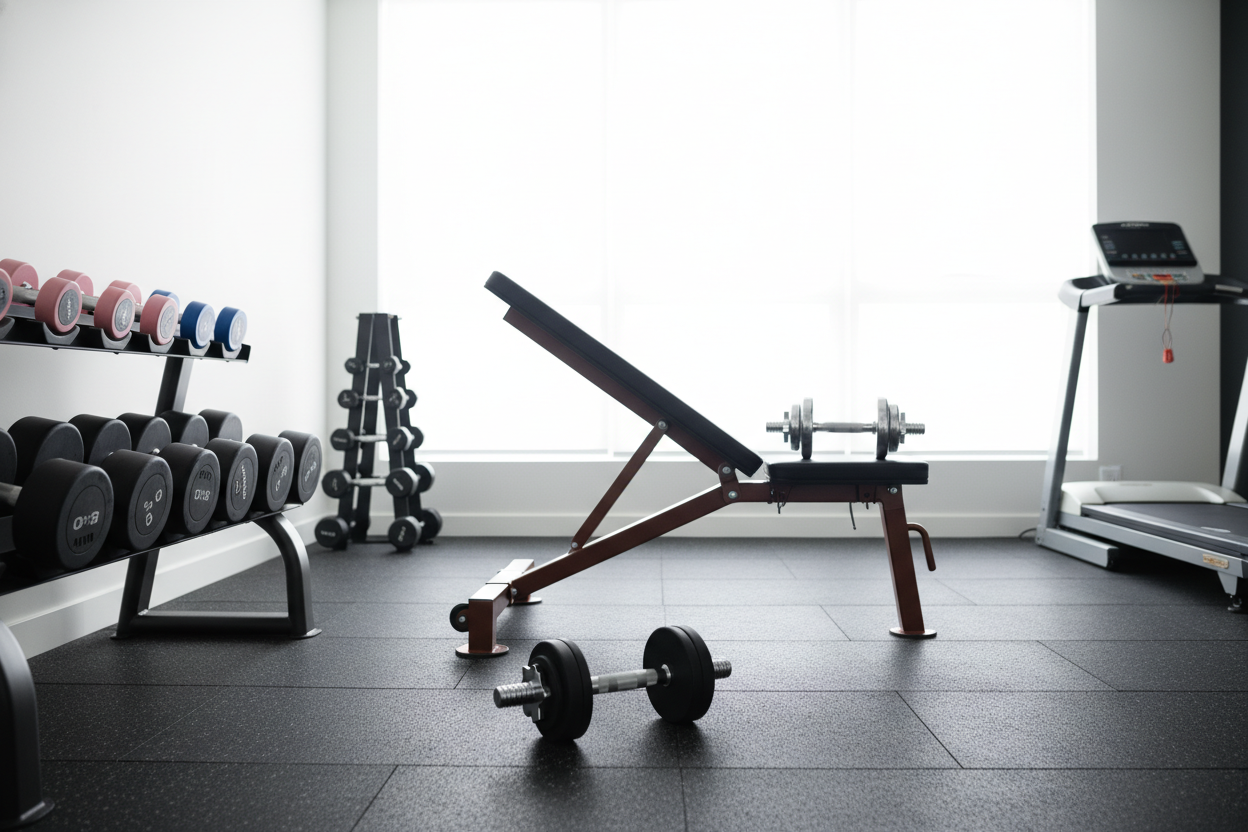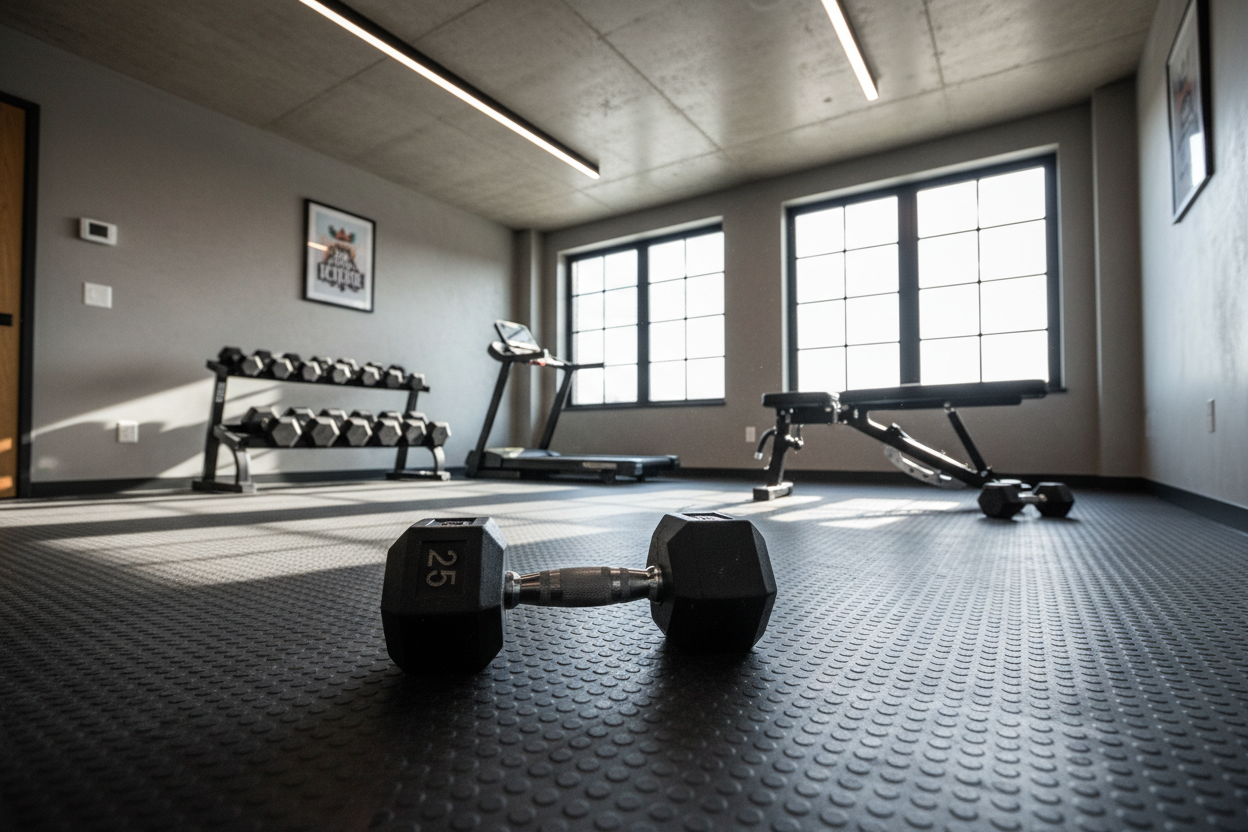
Why My Favorite Shoulder Exercise With One Dumbbell Needs No Rest
I remember staring at my single 35lb dumbbell during the 2020 lockdowns, feeling like I had been robbed. I wanted 3D delts, but all I had was one piece of iron and a lot of frustration. It turns out, that limitation was actually a tactical advantage for a shoulder exercise with one dumbbell. If you stop thinking about what you are missing and start thinking about how to abuse the weight you have, you will grow.
- Unilateral training forces your core to stabilize, burning more calories and hitting the obliques.
- The 'No-Rest Handoff' cuts workout time by 50% while doubling the metabolic pump.
- Isolating one arm at a time fixes the 'dominant side' compensation that ruins barbell symmetry.
- You do not need a 100lb pair to fail; you just need to eliminate the breaks.
You Don't Actually Need a Matched Pair to Build Mass
Most people walk into their garage, see a single 50lb dumbbell or a mismatched pair of 25s, and give up. They think they need a full rack of commercial-grade urethane weights to see progress. That is a lie sold to you by people who want you to buy more gear. Training with a single dumbbell shoulder workout is actually one of the fastest ways to fix a lagging side.
When you press a barbell, your dominant arm—usually the right for most of us—is going to do about 55-60% of the work. You do not notice it until you look in the mirror and realize your left trap is smaller than your right. By using single dumbbell exercises for shoulders, you force every fiber on that weak side to pull its own weight. There is nowhere to hide. The mind-muscle connection is not just some hippie gym talk; it is real, and it is easier to find when you only have one handle to focus on.
The 'No-Rest Handoff' Method Explained
The biggest waste of time in any gym is the two minutes you spend sitting on a bench between sets. If you are training for a 500lb squat, fine, take the rest. But if you are trying to get your delts to pop, you need metabolic stress. This is where the shoulder one dumbbell workout shines. I call it the 'No-Rest Handoff.'
Here is how it works: You start with your weaker arm. You push that set until you are one rep away from your form breaking down. Instead of putting the weight on the floor and checking your phone, you immediately pass the dumbbell to the other hand. While your right arm is working, your left arm is recovering. By the time the right arm is done, the left is ready to go again. You keep this loop going for 4 or 5 sets without ever letting the weight touch the ground. It is brutal, efficient, and honestly, a little bit sickening.
Why Staggered Rest Triggers Deltoid Hypertrophy
Hypertrophy is driven by three things: mechanical tension, muscle damage, and metabolic stress. When you use single-arm shoulder exercises in a continuous loop, you are redlining that metabolic stress. Your heart rate stays elevated, and blood stays trapped in the muscle tissue longer. This 'pump' is not just for ego; it swells the muscle cells and signals the body to adapt and grow.
Even if you only have a 25lb dumbbell, this method makes it feel like 50lbs by the third round. If you want to see how this fits into a larger plan, you can Build 3D Delts With This Dumbbell Shoulder Workout At Home using similar high-density principles. The goal is to make a light weight feel heavy through sheer work capacity.
My 3-Move Single Dumbbell Shoulder Routine
This is the exact gauntlet I run when I am short on time or stuck in a hotel gym with a pathetic rack. We are going to hit the front, side, and rear heads of the delt in one continuous flow. Grab a weight you can normally press for 12 reps and get ready to hate me.
The Kneeling Single-Arm Overhead Press
I hate standing presses for high reps because people start using their legs. They start 'push-pressing' when they get tired. By dropping to a half-kneeling position—one knee down, one foot forward—you take the legs out of the equation. It forces your core to stay rigid so you do not tip over.
Keep your elbow slightly tucked (about 30 degrees forward) rather than flared out to the side. This is safer for the rotator cuff. If your floor is concrete, I highly recommend doing this on a 6X4Ft Yoga Mat Exercise Mat Gym Flooring For Home Workout to save your patella. Press the weight up, lock it out, and control the descent. Switch hands immediately after the last rep.
The Doorframe Leaning Lateral Raise
Standard lateral raises are okay, but leaning lateral raises are elite. Find a doorframe or the upright of your power rack. Grab it with your non-working hand and lean your body out at a 20-degree angle. This changes the resistance curve, putting more tension on the side delt at the bottom of the movement where it is usually easiest.
This is one of those one arm shoulder exercises where form is everything. Do not swing the weight. Lead with your elbow and imagine you are throwing the dumbbell toward the walls, not the ceiling. Because you are leaning, the range of motion is increased, and the burn is significantly more intense than the standing version.
The Hand-to-Hand Front Raise Sweep
This is the finisher. Hold the dumbbell with your left hand. Perform a front raise until the weight is at eye level. Lower it under control, and as it reaches your waist, 'sweep' it across your body into your right hand. Immediately go into a right-arm raise.
It creates a rhythmic, pendulum-like motion that keeps the front delts under constant tension. For those looking for more variety, you can read about Effective Dumbbell Exercises For Neck And Shoulder Strength to see how to pair these moves with trap work. By the end of three rounds of this, your shoulders should feel like they are about to burst through your shirt.
How to Fix Your Form When Lifting Asymmetrically
The biggest mistake I see with single-arm shoulder exercises is 'the tilt.' When the weight gets heavy, people tend to lean away from the dumbbell to use momentum. This is a great way to pinch a nerve in your lower back. You need to brace your obliques like someone is about to punch you in the side.
Keep your shoulders square to the front. If you find yourself twisting your torso to get the weight up, the weight is too heavy. Drop 5lbs and do it right. I once tried to ego-lift a 60lb dumbbell for lateral raises and ended up with a tweaked lower back that kept me out of the gym for a week. Don't be that guy. Control the weight; don't let it control you.
Programming This Into Your Weekly Garage Gym Split
You don't have to quit your barbell routine to do this. I like to use this single dumbbell shoulder workout as a 'finisher' on a heavy upper-body day, or as a standalone session when I’m traveling. If you’re doing it as a finisher, two rounds of the 3-move routine is plenty. If it’s your main workout, go for four rounds.
For more ways to structure your training without needing a commercial gym membership, check out our Workout Hub. The key is consistency. Even with one dumbbell, if you are increasing the reps or decreasing the 'handoff' time every week, you are going to get bigger and stronger. Period.
FAQ
Can you really build big shoulders with just one dumbbell?
Yes. Your muscles don't know if you're holding a $2,000 barbell or a rusty dumbbell from a garage sale. They only respond to tension and fatigue. By using the no-rest handoff method, you create more fatigue in 10 minutes than most people do in 30.
How heavy should the dumbbell be?
For most of these moves, a weight you can handle for 10-15 clean reps is the sweet spot. If you're using an adjustable dumbbell, like a 52.5lb set, you have plenty of room to grow. If you're stuck with a light weight, just slow down the tempo.
Is it better to do one arm at a time or both?
Both have their place, but one arm at a time allows for a better range of motion and prevents your stronger side from doing all the work. It also builds a much stronger core because your trunk has to fight to stay upright.