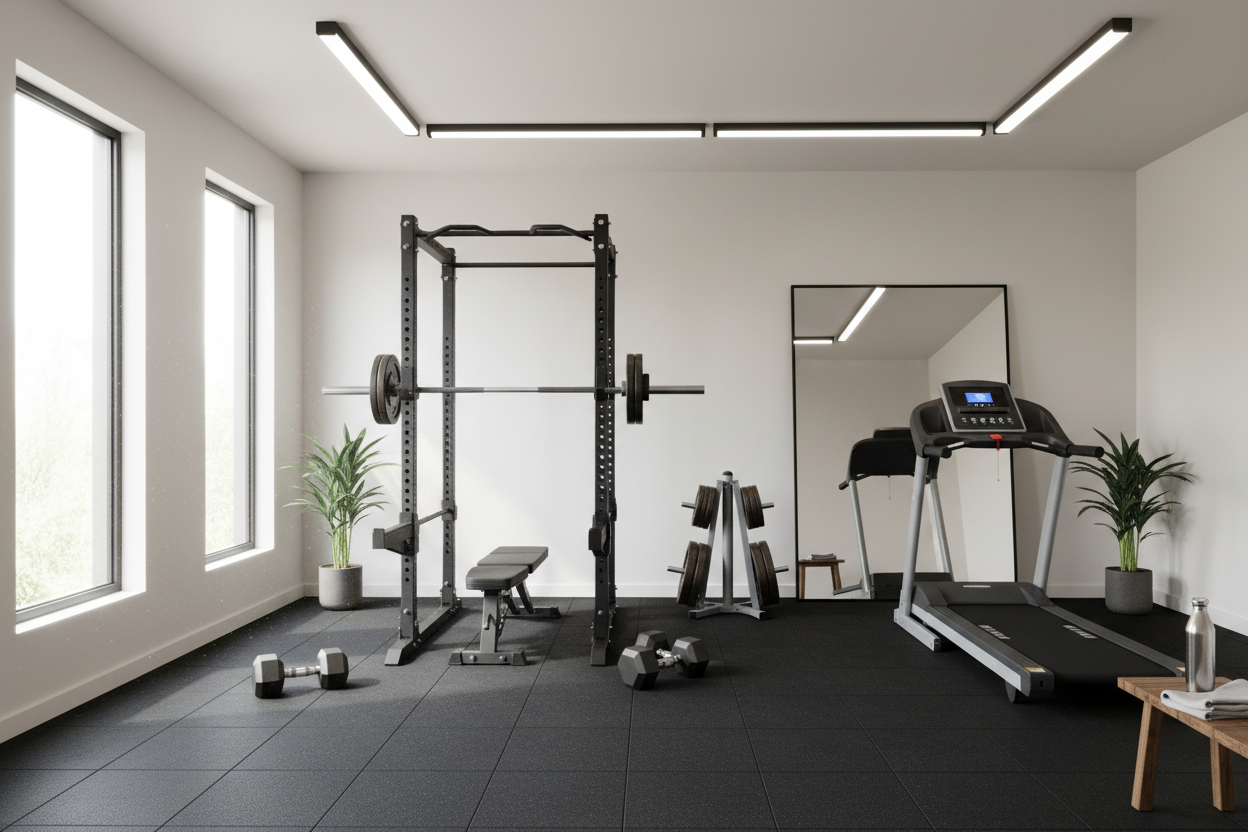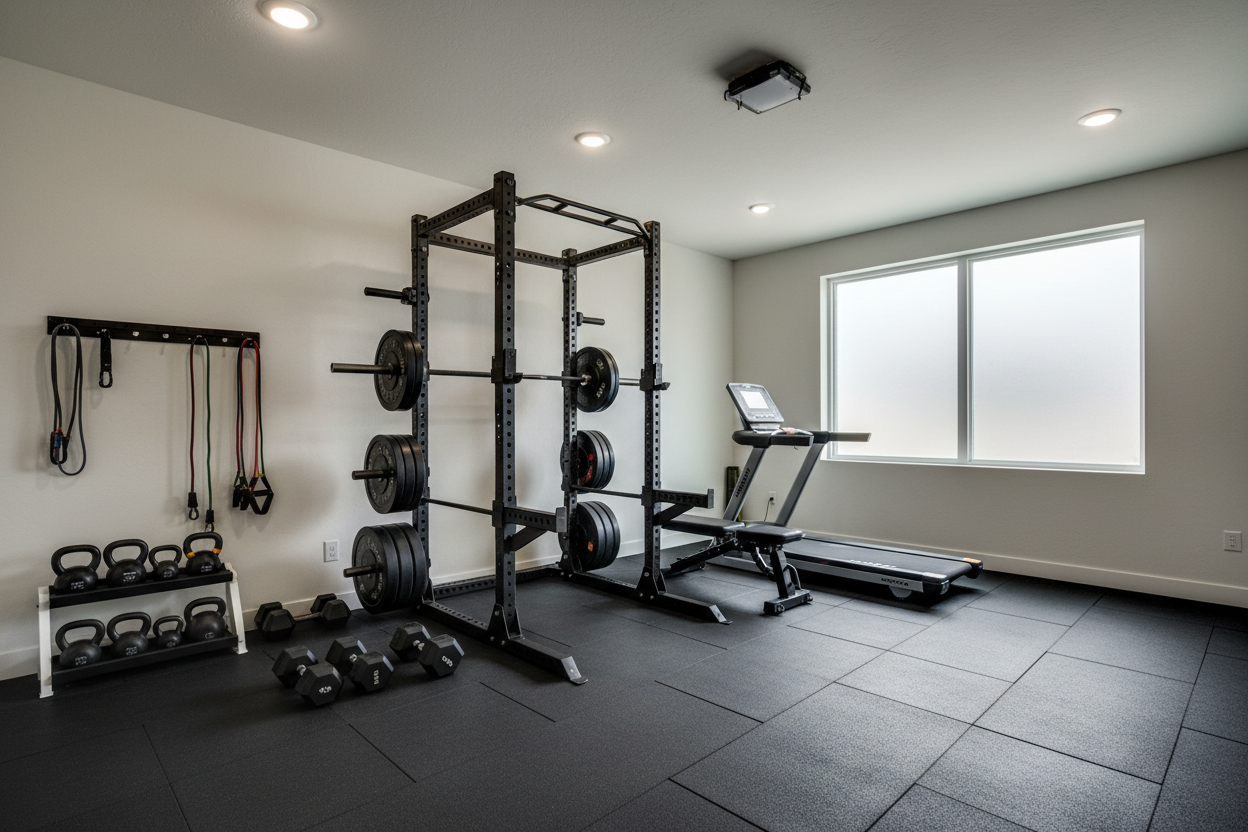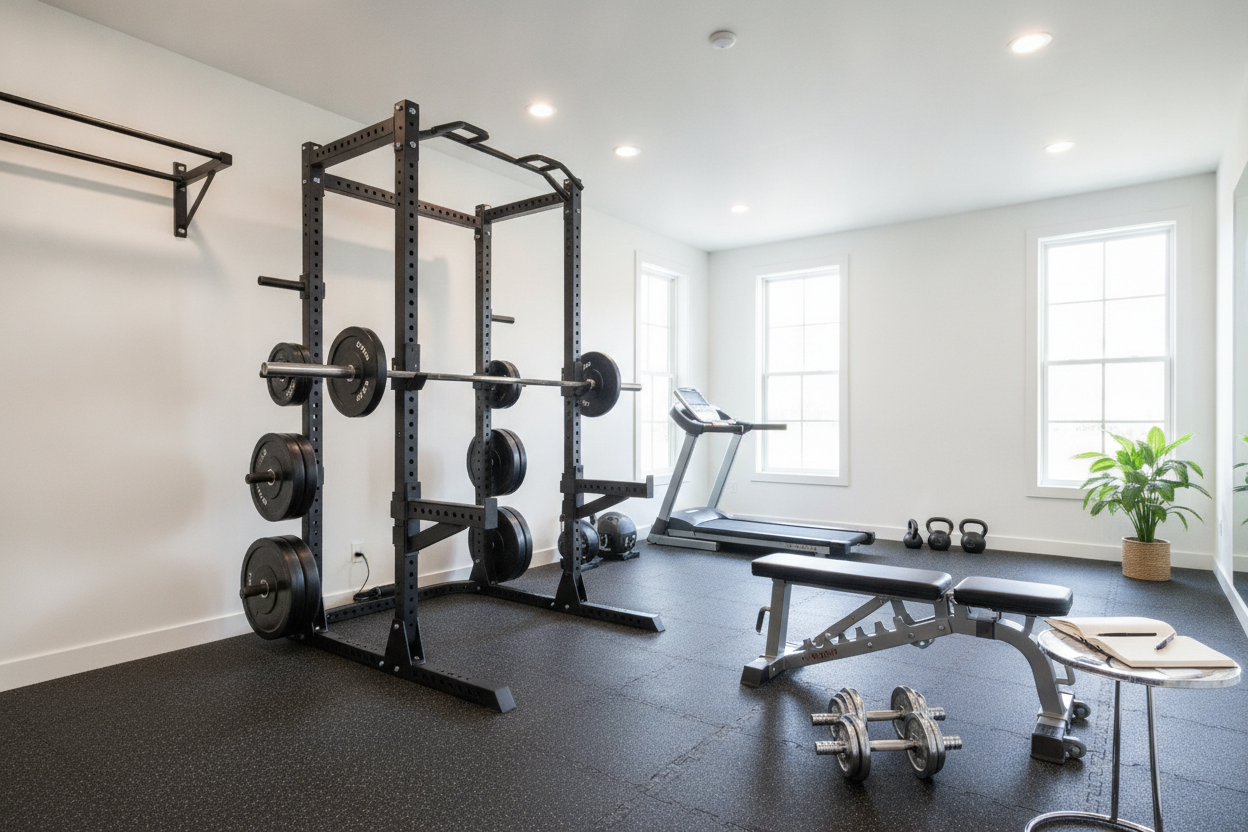
Why Most Home Gym Workout Routines With Pictures Lie to You
I remember scrolling through a popular fitness app while sitting in my garage, surrounded by iron and dust. I was looking for some fresh home gym workout routines with pictures to break up the monotony of my current block. What I found was a sea of models in pristine, white-walled studios holding 8-lb dumbbells with a smile that suggested they weren’t even breathing hard. It felt fake because it was.
If you have ever tried to grind out a heavy set of squats in a cramped spare room, you know the reality is far different. There is sweat on the floor, the lighting is terrible, and you are usually one wrong step away from tripping over a stray kettlebell. We need visuals that reflect the grit of real training, not a filtered version of it.
Quick Takeaways
- Most stock fitness photos prioritize aesthetics over actual biomechanics or safety.
- Real home gym workout ideas require understanding how to move in limited, non-commercial spaces.
- Flooring is the most overlooked safety feature in any visual workout guide.
- Effective routines focus on four core movements: squat, hinge, push, and pull.
- Form-first visuals are better than 'pretty' visuals for preventing long-term injury.
The Problem With Glossy Fitness Magazine Photos
The biggest issue with standard visual guides is the 'model factor.' These people are hired for their abs, not their squat depth. You will often see a model performing a lunging overhead press with a weight so light it wouldn't challenge a toddler, yet their form is still abysmal. Their knees are caving in, their lower back is arched like a bridge, and they are looking at the camera instead of focusing on their midline stability.
When you follow these pictures, you are often mimicking bad habits. A photo of a trainer doing a 'kettlebell swing' that looks more like a front raise with a rounded back is a recipe for a herniated disc. These guides are designed to sell an image of fitness, not the actual result of hard work. They ignore the reality of bar path, foot pressure, and bracing because those things don't look 'cool' in a thumbnail.
I have seen 'expert' routines suggesting you do box jumps on a folding chair. It is dangerous nonsense. Real training requires respect for the physics of the movement, which often means the photos should look a bit boring. A perfect deadlift isn't flashy; it is a neutral spine and a vertical bar path.
What Real Home Gym Workout Ideas Actually Look Like
Let’s talk about actual home gym workout ideas that work in the real world. A real visual guide should show you the setup. It should show you how to tuck your elbows on a bench press so you don't shred your rotator cuffs. It should show the struggle of the last two inches of a pull-up.
In a home setting, your 'gym' is often shared with a lawnmower or a washing machine. The photos you follow should account for that. You aren't training in a 10,000-square-foot facility. You need to see how to position your body so you don't hit the ceiling fan during an overhead press. We need to shift the focus from how the person in the photo looks to how the movement is being executed in a confined space.
Setting Up Your Space Before You Lift a Single Weight
You cannot execute a heavy, safe movement if you are slipping on hardwood or thin, cheap carpet. I learned this the hard way when I tried to do a max-effort deadlift on bare concrete. My lead foot shifted just an inch, and I felt a zip of pain in my lower back that kept me off the platform for a month. The background of those fitness photos actually matters.
You need a stable, high-traction surface. I tell everyone to get a dedicated mat that covers enough ground for lateral movement. Something like this 6X8Ft Exercise Mat Yoga Mat Gym Flooring For Home Workout provides the exact dimensions needed to safely perform lunges and deadlifts without slipping. If your feet aren't anchored, your power transfer is garbage. Period.
The Core Visual Blueprint: 4 Moves That Actually Work
Stop looking for '101 variations' of the bicep curl. You only need four pillars. First, the Squat. Whether it is a goblet squat or a back squat, you need to see the hip crease go below the knee. Second, the Hinge. This is your deadlift or RDL. The focus here is the horizontal movement of the hips, not just pulling with your arms.
Third is the Push. This includes overhead presses and floor presses. Fourth is the Pull—rows and chin-ups. If you want to see what this looks like without the fitness-model fluff, check out this Home Gym Workout Routines With Pictures: Form-First Guide. It breaks down the cues that actually matter, like keeping your ribs tucked and your neck neutral, rather than just trying to look 'ripped' for the lens.
Why Your Feet Keep Slipping During Push-Ups
The push-up is the most lied-to exercise in the visual fitness world. Photos show people with their hands way too wide and their butts sagging. If your feet are sliding across the floor every time you drive upward, you aren't building chest strength; you're just fighting friction. This usually happens because you are training on a surface meant for walking, not working out.
A Large Exercise Mat For Home Gym is the fix here. It gives your toes something to dig into so you can actually tension your glutes and quads. When your lower body is locked in, your upper body can actually do its job. Hand placement should be just outside shoulder width, with your elbows tracking back at a 45-degree angle, not flared out like a T-square.
Making It Work When You Lack Floor Space
Not everyone has a three-car garage to fill with power racks. If your 'gym' is a 4x4 corner of your bedroom, you have to be smart. You can't do walking lunges, so you do split squats. You can't fit a 7-foot Olympic bar, so you use dumbbells or adjustable systems. You have to adapt the visual routines to fit your square footage.
For those who want heavy resistance but can't commit to a permanent, bolted-down rack, there are better ways. You might want to look into How To Build A Pro Home Gym With A Fold Up Workout Machine as a space-saving alternative. It allows you to get that heavy stimulus without turning your living room into a permanent weight room. It’s about being a 'garage gym MacGyver'—using what you have to get the result you want.
FAQ
Do I really need pictures to learn an exercise?
Pictures help with the 'big picture' of a movement, but video is better for tempo. Use pictures as a checklist for your starting and ending positions to ensure you aren't drifting into dangerous territory.
What is the best floor for a home gym?
High-density rubber is king. It absorbs vibration, protects your subfloor from dropped weights, and provides the grip you need for explosive movements. Avoid thin foam tiles that pull apart like puzzle pieces.
Can I get strong with just bodyweight routines?
Yes, but you will hit a ceiling quickly. To keep getting stronger, you eventually need to add external resistance—be it a vest, bands, or iron. Gravity is a great coach, but it eventually needs a raise.