Why I Swapped Iron for a Shoulders Workout With Resistance Bands
I remember the morning my left shoulder felt like it had ground glass in the socket. I was staring at a pair of 80-pound dumbbells, knowing that if I tried to clean them for a press, something was going to pop. That was the day I realized my ego was writing checks my rotator cuffs couldn't cash, and I finally committed to a full shoulders workout with resistance bands.
- Bands provide 'ascending resistance'—the harder you pull, the harder they fight back.
- Constant tension means no 'resting' at the bottom or top of a rep.
- They are significantly easier on the glenohumeral joint than heavy iron.
- You can get a pro-level pump with zero footprint and no expensive rack.
The Day I Finally Put the Dumbbells Down
I spent a decade chasing a 225-lb overhead press. I got there, but the cost was constant inflammation and a bottle of ibuprofen on my nightstand. Every time I hit a heavy triple, my shoulders felt 'crunchy' for the next three days. Using therapy bands for shoulder rehab was always just a 'warmup' thing for me until I realized the iron was the problem, not the solution.
The pivot wasn't easy. It’s hard to feel like a beast when you’re pulling on a piece of rubber instead of a bent steel bar. But after three weeks of exclusively using bands for shoulders, the nagging ache disappeared. I wasn't just recovering; I was actually seeing more separation in my lateral delts because I could finally train them to failure without my joints screaming for mercy.
Why Constant Tension Builds Better Caps Than Dead Weight
Gravity is a bit of a cheat. With a dumbbell, the weight is heavy at the bottom but often loses its effective tension at the top of a lateral raise because of the strength curve. A band workout shoulders routine flips that script. The tension peaks exactly where your muscle is most contracted. This 'ascending resistance' forces your delts to work harder as they get shorter.
If you're looking for more variety, I've got a whole Workout Hub dedicated to this kind of tension-based training. Resistance exercises for shoulders aren't about moving a specific number; they're about time under tension. When you use a resistance band deltoid workout, you’re eliminating the momentum that usually carries a heavy weight through the 'easy' part of the lift. You’re fighting for every inch.
The Exact 4-Move Shoulders Workout With Resistance Bands
This isn't a 'light' day. This is a 'my delts are on fire and I can't lift my arms to wash my hair' day. We're hitting every head of the deltoid with zero fluff. Focus on the squeeze, not the speed.
The Anchorless Lateral Raise
This is my go-to for side delts. Stand on the band with one or both feet. I prefer doing this on a high-grip surface like a 6X4Ft Yoga Mat Exercise Mat Gym Flooring For Home Workout so the band doesn't slide and take out my ankle. Keep your arms straight-ish and lead with the elbows. This is the best way to do resistance band shoulder exercises no anchor while maintaining absolute control over the resistance curve.
The Banded Face Pull
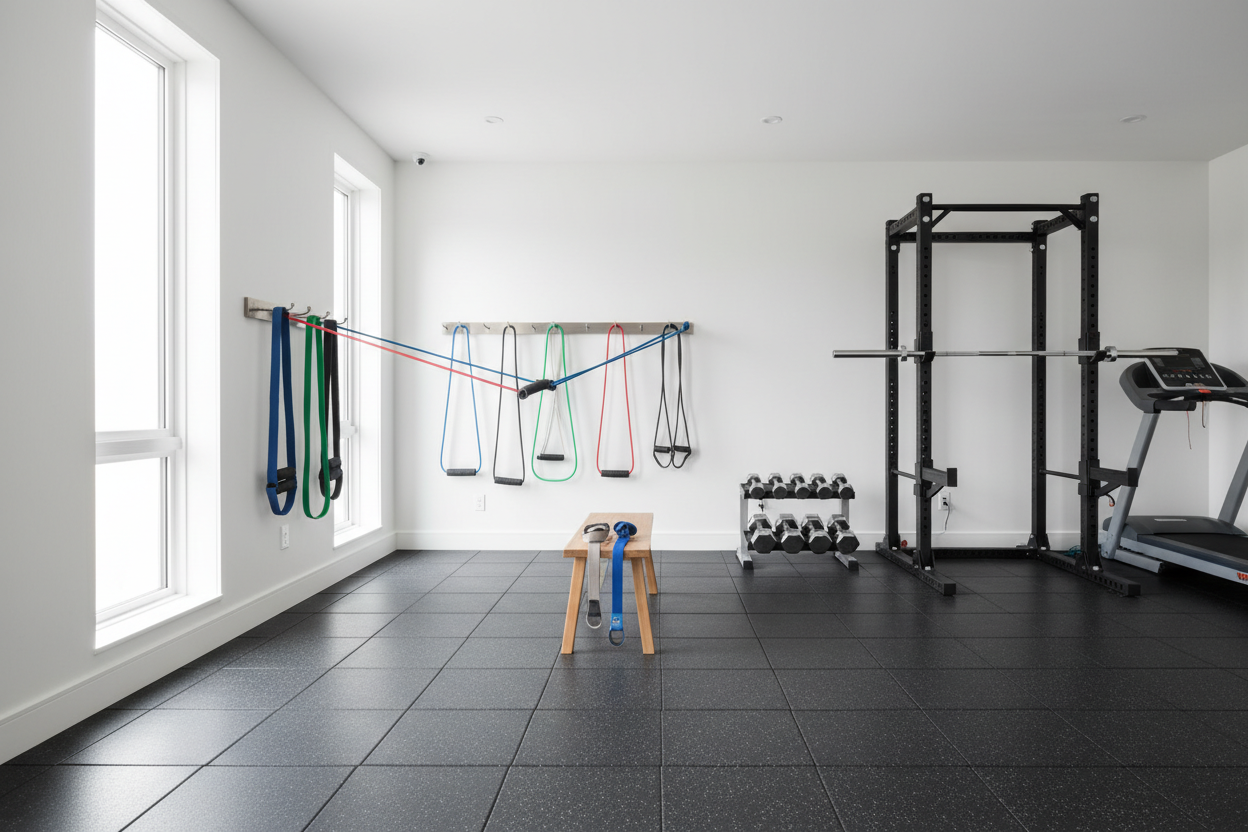
Hook your loop band to a power rack or a sturdy door at eye level. This loop band shoulder workout staple is the secret to 'capped' shoulders. Pull toward your forehead and focus on pulling the band apart at the end of the movement. It targets the rear delts and the traps, which are essential for that 3D look and keeping your posture from slumping forward after a long day at a desk.
The Elastic Overhead Press
Step inside the loop with both feet and grab the top of the band. Press straight up. Instead of the jarring weight of a barbell that can grind your joints at the bottom, you get a smooth, accelerating resistance. It’s the smartest way to learn how to use resistance bands for shoulders without that nasty impingement feeling that usually comes with heavy overhead iron.
The 'Burnout' Pull-Apart
Grab your lighter shoulder mobility resistance bands. Hold the band in front of you with straight arms and pull it across your chest until your arms are out to your sides. Do 50 reps. Don't stop. This floods the joint with blood, flushes out metabolic waste, and forces your rear delts to stay awake. It’s the ultimate finisher for any shoulder with bands routine.
Pairing Your Band Work With Push Day
Don't just do this in isolation. Mix these shoulder exercises with loop bands into your existing push day. I often pair this routine with my Top Resistance Band Chest Exercises For Strength And Tone. It creates a massive pump without the joint fatigue of a 300-lb bench press session. If you're used to heavy lifting, start by using bands as a 'finisher' after your main lifts, then eventually try a full week of just bands to let your connective tissue heal.
FAQ
Can you actually build muscle with just bands?
Yes. Your muscles don't have eyes; they only know tension. If you use a heavy enough band to reach failure in the 8-15 rep range, you will grow. Period.
Which bands should I buy for shoulders?
Get a set of 41-inch latex loops. The 'tube' bands with handles are okay for beginners, but loops are more durable and offer more versatile anchoring options for a resistance band deltoid workout.
How do I make the exercises harder?
Widen your stance to increase the 'pre-stretch' on the band, or simply grab a thicker band. You can also slow down the eccentric (lowering) phase to four seconds per rep to increase the burn.