Why I Swap My Shoulder Press Variations Every Single Month
I used to be a barbell purist. If it wasn't a 45-lb Ohio Bar moving in a straight vertical line, I didn't think it counted as training. My reward for that stubbornness was a nagging ache in my right AC joint and a 185-lb overhead max that didn't budge for fourteen months. I was grinding my gears, literally, and the standard military press was the culprit.
The reality of home gym training is that we often get stuck in a rut because we have limited gear. But the secret to a massive overhead lift isn't doing the same lift more often; it's aggressively cycling your shoulder press variations to attack weaknesses and give your connective tissue a break. Once I started rotating my movements every four weeks, my plateau didn't just break—it shattered.
- Stop the OHP Monotony: Constant barbell pressing leads to CNS burnout and shoulder impingement.
- Landmine for Longevity: The angled path is the most joint-friendly way to push heavy.
- Dumbbells for Symmetry: Neutral grips fix the imbalances a barbell hides.
- Pin Presses for Power: Removing the stretch reflex builds true starting strength.
The Definition of Insanity in Your Overhead Training
Doing the exact same overhead press variations week after week is the fastest way to stall. Most lifters treat the standing barbell press as the only valid vertical push, but it’s actually one of the most taxing on your central nervous system. When you use the same grip width and the same bar path for months, you develop micro-wear patterns in the joint. Your brain eventually recognizes this as a threat and shuts down your strength output to prevent a tear.
By switching to different shoulder presses, you change the leverage and the muscle recruitment slightly. This keeps the stimulus fresh. If you’ve been stuck at a certain weight for more than three weeks, you don't need more sets; you need a new stimulus. Rotating your ohp variations allows you to keep the intensity high while the 'groove' of the movement stays novel enough to bypass that mental and physical stagnation.
The Half-Kneeling Landmine Press for Banged-Up Joints
If your shoulders feel like they’re full of crushed glass when you go straight overhead, the landmine press is your new best friend. Because the bar is anchored in a corner or a landmine attachment, it moves in a natural arc. This allows your shoulder blade to rotate upward without getting pinched against your collarbone. It’s easily one of the best shoulder press variations for lifters who lack the thoracic mobility to get a barbell perfectly vertical without arching their lower back into oblivion.
When setting this up, I highly recommend using high-quality gym flooring for home workout to protect your knees. Since you’re in a half-kneeling position, putting that back knee directly on cold concrete is a recipe for a distraction you don't need. Keep your core tight, lean slightly into the bar, and drive. It’s a types of overhead press that builds stability and power without the typical wear and tear.
Neutral Grip Dumbbell Presses to Save Your Rotator Cuffs
The standard palms-forward dumbbell press is fine, but most people lack the external rotation to do it safely with heavy weight. By switching to a neutral grip—palms facing each other—you open up the subacromial space in the shoulder. This is one of my favorite db shoulder press variations because it shifts the load heavily onto the anterior deltoid while taking the strain off the rotator cuff tendons.
The biggest mistake people make here is flaring your elbows out to the sides. With a neutral grip, your elbows should stay tucked at about a 45-degree angle to your body. This creates a much stronger mechanical advantage. If you have a set of adjustable dumbbells that go up to 80 or 100 lbs, these types of dumbbell shoulder press can become a primary strength builder, not just a high-rep finisher.
The Seated Dead-Stop Pin Press for Raw Pushing Power
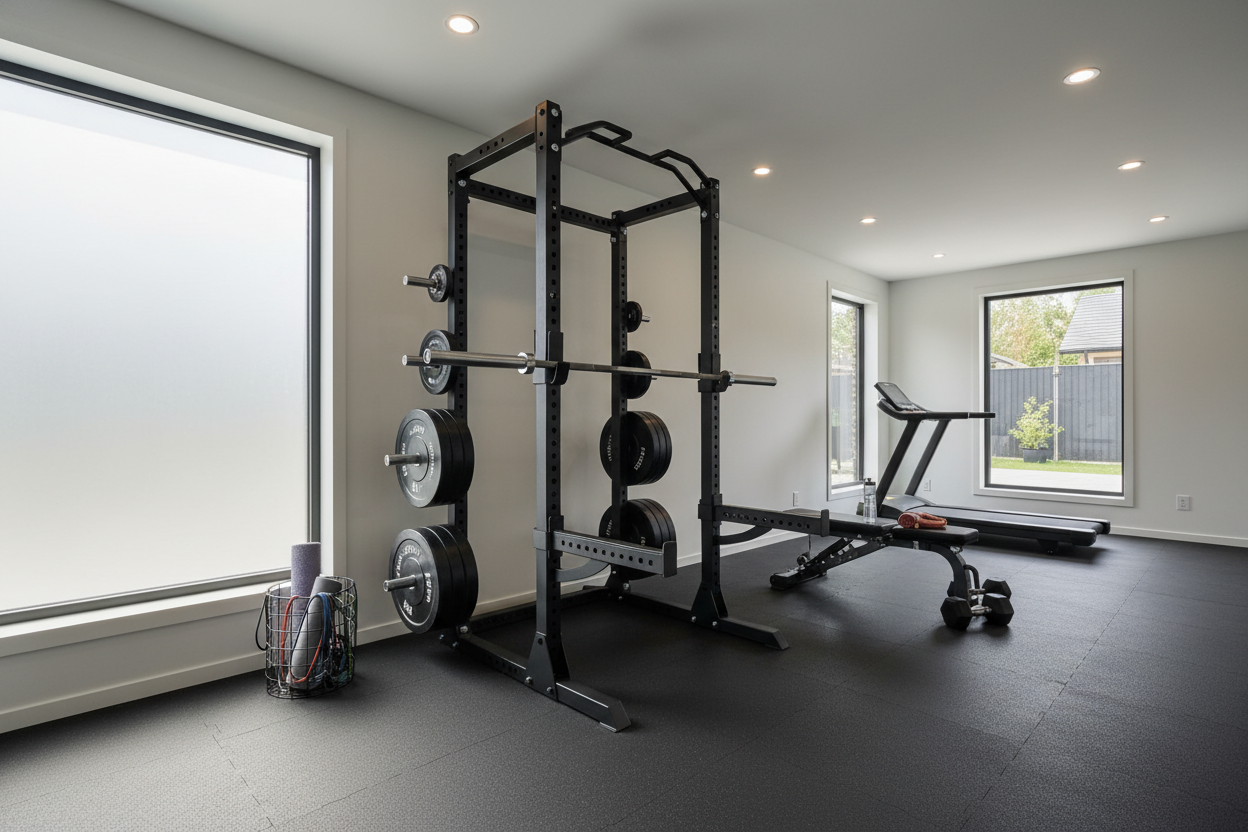
If you want to build a terrifyingly strong lockout, you have to try military press variations from the pins. Set your power rack safeties so the barbell sits right at forehead level. Sit on a bench (with or without back support) and press the bar from a dead stop. You are eliminating the stretch reflex entirely. There is no 'bounce' at the bottom to help you get the weight moving.
This is the best shoulder press variation for guys who are strong off the chest but fail halfway up. It forces you to generate maximum force instantly. Because you're seated, you can't use your legs to cheat the weight up, making it one of the most honest press variations in existence. Just make sure your rack is bolted down; slamming a loaded bar back onto pins can shift a light rack if you aren't careful.
The Bottoms-Up Kettlebell Press for Bulletproof Stability
This is the most humbling shoulder press variation you will ever try. Hold a kettlebell upside down so the heavy bell is balancing on top of the handle. Your grip has to be white-knuckle tight just to keep it from flopping over. This reflexive stability trickles down and forces your rotator cuff to fire perfectly to stabilize the weight. You won't be able to use nearly as much weight as your standard types of shoulder press, but the benefit is massive.
I use these as a 'primer' before my heavy lifting days. It 'wakes up' the stabilizers and ensures my bar path is perfect. If you’re off by even an inch, the bell falls. It’s an auto-correcting movement that teaches you exactly where your strongest pressing line is. Among different shoulder presses, this one has the highest carryover to overall joint health and grip strength.
How to Actually Program These Different Shoulder Presses
Don't just pick a random lift every morning. I recommend a 4-week block system. Use a heavy barbell variation (like the Pin Press) as your primary mover for a month. Follow it up with one of the shoulder press variations dumbbell style for higher reps. In the second month, swap the barbell work for heavy Landmine presses and move the dumbbells to a different grip or tempo. This keeps the 'types of presses workout' structured but varied.
When you transition between movements, pay attention to your range of motion. For example, if you're wondering how deep should a dumbbell shoulder overhead press actually go, the answer is usually 'as deep as your mobility allows without your shoulders rolling forward.' Consistency in your form across different shoulder press variations with dumbbells is what actually builds the muscle; the variety is just there to keep the joints happy and the progress steady.
FAQ
Is the barbell overhead press necessary for big shoulders?
No. While it's a great tool, you can build massive delts using only dumbbell shoulder press variations and landmine work. Your muscles only recognize tension, not the shape of the iron you're holding.
How often should I change my shoulder press variation?
I find every 4 to 6 weeks is the sweet spot. It's long enough to make measurable strength gains (progressive overload) but short enough to prevent overuse injuries and boredom.
Are seated variations better than standing?
Seated variations allow you to isolate the shoulders more because you can't use leg drive. Standing variations are better for overall core stability and 'real world' strength. Use both in your types of shoulder press rotation.