Why I Only Do These 4 Best Exercises for Men Over 50 at Home
I woke up last Tuesday and my right shoulder felt like I'd spent the night wrestling a bear. I hadn't. I'd just done a standard chest day with a straight barbell, chasing a weight I used to hit for reps back in 2008. That was my 'aha' moment. If you're over fifty and still trying to train like a college linebacker, you aren't being tough; you're being reckless. Finding the best exercises for men over 50 isn't about backing down — it's about shifting the strategy from 'maximum weight' to 'maximum longevity.'
Quick Takeaways
- Stop using fixed barbells for pressing if your shoulders are cranky.
- The trap bar is the king of longevity for lower body strength.
- Unilateral (one-legged) work is mandatory for balance and hip health.
- Grip strength is a literal life-saver; carry heavy things often.
- Your floor matters: Stop lifting on bare concrete to save your knees.
The Ego Check: Stop Lifting Like a 25-Year-Old
The hardest part of training after fifty isn't the physical effort; it's the mental shift. We all have those numbers burned into our brains — the 315-lb bench or the 405-lb deadlift. But here's the reality: your tendons and ligaments aren't as vascular as they used to be. They don't bounce back from a heavy session in 48 hours anymore. If you insist on hitting old PRs, you're going to spend more time on the physical therapist's table than in your garage gym. Finding the best workout routine for men over 50 starts with an ego check.
I had to learn this the hard way. I spent three months sidelined with a rotator cuff impingement because I wouldn't stop doing wide-grip bench presses. My brain thought I was still 25, but my shoulder joint knew better. Now, I prioritize 'training for the next decade.' I want to be the guy who is still deadlifting at 75, not the guy who peaked at 52 and had to quit because his back gave out. This shift changes everything about how you select your movements. We are looking for high stimulus with low joint fatigue.
Why Traditional Barbell Splits Are Betraying You
Most of the advice you find in old-school bodybuilding magazines is a recipe for disaster once you've hit your fifth decade. Those high-volume, straight-barbell splits wreck your joints because they force your body into fixed paths. A straight bar doesn't care if your left shoulder is tighter than your right. It forces both into the same internal rotation, which eventually leads to inflammation and tears. As we age, our joint morphology changes. We need tools that allow for a natural range of motion.
I've almost entirely swapped my straight bars for dumbbells and specialty bars. When you use a straight bar for a back squat, the sheer force on your lower spine and the 'statue of liberty' stretch required by your shoulders is often too much. The risk-to-reward ratio has flipped. You can get the same muscle growth using movements that don't leave you reaching for the ibuprofen every morning. It's about being surgical with your training rather than using a sledgehammer.
The Core 4: The Absolute Best Exercises for Men Over 50
If I could only keep four movements in my arsenal to stay strong and mobile, these would be them. This is the best workout for men over 50 because it covers every major human movement pattern while respecting your anatomy.
1. The Neutral Grip Press: Whether you use dumbbells or a Swiss bar (multi-grip bar), keeping your palms facing each other is a game-changer for shoulder health. It opens up the subacromial space, meaning less pinching and more pressing. I find that I can still go heavy on these without that nagging 'click' in my front delt. If you're at home, a pair of adjustable dumbbells is all you need to get this done.
2. Trap Bar Deadlifts: If you have a history of lower back tweaks, the straight-bar deadlift is your enemy. The weight is too far in front of your center of gravity. The trap bar (or hex bar) allows you to stand inside the weight. This keeps the load centered and lets you use more of your legs and less of your lumbar spine. Use the high handles to reduce the range of motion if your hip mobility is lacking. It's the ultimate 'functional' strength move.
3. Rear-Foot Elevated Split Squats: We lose balance as we age. Single-leg work forces your stabilizer muscles to wake up and protects your knees by strengthening the vastus medialis. Yes, they burn. Yes, they're hard. But they don't load your spine like a heavy back squat does. Pro tip: hold a single dumbbell in the hand opposite to your working leg to really challenge your core.
4. Loaded Carries: Pick up something heavy and walk. It sounds simple, but farmer's walks build grip strength, which study after study correlates with a longer life. It also builds 'pillar strength' — the ability of your trunk to stay rigid while your limbs move. I usually finish my sessions by grabbing my heaviest dumbbells and walking the length of my 6x8 mat until my grip gives out.
Your Foundation Matters: Upgrading Your Training Surface
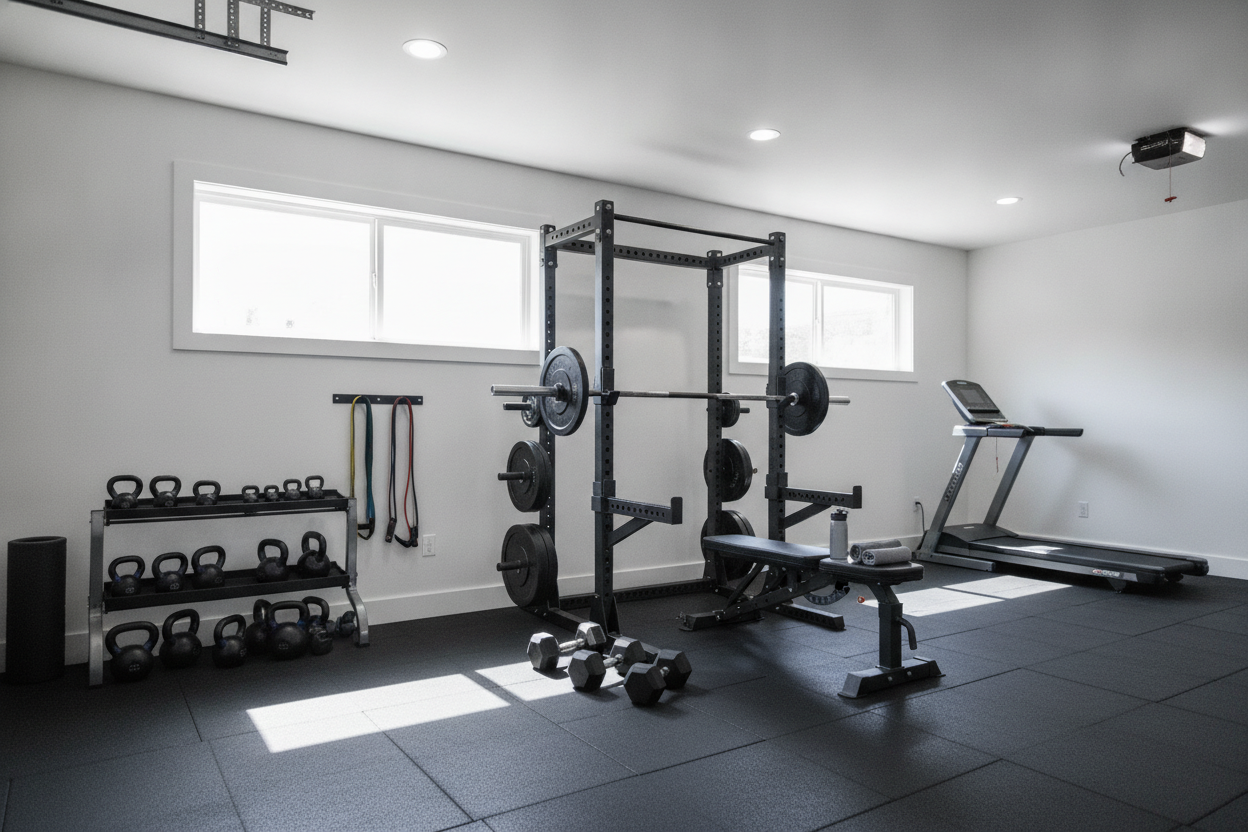
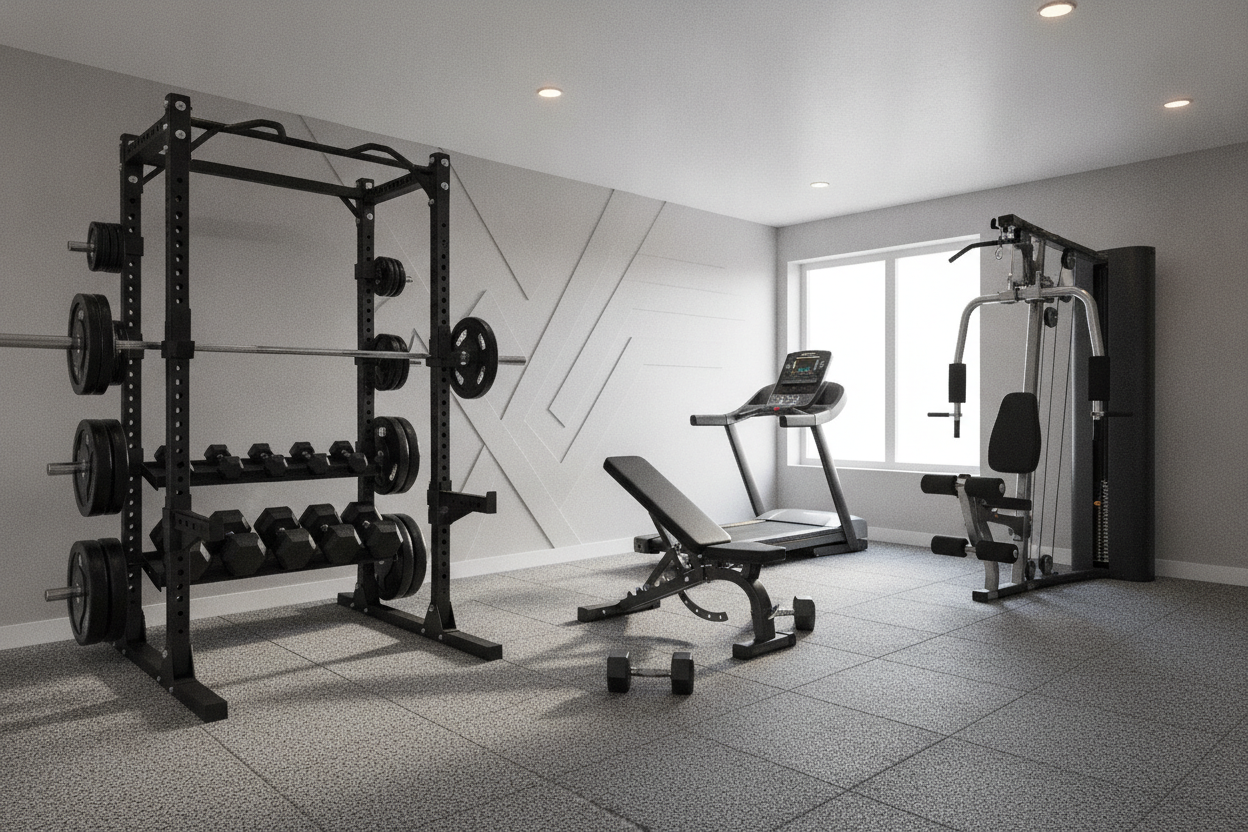
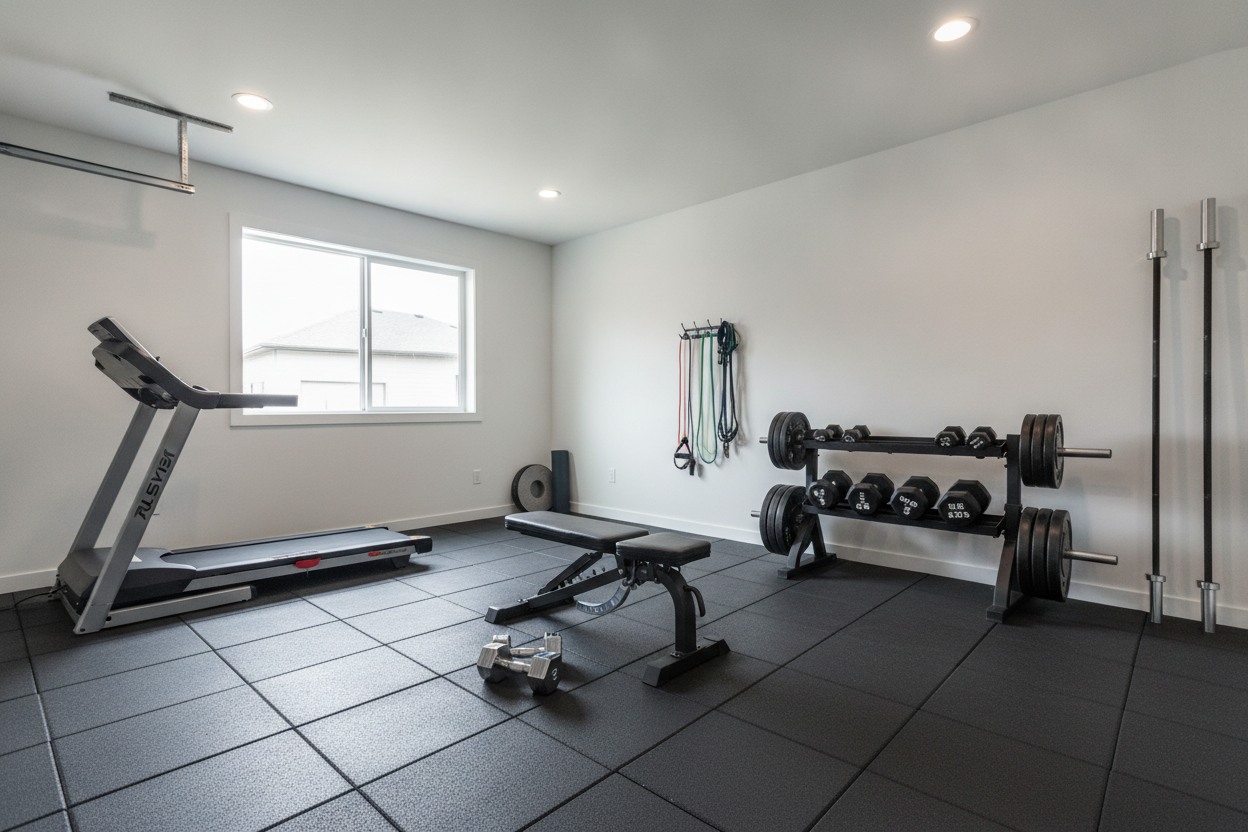
One thing nobody tells you about home gym training is that concrete is unforgiving. If you're doing lunges or dropping into a deep goblet squat on a bare garage floor, your patellar tendons are going to pay the price. I spent years lifting on thin, cheap foam tiles that shifted every time I moved. It wasn't just annoying; it was dangerous. My balance felt off, and my joints felt the impact of every rep.
You need a dedicated large exercise mat that actually absorbs shock. When I finally upgraded to a professional-grade 6x8 home gym mat, the difference was immediate. It’s dense enough that my feet don't sink during a heavy trap bar pull, but it has just enough 'give' to save my knees during split squats. Plus, having a defined space keeps you from wandering around the garage between sets. It turns a corner of your house into a legitimate training zone.
Putting It Together: The Best Workout Program for Men Over 50
You don't need to be in the gym six days a week. In fact, you shouldn't be. Recovery is where the muscle is built, and at fifty-plus, you need more of it. The best exercise program for men over 50 usually involves three full-body days a week with plenty of walking on the off days. This best workout program for men over 50 focuses on quality over quantity.
Try this 'Core 4' template: Monday, Wednesday, and Friday. Perform 3 sets of 8-12 reps for the first three exercises. For the loaded carries, do 3 rounds of 40 yards. Keep your RPE (Rate of Perceived Exertion) around a 7 or 8. You should finish each set feeling like you could have done two more reps. This prevents central nervous system burnout and keeps you coming back week after week. This isn't just a routine; it's a sustainable best workout routine for men over 50 that builds a body capable of handling real life.
FAQ
Do I really need a trap bar?
You don't *need* one, but if you have any history of lower back pain, it's the best $150-$300 you'll ever spend. It's much more forgiving for the average guy than a standard Olympic bar.
Can I do this with just dumbbells?
Absolutely. In fact, dumbbells are often superior for men over 50 because they allow your wrists and elbows to rotate naturally during the movement. You just might need a heavy set for the deadlift variations.
How long should I rest between sets?
Don't rush it. Take 2 to 3 minutes. Your goal is to let your heart rate settle so the next set is limited by your muscles, not your lungs. We aren't doing cardio; we're building strength.
Is 3 days a week enough?
If you're hitting it with enough intensity, yes. Use your off days for 'active recovery' like walking, swimming, or mobility work. Consistency beats intensity every single time at this age.