Why I Only Do the Barbell Hip Thrust No Bench Setup Now
I remember the first time I tried to go heavy on hip thrusts in my garage gym. I loaded up 315, braced my back against my standard flat bench, and drove up. Instead of a glute pump, I got a loud screech as my bench skidded six inches across the stall mats. It's a common headache for anyone training solo: you’re trying to build a shelf, but you’re spending half your energy fighting the equipment. That’s why I’ve almost exclusively switched to the barbell hip thrust no bench setup. It’s simpler, safer for your spine, and solves the sliding problem instantly.
- Eliminates hip thrust bench sliding on slick garage floors.
- Reduces lower back arching by keeping the torso grounded.
- Easier to load with standard 450mm bumper plates.
- Focuses entirely on the peak contraction of the glutes.
The Frustrating Reality of the Standard Setup
Standard flat benches are usually 17 to 18 inches tall. Unless you’re a giant, that’s almost always too high to get a proper pivot point for your shoulder blades. I’ve spent years trying to wedge my bench against a heavy rack or stacking 45lb plates behind it just to keep it from moving. It never works perfectly. Why Your Weight Bench Is Ruining Your Barbell Hip Thrusters because most of them are designed for vertical pressing, not for horizontal shear force. When you're lifting 200+ pounds, that sliding isn't just annoying—it’s a recipe for a strained lumbar. You end up chasing the bench instead of chasing the pump.
The Mechanics of the Barbell Hip Thrust Without Bench
When you perform a barbell hip thrust without bench, you’re essentially doing a heavy glute bridge. People often mock the shorter range of motion, but they’re missing the mechanical benefit. By staying on the floor, you eliminate that nasty rib-flare and lumbar hyperextension that happens when lifters try to get 'extra deep' off a bench. I found that I Ditched My Bench for the Lying Hip Thrust (Here Is Why) because my SI joint stopped acting up once I hit the floor. You’re forced to drive through the heels and lock out with your glutes rather than your lower back.
How to Actually Load the Bar on the Floor
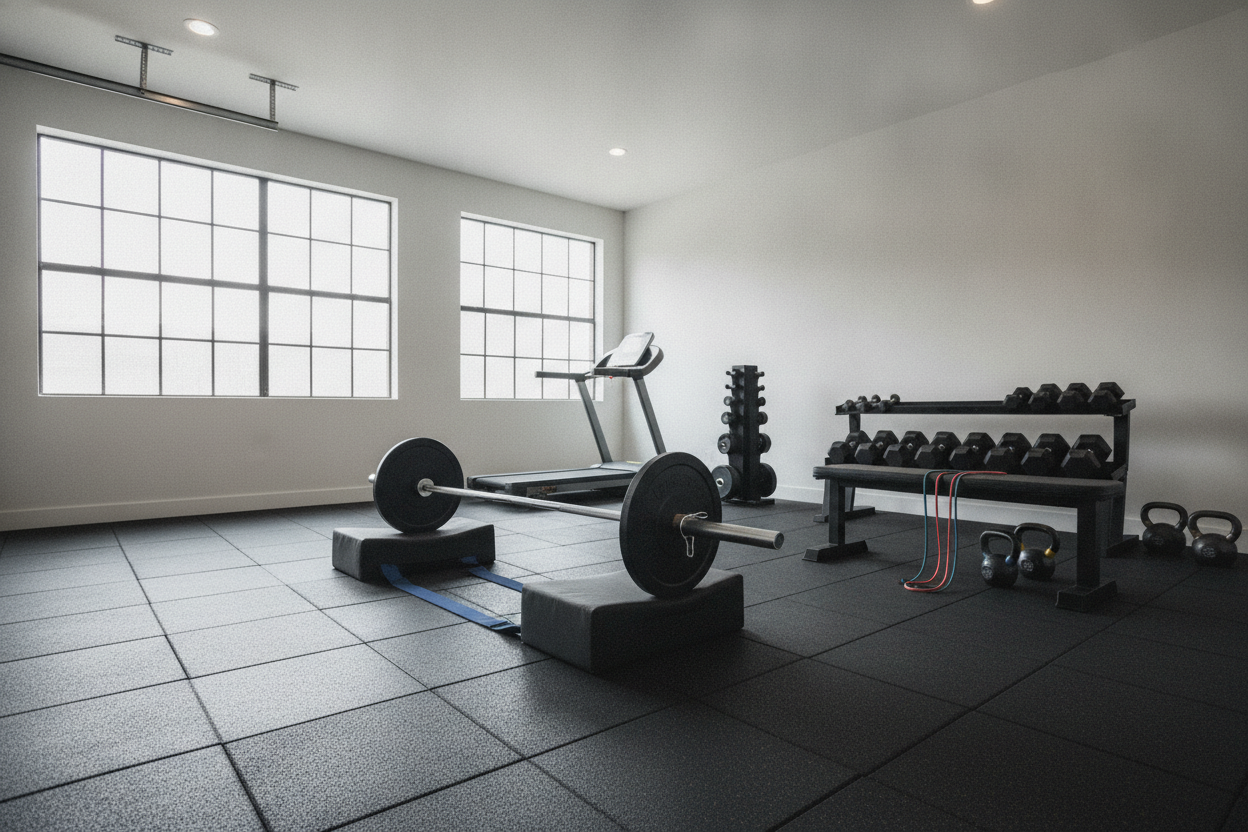
Loading is where most people get stuck. If you use small iron plates, you’re going to have a bad time trying to squeeze your legs under the bar. You need full-sized bumper plates. Roll the bar over your hips while lying flat on your back. If the bar is still too low for your thighs, you can roll it onto a pair of 5lb plates or small wooden blocks to give yourself an extra inch of clearance. You absolutely need a thick bar pad—don’t be a hero here. A 1.5-inch thick high-density foam pad is the difference between a focused set and a bruised pelvis. I’ve tried using a rolled-up yoga mat in a pinch, and it’s garbage. Buy a real pad.
Nail Your Foot Placement First
Before you even touch the bar, start with a supine bodyweight hip thrust. Keep your feet flat and move them around until you feel the glutes fire at the top without your hamstrings or quads taking over. Usually, this means your shins are vertical at the top of the rep. If your feet are too far out, your hamstrings will cramp. Too close, and it’s a quad exercise. Finding that sweet spot with just your body weight makes the loaded sets much more effective.
But What About the Range of Motion?
The biggest knock against the floor setup is the reduced range of motion. Critics say you’re losing out on the stretch. In my experience, the top 20% of the movement is where the glutes are under the most tension anyway. You aren't losing the 'meat' of the exercise. If you’re chasing hypertrophy, that hard squeeze at the top is more valuable than a deep stretch that usually just strains the hip flexors in a garage gym environment. I’ve seen more growth from heavy floor bridges than I ever did from 'full' thrusts where I was cheating the bottom half.
When You Actually Need a Dedicated Thrust Pad
The floor variation is incredible for home gyms short on space or for those tired of chasing their bench around the room. However, once you start pushing elite-level weights, or if you specifically want that deep eccentric stretch, you might outgrow the floor. That's when you look at a Gxmmat Hip Thrust Bench. It’s built low to the ground and has a grippy base that won't budge, giving you the range of motion you want without the instability of a standard weight bench.
FAQ
Can I use iron plates for this?
Only if they are standard 450mm diameter. If you’re using smaller 10lb or 25lb iron plates, the bar will be too low to roll over your thighs. Use bumpers or prop the bar up on blocks.
Is the floor version safer for the back?
Generally, yes. It’s much harder to over-arch your spine at the top when your torso is grounded. It forces a more 'tucked' pelvic position which is better for glute isolation.
Do I need a floor mat?
Yes. Lying on bare concrete or thin carpet while holding 200+ lbs on your hips is a recipe for a bruised spine. Use at least a 3/4 inch stall mat or a thick exercise mat.