Why I Never Run a Free Strength Program Exactly As Written
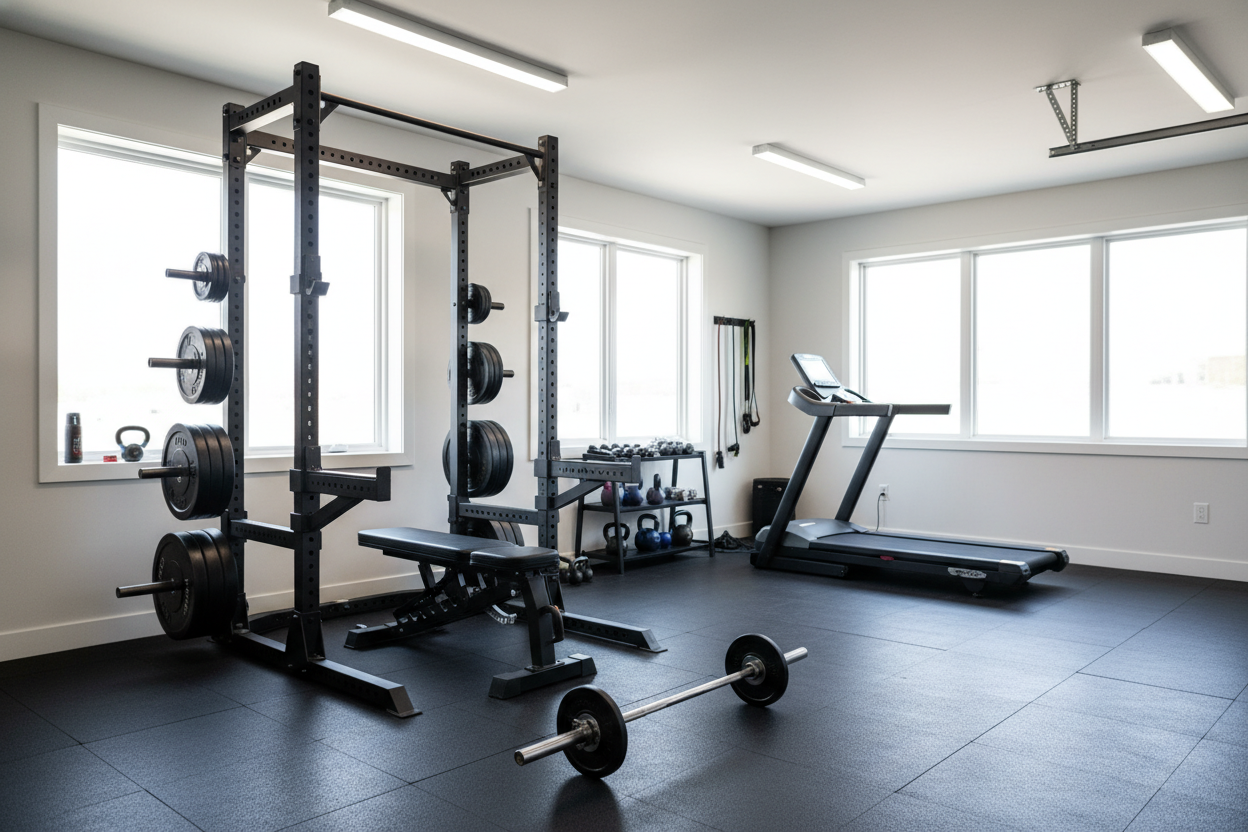
I have spent way too many late nights scrolling through Reddit and LiftVault, hunting for the perfect free strength program. You find one that looks solid, hit print, and then realize the author assumes you have access to a 10,000-square-foot commercial facility. If you are training in a garage with a power rack and a dream, trying to follow a generic template word-for-word is a recipe for a mediocre session.
The reality is that most free lifting programs are designed for the masses, not for the guy who has to move a lawnmower just to find his 45-lb plates. I have learned the hard way that the best routine is the one you have the gear for. You have to be willing to hack the PDF to make it work for your actual space.
Quick Takeaways
- Templates are suggestions, not laws.
- Machine movements are easily replaced by barbell or dumbbell equivalents.
- Cutting 'junk volume' helps you focus on the heavy hitters.
- Tempo and rest intervals can compensate for a lack of heavy plates.
The Problem with 'Plug and Play' Internet Routines
Most free lifting programs are written by coaches who spend their lives in pro-level gyms. They assume you have a leg press, a dedicated GHD, and a cable crossover machine. When you try to run these in a home gym, you end up spending twenty minutes 'rigging' something up with resistance bands and a prayer. This kills your momentum and your heart rate.
Following a program perfectly often derails home lifters because they get frustrated when they can't do 'Exercise 4: Seated Leg Curls.' Instead of moving on, they spend half their workout time googling alternatives. In my experience, it is better to have a plan for substitutions before you even step onto the stall mats.
Swapping Machines for Iron Without Losing the Stimulus
If a program calls for a machine isolation move, do not panic. You can use free weights for strength training and get the exact same hypertrophy or strength stimulus. A cable fly can become a dumbbell floor fly. A leg extension can become a sissy squat or a weighted step-up. The muscle does not know if the resistance is coming from a pulley or a hunk of iron.
When I see 'Lat Pulldowns' on a sheet, I immediately swap them for weighted pull-ups or heavy rows. If the program demands a Leg Press, I’m doing high-rep goblet squats or front squats. The goal is to match the movement pattern—push, pull, hinge, or squat—rather than the specific piece of equipment the author happened to have in their gym.
Volume Control: Why You Probably Need to Do Less
Many free strength training programs are bloated. Authors add 'junk volume'—extra sets of curls, lateral raises, and calf work—just to make the program look more comprehensive and professional. In a home gym, where you are often training solo and doing your own plate loading, this extra fluff can turn a 60-minute session into a two-hour marathon.
I usually trim at least 20% of the accessory work from any free program I find. If the main compound lifts are solid, you do not need four different types of tricep extensions to see progress. Focus your energy on the heavy barbell work. If you have gas left in the tank at the end, then you can worry about the 'beach work' accessories.
Making Do With Limited Weight on the Bar
We have all been there: the program calls for a heavy double at 90%, but you only have 300 lbs of plates and your squat is already past that. You do not need to go out and buy a thousand dollars of new strength equipment the second you hit a plateau. You just need to change the variables.
If you lack the weight to hit a specific percentage, increase the time under tension. A 3-second eccentric (the lowering phase) will make 225 lbs feel like 315 lbs real fast. You can also use strength training accessories like resistance bands to add accommodating resistance at the top of the lift, or fractional plates to make small, consistent jumps that your current plate set might not allow.
A Blueprint for Modifying Your Next Template
Before you start your next cycle, sit down with the PDF and a red pen. First, identify every exercise you cannot do with your current gear. Second, write in your 'Home Gym Equivalent.' If you do not have a cable tower, write in 'Dumbbell Rows.' Third, look at the rest periods. If the program is too long, tighten them up or cut one accessory move per day.
Once you have a plan that fits your rack, your bench, and your plate stash, you are ready. I highly recommend doing this audit before printing a free weight strength training program PDF. There is nothing more satisfying than walking into the garage knowing exactly how you are going to attack the session without having to 'improvise' mid-set.
My Personal Experience
I once tried to run a high-level powerbuilding routine that called for 'Cable Crossovers' three times a week. I spent a week trying to loop resistance bands around my power rack uprights. It was awkward, the tension was inconsistent, and I felt like a total idiot. Eventually, I realized that simple weighted dips gave me a better chest pump anyway. Now, I don't even look at the machine section of a program; I just go straight for the dumbbells.
FAQ
Can I replace all machine exercises with barbells?
Almost always. Use dumbbells for isolation and barbells for the heavy compounds. The stimulus is what matters, not the machine brand name.
What if the program uses percentages I can't hit?
Adjust the tempo. Slowing down the rep or adding a pause at the bottom increases the difficulty without needing more plates on the bar.
Are free lifting programs actually effective?
Yes, but they are templates, not gospel. The best program is the one you can actually perform consistently with the gear you own.