Why I Finally Bought a Giant Steel Cage (And Why You Should Too)
If you have ever been pinned under a heavy barbell while bench pressing alone in a basement, you know the specific kind of panic that sets in. It isn't just the physical weight crushing your chest; it is the realization that you made a calculated risk and lost. For anyone serious about strength training, particularly in a home environment, the fear of failure often holds back progress. You stop a rep or two short because you aren't sure you can get the weight back up. This is exactly why the centerpiece of any serious gym isn't the treadmill or the dumbbell rack—it is the steel box that keeps you alive.
Building a physique capable of moving real weight requires safety mechanisms that don't rely on a spotter being present. This is where the discussion of racks comes into play. It is the only piece of equipment that allows you to push your muscles to absolute failure without the risk of injury. Once you understand the mechanics and the safety it provides, the initial investment starts to look less like a purchase and more like an insurance policy for your body.
The Roll of Shame: A Personal Lesson
Years ago, I was training in a garage with nothing but a pair of independent squat stands. They were wobbly, cheap, and frankly, dangerous. I was attempting a personal best on the squat. As I descended, my form broke slightly. I couldn't drive the weight back up. I had to dump the bar behind me, which sent the metal crashing onto the concrete, damaging the plates and nearly taking out my Achilles tendon. It was a loud, expensive, and embarrassing mistake.
That incident was the turning point. I realized that my training intensity was capped by my fear. I wasn't getting stronger because I was lifting to survive, not to grow. The following week, I cleared out space and ordered a full enclosure. The difference was immediate. Knowing that a steel safety pin would catch the bar if I failed allowed me to grind through reps I would have previously abandoned. That psychological safety net is the single greatest advantage of owning proper equipment.
Understanding the Hardware
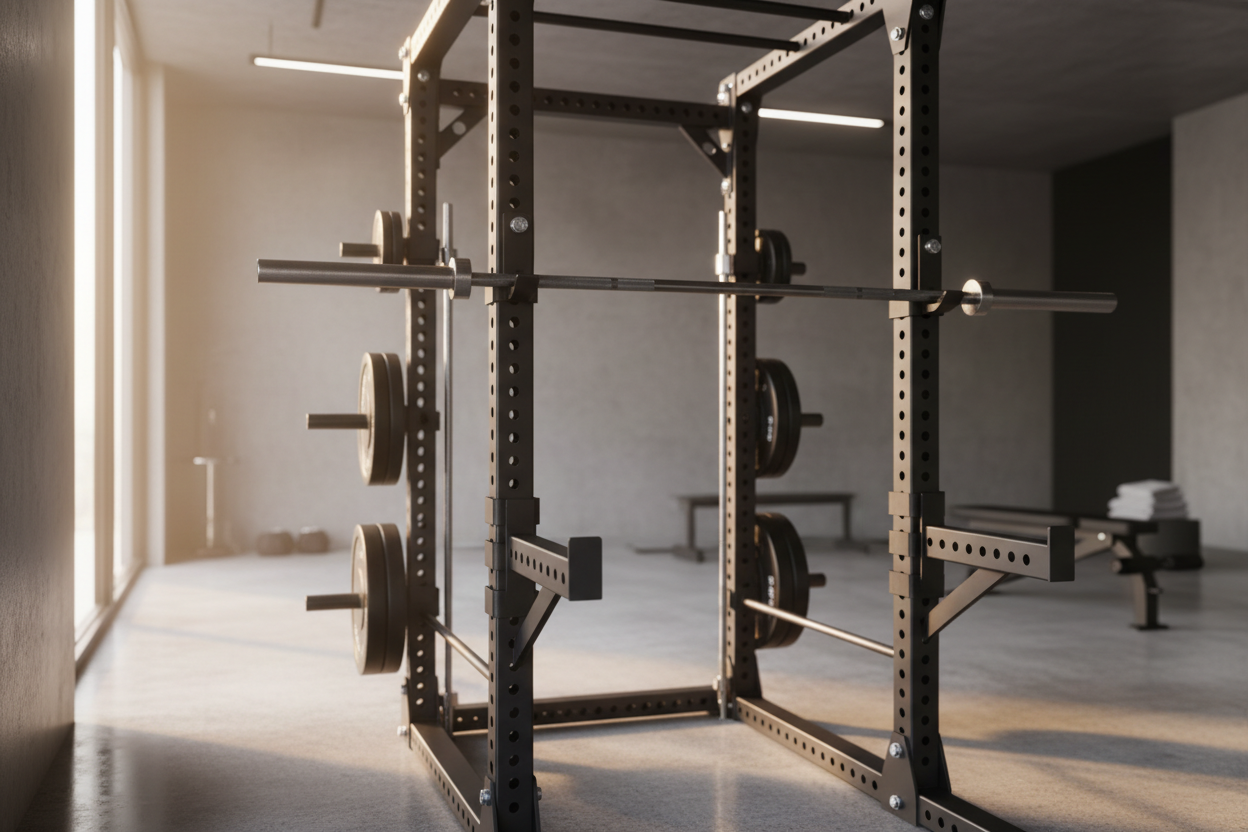
For beginners, the terminology can get muddy. You will see terms like squat stand, half rack, and full cage thrown around. While squat stands are two simple posts, the more robust options are the full enclosures. In the industry, you might see a product description awkwardly labeled as a power rack power cage to catch every possible search term, but they refer to the same four-post structure. This box allows you to stand inside the frame, surrounded by safety bars that can be adjusted to any height.
The primary function of this setup is safety, but the secondary function is versatility. A simple set of stands can usually only handle squats and overhead presses. A four-post cage, however, becomes a jungle gym. You can attach dip bars, landmine attachments, band pegs, and pulley systems. It transforms a 4x4 foot footprint into a complete gym.
Key Features to Look For
When you start shopping, do not just look at the price tag. The construction quality matters immensely. You want to look for 11-gauge steel or lower (lower numbers mean thicker steel). A 14-gauge rack might be cheaper, but it will wobble under heavy loads, killing your confidence. Look for a rack with 'Westside hole spacing' through the bench zone. This means the holes are spaced 1 inch apart rather than 2 inches, allowing for precise safety pin placement so you don't crush your face or miss a lift by being too high.
Comparing Half Racks and Full Enclosures
Space is often the deciding factor for garage gym owners. This leads many to consider half racks. These are essentially two uprights with safety arms sticking out the front. They save a bit of depth, but they lack the total security of being inside the box. If you stumble backward during a squat in a full cage, you hit the back uprights. If you stumble backward on a half rack, you might fall completely over.
However, modern power rack cages have evolved. Many manufacturers now offer flat-foot racks that don't need to be bolted down, or folding racks that collapse against the wall when not in use. If you have the room, the full cage is superior. It offers structural rigidity that open-ended racks simply cannot match. The ability to use safety straps inside the rack—which protect your barbell knurling better than metal pins—is another huge advantage of the four-post design.
The Versatility Factor
Beyond the big three lifts (squat, bench, deadlift), a rack opens up exercises that are difficult to replicate elsewhere. Rack pulls are a prime example. By setting the safety pins just below the knee, you can overload your back and traps with weight exceeding your normal deadlift max. This creates a thickening effect on the upper back that is hard to achieve with standard pulls from the floor.
Overhead pressing inside the rack also provides a unique benefit. You can set the pins at chin height and press from a dead stop. This eliminates the stretch reflex (the bounce) and forces pure concentric strength, which is fantastic for breaking through plateaus. Additionally, almost every rack comes with a pull-up bar. Whether it is a simple straight bar or a multi-grip arch, having a stable place to hang is essential for spinal decompression and back development.
Making the Investment
Buying fitness equipment is often a game of 'buy nice or buy twice.' Cheap equipment has virtually no resale value and can be unsafe. A high-quality rack holds its value incredibly well. If you ever decide to sell it, you can often recoup 70-80% of your initial cost, provided you bought a reputable brand.
Before you purchase, measure your ceiling height. This is the most common mistake home gym owners make. Standard racks are usually around 90 inches tall, but many basements have lower ceilings. Look for 'short' versions if you are tight on vertical space. Also, consider the width. Some racks are 47 inches wide while others are 49. A wider rack gives you more room to walk the bar out but requires more precise re-racking to ensure the plates don't hit the uprights.
Ultimately, the goal is longevity. You want to be lifting in your 40s, 50s, and beyond. The only way to do that is to avoid catastrophic injury while still challenging your body. A sturdy steel cage is the best tool for that job. It removes the variables that cause accidents and leaves you with the only variable that matters: gravity.
Frequently Asked Questions
Do I need to bolt my power rack to the floor?
If you are buying a lightweight rack or plan on using heavy resistance bands, bolting it down is highly recommended to prevent tipping. However, many modern heavy-duty racks feature 'flat foot' bases designed to be stable without bolting, provided you aren't swinging wildly on the pull-up bar.
Can a power rack damage my floor?
Yes, the concentrated weight of the steel uprights can scratch or dent hardwood, tile, or concrete. You should always place the rack on a rubber horse stall mat or a dedicated lifting platform to disperse the weight and protect the foundation of your home.
What is the difference between J-hooks and safety pins?
J-hooks are the small brackets that hold the barbell when you are not lifting (the starting and ending position). Safety pins or straps are the long horizontal bars that run through the cage to catch the barbell if you fail a lift, preventing the weight from crushing you.