Why I Drag My Feet During Workouts at Home Without Equipment
I’ve spent a small fortune on power racks, calibrated plates, and bars that have better knurling than a custom handgun. But there are days when the garage is freezing, or I’m stuck in a hotel room that’s basically a closet with a bed. You start looking for workouts at home without equipment because you don't want to lose your hard-earned gains, but most of what you find online is just high-rep cardio disguised as strength training.
Doing fifty air squats isn't the same as a heavy set of five. If you want to keep building muscle while exercising without equipment, you have to stop thinking about reps and start thinking about mechanical tension. You need to stop moving through thin air and start fighting the floor.
Quick Takeaways
- Friction creates 'artificial' weight by resisting your movement.
- Socks on hardwood or towels on tile mimic the feel of a cable machine.
- Constant tension is the key to hypertrophy when you have no iron.
- A stable, non-slip base for your 'anchor' limbs is vital for safety.
The Problem With Moving Through Empty Space
The biggest issue with how to workout without equipment is that air offers zero resistance. When you do a standard push-up or a bodyweight squat, the only load is your own mass against gravity. Once your nervous system figures out the movement, those exercises become endurance tests. You aren't getting stronger; you’re just getting better at not getting tired. To grow, your muscles need to feel like they are being pulled apart and crushed under load.
Most people try to fix this by just doing more reps. That’s a mistake. If you can do 30 push-ups, doing 40 isn't going to trigger a massive hormonal response for growth. You need to find a way to make the movement harder without adding external pounds. This is where most people fail when looking for exercises to do without equipment. They stick to the 'up and down' plane and ignore the 'sliding' plane. By introducing friction, you create a horizontal force that mimics the constant pull of a functional trainer or a cable crossover machine.
Think about a cable fly. The weight is trying to pull your arms apart the entire time. In a standard push-up, there is no force trying to pull your hands away from each other—they are just stuck to the floor. By deliberately trying to slide your hands apart (and fighting to pull them back in), you transform the move from a simple press into a high-tension muscle builder. This is the 'Floor Drag' philosophy.
Enter the 'Floor Drag' Method
The mechanics of floor dragging are simple but brutal. You are essentially using the coefficient of friction of your flooring as your resistance. If you’ve ever tried to slide a heavy couch across a rug, you know that friction is a nightmare. We’re going to weaponize that nightmare. To start, you need a slick surface—hardwood, laminate, or tile. If you have carpet, you can use plastic furniture sliders or even the lids of large plastic containers.
By wearing socks or placing a small towel under your moving limbs, you remove the 'grip' that usually makes bodyweight moves easy. Now, every inch of the movement requires active force to maintain control. This is how you master workouts that don't need equipment while still maintaining the intensity of a heavy gym session. You aren't just falling and pushing back up; you are fighting a 'drag' that lasts from the very start of the rep to the very end.
The beauty of this is that it provides constant tension. In a traditional bench press, the tension drops off slightly at the lockout. With a friction-based drag, the tension is highest where you choose to apply it. You can literally 'dial in' the weight by pressing harder into the floor. The more downward pressure you apply, the more friction you create, and the heavier the 'weight' feels. It’s a self-regulating resistance system that requires zero plates.
Turning Basic Push-Ups Into Cable Flyes
The sliding chest fly is probably the most humbling exercise you can do at home. Start in a standard push-up position, but place a towel under each hand. As you lower your chest toward the floor, slowly allow your hands to slide out to the sides. This isn't just a drop; it’s an eccentric fight. Your pecs have to work overtime to keep your chest from slamming into the ground. If you’ve been looking for effective chest workouts you can do at home, this is the gold standard.
Once you reach the bottom, don't just push up. Try to 'sweep' your hands back toward the center line while maintaining that downward pressure. It feels exactly like a cable crossover. The muscle fiber recruitment is off the charts compared to a standard push-up because you’re attacking the chest from its primary function: adduction (bringing the arms toward the center of the body).
If you find the full version too difficult, drop to your knees. Don't let your ego get in the way—the friction makes this significantly harder than you think. Keep your core locked tight. If your lower back arches, you lose the leverage and the tension on the chest. This is one of the best exercises you can do without equipment because it scales with your strength. The stronger you get, the further out you slide and the harder you press into the floor.
The Hamstring Slider That Rivals the Leg Curl
Most people struggle with how to get fit without equipment because they ignore the posterior chain. You can do all the air squats you want, but your hamstrings will stay small and weak without a pulling movement. The 'Heel Drag' is the bodyweight answer to the lying leg curl machine. Lie on your back on a slick floor with your heels on a towel. Lift your hips into a bridge position, then slowly extend your legs out until they are almost straight.
The magic happens on the way back. Dig your heels into the floor as hard as possible and 'drag' the towel back toward your glutes. If you do this right, your hamstrings will cramp almost instantly. This is a far superior option to the standard glute bridge because it involves knee flexion under load. It’s one of those workouts from home no weights required that actually builds the kind of 'thick' legs you see on sprinters.
To progress this, try doing it one leg at a time. The amount of torque placed on the hamstring during a single-leg eccentric slide is comparable to a heavy machine curl. You are essentially using your entire body weight as the resistance. It’s the ultimate proof that you don't need a $3,000 leg curl unit taking up space in your spare bedroom to build serious leg strength.
Anchoring Your Base for Maximum Drag
The biggest mistake people make with the friction method is failing to anchor the rest of their body. If you are doing a hamstring slide and your upper body is sliding toward your feet, you’ve lost the tension. You need a 'sticky' point to push off of. This is where your choice of surface for your non-moving parts becomes critical. You want the sliding part to be as slick as possible, but the anchoring part to be as grippy as a rock climber’s chalked hands.
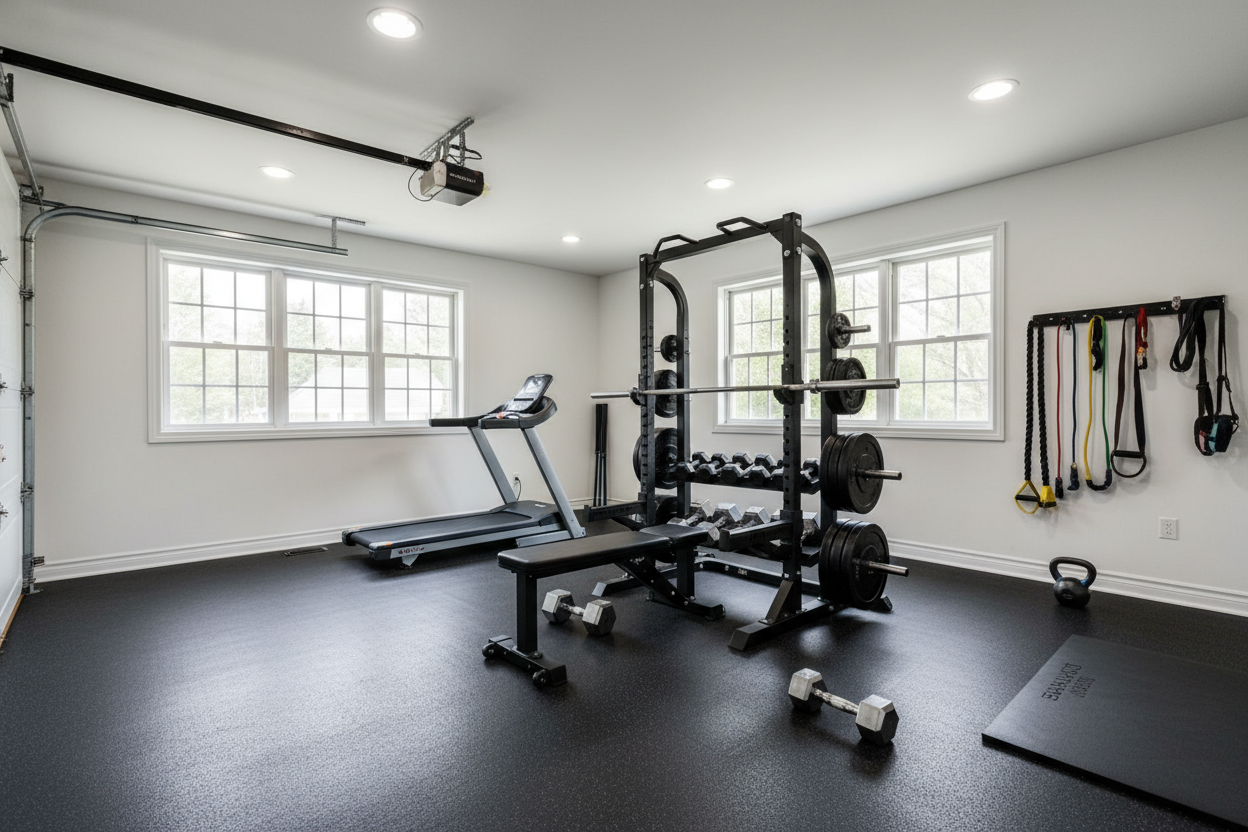
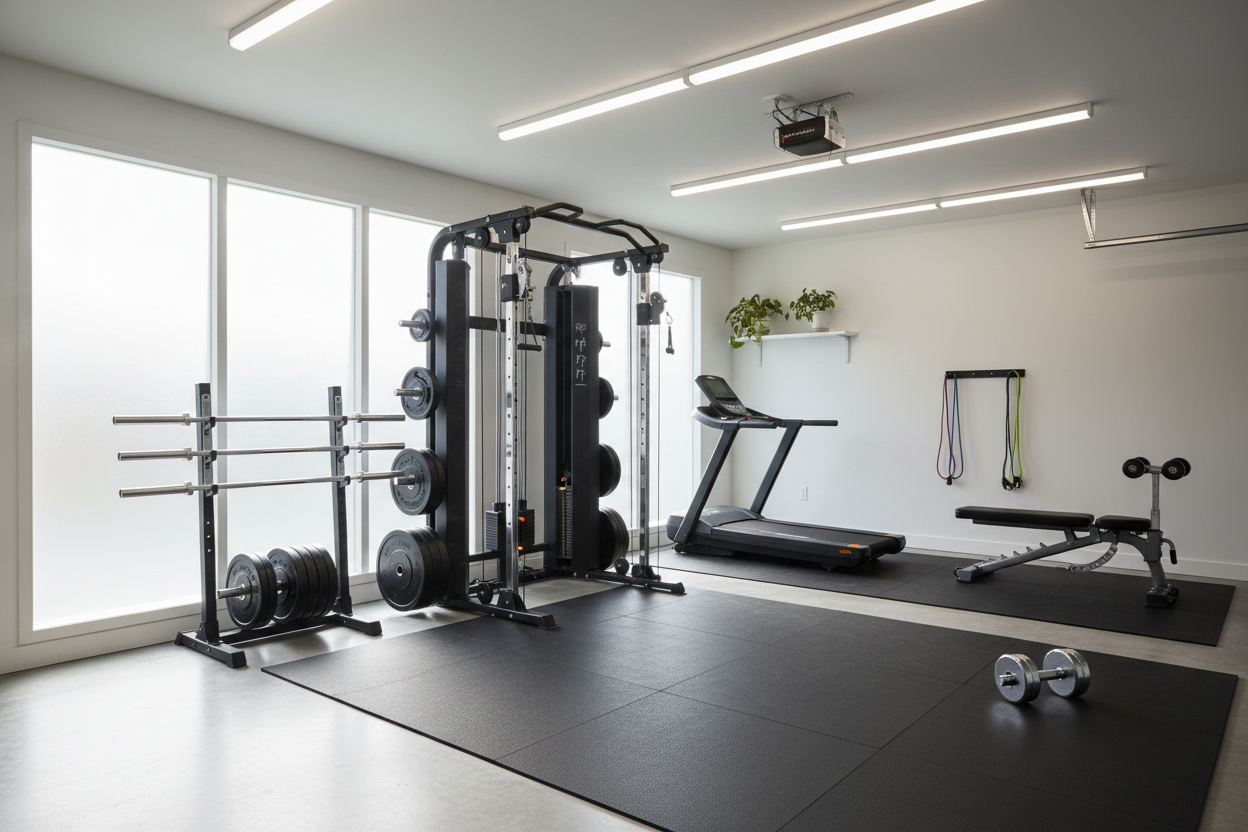
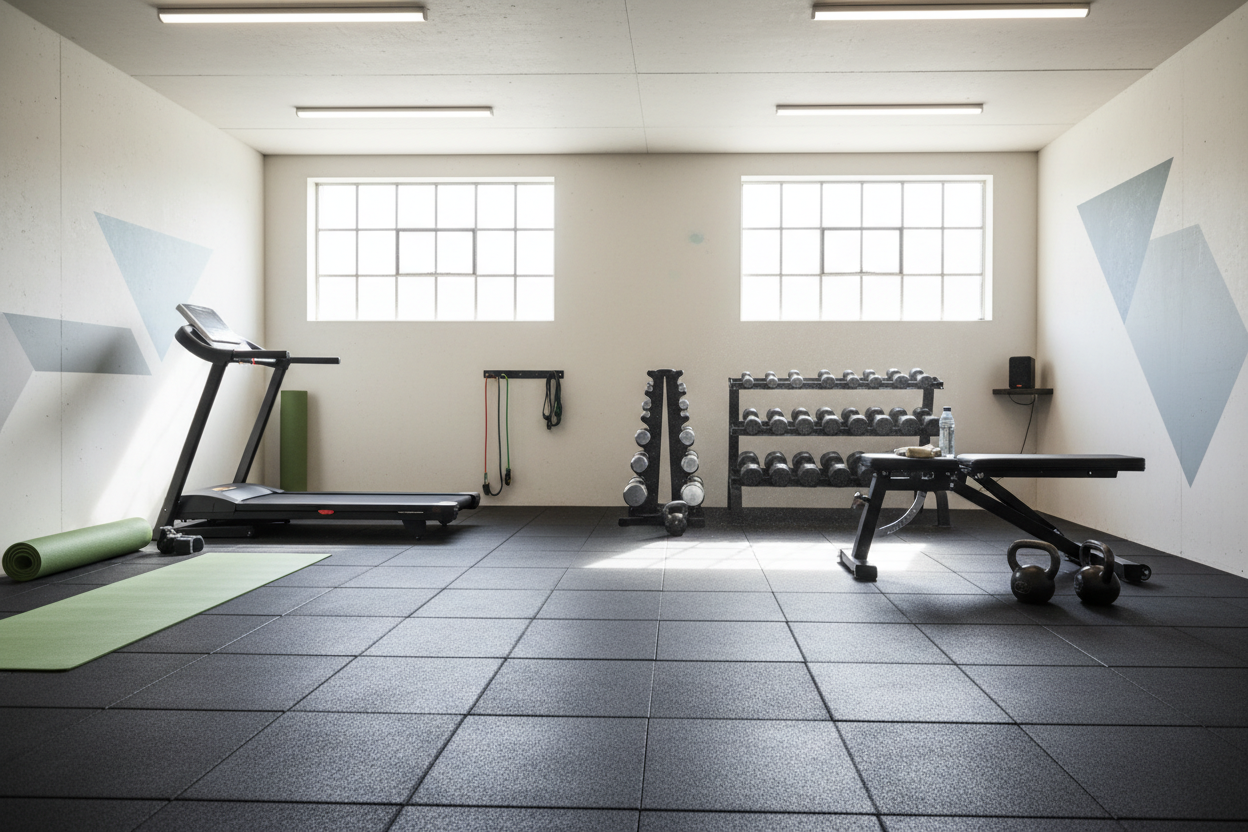
I usually plant my hands or my upper back on a high-density exercise mat gym flooring for home workout to ensure I have a solid base. Having that 6x4 foot area of traction allows you to put 100% of your effort into the 'drag' without worrying about your whole body shifting. It provides the leverage you need to actually create the friction that drives muscle growth. Without a solid anchor, you’re just ice skating in your living room.
Think of the mat as the frame of the machine and the towel/slick floor as the weight stack. You need the frame to stay still so the weight can move. This setup allows you to perform best workout to do at home without equipment by creating a high-stability, high-tension environment. It’s the difference between a productive set and just flailing around on the floor.
My Honest Take on Friction Training
I’ll be real: I hated this the first time I tried it. I thought I was 'too strong' for bodyweight stuff. I tried to do a full-range sliding fly on a laminate floor with some old gym socks. About halfway down, my hands flew out faster than I could control them, and I faceplanted into the floor. It was a bruised ego and a sore jaw. I realized then that I didn't have the eccentric control I thought I did. Now, I use a specific micro-fiber towel and I never skip the 'anchor' mat. It’s a tool, not a toy, and it’s arguably more taxing on my CNS than a moderate barbell session.
FAQ
Can I really build muscle without weights?
Yes, but you have to create mechanical tension. Friction-based sliding exercises mimic the tension of machines, which triggers hypertrophy much better than simple high-rep calisthenics.
What is the best floor for sliding exercises?
Hardwood, tile, or smooth laminate are best. If you only have carpet, buy a set of 'furniture sliders' or use smooth plastic lids to get the same effect.
How do I make these exercises easier?
Change the leverage. For chest flyes, go to your knees. For hamstring curls, keep your hips on the floor instead of in a bridge until you build the necessary strength.